seamus dubhghaill

Promoting Irish Culture and History from Little Rock, Arkansas, USA


Leave a comment

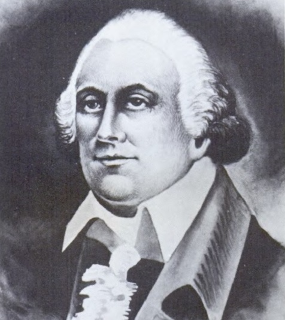
Death of Stephen Moylan, Patriot During the American Revolutionary War

Stephen Moylan, Irish American patriot leader during the American Revolutionary War, dies in Philadelphia, Pennsylvania, on April 11, 1811. He holds several positions in the Continental Army including Muster-Master General, Secretary and Aide to General George Washington, 2nd Quartermaster General, Commander of The Fourth Continental Light Dragoons and Commander of the Cavalry of the Continental Army.

Moylan is born to a Catholic family in Cork, County Cork, in 1737. His father, John Moylan, is a well-to-do merchant in Shandon, County Cork. His older brother Francis becomes Bishop of Cork. His family sends him to be educated in Paris. He then works in Lisbon for three years in the family shipping firm. He settles in Philadelphia in 1768 to organize his own firm. He is one of the organizers of the Friendly Sons of St. Patrick, an Irish American fraternal organization, and serves as its first president.

Moylan joins the American Continental Army in 1775 and upon the recommendation of John Dickinson, is appointed Muster-Master General on August 11, 1775. His brother John acts as United States Clothier General during the war. His experience in the shipping industry affords the United States a well-qualified ship outfitter, who helps fit out the first ships of the Continental Navy. On March 5, 1776, he becomes secretary to General George Washington with the rank of lieutenant colonel. He is appointed Quartermaster General in the American Continental Army on June 5, 1776, succeeding Thomas Mifflin. He resigns from this office on September 28, 1776. However, he continues to serve as a volunteer of General Washington’s staff through December 1776.

In January 1776, Moylan writes a letter using the term “United States of America,” the earliest known use of that phrase.

Moylan then raises a troop of light dragoons, the 4th Continental Light Dragoons, also known as Moylan’s Horse, on January 3, 1777, at Philadelphia, and is appointed colonel in the Continental Army on January 5. The regiment is be noted for taking the field in captured British red coats. However, they see action in green coats at the Battle of Brandywine on September 11, 1777, and the Battle of Germantown on October 4, 1777, and end the year by protecting the Cantonment at Valley Forge. He succeeds General Casimir Pulaski as Commander of the Cavalry in March 1778. Moylan’s Horse sees action at the Battle of Monmouth on June 28, 1778.

In the campaign of 1779 Moylan and the 4th Dragoons are stationed at Pound Ridge, New York, and see action when the British raid Norwalk, Connecticut, on July 11, 1779. He and the 4th Dragoons take part in the Battle of Springfield in New Jersey, on June 23, 1780, and General Anthony Wayne‘s expedition at Bull’s Ferry, New Jersey, on July 20, 1780. He commands his Dragoons at the Siege of Yorktown in October 1781, after which he is to take the cavalry to the Southern Campaign. However, his failing health causes him to leave the field and return to Philadelphia, where he constantly appeals to the Continental Congress to man, equip and maintain the Continental Dragoon Regiments.

Moylan is rewarded for his service by being breveted to brigadier general on November 3, 1783.

Moylan is married to Mary Ricketts Van Horne on September 12, 1778, and has two daughters, Elizabeth Catherine, and Maria. His two sons die as children. He dies in Philadelphia on April 11, 1811, and is buried there in the churchyard at St. Mary’s Roman Catholic Church.


Leave a comment

Irish Brigade of France Takes Part in the Siege of Savannah

On October 9, 1779, members of Arthur Dillon‘s regiment of the Irish Brigade of France take part in the Franco-American siege of Savannah, or the Second Battle of Savannah, during the final stages of the siege during the American Revolutionary War. The year before, the city of Savannah, Georgia, had been captured by a British expeditionary corps under Lieutenant Colonel Archibald Campbell. The siege itself consists of a joint Franco-American attempt to retake Savannah, from September 16 to October 18, 1779.

Charles Henri Hector, Count of Estaing, begins landing troops below the city on September 12, and begins moving in by September 16. Confident of victory and believing that British Lieutenant Colonel John Maitland‘s reinforcements will be prevented from reaching Savannah by Major General Benjamin Lincoln, he offers Major General Augustine Prévost the opportunity to surrender. Prevost delays, asking for a 24-hour truce. Owing to miscommunication about who is responsible for preventing Maitland’s movements, the waterways separating South Carolina‘s Hilton Head Island from the mainland are left unguarded, and Maitland is able to reach Savannah hours before the truce ends. Prevost’s response to d’Estaing’s offer is a polite refusal, despite the arrival.

On September 19, as Charles-Marie de Trolong du Rumain moves his squadron up the river, he exchanges fire with Comet, Thunder, Savannah, and Venus. The next day the British scuttle Rose, which is leaking badly, just below the town to impede the French vessels from progressing further. They also burn Savannah and Venus. By scuttling Rose in a narrow part of the channel, the British effectively block it. Consequently, the French fleet is unable to assist the American assault.

Germaine takes up a position to protect the north side of Savannah’s defenses. Comet and Thunder have the mission of opposing any attempt by the South Carolinian galleys to bombard the town. Over the next few days, British shore batteries assist Comet and Thunder in engagements with the two South Carolinian galleys. During one of these, they severely damage Revenge.

The French commander, rejecting the idea of assaulting the British defenses, unloads cannons from his ships and begins a bombardment of the city. The city, rather than the entrenched defenses, bear the brunt of this bombardment, which lasts from October 3 to 8. “The appearance of the town afforded a melancholy prospect, for there was hardly a house that had not been shot through,” writes one British observer.

When the bombardment fails to have the desired effect, d’Estaing changes his mind and decides it is time to try an assault. He is motivated in part by the desire to finish the operation quickly, as scurvy and dysentery are becoming problems on his ships, and some of his supplies are running low. While a traditional siege operation would likely have succeeded eventually, it would take longer than d’Estaing is prepared to stay.

Against the advice of many of his officers, d’Estaing launches the assault against the British position on the morning of October 9. The success depends in part on the secrecy of some of its aspects, which are betrayed to Prévost well before the operations are supposed to begin around 4:00 a.m. Dillon’s regiment is sent to the right of the main assault, but their guides prove to be unreliable, and the column goes down the wrong path into a swamp. The British have already learned of the assault and the bagpipes of a Highland regiment begin playing at daybreak, unnerving the allies since it signals that surprise is lost. It is nearly daylight when the attack finally gets underway.

The redoubt on the right side of the British works had been chosen by the French admiral in part because he believed it to be defended only by militia. In fact, it is defended by a combination of militia and Scotsmen from John Maitland’s 71st Regiment of Foot, Fraser’s Highlanders, who had distinguished themselves at Stono Ferry. The militia includes riflemen, who easily pick off the white-clad French troops when the assault is underway. Admiral d’Estaing is twice wounded, and Polish cavalry officer Casimir Pulaski, fighting with the Americans, is mortally wounded. By the time the second wave arrives near the redoubt, the first wave is in complete disarray, and the trenches below the redoubt are filled with bodies. Attacks intended as feints against other redoubts of the British position are easily taken.

The second assault column is commanded by the Swedish Count Curt von Stedingk, who manages to reach the last trench. He later writes in his journal, “I had the pleasure of planting the American flag on the last trench, but the enemy renewed its attack, and our people were annihilated by crossfire.” He is forced back by overwhelming numbers of British troops, left with some 20 men, all being wounded, including von Stedingk. He later writes, “The moment of retreat with the cries of our dying comrades piercing my heart was the bitterest of my life,”

After an hour of carnage, d’Estaing orders a retreat. On October 17, Lincoln and d’Estaing abandon the siege.

The Irish Brigade of France suffers more than 40 killed and close to 150 wounded. Among the dead is Captain Bernard O’Neill, a 5th generation officer in Dillon’s regiment. Dillon’s regiment is the only one of the Brigade units to remain in command of one family for its entire service. Count Arthur Dillon, commander at Savannah, is the grandson of Colonel Arthur Dillon, who brought the regiment into French service in 1690. The Count later becomes a victim of the French Revolution. He is condemned for alleged participation in a prison conspiracy and executed by guillotine on April 13, 1794.


Leave a comment

Stephen Moylan Appointed Colonel in the Continental Army

Stephen Moylan, Irish American patriot leader during the American Revolutionary War, is appointed colonel in the Continental Army on January 5, 1777. He has several positions in the Continental Army including Muster-Master General, Secretary and Aide to General George Washington, 2nd Quartermaster General, Commander of The Fourth Continental Light Dragoons and Commander of the Cavalry of the Continental Army.

Moylan is born to a Catholic family in Cork, County Cork, in 1737. His father, John Moylan, is a well-to-do merchant in Shandon, County Cork. His older brother Francis becomes Bishop of Cork. His family sends him to be educated in Paris. He then works in Lisbon for three years in the family shipping firm. He settles in Philadelphia in 1768 to organize his own firm. He is one of the organizers of the Friendly Sons of St. Patrick, an Irish American fraternal organization, and serves as its first president.

Moylan joins the American Continental Army in 1775 and upon the recommendation of John Dickinson, is appointed Muster-Master General on August 11, 1775. His brother John acts as United States Clothier General during the war. His experience in the shipping industry affords the United States a well-qualified ship outfitter, who helps fit out the first ships of the Continental Navy. On March 5, 1776, he becomes secretary to General George Washington with the rank of lieutenant colonel. He is appointed Quartermaster General in the American Continental Army on June 5, 1776, succeeding Thomas Mifflin. He resigns from this office on September 28, 1776. However, he continues to serve as a volunteer of General Washington’s staff through December 1776.

In January 1776, Moylan writes a letter using the term “United States of America,” the earliest known use of that phrase.

Moylan then raises a troop of light dragoons, the 4th Continental Light Dragoons, also known as Moylan’s Horse, on January 3, 1777, at Philadelphia. The regiment is be noted for taking the field in captured British red coats. However, they see action in green coats at the Battle of Brandywine on September 11, 1777, and the Battle of Germantown on October 4, 1777, and end the year by protecting the Cantonment at Valley Forge. He succeeds General Casimir Pulaski as Commander of the Cavalry in March 1778. Moylan’s Horse sees action at the Battle of Monmouth on June 28, 1778.

In the campaign of 1779 Moylan and the 4th Dragoons are stationed at Pound Ridge, New York, and see action when the British raid Norwalk, Connecticut, on July 11, 1779. He and the 4th Dragoons take part in the Battle of Springfield in New Jersey, on June 23, 1780, and General Anthony Wayne‘s expedition at Bull’s Ferry, New Jersey, on July 20, 1780. He commands his Dragoons at the Siege of Yorktown in October 1781, after which he is to take the cavalry to the Southern Campaign. However, his failing health causes him to leave the field and return to Philadelphia, where he constantly appeals to the Continental Congress to man, equip and maintain the Continental Dragoon Regiments.

Moylan is rewarded for his service by being breveted to brigadier general on November 3, 1783.

Moylan is married to Mary Ricketts Van Horne on September 12, 1778, and has two daughters, Elizabeth Catherine, and Maria. His two sons die as children. He dies in Philadelphia on April 11, 1811, and is buried there in the churchyard at St. Mary’s Roman Catholic Church.