seamus dubhghaill

Promoting Irish Culture and History from Little Rock, Arkansas, USA


Leave a comment

Birth of James McAlinden, Irish Footballer

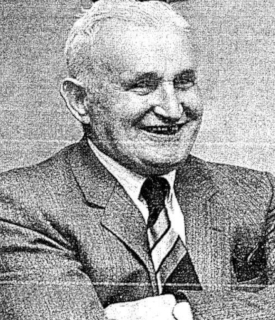
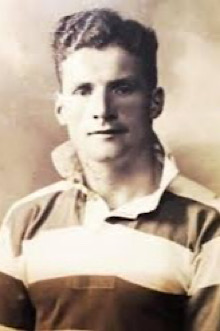
James McAlinden, Irish footballer who plays as a forward for several clubs, most notably, Belfast CelticPortsmouthShamrock Rovers and Southend United, is born in Belfast on December 27, 1917. As an international, he also plays for both Ireland teams – the IFA XI and the FAI XI. After retiring as a player, he goes on to manage GlenavonLisburn Distillery and Drogheda United.

In 1934, aged 16, McAlinden is playing for Glentoran Reserves, when after a game against their reserves, he is offered a professional contract by Belfast Celtic. Together with Jackie VernonTommy BreenBilly McMillan and Charlie Tully, he subsequently becomes a prominent member of the Celtic team managed by Elisha Scott. This team dominates the Irish League in the era before and during World War II. Among his most notable contributions is scoring in the 2–1 win against Bangor in the 1938 Irish Cup final.

In December 1938, McAlinden signs for Portsmouth for a fee of £7.500. He makes his debut for the club against Chelsea and goes on to become a regular in the side. Within six months of his arrival at the club, he helps them win the 1939 FA Cup final, beating Wolverhampton Wanderers 4–1. After the outbreak of World War II, he plays three times for Portsmouth in wartime regional leagues, but his first spell with the club ends when he then returns to Belfast Celtic in 1939. He returns to Portsmouth for a second stint in 1946. In September 1947, he leaves Portsmouth once again and joins Stoke City for a fee of £7,000.

Following the end of his second stint with Belfast Celtic and before he rejoins Portsmouth, McAlinden signs for Shamrock Rovers in September 1945. He makes his debut against Shelbourne at Glenmalure Park on September 16. While playing for Rovers his teammates include Paddy CoadPeter Farrell and Tommy Eglington. During his one season with Rovers, he helps the club reach the 1946 FAI Cup final. However Rovers lose 3–1 to Drumcondra.

McAlinden joins Stoke City in September 1947 for a then club record fee of £7,000. He becomes regular inside forward under manager Bob McGrory in 1947–48, playing in 33 matches scoring just twice against Aston Villa and Huddersfield Town. His lack of goals sees him fall out of favour at the Victoria Ground and he is sold to Third Division South side Southend United in October 1948.

In 1948, Southend United signs McAlinden from Stoke City for a fee of £8,000. He continues to play for United until 1954 and during his time with the club he serves as club captain. He also becomes something of a cult hero among the club’s fans and is remembered as being possibly the best player ever to play for the club. In 1950, he is caught up in controversy after it is alleged that he received illegal payments during his second spell with Portsmouth. As a result, he is suspended for the first two months of the 1950–51 season. In April 1954, he makes his last home appearance for United in a 4–1 win over Queens Park Rangers.

When McAlinden begins his international career in 1937 there are in effect, two Ireland teams, chosen by two rival associations. Both associations, the Northern Ireland–based Irish Football Association (IFA) and the Irish Free State–based Football Association of Ireland (FAI), claim jurisdiction over the whole of Ireland and select players from the whole island. As a result, several notable Irish players from this era, including McAlinden play for both teams.

Between 1937 and 1948, McAlinden makes five appearances for the IFA XI, making his international debut in a 1–1 draw with Scotland at Pittodrie Stadium on November 10, 1937. His IFA XI appearances also include the 8–4 defeat against a Combined Services XI at Windsor Park on September 9, 1944. This team is basically a Great Britain XI and features, among others, Matt BusbyStanley MatthewsTommy Lawton and Stan Mortensen. He also plays against England in 7–2 defeat at Windsor Park on September 9, 1946. He makes his last appearance for the IFA XI on October 10, 1948, in a 6–2 defeat to England at Windsor Park. He makes his first three appearances for the IFA XI while with Belfast Celtic, his fourth while at Portsmouth and his fifth while at Southend United.

In 1946, while with Portsmouth, McAlinden also makes two appearances for the FAI XI. He is one of several players born in Northern Ireland who benefits from the FAI’s attempts to establish their all-Ireland influence. In June 1946, when the FAI organises an Iberian tour, he, together with Jackie Vernon, Billy McMillan and Paddy Sloan, is one of four Northern Irish players called up. He subsequently plays in both the 3–1 defeat to Portugal on June 16 and then helps Ireland gain a surprise 1–0 victory against Spain on June 23, 1946.

In 1955, McAlinden becomes player/manager of Glenavon. He continues playing for an additional year before finally retiring as a player to concentrate on management. During a thirteen-year stint with Glenavon, he guides them two Irish League titles, three Irish Cup victories and one Gold Cup. After leaving Glenavon, works as a full-time scout for Coventry City before taking charge at Lisburn Distillery in 1969. He subsequently guides a Distillery team that includes a young Martin O’Neill to a win in the 1971 Irish Cup. Later in his first season with Drogheda United, he guides them to the 1976 FAI Cup final, only to lose 1–0 to Bohemian.

McAlinden dies at the age of 75 on November 15, 1993.


2 Comments

Birth of Billy Whelan, Irish Footballer

William Augustine Whelan, known as Billy Whelan or Liam Whelan, Irish footballer who plays as an inside-forward, is born at 28 St. Attracta’s Road, Cabra, Dublin, on April 1, 1935. He dies at the age of 22, as one of eight Manchester United players who are killed in the Munich air disaster.

Whelan is the fourth of seven children born to John and Elizabeth Whelan. His father is an accomplished centre half-back for Dublin club Brunswick and is instrumental in winning the FAI Junior Shield in 1924. His mother is an avid Shamrock Rovers supporter. His father dies in 1943 when Whelan is just eight years old.

Whelan plays Gaelic games, winning a medal for St. Peter’s national school in nearby Phibsborough. After leaving school at the age of fourteen, he works in Cassidy’s, an outfitter on South Great George’s Street. He is an accomplished Gaelic footballer and hurler, but association football is his first love.

Whelan begins his career at the age of twelve when he joins Home Farm before joining Manchester United as an 18-year-old in 1953. He is capped four times for the Republic of Ireland national football team, including a surprising 4–1 victory against Holland in Rotterdam in 1956, but does not score. His brother John plays for Shamrock Rovers and Drumcondra and his eldest brother Christy plays for Transport.

Whelan makes his first appearance for Manchester United during the 1954–55 season and quickly becomes a regular first-team player. He goes on to make 98 first-team appearances in four seasons at United, scoring 52 goals. He is United’s top scorer in the 1956–57 season, scoring 26 goals in the First Division and 33 in all competitions as United wins their second successive league title and reaches the semi-finals of the 1957-58 European Cup. He also gives a commanding display in the 1957 FA Cup final despite losing 2–1 to Aston Villa. Such is the strength of the competition in the United first team that he is soon being kept out of the side by Bobby Charlton. He is a traveling reserve for United’s ill-fated European Cup match against Red Star Belgrade in Belgrade on February 6, 1958, and is one of eight players to die in the subsequent air crash that destroys Matt Busby‘s young team and claims twenty-three lives. Fellow Irishman Harry Gregg, United’s goalkeeper and a survivor and hero of the Munich air crash, recalls Whelan’s last words as the plane is attempting take-off for the third and final time as “Well, if this is the time, then I’m ready.”

Thousands attend Whelan’s funeral on February 12 in St. Peter’s Church, Phibsborough, Dublin, and line the streets as the funeral procession makes its way to his burial-place in Glasnevin Cemetery. In December 2006 Dublin Corporation unveils a commemorative plaque on a bridge at Faussagh Road, Cabra, which was renamed Liam Whelan Bridge.

Although of a cheerful disposition, Whelan is also modest and shy by nature, and a quietly devout Catholic. He has a particular dislike of swearing and tends to fix a look of pained disappointment on teammates who use bad language. Nobby Stiles admits that he “would rather be caught swearing by the pope than by Billy Whelan.” His religious devotion regularly fuels rumours that he is considering being a priest, although at the time of his death he is engaged to be married to Ruby McCullough.


2 Comments

Birth of Irish Footballer Billy Behan

billy-behan

William “Billy” Behan, Irish footballer who plays as a goalkeeper for Shelbourne F.C., Shamrock Rovers F.C. and Manchester United F.C. during the 1930s, is born on August 8, 1911, in Dublin.

Behan makes his Rovers debut on February 8, 1931, in a 5–1 win over Bray Unknowns F.C. at Glenmalure Park. In his first season, he wins the FAI Cup. He signs with Manchester United in September 1933, along with fellow Irishman David Byrne, becoming the first players from the south of Ireland to play for the club in over a decade.

Behan makes his United debut in a Football League Second Division home game against Bury F.C. on March 3, 1934. The following July, he briefly returns to Shelbourne before again returning to the Rovers. Over the next two seasons, he wins another FAI Cup and a League of Ireland Shield. His last game for the Rovers is on August 23, 1936, in a Shield win over Drumcondra F.C..

After his retirement as a player, Behan becomes a respected referee and is in charge of the 1943 FAI Cup Final. He then manages Drumcondra F.C. in the 1950s where he wins the FAI Cup again.

Behan subsequently becomes United’s chief scout in the Republic of Ireland and is credited with discovering, among others, Johnny Carey, Billy Whelan, Tony Dunne, Don Givens, Kevin Moran and Paul McGrath. He also serves as vice chairman of the Dalkey-based Leinster Senior League team, Dalkey United, and it is through this association that he discovers McGrath.

Behan’s father, William Sr., is one of the founder members of Shamrock Rovers. His brothers John and Paddy also play for the Rovers. His son William junior keeps goal for the Rovers side also for a time. His second cousin is Bob Fullam.

Behan’s grandson, Philip Behan, is the former Head of International Football at the Football Association of Ireland and is now a UEFA and FIFA agent organising friendly international matches and tournaments around the world.

Billy Behan dies on November 12, 1991, at the age of 80.