seamus dubhghaill

Promoting Irish Culture and History from Little Rock, Arkansas, USA


Leave a comment

The London Stock Exchange Bombing

The London Stock Exchange bombing occurs at 8:49 a.m. on the morning of July 20, 1990, with the explosion of a 5 to 10 lb. (2.3 to 4.5 kg) bomb of high explosives inside the London Stock Exchange building on Threadneedle Street in the City of London, England, planted by the Provisional Irish Republican Army (IRA). The building and surrounding area are evacuated after the IRA gives a telephone warning 40 minutes prior to the explosion, and thus nobody is wounded. As many as 300 people are evacuated from the building alone. The bomb’s strength blows a 10-foot hole inside the Stock Exchange Tower and causes massive damage to the visitors’ gallery on the first floor, which is frequently used by foreign tourists and schoolchildren and had been scheduled to open ten minutes after the explosion. The bomb is placed in the men’s toilets behind the gallery. The gallery and public viewing area is forced to close in 1992.

The bombing comes on the eighth anniversary of the July 20, 1982, Hyde Park and Regent’s Park bombings which killed eleven soldiers and wounded 53 people. The IRA launches a renewed campaign in London in 1990. During May, a soldier at an army recruiting centre is killed by a bomb in Wembley, while five are injured in a similar explosion in Eltham. In June 1990, bombs at the Honourable Artillery Company (HAC) and the Carlton Club injure 19 and 20 people respectively.

Scotland Yard‘s anti-terrorist chief George Churchill-Coleman says eight phone calls from the same man with an Irish accent are made between 8:02 a.m. and 8:20 a.m. to the City of London Police, the London Fire Brigade, Reuters, the Financial Times, The Salvation Army and the Stock Exchange itself. The caller telephones Reuters just after 8:00 a.m. and says, “This is the IRA. The bomb is due to go off in half an hour at the stock exchange.” The caller then gives a code word that the police say is known to them and used by the IRA to show that its threats are serious, and says, “Clear the building.”

The Stock Exchange’s chairman, however, says after the attack, “If the purpose of this callous act was to bring the City to a halt, they have failed singularly.” The explosion has little impact on stock trading since that is being carried out by computers elsewhere.

A spokesman for Prime Minister Margaret Thatcher says she is “appalled when people leave explosive devices in this manner in public areas.” On October 12, 1984, a bomb planted by the IRA at the Grand Brighton Hotel in Brighton, where the Conservative Party is holding its annual conference, kills five people and comes close to killing Thatcher.

In 1992, the IRA bombs the Baltic Exchange building in the city.

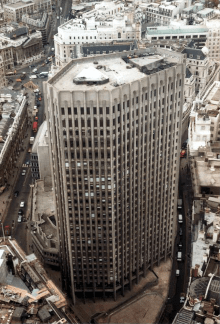
(Pictured: The Stock Exchange Tower in 1983, taken from the top of the National Westminster Tower (now Tower 42), clearly showing the symbolic coffin shape of the building)

Leave a comment

Birth of Katharine O’Shea Parnell

katharine-oshea

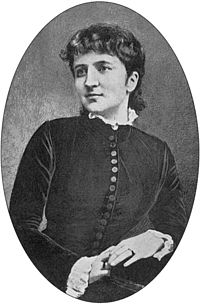
Katharine O’Shea (née Wood), English woman of aristocratic background, whose decade-long secret adultery with Charles Stewart Parnell leads to a widely publicized divorce in 1890 and his political downfall, is born in Braintree, Essex on January 30, 1846.

Katharine is the daughter of Sir John Page Wood, 2nd Baronet (1796–1866), and granddaughter of Sir Matthew Wood, a former Lord Mayor of London. She has an elder brother who becomes Field Marshal Sir Henry Evelyn Wood and is also the niece of both Western Wood MP (1804–1863) and Lord William Wood, William Ewart Gladstone‘s first Liberal Lord Chancellor.

Katharine marries Captain William O’Shea in 1867, a Catholic Nationalist MP for Clare from whom she separates around 1875. She first meets Parnell in 1880 and begins a relationship with him. Three of her children are fathered by Parnell. Although Captain O’Shea keeps publicly quiet for several years, he is aware of the relationship. He challenges Parnell to a duel in 1881 and initially forbids his estranged wife to see him, although she says that he encouraged her in the relationship. Although their relationship is a subject of gossip in London political circles from 1881, later public knowledge of the affair in an England governed by “Victorian morality” with a “nonconformist conscience” creates a huge scandal, as adultery is prohibited by the Ten Commandments.

Out of her family connection to the Liberal Party, Katharine acts as liaison between Parnell and Gladstone during negotiations prior to the introduction of the First Irish Home Rule Bill in April 1886. Parnell moves to her home in Eltham, close to the London-Kent border, that summer.

Captain O’Shea files for divorce in 1889 and his reasons are a matter for speculation. Some say he may have political motives. Alternatively, it is claimed that he has been hoping for an inheritance from Katharine’s rich aunt whom he had expected to die earlier, but when she dies in 1889 her money is left in trust to cousins. After the divorce the court awards custody of Katharine O’Shea and C.S. Parnell’s two surviving daughters to her ex-husband.

Katharine’s November divorce proceedings from Captain O’Shea, in which Parnell is named as co-respondent, leads to Parnell’s being deserted by a majority of his own Irish Parliamentary Party and to his downfall as its leader in December 1890. Catholic Ireland feels a profound sense of shock when Katharine breaks the vows of her previous Catholic marriage by marrying Parnell on June 25, 1891. With his political life and his health essentially ruined, Parnell dies at the age of 45 in Hove on October 6, 1891 in her arms, less than four months after their marriage. The cause is stomach cancer, possibly complicated by coronary artery disease inherited from his grandfather and father, who also died prematurely.

Though to her friends Katharine is known as Katie O’Shea, Parnell’s enemies, in order to damage him personally, call her “Kitty O’Shea” because at that time “kitty,” as well as being an Hiberno-English version of Catherine/Katherine/Katharine, is also a slang term for a prostitute. She lives the rest of her life in relative obscurity. She dies on February 5, 1921, at the age of 75, and is buried in Littlehampton, Sussex, England, apparently never once setting foot on Irish soil.

Captain Henry Harrison, MP, who had acted as Parnell’s bodyguard and aide-de-camp, devotes himself after Parnell’s death to the service of his widow. From her he hears a completely different version of the events surrounding the divorce issue from that which had appeared in the press, and this is to form the seed of his later two books defending Parnell published in 1931 and 1938. They have a major impact on Irish historiography, leading to a more favourable view of Parnell’s role in the O’Shea affair.