seamus dubhghaill

Promoting Irish Culture and History from Little Rock, Arkansas, USA


Leave a comment

Death of Kathleen Mills, Senior Camogie Player

Kathleen “Kay” Mills-Hill, a sportsperson who plays senior camogie with Dublin from 1941 until 1961, dies at her home in Dublin on August 11, 1996. She is regarded as one of the greatest players of all-time, winning fifteen All-Ireland Senior Medals.

Mills is born in 31 South Square, Inchicore, Dublin, on October 8, 1923. Her mother, Winifred (née Wills), is from Inchicore and her father, Thomas, is from Glanmire, County Cork. Her father works for Great Southern Railways. She has three siblings, Gertrude, Ada and Robert. Her mother dies when she is just eighteen months old, leaving her to be raised by her maternal grandmother, Charlotte Wills, who lives at 1 Abercorn Terrace, Inchicore. She is educated at St. Vincent’s Industrial School, Goldenbridge, where she plays table tennis and association football as well as doing gymnastics. However, camogie is her first love, which she starts playing at age five. She leaves school at a young age, and goes to work in Lamb’s jam factory.

Through her father, Mills is able to participate in and avail of the sporting activities in the GSR Athletic Union. Two pence per week are deducted from the worker’s wages to go toward the financing of the sports activities in the Railway. In 1947, she marries George Hill. They run the Red Seal Handbag Company from the North Circular Road, and later Hill Street. Later they become vintners, running the Seventh Lock public house on the Grand CanalBallyfermot.

Mills makes her camogie debut with the Great Southern Railways club in Dublin in 1938 at the age of fourteen, and is promoted to the senior team for her second match. Three years later she makes her debut for Dublin while still sixteen and plays in Dublin’s unsuccessful 1941 All-Ireland Senor Camogie Championship final against Cork, winning her first All-Ireland medal after a replay against Cork a year later in the 1942 All-Ireland Senior Camogie Championship final.

In 1943, the same counties meet in the All-Ireland final for the third consecutive year. Once again Mills ends up claiming an All-Ireland medal, her goal from fifty yards range being described as the highlight of the match. The following year, 1944, brings a third All-Ireland medal. In 1945 and 1946, a dispute in the camogie association keeps Dublin out of the All-Ireland championship in spite of being Leinster champions in both years. In 1948, Dublin is back on form and Mills captures a fourth All-Ireland medal. She takes no part in the 1949 championship, however, the 1950s brings much success to Mills.

From 1950 to 1955, Mills captures six consecutive All-Ireland titles. In 1956, “the Dubs” surrender their crown to Antrim but it is soon reclaimed in 1957. In 1958, she is appointed captain of the Dublin camogie team. Led by her, Dublin defeats Tipperary to capture yet another All-Ireland title. She captures three more All-Ireland medals in 1959, 1960 and 1961. The occasion of the 1961 final is special as it is her 38th birthday and her last outing in a Dublin jersey.

In her playing days Mills is regarded as one of the all-time greats. She is regarded as camogie’s first superstar she has often been described as the Christy RingMick MackeyNicky Rackard and Lory Meagher of the camogie world. With a haul of fifteen senior All-Ireland medals, she is the most decorated player in the history of Gaelic games at the time of her retirement. Since then Rena Buckley and Briege Corkery have won more than Mills.

Mills-Hill dies on August 11, 1996, from undisclosed causes, at her home on the Naas Road, Dublin. She is buried in Palmerstown Cemetery. In 2010, the camogie trophy for the annual inter-county All-Ireland Junior Camogie Championship is named in her honour. The Kay Mills Cup is a replica of the O’Duffy Cup. A plaque to Mills is erected at her former home, 1 Abercorn Terrace, Inchicore.


Leave a comment

Death of Iris Cummins, First Female Engineering Graduate at UCC

Iris Ashley Cummins, the first female engineer to graduate from University College Cork (UCC), dies in Dublin on April 30, 1968. She is also an international field hockey player.

Cummins is born on June 6, 1894, in Woodville, Glanmire, County Cork, to William Edward Ashley Cummins (1858–1923), professor of medicine at UCC, and Jane Constable Cummins (née Hall). Of her four sisters and six brothers, Geraldine is a renowned psychic and author, Jane serves as a squadron officer in the Women’s Royal Air Force (WRAF) during World War II and becomes a medical doctor, Mary is a gynaecologist and fellow of the Royal College of Physicians of Ireland (RCPI), and her brother Marshall is involved in setting up the first blood transfusion service in Cork.

Cummins begins to study at UCC in 1912. At that time, there are 78 women students out of the 420 students enrolled. She graduates with an engineering degree in 1915. During her time in engineering, she is editor of the Journal of the Engineering Society.

While she is in college, Cummins is on the Ireland field hockey team. She earns her first “cap” for hockey in 1914 and leads the college hockey team to victory in the Munster cup. The Irish hockey team tours the United States in 1925 with Cummins as the captain. With the team she goes to the White House at the invitation of Calvin Coolidge.

Cummins works for the Royal Arsenal with the munitions factory at Woolwich, London, and then the Vickers Limited factory at nearby Erith. She works in a shipyard in Scotland during World War I between 1915 and 1916 before returning to Cork. Initially, she finds it difficult to find work there.

In 1924, Cummins founds a private practice in the city and works there until 1927 at which time she is appointed to the Irish Land Commission in Dublin. She moves to Dublin and although she visits, she never returns to live in Cork. She retires from the Land Commission in 1954.

In 1927, Cummins becomes the first woman member of the Institution of Civil Engineers of Ireland.

Cummins is a Council member of the Women’s Engineering Society, having joined at the organisation’s inception. In December 1919, she writes an encouraging article in the very first edition of the society’s journal, The Woman Engineer. Based on her own Irish university experience, it lays out the practicalities of studies as well as social interactions likely to be encountered by a woman thinking of training as a civil engineer. The following year, she has another article published, this time in the Practical Engineer magazine, entitled The Suitability of Women for the Engineering Industries.

Twenty years later, in 1940, Cummins writes a lively piece entitled Women Engineers Overseas – in Eire for The Woman Engineer journal on her experiences as one of the earliest women engineers in Ireland. In this article, she recounts a tale of encountering the “oldest Inhabitant” of a very rural area, a proud owner of two fine horses, who on discovering “you must be an engineer, so would ye mind mending the electric light in the mare’s stable?”

Cummins dies at the age of 73 in Dublin on April 30, 1968.

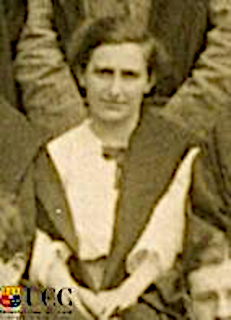
(Pictured: Detail from photo of the 1913-14 2nd Year Engineering Class at University College Cork (UCC University Archives, OCLA, UCC))


2 Comments

Death of Brian Dillon, Republican Leader & IRB Member

Brian Dillon, Irish republican leader and a member of the Irish Republican Brotherhood (IRB), dies at his home in Cork, County Cork, on August 17, 1872. He is a central figure in the Cork Fenian movement.

Dillon is born in Glanmire, County Cork, in 1830. As a child, he is injured in a heavy fall which results in curvature of the spine and general ill health. His family moves to a house near the corner of Old Youghal Road and Ballyhooly Road. He attends the School of Art for several years and becomes quite talented with brush and pencil. He lives through the Great Famine and becomes an ardent nationalist.

Dillon is appointed a Fenian leader in Cork by James Stephens, the head of the Irish Republican Brotherhood. Under his supervision the Fenian recruits drill on the Fair Field and at Rathpeacon and are hoping for a rebellion in 1865 when the Fenians are at their strongest. He often associates with other Cork Fenians such as John J. Geary, James Mountaine and John Lynch. He chairs the Fenian meetings at Geary’s pub.

In September 1865, police arrest Fenian leaders James Stephens and Jeremiah O’Donovan Rossa in Dublin, and Dillon in Cork. The police search his home and find a pair of field glasses, some drawings and some incriminating letters sewn into the mattress of his bed. He is remanded in Cork City Gaol until his trial.

On December 18, Dillon and another Cork Fenian, John Lynch, are tried together in the dock in Cork Courthouse by Judge Keogh. The charges are primarily based on information provided by an informer named John Warner, an ex-military pensioner. Isaac Butt and Mr. Waters represent the defendants. The charges are “in one indictment with having conspired to depose the Queen, &c., and with illegally drilling and being drilled in furtherance of that design.” Both are found guilty, based primarily on the testimony of informants, although John Warner’s account is very weak and unsatisfactory under cross-examination. The defendants are sentenced to ten years’ penal servitude.

Dillon is brought under armed guard by train from Cork to Dublin and then thrown into Mountjoy Gaol. He spends nearly a month there and suffers from lack of sleep. In January 1866, he and John Sarsfield Casey are handcuffed together on the tough and rough sea crossing between Kingstown and Holyhead. On arrival at Holyhead, they are then taken by train to Pentonville Prison. This is a very cold prison, and he becomes seriously ill in May 1866. He is transferred to the hospital wing of Woking Convict Invalid Prison, and this is to be his home for the next four-and-a-half years. Here he becomes Convict Number 2658.

In 1870, after five years imprisonment, a commission is set up to investigate the Fenian prisoners, and on account of his bad health, this commission recommends that Dillon be allowed home to Cork. In January 1871 he is transferred to Millbank Prison London and is set free two weeks later on February 8. The following day he arrives in Dublin and after a few days’ rest, he returns to Cork by train. All along the route thousands of people wait on the platforms to greet him and read special addresses of welcome. The train reaches Cork at 8:00 p.m. and even though a carriage and pair are waiting, he is glad to seek refuge in the first covered car he can find, so dense is the crowd all around him wanting to shake his hand. The triumphal procession from the station to his home then begins and the hills all along the route are lighted with tar barrels.

Amid emotional scenes Dillon meets his family and afterwards appears at one of the windows of the house and thanks the people of Ireland for the great reception he has received everywhere on his journey home to Cork. He is now in very poor health and his mother begins the task of nursing him back to health. Everything that loving care and money could do is done, and from New York comes a cheque for £50 from the generous-hearted O’Donovan Rossa. Other friends also contribute, but all to no avail. On Saturday, August 17, 1872, he dies at his home surrounded by his sorrowing relatives.

Dillon’s funeral is one of the biggest ever seen in Cork. The cortege is headed by the Barrack Street Band, and at least ten other bands take part. All have their instruments dressed in sombre black. On Monday, August 18, his remains are privately borne to St. Joseph’s cemetery, to a temporary resting place, as it has been decided to build a vault in the family burial ground in Rathcooney which will not be ready for a few days. Later the funeral route travels from Turners Cross along Anglesea Street, South Mall, Grand Parade, Patrick Street, McCurtain Street and St. Luke’s. The funeral procession stops outside his home and prayers are recited for the repose of his soul. The procession then moves on toward Ballyvolane and up the steep hill toward the graveyard at Rathcooney. On arrival at the newly built tomb, so dense is the crowd milling around the hearse that considerable difficulty is experienced in getting the coffin to the grave. The priests then read the burial service, and, in a hushed silence, Canon Freeman asks the entire assembly to kneel and recite the Lord’s Prayer aloud. He blesses the grave, and the mortal remains of Brian Dillon are lowered to rest. The coffin is then covered, and after Colonel Ricard O’Sullivan Burke‘s oration, the crowd quietly disperses.

Today Dillon’s name is inscribed in the National Monument on the Grand Parade and in street names like Dillon’s Cross, Brian Dillon Park and Brian Dillon Crescent. The Brian Dillons GAA club in the same area of Cork city is also named after him.

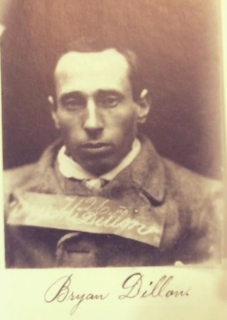
(Pictured: A mug shot of Brian Dillon)


Leave a comment

Death of Poet & Revolutionary Denny Lane

Denny Lane, author, poet and member of the revolutionary Young Ireland party, dies in Cork, County Cork, on November 29, 1895.

Lane is born in Riverstown, near Glanmire in County Cork, on December 4, 1818. Although a Catholic, Lane graduates from the mainly Protestant Trinity College, Dublin, where he joins the College Historical Society, becomes a friend of Charles Gavan Duffy and Thomas Davis. He is called to the bar from Inner Temple, but soon becomes involved in the political activities surrounding Daniel O’Connell, joining the Repeal Association.

The young men become increasingly impatient with the slow pace of O’Connell’s repeal campaign and soon begin to contemplate armed insurrection. Davis, along with John Dillon and Charles Duffy, found The Nation, the newspaper of the movement in 1842. In its pages the idea of total separation from England is soon openly suggested, and Lane becomes one of the paper’s contributors. He contributes articles and later poems to the paper, his best known poems being Carrig Dhoun and Kate of Araglen which are written under the pen name “Domhnall na Glanna” or “Domhnall Gleannach.”

Finally, in 1846, the issue of physical force split the Young Irelanders from O’Connell’s Repeal Association. Lane supports the split. Davis, Lane, and small group of their friends soon become known by the name which has survived to this day: the Young Ireland Party.

Lane and his college classmate Michael Joseph Barry are the most prominent Young Irelanders in Cork, and are interned in Cork City Gaol after the Young Ireland Rebellion of 1848. Lane spends four months in prison. After his release, he returns to Cork and does not appear to have much political involvement thereafter.

Lane takes over his father’s distillery in Cork and later starts several industrial businesses near the city, with mixed success. He takes an interest in technology and industrial innovation. He is on the boards of the Macroom Railway Company and the Blackrock and Passage Railway Company, and also involved in Cork’s School of Art, School of Music, and Literary & Scientific and Historical & Archaeological societies. He stands for Parliament in the 1876 Cork City by-election, but the Home Rule vote is split with John Daly, so that unionist William Goulding is elected.

(Pictured: An 1889 bust of Denny Lane sculpted by John Lawlor)