

Billy Fox, Protestant Irish politician and a Fine Gael member of Dáil Éireann from 1969 to 1973, and of Seanad Éireann from 1973 until his death, is assassinated on March 12, 1974, by Irish Republican Army (IRA) gunmen who are carrying out a raid on his girlfriend’s farmhouse. Five members of the Provisional IRA are convicted of involvement in his murder.
Late on the night of Monday, March 11, 1974, about a dozen gunmen arrive at the home of Fox’s girlfriend, Marjorie Coulson. She lives there with her parents and brother, and Fox regularly visits on Monday evenings. The farmhouse is in the rural townland of Tircooney in County Monaghan, near the border with Northern Ireland. The gunmen search the farmhouse and demand the occupants hand over weapons. Shortly after midnight, as this is taking place, Fox drives down the laneway and is stopped by some of the gunmen who are outside. He runs but is shot and killed by a single gunshot through the upper torso. The gunmen then order everyone out of the house, set it on fire, and escape.
The next day, the Ulster Freedom Fighters claim that it had killed Fox because he had links to the Provisional IRA. The IRA issues a statement saying that it is not involved. However, shortly after the shooting, five men from County Monaghan are charged with Fox’s murder and IRA membership. They are convicted in May 1974 and sentenced to penal servitude for life. One of those convicted tells the court they had raided the farm because they received a tip-off that Ulster Volunteer Force (UVF) weapons were being stored there. He says there was an agreement that no shots were to be fired. His understanding is that Fox had taken some of the men by surprise and they had shot to wound, not recognizing him.
It is reported that the tip-off had come from another local family and was the result of a grudge. IRA members are already suspicious that the UVF is receiving local help, following an incident in November 1973. Loyalist gunmen had bombed a house at nearby Legnakelly and shot one of the occupants, a republican activist. In its statement on Fox’s killing, the IRA says, “We have repeatedly drawn attention to the murderous acts of a group of former B Specials from County Fermanagh…led by serving officers of the British Army.” The author, Tim Pat Coogan, however, suggests that members of the Official IRA are responsible for killing Fox.
The Seanad adjourns for a week as a mark of respect. About 500 people attend Fox’s funeral at Aughnamullen, including Taoiseach Liam Cosgrave and the Irish president, Erskine Childers. Fox is the first member of the Oireachtas to be killed since Minister for Justice Kevin O’Higgins by the anti-Treaty Irish Republican Army in 1927. When John Bruton first becomes a Teachta Dála (TD) in 1969 he shares an office with Fox. He says that he is still angry at the murder. The RTÉ documentary Rumours from Monaghan report in detail on the circumstances of Fox’s killing. Because Fox is a Protestant, some suggest that the motive for the killing was sectarian.
One of those convicted for Fox’s killing, Sean Kinsella, later escapes from Portlaoise Prison. He is later convicted of arms offences and attempted murder in England. He is released by the Irish government under the Good Friday Agreement.
The Senator Billy Fox Memorial Park in Aughnamullen is named in his memory.
 The
The 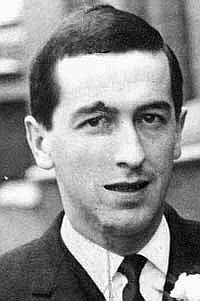
 seamus dubhghaill