seamus dubhghaill

Promoting Irish Culture and History from Little Rock, Arkansas, USA


Leave a comment

Birth of Richard Brinsley Sheridan, Playwright & Satirist

Richard Brinsley Butler Sheridan, Irish satirist, playwright and poet, and long-term owner of the London Theatre Royal, Drury Lane, is born on October 30, 1751, in Dublin, where his family has a house on then fashionable Dorset Street.

While in Dublin Sheridan attends the English Grammar School in Grafton Street. The family moves permanently to England in 1758 where he is a pupil at Harrow School from 1762 to 1768. After his period in Harrow School, his father employs a private tutor to directs his studies.

In 1775, Sheridan’s first play, The Rivals, is produced at London’s Covent Garden Theatre. It is a failure on its first night. He casts a more capable actor in the lead for its second performance, and it is a smash which immediately establishes the young playwright’s reputation and the favour of fashionable London. It has gone on to become a standard of English literature.

Shortly after the success of The Rivals, Sheridan and his father-in-law, Thomas Linley the Elder, a successful composer, produce the opera, The Duenna. This piece is accorded such a warm reception that it plays for seventy-five performances.

The following year, Sheridan, his father-in-law, and one other partner purchase a half-interest in the Drury Lane theatre and, two years later, buy out the other half. Sheridan is the manager of the theatre for many years and later becomes sole owner with no managerial role.

His most famous play, The School for Scandal (Drury Lane, May 8, 1777), is considered one of the greatest comedies of manners in English. It is followed by The Critic (1779), an updating of the satirical Restoration comedy The Rehearsal. He has a rivalry with his fellow playwright Richard Cumberland and includes a parody of Cumberland in The Critic. In 1778, Sheridan writes The Camp, which comments on the ongoing threat of a French invasion of Britain.

In 1780, Sheridan enters Parliament as the ally of Charles James Fox on the side of the American Colonials in the political debate of that year. He remains in Parliament for 32 years.

On February 24, 1809, despite the much-vaunted fire safety precautions of 1794, the theatre burns down. On being encountered drinking a glass of wine in the street while watching the fire, Sheridan is famously reported to have said, “A man may surely be allowed to take a glass of wine by his own fireside.”

When he fails to be re-elected to Parliament in 1812, his creditors close in on him and his last years are harassed by debt and disappointment. On hearing of his debts, the United States Congress offers Sheridan £20,000 in recognition of his efforts to prevent the American Revolutionary War. The offer is refused.

In December 1815 Sheridan becomes ill and is largely confined to bed. He dies in poverty on July 7, 1816, and is buried in the Poets’ Corner of Westminster Abbey. His funeral is attended by dukes, earls, lords, viscounts, the Lord Mayor of London, and other notables.

Leave a comment

Death of Richard Brinsley Sheridan, Playwright & Satirist

Richard Brinsley Butler Sheridan, Irish satirist, playwright, poet, and long-term owner of London‘s Theatre Royal, Drury Lane, dies on July 7, 1816, at 14 Savile Row, London.

Sheridan is born on October 30, 1751, in Dublin, where his family has a house on then fashionable Dorset Street. While in Dublin Sheridan attends the English Grammar School in Grafton Street. The family moves permanently to England in 1758 where he is a pupil at Harrow School from 1762 to 1768. After his period in Harrow School, his father employs a private tutor to directs his studies.

In 1775, Sheridan’s first play, The Rivals, is produced at London’s Covent Garden Theatre. It is a failure on its first night. He casts a more capable actor in the lead for its second performance, and it is a smash which immediately establishes the young playwright’s reputation and the favour of fashionable London. It has gone on to become a standard of English literature.

Shortly after the success of The Rivals, Sheridan and his father-in-law, Thomas Linley the Elder, a successful composer, produce the opera, The Duenna. This piece is accorded such a warm reception that it plays for seventy-five performances.

The following year, Sheridan, his father-in-law, and one other partner purchase a half-interest in the Drury Lane theatre and, two years later, buy out the other half. Sheridan is the manager of the theatre for many years and later becomes sole owner with no managerial role.

His most famous play, The School for Scandal (Drury Lane, May 8, 1777), is considered one of the greatest comedies of manners in English. It is followed by The Critic (1779), an updating of the satirical Restoration comedy The Rehearsal. He has a rivalry with his fellow playwright Richard Cumberland and includes a parody of Cumberland in The Critic. In 1778, Sheridan writes The Camp, which comments on the ongoing threat of a French invasion of Britain.

In 1780, Sheridan entered Parliament as the ally of Charles James Fox on the side of the American Colonials in the political debate of that year. He remains in Parliament for 32 years.

On February 24, 1809, despite the much-vaunted fire safety precautions of 1794, the theatre burns down. On being encountered drinking a glass of wine in the street while watching the fire, Sheridan is famously reported to have said, “A man may surely be allowed to take a glass of wine by his own fireside.”

When he fails to be re-elected to Parliament in 1812, his creditors close in on him and his last years are harassed by debt and disappointment. On hearing of his debts, the United States Congress offers Sheridan £20,000 in recognition of his efforts to prevent the American Revolutionary War. The offer is refused.

In December 1815 Sheridan becomes ill and is largely confined to bed. He dies in poverty on July 7, 1816, and is buried in the Poets’ Corner of Westminster Abbey. His funeral is attended by dukes, earls, lords, viscounts, the Lord Mayor of London, and other notables.


Leave a comment

Birth of Henry Vivien Pierpont Conyngham

henry-vivien-pierpont-conyngham

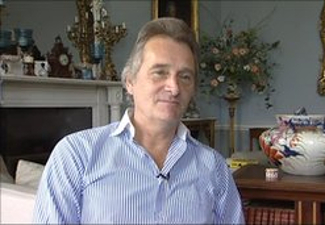
Henry Vivien Pierpont Conyngham, 8th Marquess Conyngham, Anglo-Irish nobleman who holds titles in the Peerages of Ireland and the United Kingdom, is born on May 25, 1951.

The eldest son of Frederick Conyngham, 7th Marquess Conyngham by his wife, Eileen Wren Newsom, he attends Harrow School before studying at Harvard University.

Styled Viscount Slane until 1974 and Earl of Mount Charles from 1974 until 2009, he succeeds his father in the marquessate and other titles in 2009. However, in the Republic of Ireland frequently, and erroneously, he remains referred to as Lord Mountcharles, his former courtesy title. He also inherits the U.K. peerage title Baron Minster, of Minster Abbey in the County of Kent, created in 1821 for his ancestor, the 1st marquess thereby giving the Marquesses Conyngham the automatic right to sit in the British House of Lords until 1999.

As Earl of Mount Charles, he unsuccessfully contests the Louth seat in 1992 for Fine Gael. In 1997 he stands for election to Seanad Éireann for Trinity College Dublin and runs again without success as a Fine Gael candidate for the European Parliament in 2004.

Lord and Lady Conyngham divide their time between Beauparc House and Slane Castle in County Meath. The latter is the family’s principal ancestral seat until it is badly damaged by fire in 1992. The castle has now been restored.

The Marquess Conyngham enjoys a high profile in Ireland as the author of a weekly column in the Daily Mirror. He has been dubbed the rock and roll aristocrat or the rock and roll peer owing to the very successful series of rock concerts he has hosted since 1981, held in the natural amphitheatre on the grounds of Slane Castle. These concerts have included performances by The Rolling Stones, Thin Lizzy, Queen, U2, Bob Dylan, Bruce Springsteen, David Bowie, Guns N’ Roses, Oasis, and Madonna. Lord Conyngham receives the Industry Award at the 2010 Meteor Awards. In his autobiography Public Space–Private Life: A Decade at Slane Castle, he describes his business career and the challenges of being an Anglo-Irish peer in modern Ireland, and how being Anglo-Irish has gradually become more accepted there.