seamus dubhghaill

Promoting Irish Culture and History from Little Rock, Arkansas, USA


Leave a comment

Death of Joan O’Hara, Stage, Film & Television Actress

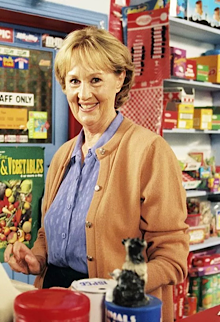
Joan O’Hara, Irish stagefilm and television actress, dies in Dublin on July 23, 2007. She is one of Ireland’s most popular actresses and is, at the time of her death, recognisable to television viewers as Eunice Dunstan, a gossip in Fair City on RTÉ One.

O’Hara is born in Rosses PointCounty Sligo, on October 10, 1930, the daughter of Major John Charles O’Hara, an officer in the British Corps of Royal Engineers and his wife, Mai (née Kirwan). One of her sisters, Mary (born 1935), is a soprano/harpist. Her brother Dermot (born 1934) now lives with his family in Canada. She attends the same Ursuline convent school as fellow actress and friend Pauline Flanagan.

O’Hara lives most of her life in Monkstown, Dublin, with a stay in London, with her husband, the poet and architect Francis J. Barry. The couple has four children: Siubhan, Jane, Guy, and Sebastian, an author/playwright, whose works include The Steward of Christendom, and the Booker-shortlisted novels A Long Long Way and The Secret Scripture. She is also a year-round sea-swimmer.

O’Hara is a member of the renowned Abbey Players and performs in many plays in the Abbey Theatre in Dublin, including those by Seán O’CaseyLady Gregory and W.B. Yeats. She appears as Maurya in the 1988 film The Dawning. She appears in a number of other films, including Ron Howard‘s Far and AwayDaFootfallsHome is the Hero and just before her death, How About You. In this her final film, she stars with Vanessa Redgrave and her friend Brenda Fricker. The strength of her performance and bravery in carrying it out is acknowledged by the cast and crew in a standing ovation.

More recently, O’Hara is best known for appearing in the popular Irish television soap opera Fair City, broadcast on RTÉ One. She joins the soap in 1994, portraying the character Eunice Dunstan until her death in 2007. Thus, she is described as both one of Ireland’s most popular actresses and as one of the finest actors of her generation on her death. She admires in particular Samuel BeckettFederico García Lorca and Ingmar Bergman. While she takes a no-nonsense approach to her craft, famously giving the advice that when in doubt, one should relate to the fireplace, she is educated at the Abbey School of Acting and has a deep appreciation and knowledge of theoretical approaches to acting and is an admirer of the European and American avant-garde. As actor Alan Stanford says after her death, “She had the most amazing energy. She was in the truest sense one of the last of the greats.”

Joan O’Hara Barry (she keeps her maiden name as her stage name) dies in Dublin on July 23, 2007, of complications from heart disease, aged 76. Her death is announced on RTÉ News the following day.

2 Comments

Birth of Eileen Crowe, Stage & Film Actress

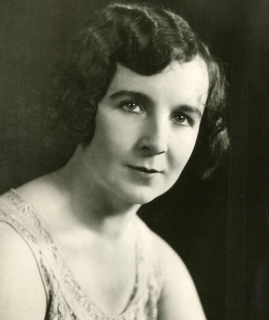
Eileen Aice Izabella Crowe, Irish actress, is born at Carlingford Terrace in Drumcondra, Dublin, on March 2, 1899.

Born Alice Izabella, she is one of ten children born to grocer Moses Crowe and Therese Eglinton. From an early age, she shows an interest in the theatre, and regularly attends productions in both the Gaiety and Abbey theatres. Having completed her education, she joins a convent but soon after abandons the idea of becoming a nun. In October 1921, she enters the Abbey School of Acting. She has a career with the Abbey Theatre from 1921 to 1970.

Upon her entry to the Abbey School of Acting, Crowe makes her debut in 1921 in the play The Revolutionist, taking the lead role of Nora Mangan. She plays her last role of Miss Hatty in Grogan and the Ferret, after which she retires. During nearly five decades, she stars in many plays, some of which include The Marriage of Columbine (1921) and Juno and the Paycock (1924). Between 1931 and 1953, she appears in the Abbey Theatre productions of plays by Irish playwright Teresa Deevy including A Disciple (1931), Katie Roche (1936, 1937, 1949, 1953), Temporal Powers (1932, 1937) and The Reapers (1930).

Following her film debut in 1925 in The Land of Her Fathers, Crowe appears in many films between 1936 and 1964 including The Plough and the Stars (1937), The Quiet Man (1952), Home is the Hero (1959) and Girl with Green Eyes (1964), her last film appearance.

Also in 1964, Crowe appears in the Aldwych Theatre‘s production of Juno and the Paycock in London. She works in the Abbey for the vast majority of her career, except for when she is on a six-month tour for Peg O’ My Heart, touring Northern Ireland and England.

In 1924, when the play Grasshopper is being produced, Crowe meets her husband, Peter Judge, also known as F. J. McCormick. They are married in 1925 and the marriage produces a daughter and a son.

Crowe dies at her home in Upper Rathmines Road, Dublin, on May 8, 1978, at the age of 79. She is buried beside her husband in Dean’s Grange Cemetery in Deansgrange, Dún Laoghaire–Rathdown, County Dublin.


Leave a comment

Birth of Joan O’Hara, Actress of Stage, Film & Television

Joan O’Hara, Irish stage, film and television actress, is born in Rosses Point, County Sligo, on October 10, 1930. She is one of Ireland’s most popular actresses and is, at the time of her death, recognisable to television viewers as Eunice Dunstan, a gossip in Fair City on RTÉ One.

O’Hara is born and raised in Rosses Point, the daughter of Major John Charles O’Hara, an officer in the British Corps of Royal Engineers and his wife, Mai (née Kirwan). One of her sisters, Mary (born 1935), is a soprano/harpist. Her brother Dermot (born 1934) now lives with his family in Canada. She attends the same Ursuline convent school as fellow actress and friend Pauline Flanagan.

O’Hara lives most of her life in Monkstown, County Dublin, with a stay in London, with her husband, the poet and architect Francis J. Barry. The couple has four children: Siubhan, Jane, Guy, and Sebastian, an author/playwright, whose works include The Steward of Christendom, and the Booker-shortlisted novels A Long Long Way and The Secret Scripture. She is also a year-round sea-swimmer.

O’Hara is a member of the renowned Abbey Players and performs in many plays in the Abbey Theatre in Dublin, including those by Seán O’Casey, Lady Gregory and W.B. Yeats. She appears as Maurya in the 1988 film The Dawning. She appears in a number of other films, including Ron Howard‘s Far and Away, Da, Footfalls, Home is the Hero and just before her death, How About You. In this her final film, she stars with Vanessa Redgrave and her friend Brenda Fricker. The strength of her performance and bravery in carrying it out is acknowledged by the cast and crew in a standing ovation.

More recently, O’Hara is best known for appearing in the popular Irish television soap opera Fair City, broadcast on RTÉ One. She joins the soap in 1994, portraying the character Eunice Dunstan until her death in 2007. Thus, she is described as both one of Ireland’s most popular actresses and as one of the finest actors of her generation on her death. She admires in particular Samuel Beckett, Federico García Lorca and Ingmar Bergman. While she takes a no-nonsense approach to her craft, famously giving the advice that when in doubt, one should relate to the fireplace, she is educated at the Abbey School of Acting and has a deep appreciation and knowledge of theoretical approaches to acting and is an admirer of the European and American avant-garde. As actor Alan Stanford said after her death, “She had the most amazing energy. She was in the truest sense one of the last of the greats.”

Joan O’Hara Barry (she keeps her maiden name as her stage name) dies in Dublin on July 23, 2007, of complications from heart disease, aged 76. Her death is announced on RTÉ News the following day.