seamus dubhghaill

Promoting Irish Culture and History from Little Rock, Arkansas, USA


Leave a comment

Birth of Edmund Henry Pery, 1st Earl of Limerick

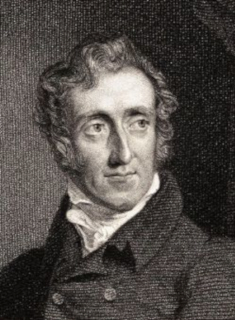
Edmund Henry Pery, 1st Earl of Limerick PC, Irish peer and politician styled Lord Glentworth between 1794 and 1800 and Viscount Limerick until 1803, is born in Limerick, County Limerick, on January 8, 1758.

Pery is the son of William Cecil Pery, 1st Baron Glentworth, and his first wife, Jane Walcott, daughter of John Minchin Walcott. He is educated at Trinity College Dublin (TCD). He marries Alice Mary Ormsby, the daughter of Henry Ormsby of County Mayo, by his wife Mary Hartstonge, in 1783, and they have at least eight children. Alice Mary is the heiress of her uncle, Sir Henry Hartstonge, 3rd Baronet, who leaves her substantial property in the south of Ireland.

Pery is elected to the Parliament of Ireland as the Member of Parliament for Limerick City in 1786 and holds the seat until 1794, when he inherits his father’s barony and takes his seat in the Irish House of Lords. As a politician, he is a vocal Unionist. He holds the office of Keeper of the Signet and Privy Seal of Ireland between 1795 and 1797. In 1797, he is invested as a Privy Counsellor. He subsequently holds the office of Clerk of the Crown and Hanaper of Ireland between 1797 and 1806. In 1800, he is created Viscount Limerick of the City of Limerick.

Following the Acts of Union 1800, Pery becomes an Irish representative peer, sitting in the House of Lords between 1801 and 1844. He is created Earl of Limerick in the Peerage of Ireland on January 1, 1803, in recognition of his vocal and persistent support for the Union. In addition, he is created Baron Foxford of Stackpole Court in the Peerage of the United Kingdom on August 11, 1815, giving him and his descendants a permanent seat in the House of Lords. During this part of his life, he lives at South Hill Park, Berkshire, England.

Pery dies on December 7, 1844, at Bracknell, Bracknell Forest Borough, Berkshire, England. He is buried at St. Mary’s Cathedral, Limerick. His wife, Alice Mary, dies on June 13, 1850, in Marylebone, City of Westminster, Greater London, England. She is buried alongside her husband in Limerick.

Pery’s eldest son and heir, Henry Hartstonge Pery, Viscount Glentworth, predeceases him on August 7, 1834, and thus Pery is succeeded in his titles by Henry’s eldest son, William Henry Tenison Pery. One of Pery’s daughters, Theodosia, marries the Whig politician and Chancellor of the Exchequer, Thomas Spring Rice, 1st Baron Monteagle of Brandon.
Leave a comment

Birth of Politician Henry Welbore Agar-Ellis

henry-welbore-agar-ellis

Henry Welbore Agar-Ellis, 2nd Viscount Clifden, Irish politician styled The Honourable Henry Agar between 1776 and 1789, is born Henry Welbore Agar at Gowran Castle, Gowran, County Kilkenny on January 22, 1761. He is perhaps the only person to sit consecutively in four different Houses of Parliament – the two in Ireland and the two in England.

Agar is the eldest son of James Agar, 1st Viscount Clifden, son of Henry Agar and Anne, daughter of Welbore Ellis, Bishop of Meath, and sister of Welbore Ellis, 1st Baron Mendip. His mother is Lucia, daughter of Colonel John Martin, of Dublin. He is the nephew of Charles Agar, 1st Earl of Normanton.

Agar is returned to the Irish House of Commons for both Gowran and Kilkenny County in 1783, but chooses to sit for the latter, a seat he holds until 1789, when he succeeds his father in the Irish viscountcy and enters the Irish House of Lords. He is appointed Clerk of the Privy Council of Ireland in 1785, which he remains until 1817.

In 1793 Agar is elected to the House of Commons of the United Kingdom as one of two representatives for Heytesbury. He succeeds his great-uncle Lord Mendip as second Baron Mendip in 1802 according to a special remainder in the letters patent. This is an English peerage and forces him to resign from the House of Commons and enter the House of Lords. Two years later he assumes by Royal licence the surname of Ellis in lieu of Agar.

Lord Clifden marries Lady Caroline , daughter of George Spencer, 4th Duke of Marlborough, in 1792. His only son, George, becomes a successful politician and is created Baron Dover in his father’s lifetime, but predeceases his father. Lady Clifden dies at the age of 50 at Blenheim Palace in November 1813. Lord Clifden remains a widower until his death at the age of 75 at Hanover Square, Mayfair, London, on July 13, 1836. He is succeeded in his titles by his grandson Henry, the eldest son of Lord Dover.


Leave a comment

Ratification of the Anglo-Irish Treaty

anglo-irish-treaty-negotiatorsThe Anglo-Irish Treaty is ratified by the Parliament of the United Kingdom on December 16, 1921. It is ratified by the British House of Commons by a vote of 401 to 58. On the same day the House of Lords votes in favour by 166 to 47.

The Anglo-Irish Treaty, commonly known as “The Treaty” and officially the “Articles of Agreement for a Treaty Between Great Britain and Ireland,” is an agreement between the government of the United Kingdom of Great Britain and Ireland and representatives of the Irish Republic that concludes the Irish War of Independence. It provides for the establishment of the Irish Free State within a year as a self-governing dominion within the “community of nations known as the British Empire,” a status “the same as that of the Dominion of Canada.” It also provides Northern Ireland, which had been created by the Government of Ireland Act 1920, an option to opt out of the Irish Free State, which it exercises.

The agreement is signed in London on December 6, 1921, by representatives of the Government of the United Kingdom, which includes Prime Minister David Lloyd George, who is head of the British delegates, and by representatives of the Irish Republic including Michael Collins and Arthur Griffith. The Irish representatives have plenipotentiary status (negotiators empowered to sign a treaty without reference back to their superiors) acting on behalf of the Irish Republic, though the British government declines to recognise that status. As required by its terms, the agreement is ratified by “a meeting” of the members elected to sit in the House of Commons of Southern Ireland and separately by the British Parliament.

Éamon de Valera calls a cabinet meeting to discuss the treaty on December 8, where he comes out against the treaty as signed. The cabinet decides by four votes to three to recommend the treaty to Dáil Éireann on December 14. Though the treaty is narrowly ratified, the split leads to the Irish Civil War, which is won by the pro-treaty side.

The Irish Free State as contemplated by the treaty comes into existence when its constitution becomes law on December 6, 1922 by a royal proclamation giving the force of law to the Irish Free State Constitution Act 1922.

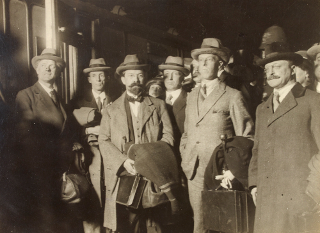
(Pictured: Members of the Irish negotiation committee returning to Ireland in December 1921)