seamus dubhghaill

Promoting Irish Culture and History from Little Rock, Arkansas, USA


Leave a comment

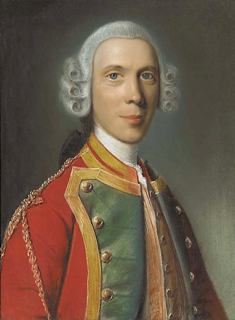
Death of Isaac Corry, Lawyer & Member of Parliament

Isaac Corry FRS, PC (I), PC, an Irish and British Member of Parliament and lawyer, dies in Merrion Square, Dublin, on May 15, 1813, his 60th birthday.

Corry is born on May 15, 1753, in Newry, County Down, the son of Edward Corry, sometime Member of Parliament, and Catharine Bristow. His cousin is the writer Catherine Dorothea Burdett. He is educated at The Royal School, Armagh, where his contemporaries include Robert Stewart, Viscount Castlereagh, and later at Trinity College, Dublin, from which he graduates in 1773. On October 18, 1771, he is admitted to the Middle Temple and called to the bar at King’s Inns in 1779.

Corry succeeds his father as Member of Parliament for Newry in 1776, sitting in the Irish House of Commons until the Acts of Union 1800. From 1782 to 1789 he serves as equerry to Prince Henry, Duke of Cumberland, being described in 1794 by Rt. Hon. Sylvester Douglas as “a well-bred man…He has no brogue…He once acted as a sort of groom of the bedchamber to the late Duke of Cumberland.” In 1798, he is also elected for Randalstown, but chooses not to sit and, in 1802, he is returned to the British House of Commons for Newry. He serves as a Whig at Westminster until 1806. It is written in 1783 that he would expect to enter high office, given that “he lives expensively and does not pursue his profession, which is the law.” In 1788 he becomes Clerk of the Irish Board of Ordnance. The following year he is appointed a commissioner of the revenue. Finally in 1799 he is appointed Chancellor of the Exchequer of Ireland and a Lord High Treasurer of Ireland in place of Sir John Parnell, who quarreled violently with William Pitt the Younger over the projected union, which he categorically refuses to support. In 1795 he becomes a Privy Councillor.

In 1802 Corry is dismissed from the Exchequer and replaced by John Foster (later Lord Oriel), he is awarded, however, £2,000 p.a. in compensation. In 1806 the changes in ownership of the Newry estates alters his position. The lands pass to a senior line of the Needham family and they support General Francis Needham, 1st Earl of Kilmorey, at the general election. Corry does not have the funds needed, in excess of £5000, to purchase a seat elsewhere. However, Lady Downshire is inclined to support the Grenville ministry and comes to a formal agreement with Corry to give him £1000 towards his expenses should he be successful in Newry, and, if not, to bring him in for another borough. He fails against the Needham interest in Newry, but a seat at Newport, Isle of Wight, is purchased for him, with £4000 from Lady Downshire, and he is appointed to the Board of Trade. Six months later Grenville’s ministry has fallen and there is another general election. Corry stands, again unsuccessfully, for Newry.

Corry is unmarried but has a long-term relationship with Jane Symms. They have three sons and three daughters. His daughter Ann marries Lt. Col. Henry Westenra, the brother of Robert Cuninghame, 1st Baron Rossmore. His residence in Newry is the Abbey Yard, now a school, and Derrymore House, Bessbrook, County Armagh, which he had inherited from his father and sold in 1810. It is now the property of the National Trust. During his life, a road is constructed from near the main entrance of Derrymore House around Newry and links up with the Dublin Road on the southern side of the town primarily for his use. This road subsequently becomes known as “The Chancellor’s Road,” as a result of his term as the Irish Chancellor of the Exchequer. A local legend has it that the road is constructed after an incident in which Corry’s stagecoach is stoned while passing through Newry by people angry at an unpopular window tax he had introduced. The road has retained this name, but it is cut in half by the Newry by-pass in the mid-1990s, however, as a result of works associated with the new A1 dual carriageway, the two-halves of the road are now reconnected.

Corry dies at his house in Merrion Square, Dublin, on May 15, 1813, his 60th birthday. He is buried in St. Patrick’s Cathedral, Dublin.


Leave a comment

James FitzGerald, Lord Ophaly, Wins Athy By-Election

At the Athy by-election on June 12, 1741, following the death of Sir Walter Dixon Borrowes, James FitzGerald, styled Lord Ophaly and later 1st Duke of Leinster, is returned. In the course of the election there is a duel between William Paul Warren and Jack Hardy, which leads to Hardy’s right hand and arm being shattered. It is thought that it might have to be amputated.

FitzGerald, an Anglo-Irish nobleman, soldier and politician, is the son of Robert FitzGerald, 19th Earl of Kildare, and Lady Mary, daughter of William O’Brien, 3rd Earl of Inchiquin.

FitzGerald is a member of the Irish House of Commons for Athy from the 1741 by-election until he succeeds his father as 20th Earl of Kildare in 1743. He is sworn of the Privy Council of Ireland in 1746 and in 1747, on the occasion of his marriage, he is created Viscount Leinster, of Taplow in the County of Buckingham, in the Peerage of Great Britain, and takes his seat in the British House of Lords that same year. From 1749 to 1755 he is one of the leaders of the Popular Party in Ireland and serves as the country’s Master-General of the Ordnance between 1758 and 1766, becoming Colonel of the Royal Irish Artillery in 1760. He is promoted to Major General in 1761 and to Lieutenant General in 1770.

In 1761 FitzGerald is created Earl of Offaly and Marquess of Kildare in the Peerage of Ireland and in 1766 he is further honoured when he is made Duke of Leinster, becoming by this time the Premier Duke, Marquess and Earl in the Peerage of Ireland.

FitzGerald marries the 15-year-old Lady Emily Lennox, daughter of Charles Lennox, 2nd Duke of Richmond, and one of the famous Lennox Sisters, in London on February 7, 1747. She is a great-granddaughter of King Charles II and is therefore a distant fifth cousin of King George III. Both of them are descended from King James VI and I. The couple has nineteen children.

FitzGerald dies at Leinster House, Dublin, on November 19, 1773, aged 51, and is buried in the city’s Christ Church Cathedral. He is succeeded by his second (but eldest surviving) son, William, Marquess of Kildare. The Duchess of Leinster causes a minor sensation by marrying her lover William Ogilvie in 1774 but continues to be known as The Dowager Duchess of Leinster. She has a further three children by him. She dies in London on March 27, 1814, aged 82.

In 1999, Irish Screen, BBC America and WGBH produce Aristocrats, a six-part limited television series based on the lives of Emily Lennox and her sisters. FitzGerald is portrayed by Ben Daniels.


Leave a comment

Birth of Isaac Corry, Lawyer & Member of Parliament

Isaac Corry FRS, PC (I), PC, an Irish and British Member of Parliament and lawyer, is born on May 15, 1753, in Newry, County Down.

Corry is the son of Edward Corry, sometime Member of Parliament, and Catharine Bristow. His cousin is the writer Catherine Dorothea Burdett. He is educated at the Royal School, Armagh, where his contemporaries include Robert Stewart, Viscount Castlereagh, and later at Trinity College, Dublin, from which he graduates in 1773. On October 18, 1771, he is admitted to the Middle Temple and called to the bar at King’s Inns in 1779.

Corry succeeds his father as Member of Parliament for Newry in 1776, sitting in the Irish House of Commons until the Acts of Union 1800. From 1782 to 1789 he serves as equerry to Prince Henry, Duke of Cumberland, being described in 1794 by Rt. Hon. Sylvester Douglas as “a well-bred man…He has no brogue…He once acted as a sort of groom of the bedchamber to the late Duke of Cumberland.” In 1798, he is also elected for Randalstown, but chooses not to sit and, in 1802, he is returned to the British House of Commons for Newry. He serves as a Whig at Westminster until 1806. It is written in 1783 that he would expect to enter high office, given that “he lives expensively and does not pursue his profession, which is the law.” In 1788 he becomes Clerk of the Irish Board of Ordnance. The following year he is appointed a commissioner of the revenue. Finally in 1799 he is appointed Chancellor of the Exchequer of Ireland and a Lord High Treasurer of Ireland in place of Sir John Parnell, who quarreled violently with William Pitt the Younger over the projected union, which he categorically refuses to support. In 1795 he becomes a Privy Councillor.

In 1802 Corry is dismissed from the Exchequer and replaced by John Foster (later Lord Oriel), he is awarded, however, £2,000 p.a. in compensation. In 1806 the changes in ownership of the Newry estates alters his position. The lands pass to a senior line of the Needham family and they support General Francis Needham, 1st Earl of Kilmorey, at the general election. Corry does not have the funds needed, in excess of £5000, to purchase a seat elsewhere. However, Lady Downshire is inclined to support the Grenville ministry and comes to a formal agreement with Corry to give him £1000 towards his expenses should he be successful in Newry, and, if not, to bring him in for another borough. He fails against the Needham interest in Newry, but a seat at Newport, Isle of Wight, is purchased for him, with £4000 from Lady Downshire, and he is appointed to the Board of Trade. Six months later Grenville’s ministry has fallen and there is another general election. Corry stands, again unsuccessfully, for Newry.

Corry is unmarried but has a long-term relationship with Jane Symms. They have three sons and three daughters. His daughter Ann marries Lt. Col. Henry Westenra, the brother of Robert Cuninghame, 1st Baron Rossmore. His residence in Newry is the Abbey Yard, now a school, and Derrymore House, Bessbrook, County Armagh, which he had inherited from his father and sold in 1810. It is now the property of the National Trust. During his life, a road is constructed from near the main entrance of Derrymore House around Newry and links up with the Dublin Road on the southern side of the town primarily for his use. This road subsequently becomes known as “The Chancellor’s Road,” as a result of his term as the Irish Chancellor of the Exchequer. A local legend has it that the road is constructed after an incident in which Corry’s stagecoach is stoned while passing through Newry by people angry at an unpopular window tax he had introduced. The road has retained this name, but it is cut in half by the Newry by-pass in the mid-1990s, however, as a result of works associated with the new A1 dual carriageway, the two-halves of the road are now reconnected.

Corry dies at his house in Merrion Square, Dublin, on May 15, 1813, his 60th birthday. He is buried in St. Patrick’s Cathedral, Dublin.