Whiteside is the son of William Whiteside, a clergyman of the Church of Ireland. His father is transferred to the parish of Rathmines but dies when his son is only two years old, leaving his widow in straitened circumstances. She schools her son personally in his early years. He is educated at Trinity College Dublin, enters the Middle Temple, and is called to the Irish bar in 1830.
Whiteside very rapidly acquires a large practice, and after taking silk in 1842 he gains a reputation for forensicoratory surpassing that of all his contemporaries and rivalling that of his most famous predecessors of the 18th century. He defends Daniel O’Connell in the state trial of 1843, and William Smith O’Brien in 1848. His greatest triumph is in the Yelverton case in 1861. He is elected Member of Parliament (MP) for Enniskillen in 1851, and in 1859 becomes an MP for Dublin University. In Parliament, he is no less successful as a speaker than at the bar, and in 1852 is appointed Solicitor-General for Ireland in the first administration of Prime MinisterEdward Smith-Stanley, becoming Attorney-General for Ireland in 1858, and again in 1866. In the same year he is appointed Lord Chief Justice of the Queen’s Bench, having previously turned down offers of a junior judgeship. His reputation as a judge does not equal his reputation as an advocate, although he retains his great popularity. In 1848, after a visit to Italy, he publishes Italy in the Nineteenth Century. In 1870 he collects and republishes some papers contributed many years before to periodicals, under the title Early Sketches of Eminent Persons.
In July 1833, Whiteside marries Rosetta, daughter of William and Rosetta Napier, and sister of Sir Joseph Napier, Lord Chancellor of Ireland. Like his brother-in-law, Joseph, he is devoted to the Church of Ireland and strongly opposes its disestablishment.
Whiteside is universally well-liked, being noted for charm, erudition and a sense of humour. Barristers who practise before him say that his charm, courtesy and constant flow of jokes make appearing in his Court a delightful experience.
Whiteside’s last years on the bench ware affected by ill health. He dies on November 25, 1876, at Brighton, Sussex, England. His brother-in-law, from whom he is estranged in later years, is overcome with grief at his death and collapses at the funeral. He is buried at Mount Jerome Cemetery in Dublin.
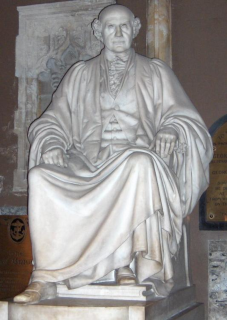
(Pictured: Statue of James Whiteside by Albert Bruce-Joy on display in St. Patrick’s Cathedral)
Christian is considered one of the best Irish lawyers of his time, but as a judge, he regularly courts controversy. His bitter and sarcastic temper and open contempt for most of his colleagues leads to frequent clashes both in Court and in the Press. Though he is rebuked for misconduct several times by the House of Commons, no serious thought seems to be given to removing him from office.
Christian is the third son of George Christian, a solicitor, and his wife Margaret Cormack. He is educated at the Trinity College Dublin, enters Gray’s Inn in 1831 and is called to the Bar of Ireland in 1834. He marries Mary Thomas in 1859 and they have four sons and four daughters. He lives at Ravenswell, Bray, County Wicklow.
Christian’s early years at the Bar are not successful, and he admits to being near to despair at times about his prospects. His practice lays in the Court of Chancery (Ireland). Chancery procedures are extremely complex, and he finds them at first almost unintelligible. Gradually he masters the intricacies of Chancery practice and becomes a leader of the Bar, taking silk in 1841. It is said that his expertise in Chancery procedures leaves even the Lord Chancellor himself quite unable to argue with him.
Christian is appointed Law Adviser to the Lord Lieutenant of Ireland, an influential post which involves assisting the Attorney General and Solicitor General in advising the Crown in 1850, but resigns after only a few months, on the ground that it interferes with his private practice. He is appointed Third Sergeant later the same year but resigns in 1855, allegedly because he is disappointed at not receiving further promotion. Promotion does in time come his way. He is appointed Solicitor General the following year and a judge of the Court of Common Pleas in 1858. He is unusual in having no strong political loyalty. It is said that his political allegiance is known only to himself.
As a judge of the Court of Common Pleas, Christian gets on well with his colleagues, and any dissenting judgements he writes are short and courteous. It is after his appointment as a Lord Justice of Appeal in Chancery in 1867 that his behaviour begins to attract unfavourable comment, as he goes out of his way to court controversy on a wide variety of topics.
Christian develops a deep contempt for the Irish Reports, castigating them in open Court as “nonsense,” “worthless rubbish” and “disjointed twaddle.” All attempts by colleagues to get him to moderate his language fail. He threatens to refuse to let his judgements be reported, and in his last years, his relations with the law reporters are so bad that they simply publish their uncorrected notes of his decisions rather than sending them to the judge for revision.
In 1867 a new office of Vice-Chancellor for Ireland is created. It is filled throughout its existence by one man, Hedges Eyre Chatterton, who retires in 1904. Despite his length of service, he is not considered a judge of the first rank, and Christian evidently combines feelings of professional contempt with a personal dislike for him. Christian usually votes on appeals to overturn his judgments, and frequently adds personal attacks on Chatterton, despite protests from his colleagues. The feud between the two judges reaches the Press in 1870 when The Irish Times, without naming them, quotes one judge’s opinion that another is “lazy, stupid, conceited and dogmatic.” Although Christian denies it, it is universally believed that he is the author of the remarks, which are aimed at Chatterton. Chatterton is fortunate in enjoying the support of the Lord Chancellor of Ireland, Thomas O’Hagan, 1st Baron O’Hagan, who is also on bad terms with Christian.
Christian had worked well with Abraham Brewster, O’Hagan’s predecessor, whom he respected. For O’Hagan on the other hand, he feels the same dislike and contempt which he felt for Chatterton. Although they served together in the Court of Common Pleas without any obvious conflict, Christian considers O’Hagan’s appointment as Lord Chancellor to be a purely political act, and that he is unfit to be either head of the judiciary or an appeal judge in Chancery. He also complains of what he sees as O’Hagan’s laziness, which puts an extra burden on him. During O’Hagan’s first term as Chancellor, Christian subjects him to constant criticism. Unwisely he does not confine these attacks to the Courtroom but publishes numerous pamphlets, which is widely seen as improper conduct in a judge. When O’Hagan becomes Chancellor for the second time, a friend congratulates him on escaping from “the misnamed Christian” who had retired two years earlier.
It is probably Christian’s feud with O’Hagan which leads to his extraordinary decision to publicly attack the House of Lords for reversing, by a majority including O’Hagan, his judgment in O’Rorke v Bolingbroke. In a letter to The Times in 1877, whose content has been described as “astounding,” he questions the Law Lords knowledge of equity. While he singles out Lord Blackburn for criticism, it is likely that he also intends to harm O’Hagan’s reputation.
A major source of contention between Christian and O’Hagan is the Landlord and Tenant (Ireland) Act 1870, which O’Hagan steers through Parliament. The Act provides for compensation for tenants in the event of eviction. Christian, though he is not a landowner and is not as a rule much interested in politics, objects strongly to the policy of the Act, which he believes to be most unjust to landlords. His attacks from the Bench on the Act lead to serious rebukes both from the House of Commons and from the Press, which comment on the impropriety of a judge attacking an Act of Parliament, which it is his duty to enforce.
O’Hagan’s retirement does nothing to lessen Christian’s ill-temper. Other judges come in for attack, including Lord Chief Justice of IrelandJames Whiteside, whom he accuses of speaking constantly on matters of which he is ignorant. In his later years, he seems to be a lonely and isolated figure. His vigorous opposition to the Supreme Court of Judicature (Ireland) Act 1877 is entirely unsuccessful. A feeling of isolation may partly explain his decision to retire, though certainly his increasing deafness also plays a part.
V.T.H. Delaney praises Christian as a great master of equity, a man of great learning and a judge with a great desire to see justice done, but he does not deny that Christian loved controversy. Even his supporters spoke of “arrows too sharply pointed.” Critics spoke of his “spirit of personal sarcasm, cold, keen and cynical.” No doubt Christian was genuinely concerned to uphold high standards of judicial conduct, but as Daire Hogan points out, his own conduct struck most observers as far more improper than anything he complained of in others.


 seamus dubhghaill