
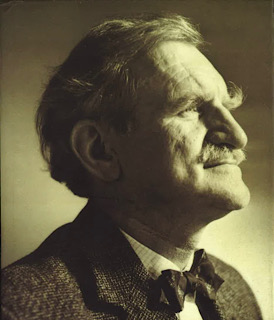
Sam Hanna Bell, Scottish-born Northern Irish novelist, short story writer, playwright, and broadcaster, is born in Glasgow to Ulster Scots parents on October 16, 1909.
Following the sudden death of his father in 1918, Bell is brought at the age of seven to live near Raffery in the Strangford Lough area of County Down. He lives with his mother and two brothers in a cottage with no electricity or running water. This is the setting of his acclaimed novel of Ulster rural life, December Bride (1951). He moves to Belfast in 1921, where he works at a variety of manual jobs before securing a post with the BBC in 1945. He is a co-founder of the left-leaning literary journal, Lagan, in 1943.
Bel’s first collection of short stories, Summer Loanen and Other Stories, is published in 1943. His novels include December Bride (1951), The Hollow Ball (1961), A Man Flourishing (1973) and Across the Narrow Sea (1987).
Bell is recruited to the BBC in 1946, along with fellow writer, W. R. Rodgers, by poet and radio producer, Louis MacNeice. Some of his work as a radio producer is highly innovative. This is Northern Ireland, An Ulster Journey (1949) is a classic radio feature incorporating actuality, poetry, music and narration. In later work, Bell incorporates the voices of “ordinary people” in his attempt to paint a picture of Ulster as rooted in the lives and traditions of its people. His collaboration with W. R. Rodgers, The Return Room (1955), is one of the most important post-war Irish radio features and shows the influence of Dylan Thomas on Rodgers, the poet.
In the 1940s, along with his BBC colleague John Boyd, the essayist (and anti-Partition activist) Denis Ireland, actors Joseph Tomelty and J. G. Devlin, poets John Hewitt and Robert Greacen, and the Rev. Arthur Agnew, Bell is one of an intellectual set, “the club of ten” Linen Hall Library members that meets weekly next to the library in Campbell’s cafe.
In 1977, Bell is honoured with an MBE in recognition of his contribution to the cultural life of Northern Ireland.
December Bride is made into an acclaimed film in 1990. Reviewing the film, The Irish Times columnist and literary critic Fintan O’Toole says it is “not just a remarkable artistic achievement, but also a remarkable political one…restoring a richness and complexity to a history that has been deliberately narrowed.” In April 1999, December Bride is selected by award-winning novelist and critic Colm Tóibín and publisher, writer and critic Dame Carmen Callil, for inclusion in The Modern Library: The 200 Best Novels in English Since 1950 (Picador).
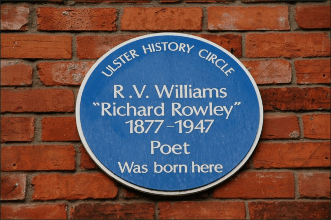
Bell dies on February 9, 1990, at 190 King’s Road, Knock, Belfast, aged 80, shortly before the premiere of the film of December Bride. On October 15, 2009, the eve of what would have been Bell’s centenary, a blue plaque is unveiled by Northern Ireland Minister of Culture, Arts and Leisure Nelson McCausland on the Belfast house where Bell had written December Bride. Such plaques are erected to commemorate and honour notable people.
 seamus dubhghaill