seamus dubhghaill

Promoting Irish Culture and History from Little Rock, Arkansas, USA


Leave a comment

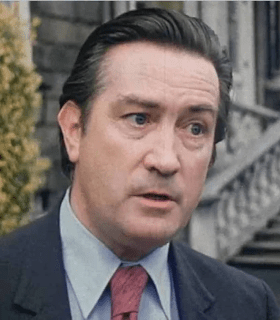
Death of Justin Keating, Politician, Broadcaster & Journalist

Justin Pascal Keating, Irish Labour Party politician, broadcaster, journalist, lecturer and veterinary surgeon, dies at Ballymore Eustace, County Kildare, on December 31, 2009. In later life he is president of the Humanist Association of Ireland.

Keating is twice elected to Dáil Éireann and serves in Liam Cosgrave‘s cabinet as Minister for Industry and Commerce from 1973 to 1977. He also gains election to Seanad Éireann and is a Member of the European Parliament (MEP). He is considered part of a “new wave” of politicians at the time of his entry to the Dáil.

Keating is born in Dublin on January 7, 1930, a son of the noted painter Seán Keating and campaigner May Keating. He is educated at Sandford Park School, and then at University College Dublin (UCD) and the University of London. He becomes a lecturer in anatomy at the UCD veterinary college from 1955 until 1960 and is senior lecturer at Trinity College Dublin from 1960 until 1965. He is RTÉ‘s head of agricultural programmes for two years before returning to Trinity College in 1967. While at RTÉ, he scripts and presents Telefís Feirme, a series for the agricultural community, for which he wins a Jacob’s Award in 1966.

In the 1950s and 1960s Keating is a member of the communist Irish Workers’ Party. He is first elected to the Dáil as a Labour Party Teachta Dála (TD) for the Dublin County North constituency at the 1969 Irish general election. From 1973 to 1977 he serves in the National Coalition government under Liam Cosgrave as Minister for Industry and Commerce. In 1973 he is appointed a Member of the European Parliament from the Oireachtas, serving on the short-lived first delegation.

During 1975 Keating introduces the first substantial legislation for the development of Ireland’s oil and gas. The legislation is modelled on international best practice and intended to ensure the Irish people would gain substantial benefit from their own oil and gas. Under his legislation the state could by right acquire a 50% stake in any viable oil and gas reserves discovered. Production royalties of between 8% and 16% with corporation tax of 50% would accrue to the state. The legislation specifies that energy companies would begin drilling within three years of the date of the issue of an exploration license.

Keating loses his Dáil seat at the 1977 Irish general election but is subsequently elected to Seanad Éireann on the Agricultural Panel, serving there until 1981. He briefly serves again in the European Parliament from February to June 1984 when he replaces Séamus Pattison.

In the aftermath of President of Iran Mahmoud Ahmadinejad‘s “World Without Zionism” speech in 2005, Keating publishes an op-ed in The Dubliner magazine, expressing his views on Israel. The article starts by claiming that “the Zionists have absolutely no right in what they call Israel.” He then proceeds to explain why he thinks Israel has no right to exist, claiming that the Ashkenazi Jews are descended from Khazars.

Keating dies at Ballymore Eustace, County Kildare, on December 31, 2009, at the age of 79, one week before his 80th birthday. Tributes come from the leaders of the Labour Party and Fine Gael at the time of his death, Eamon Gilmore and Enda Kenny, as well as former Fine Gael leader and Taoiseach John Bruton.


Leave a comment

Death of Seán Keating, Romantic-Realist Painter

Seán Keating, Irish romantic-realist painter who paints some iconic images of the Irish War of Independence and of the early industrialization of Ireland, dies on December 21, 1977, at the Adelaide Hospital in Dublin.

Keating is born in Limerick, County Limerick on September 28, 1889. He studies drawing at the Limerick Technical School before a scholarship arranged by William Orpen allows him to go study at the Metropolitan School of Art in Dublin at the age of twenty. Over the next few years, he spends two weeks or so during the late summer on the Aran Islands and his many portraits of island people depict them as rugged heroic figures.

In 1914 he wins the RDS Taylor award with a painting titled The Reconciliation. The prize includes £50.00 which allows him to go to London to work as Orpen’s studio assistant in 1915. In late 1915 or early 1916, he returns to Ireland where he documents the Irish War of Independence and the subsequent Irish Civil War. Examples include Men of the South (1921–22) which shows a group of Irish Republican Army (IRA) men ready to ambush a military vehicle and An Allegory (first exhibited in 1924), in which the two opposing sides in the Irish Civil War are seen to bury the tri-colour covered coffin amid the roots of an ancient tree. The painting includes a self-portrait of the artist.

Keating is elected an Associate of the Royal Hibernian Academy (RHA) in 1918, and a full member in 1923. One of the cardinal achievements of the Irish Free State in the 1920s is the building, in partnership with Siemens, of a hydro-electric power generator at Ardnacrusha, near Limerick. Between 1926 and 1927, at his own volition, he produces a considerable number of paintings related to this scheme. He exhibits several examples of the paintings in the RHA exhibitions in 1927 and 1928. Most of the paintings are now in the collection of ESB Group.

In 1936 group of prominent Limerick politicians, artists and patrons establish the first Limerick City Collection of Art from various donations and bequests. Keating is part of this artist-led initiative to form a municipal art gallery in Limerick similar to those already in Dublin and Cork. The collection is formed primarily out of donations and bequests. As a pivotal member of the committee, Keating himself donates many works to the collection which is first exhibited as a municipal collection in the Savoy Cinema, Limerick City on November 23, 1937. It is not until 1948 that an extension to the rear of Limerick Free Library and Museum becomes the home to the City Collection as the Limerick Free Art Gallery. In 1985 the Library and Museum are transferred to larger buildings.

In 1939 Keating is commissioned to paint a mural for the Irish pavilion at the New York World’s Fair. He is President of the RHA from 1950 to 1962 and shows at the annual exhibition for 61 years from 1914. Although he is an intellectual painter in the sense that he consciously sets out to explore the visual identity of the Irish nation, and his paintings show a very idealised realism, he fears that the modern movement will bring back a decline in artistic standards. Throughout his career, he exhibits nearly 300 works at the RHA and also shows at the Oireachtas.

Seán Keating dies on December 21, 1977 at the Adelaide Hospital in Dublin and is buried at Cruagh Cemetery, Rathfarnham. The 1978 RHA Exhibition features a small memorial collection of his work.

Posthumous exhibitions of his work are mounted by The Grafton Gallery, Dublin (1986) and the Electricity Supply Board (1987). Sean Keating – The Pilgrim Soul, a documentary presented and written by his son Justin Keating, airs on RTÉ in 1996.

(Pictured: Photograph of Keating’s “An Allegory” painted between 1922 and 1924. The painting represents Keating’s own disillusionment and loss of idealism resulting from the outbreak of the Irish Civil War. The only figure of the group addressing the observer is a self-portrait of the artist.)


Leave a comment

Birth of Seán Keating, Romantic-Realist Painter

sean-keating-an-allegory

Seán Keating, Irish romantic-realist painter who painted some iconic images of the Irish War of Independence and of the early industrialization of Ireland, is born in Limerick, County Limerick on September 28, 1889.

Keating studies drawing at the Limerick Technical School before a scholarship arranged by William Orpen allows him to go study at the Metropolitan School of Art in Dublin at the age of twenty. Over the next few years, he spends two weeks or so during the late summer on the Aran Islands and his many portraits of island people depict them as rugged heroic figures.

In 1914 he wins the RDS Taylor award with a painting titled The Reconciliation. The prize includes £50.00 which allows him to go to London to work as Orpen’s studio assistant in 1915. In late 1915 or early 1916, he returns to Ireland where he documents the Irish War of Independence and the subsequent Irish Civil War. Examples include Men of the South (1921–22) which shows a group of Irish Republican Army (IRA) men ready to ambush a military vehicle and An Allegory (first exhibited in 1924), in which the two opposing sides in the Irish Civil War are seen to bury the tri-colour covered coffin amid the roots of an ancient tree. The painting includes a self-portrait of the artist.

Keating is elected an Associate of the Royal Hibernian Academy (RHA) in 1918, and a full member in 1923. One of the cardinal achievements of the Irish Free State in the 1920s is the building, in partnership with Siemens, of a hydro-electric power generator at Ardnacrusha, near Limerick. Between 1926 and 1927, at his own volition, he produces a considerable number of paintings related to this scheme. He exhibits several examples of the paintings in the RHA exhibitions in 1927 and 1928. Most of the paintings are now in the collection of ESB Group.

In 1936 group of prominent Limerick politicians, artists and patrons establish the first Limerick City Collection of Art from various donations and bequests. Keating is part of this artist-led initiative to form a municipal art gallery in Limerick similar to those already in Dublin and Cork. The collection is formed primarily out of donations and bequests. As a pivotal member of the committee, Keating himself donates many works to the collection which is first exhibited as a municipal collection in the Savoy Cinema, Limerick City on November 23, 1937. It is not until 1948 that an extension to the rear of Limerick Free Library and Museum becomes the home to the City Collection as the Limerick Free Art Gallery. In 1985 the Library and Museum are transferred to larger buildings.

In 1939 Keating is commissioned to paint a mural for the Irish pavilion at the New York World’s Fair. He is President of the RHA from 1950 to 1962, and shows at the annual exhibition for 61 years from 1914. Although he is an intellectual painter in the sense that he consciously sets out to explore the visual identity of the Irish nation, and his paintings show a very idealised realism, he fears that the modern movement will bring back a decline in artistic standards. Throughout his career, he exhibits nearly 300 works at the RHA and also shows at the Oireachtas.

Seán Keating dies on December 21, 1977 at the Adelaide Hospital in Dublin and is buried at Cruagh Cemetery, Rathfarnham. The 1978 RHA Exhibition features a small memorial collection of his work.

Posthumous exhibitions of his work are mounted by The Grafton Gallery, Dublin (1986) and the Electricity Supply Board (1987). Sean Keating – The Pilgrim Soul, a documentary presented and written by his son Justin Keating, airs on RTÉ in 1996.

(Pictured: Photograph of Keating’s “An Allegory” painted between 1922 and 1924. The painting represents Keating’s own disillusionment and loss of idealism resulting from the outbreak of the Irish Civil War. The only figure of the group addressing the observer is a self-portrait of the artist.)