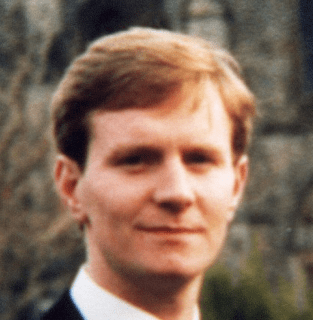
Kelly is the oldest child in a Roman Catholic family of five. He lives in Carrickfergus until he is sixteen, at which time the family returns to live in Dungannon. His uncle is the Irish Republican activist and elected official Liam Kelly.
Kelly becomes a member of the Provisional Irish Republican Army at the beginning of the 1970s and becomes one of the most experienced IRA men in County Tyrone. He is arrested in February 1982 based on testimony from an informant named Patrick McGurk but is released in October 1983 due to lack of evidence, after a trial that lasts fifteen minutes.
In 1985, Kelly becomes brigade commander in East Tyrone and begins developing tactics for attacking isolated Royal Ulster Constabulary (RUC) bases in his area. Under his leadership the East Tyrone Brigade becomes the most active IRA unit.
In 1986, Kelly attends the IRA Army Convention where the main topic of discussion is the principle of abstentionism. Gerry Adams and others argue that the abstentionist rule should be dropped and the Provisional movement should become involved in constitutional politics. Kelly votes against dropping the rule, and a rift with the majority of the IRA Army Council ensues.
Kelly is killed by the Special Air Service (SAS) on May 8, 1987, while he is participating in an attack on Loughgall police station, in which seven other IRA men, Pádraig McKearney, Declan Arthurs, Seamus Donnelly, Tony Gormley, Eugene Kelly, Jim Lynagh, and Gerard O’Callaghan, also die. His funeral in Dungannon is one of the largest in Tyrone during the Troubles.
Kelly is buried in Edendork Cemetery, two miles from his home in Dungannon.
Richard Valentine Williams, who writes poetry, plays and stories under the pseudonym of Richard Rowley, is born on April 2, 1877, at 79 Dublin Road in Belfast, in what is now Northern Ireland.
At the age of sixteen, Rowley enters the family firm, McBride and Williams, which manufactures cotton handkerchiefs and eventually becomes its managing director. After the collapse of the company in 1931 he is Chairman of the Northern Ireland Unemployment Assistance Board. His early poems, in The City of Refuge and Other Poems (1917), are rhetorical celebrations of industry. His next volume, City Songs and Others (1918), includes his most quoted poem, The Islandmen, and is regarded as containing his most original work: “Browning-like monologues straight from the mouths of Belfast’s working-class.”
In 1918, Rowley goes to live in the Mourne country, residing in Brook Cottage, Bryansford Rd., Newcastle, County Down. He writes short stories, including Tales of Mourne (1937), as well as at least one highly successful play, Apollo In Mourne (1926). During World War II, he founds, and runs from his Newcastle home, the short-lived Mourne Press. He publishes first collections of Sam Hanna Bell and Michael McLaverty, but the press fails in 1942.
In 1946, Rowley sells Brook Cottage, which has since been demolished, and moves with his wife, the former Margaret Pollock, to Drumilly, Loughgall, County Armagh, as paying guests of their friends, Mr. and Mrs. Ralph Cope. He dies there on April 25, 1947.
George MacCann and Jack Loudan presents a commemoration of Rowley’s life on the radio in 1952. The programme uses recordings of his friends Lady Mabel Annesley, who illustrated several of his publications, along with the poet John Irvine, the playwright Thomas Carnduff and William Conor. In Newcastle, Rowley’s name is remembered through the Rowley Meadows housing development and the Rowley Path, which runs along the southern boundary of the Islands Park.
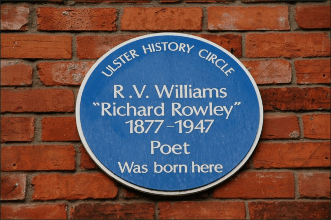
(Pictured: Blue plaque at Richard Rowley’s birthplace in Belfast, Northern Ireland)
From 1985 onwards, the IRA in East Tyrone had been at the forefront of a campaign against British state police and army facilities and their personnel. In 1987, an East Tyrone IRA unit was ambushed with eight of its members being killed by the SAS while they were making an attack on a police station in Loughgall, County Armagh. This was the IRA’s greatest loss of life in a single incident during The Troubles. Despite these losses, the IRA’s campaign continued, with it attacking nearly 100 police and military facilities over the next five years, wrecking thirty-three and damaging the remainder to varying degrees. The SAS ambush has no noticeable long-term effect on the level of IRA activity in East Tyrone. In the two years before the Loughgall ambush, the IRA killed seven people in East Tyrone and North Armagh, and eleven in the two years following the ambush.
Three other IRA members – Gerard Harte, Martin Harte and Brian Mullin – had been ambushed and killed by the SAS as they tried to kill an off-duty Ulster Defence Regiment (UDR) soldier near Carrickmore, County Tyrone. British intelligence identified them as the perpetrators of the Ballygawley bus bombing, which killed eight British soldiers. After that bombing, all troops going on leave or returning from leave were ferried in and out of East Tyrone by helicopter. Another high-profile attack of the East Tyrone Brigade was carried out on January 11, 1990, near Augher, where a Gazelle helicopter was shot down.
On June 3, 1991, three IRA men, Lawrence McNally, Michael “Pete” Ryan and Tony Doris, were killed at the town of Coagh, when a stolen car they were driving in on their way to kill an off-duty Ulster Defence Regiment soldier was ambushed by the Special Air Service. Ryan was the same man who, according to Irish journalist and author Ed Moloney, had led an attack on Derryard checkpoint on the orders of IRA Army Council member Thomas “Slab” Murphy two years earlier.
The IRA’s East Tyrone Brigade lost 53 members killed by the British Forces during the Troubles – the highest of any “Brigade areas.” Of these, 28 were killed between 1987 and 1992.
At 10.30 p.m. on the night of February 16, 1992, a stolen car and lorry carrying multiple IRA attackers drives into the centre of the village of Coalisland and, pulling up at its fortified Royal Ulster Constabulary security base, fires 30 rounds of armour-piercing tracer ammunition into it at close range from a Soviet Union made DShK heavy machine-gun that they had mounted on the back of the lorry. The heavy machine gun is fired by IRA member Kevin O’Donnell, the rest of the unit being armed with Soviet-made AKMassault rifles. The IRA attackers then drive off at speed up Annagher hill, without any apparent pursuit from the security forces. While making their escape they drive past the home of Tony Doris, an IRA man who had been killed by the British Army the previous year, where they stop to fire into the air, shouting, “Up the ‘RA, that’s for Tony Doris!” Witnesses also report the IRA men waving Irish Tricolours from the back of the lorry. After this they drive on at speed to the car park of St. Patrick’s Roman Catholic Church in the village of Clonoe, two miles away from Coalisland police station, arriving at 10.45 p.m., where getaway cars are waiting.
Immediately on arrival, the IRA attackers are in the process of preparing to abandon the attack vehicles and dismounting the DShK to take with them when they are assailed by a British Army detachment that had been lying in wait for them in the car park’s perimeter, primarily composed of soldiers from the Special Air Service, who engage them with sustained automatic fire. Patrick Vincent, age 20, the driver of the stolen lorry, is shot dead with five bullets while still in its cab. Peter Clancy, age 19, and Kevin O’Donnell, age 21) are killed while dismounting the DShK on the back of the lorry. Sean O’Farrell, age 23, is pursued on foot across the church grounds over a distance of 100 yards before being shot dead with five bullets while trying to climb over a fence. Two other IRA men, one of them being Aidan McKeever, who are found sitting in a car in the car park with the intention of acting as getaway drivers, surrender after being wounded and are taken prisoner. The roof of the church is accidentally set on fire after a stray round hit a fuel storage tank. One British soldier is wounded during the confrontation. An IRA statement reports that another active service unit made up of at least four volunteers taking part in the operation at Coalisland “escaped unharmed” under heavy fire in other vehicles after splitting up into two teams.
Several witnesses to the ambush later claim that some of the IRA men tried to surrender to the British Army engaging unit during the ambush but were summarily executed. Justice Seamus Treacy of Northern Ireland’s High Court awards McKeever, the IRA getaway driver, £75,000 in damages in 2011. It is unclear whether or not this decision is appealed, or whether the damages are ever paid.
A local IRA source points out areas of incompetence in the attack by the IRA unit involved that leads to its destruction:
The use of a long-range weapon for a short-range shooting. The DShK can be used up to 2,000 metres from the target, and its armour-piercing capabilities at 1,500 metres are still considerable.
The use of tracer rounds is ill-judged as they easily reveal the firing location of the gun if it is not being fired from a well-hidden position.
The escape route is chosen at random, with the machine-gun in full sight and the support vehicle flashing its hazard lights.
The gathering of so many men at the same place after such an attack is another factor in the failure to escape for most of the attacking force.
During the funeral services for O’Donnell and O’Farrell in Coalisland, the parish priest criticises the security forces for what happened at Clonoe church, which had resulted in the deaths of the four IRA men. The priest, Fr. MacLarnon, then appeals to the IRA and Sinn Féin to replace “the politics of confrontation with the politics of cooperation.” While Francie Molloy, a local Sinn Féin councillor, walks out of the church in protest, leading Sinn Féin politicians Gerry Adams and Martin McGuinness remain in their seats. There are hundreds of Royal Ulster Constabulary police officers outside the church during the funeral, the RUC having changed its policy after the Milltown Cemetery attack. This show of force is criticised by Sinn Féin.
This is the last occasion that IRA members are killed in a series of ambushes by the British Army, spearheaded by the Special Air Service, in Northern Ireland. Growing tension between locals and the British military foot-patrols lead to street confrontations with soldiers from the Parachute Regiment three months later.
(Pictured: The ambush scene at Clonoe, County Tyrone, where four IRA men were shot dead by the British army in February 1992)
In 1985 the IRA’s East Tyrone Brigade, commanded by Patrick J. Kelly, begins a campaign of destroying remote RUC stations and preventing anyone from rebuilding them, to create no-go zones. On December 7, 1985, it launches an attack on the RUC barracks in Ballygawley, County Tyrone, destroying the base and killing two RUC officers.
On January 22, 1986, the East Tyrone Brigade fires mortars at the Ulster Defence Regiment (UDR) base in Dungannon, County Tyrone, injuring two UDR soldiers and damaging the base. Just over a week later, on February 1, it carries out a large van bomb attack on the RUC base at Coalisland, County Tyrone, damaging the base and several houses and shops.
The Birches base attack is a complex attack that involves several units, including teams of lookouts, an armed team and bomb-makers as well as a team to carry out a diversionary attack. A diversionary bomb attack is staged at Pomeroy to draw security forces away from the real target at the Birches. Another team hijacks a JCB digger, getaway vehicles and scout cars at Washing Bay.
The digger is used to deliver the bomb to its target. The IRA does not expect any resistance as the RUC station is unmanned at the time of the attack. The IRA first rakes the base with automatic gunfire while the digger, with the bomb in its bucket, is driven through the high wire perimeter fence which had been constructed to protect the base from grenade or mortar attack. The digger is most likely driven by young IRA volunteer Declan Arthurs from Galbally, County Tyrone, who has experience driving diggers on his family’s farm. A volunteer then lights a fuse, and the bomb explodes after the IRA hads retreated to safety in a waiting van. The blast destroys most of the base and also damages nearby buildings, blowing the roof off a pub across the road. The IRA team then makes its getaway. According to journalist Mark Urban, the armed members of the unit evade British security force roadblocks by escaping in a boat across Lough Neagh.
About 35 people are reportedly involved in the Birches attack, from planning, executing the attack and creating an escape route. A partially disabled American tourist and six local civilians are slightly injured in the blast.
A member of the British security forces tells Mark Urban of the attack: “The Birches RUC station was destroyed by the bomb, creating problems for the authorities about how to re-build it. The Tyrone IRA was able to combine practical skills such as bomb-making and the welding needed to make mortars with considerable resources. Its members went on operations carrying the latest assault rifles and often wore body-armour similar to that used by the security forces, giving them protection against pistol or sub-machine-gun fire. By 1987 they had also succeeded in obtaining night-sights, allowing them to aim weapons or observe their enemy in darkness.”
The IRA unit’s next major target is the RUC station at Loughgall, which is attacked in the same manner. This operation is a disaster for the IRA as the IRA unit is ambushed by the Special Air Service (SAS). The entire IRA unit of eight, along with a Catholic civilian, are shot dead. Many of those IRA volunteers killed at Loughgall had taken part in the Birches attack, like Pádraig McKearney, Jim Lynagh and Patrick J. Kelly.
Although slightly smaller than their opponents, Coote’s troops consist largely of veterans from the New Model Army and have three times the number of cavalry. After an hour of fighting, the Ulster army collapses and flees, losing most of its men, officers, weapons, and supplies. The battle secures the north of Ireland for the Commonwealth and clears the way to complete the Cromwellian conquest of Ireland.
In September 1643, Ormond agrees a truce, or ‘Cessation’, with the Confederation, freeing his troops for use in England against Parliament in the First English Civil War. Some Irish Protestants object, and switch sides, including Sir Charles Coote, who becomes Parliamentarian commander in Connacht. Charles surrenders in 1646, while a Covenanter/Royalist uprising is quickly suppressed in the 1648 Second English Civil War. On January 17, 1649, the Confederation allies with Ormond’s Royalists. Following the execution of Charles on January 30, they are joined by the Laggan Army and remaining Scots troops in Ulster.
There are various reasons for this. The Covenanter government, who provide support for Scottish settlers in Ulster, consider Oliver Cromwell and other leaders of the new Commonwealth of England dangerous political and religious radicals. As Scots, they object to the execution of their king by the English. As Presbyterians, they view monarchy as divinely ordained, making regicide also sacrilegious, and they transfer their allegiance to his son, Charles II of England.
However, this is offset by a split within the Confederation, between Catholic landowners who want to preserve the position prevailing in 1641, and those like Ó Néill, whose estates had been confiscated in 1607. As a result, he agrees a truce with Coote, and refuses to join the Alliance, depriving them of their most effective fighting force in the north. Despite this, by late July, Ormond’s combined Royalist/Confederate army control most of Ireland.
Ormond’s defeat at the Battle of Rathmines on August 2 allows Cromwell and an army of 12,000 to land in Dublin unopposed. After capturing Drogheda on September 11, his main force heads south towards Wexford. Colonel Robert Venables is sent north with three regiments, or around 2,500 men, to take control of Ulster. Munro’s garrisons surrender with minimal resistance, and by the end of September, Venables has occupied Dundalk, Carlingford, Newry, and Belfast. These are accompanied by the mass expulsion of Scots settlers, as punishment for their defection. When Coote captures Coleraine on September 15, he massacres the largely Scottish garrison.
Ó Néill’s death in November 1649 and Coote’s defeat of a combined Royalist/Covenanter force at Lisnagarvey in December leaves the Catholic Ulster army as the only remaining opposition to the Commonwealth in the north. At a meeting at Belturbet on March 18, 1650, Heber MacMahon, Catholic Bishop of Clogher, is appointed in his place. Although a leading figure in the Confederation, MacMahon has no military experience and opposes the alliance with Ormond’s Royalists. His election is essentially a compromise between supporters of Henry, Ó Néill’s son, and his cousin, Felim Ó Néill.
By May 20, MacMahon and his deputy Richard O’Farrell have assembled an army near Loughgall, with 5,000 infantry and 1,000 cavalry. They lack both arms and artillery but after Ormond promises to send these from Connacht, they march north, intending to divide Coote’s troops at Derry from those commanded by Venables at Carrickfergus in the east. To do this, MacMahon establishes a line of garrisons with its northern end at Ballycastle, then moves south, intending to cross the River Foyle just below Lifford and maintain contact with Ormond through Ballyshannon.
At this point, Coote has only 1,400 men and seems vulnerable. The Irish cross the river on June 2, beating off an attack by the Commonwealth cavalry and occupy Lifford, where they spend the next two weeks and Coote withdraws to Derry. However, the supplies promised by Ormond fail to arrive, leaving MacMahon short of provisions, while on June 18 Coote is joined by an additional 1,000 infantry under Colonel Roger Fenwick sent from Belfast. At the same time, detaching men for the new garrisons leave MacMahon with around 4,000 infantry and 400 cavalry.
MacMahon now relocates to the Doonglebe/Tullygay Hill overlooking the pass at Scariffhollis, a strong defensive position two miles west of Letterkenny on the River Swilly. When Myles MacSweeney takes his regiment off to recapture his ancestral home at Doe Castle, it leaves the two armies roughly equal in number. However, Coote’s men are well equipped veterans, and he has three times the number of cavalry. When he appears at Scariffhollis on June 21, MacMahon’s subordinates advise him not to risk battle. They argue Coote will soon be forced to retreat due to lack of provisions, allowing the Irish to withdraw into Connaught in good order.
For reasons that are still debated, MacMahon ignores this advice and on the morning of June 21, 1650, orders his troops down from their mountain camp to give battle. Coote later reports that although the ground is still “excessive bad,” it allows him to use his cavalry, although the initial fighting is conducted by the opposing infantry.
The Irish army is drawn up in a large mass formation with 200–300 musketeers in front, which may have been due to their shortage of ammunition. The battle begins when Colonel Fenwick leads a detachment of 150 men against the advance guard. After an exchange of fire, during which Fenwick is mortally wounded, it turns into a hand-to-hand struggle. As Coote feeds in reinforcements, the Irish musketeers fall back on their main force, which has no room to manoeuvre and is now subjected to devastating volleys at close range. After an hour of bitter conflict, the Irish are out of ammunition and at this point the Parliamentarian cavalry charges their flank. Thrown into disarray, the Irish break and run.
In most battles, flight is the point at which the defeated suffer the heaviest casualties, exacerbated by the lack of Irish cavalry and the brutal nature of the war. Most of the infantry dies on the battlefield or in the pursuit that follows, including Henry Ó Néill and many officers, some of whom are killed after surrendering. Estimates of the Irish dead range from 2,000 – 3,000, while Coote loses around 100 killed or wounded.
MacMahon escapes with 200 horse but is captured a week later and executed. Phelim Ó Néill and O’Farrell make it to Charlemont, which is besieged by Coote and surrenders on August 14. With the exception of a few scattered garrisons, this ends fighting in the north. Limerick is taken by Hardress Waller in October 1651, and the war ends when Galway surrenders to Coote in May 1652.
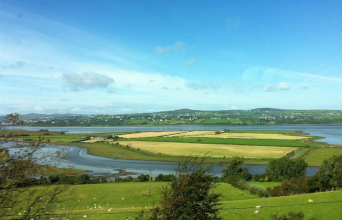
(Pictured: A view of the mouth of River Swilly at Lough Swilly, Letterkenny, County Donegal)
Lynagh joins the Provisional Irish Republican Army in the early 1970s. In December 1973 he is badly injured in a premature bomb explosion, arrested, and spends five years in the Maze Prison. While imprisoned, he studies and becomes a great admirer of Mao Zedong. After his release from prison in 1979 he is elected as a Sinn Féincouncillor for Monaghan and holds this position until he is killed.
After his release from prison Lynagh becomes active in the IRA again, active with the Provisional IRA East Tyrone Brigade. He quickly becomes a unit commander and gradually builds up his ruthless reputation. After a series of Ulster loyalist attacks against Irish nationalist politicians in late 1980 and early 1981, he is suspected of involvement in an attack on the Stronge estate near Middletown, County Armagh, where the IRA murdered the retired Ulster Unionist PartyStormont speaker, Sir Norman Stronge, and his son James, a Royal Ulster Constabulary (RUC) officer, before burning down their home, Tynan Abbey, and shooting their way out through a police cordon.
Lynagh is known as “The Executioner” by the Royal Ulster Constabulary. He is arrested and interrogated many times by the Garda Síochána in County Monaghan but is never charged. During this period, he devises a Maoist military strategy, aimed at escalating the war against the British state in Northern Ireland. The plan envisages the destruction of police stations and British Army military bases in parts of Northern Ireland to create “liberated” areas that will be thereby rendered under the domination of the IRA. In 1984 he starts co-operating with Pádraig McKearney who shares his views. The strategy begins materialising with the destruction of an RUC police station in Ballygawley in December 1985 which kills two police officers, and in The Birches in August 1986.
Lynagh is killed by the British Army’s Special Air Service on May 8, 1987 during an attack on the isolated rural part-time police station at the small County Armagh village of Loughgall, the third such attack that he had taken part in. During the incident the IRA detonates a 200-lb. bomb, and attacks the station with automatic weapons, and in the process are ambushed by the British Army which is lying in wait for them, having been forewarned of the IRA operation. All eight of the IRA attacking force are killed in the exchange of fire, the British forces involved incurring no fatalities. The incident subsequently becomes known as the Loughgall ambush.
At the time of his death, Lynagh is living in a flat on Dublin Street in Monaghan. He is buried at St. Joseph’s Cemetery (Latlurcan Cemetery) in Monaghan. During his funeral, as his coffin is carried through the village of Emyvale, Irish Garda Síochána officers are attacked by the crowd of mourners after they pursue three gunmen who had fired a volley over his coffin.
The IRA’s East Tyrone Brigade is active mainly in eastern County Tyrone and neighbouring parts of County Armagh. By the mid-1980s it had become one of the IRA’s most aggressive formations. The British security forces receive intelligence of the IRA’s plan weeks prior to the attack and learn the target at least 10 days before the attack. It has been alleged that the security forces had a double agent inside the IRA unit, and that he was killed by the British Army‘s Special Air Service (SAS) during the ambush. Other sources claim that the security forces had instead learned of the ambush through other surveillance methods.
Three local RUC officers work at the station, which is only open part-time, from 9:00 AM to 11:00 AM, and from 5:00 PM to 7:00 PM daily.The IRA’s attack involves two teams. One team is to drive a digger with a bomb in its bucket through the base’s perimeter fence and light the fuse. At the same time, another team is to arrive in a van and open fire on the base, with the intent of killing the three RUC officers as they come off duty.
The IRA unit arrives in Loughgall from the northeast shortly after 7:00 PM, when the station is scheduled to close for the night. They are armed and wearing bulletproof vests, boilersuits, gloves and balaclavas. The digger drives past the police station, turns around and drives back again with the Toyota van carrying the main IRA assault party doing the same. Not seeing any activity in the station, members of the IRA unit feel that something is amiss and debate whether to continue, but decide to go ahead with the attack. Tony Gormley and Gerard O’Callaghan get out of the van and join Declan Arthurs on the digger. At about 7:15 PM Arthurs drives the digger towards the station with the front bucket containing 300–400 lbs. of Semtex inside an oil drum, partially hidden by rubble and wired to two 40-second fuses. The other five members of the unit follow in the van with Eugene Kelly driving, unit commander Patrick Kelly in the passenger seat, with unit commander Jim Lynagh, Pádraig McKearney, and Seamus Donnelly in the back seat.
The digger crashes through the light security fence and the fuses are lit. The van stops a short distance ahead and, according to the British security forces, three of the team jump out and fire on the building with automatic weapons. At the same time, the bomb detonates, the blast destroying the digger and badly damaging the building.
Within seconds the SAS opens fire on the IRA attackers from the station and from hidden positions outside. All eight IRA members are killed in the hail of gunfire, each with multiple wounds to their bodies. Declan Arthurs is shot in a lane-way opposite Loughgall F.C. premises. Three of the IRA members are shot at close range as they lay either dead or wounded on the ground. Three other IRA members in the scout cars escape from the scene, managing to pass through British Army and RUC checkpoints set up after the ambush had been sprung. The two RUC Headquarters Mobile Support Unit (HMSU) officers are injured in the explosion and an SAS soldier receives a facial injury from glass after a window is broken by gunfire.
Two civilians, brothers Anthony and Oliver Hughes, traveling in a car that happens to drive into the scene of the ambush while it is underway are also fired upon by the British forces. Oliver is wearing overalls similar to those being worn by the IRA unit. About 130 yards from the police station, British soldiers open fire on their car from behind, killing Anthony and badly wounding Oliver. The villagers had not been told of the operation and no attempt had been made to evacuate anyone or to seal off the ambush zone, as this might have alerted the IRA.
The security forces recover eight IRA firearms from the scene. The RUC links the weapons to seven known murders and twelve attempted murders in the Mid-Ulster region. On of the weapons, a Ruger Security-Six, had been stolen from Reserve RUC officer William Clement, killed two years earlier in the IRA attack on Ballygawley RUC base. It is found that another of the guns had been used in the murder of Harold Henry, a builder employed by the British Army and RUC in facilities construction in Northern Ireland.
(Pictured: Mural commemorating the IRA members killed in the ambush)
In the 1780s, County Armagh is the most populous county in Ireland, and the center of its linen industry. Its population is equally split between Protestants, who dominate in the northern part of the county, and Catholics, who dominate in the south. Sectarian tensions increase throughout the decade and are exacerbated by the relaxing of some of the Penal Laws, failure to enforce others, and the entry of Catholics into the linen industry at a time when land is scarce, and wages are decreasing due to pressure from the mechanised cotton industry.
By 1784, sectarian fighting breaks out between gangs of Protestants and Catholics. The Protestants re-organise themselves as the Peep o’ Day Boys, with the Catholics forming the Defenders. The next decade sees an escalation in the violence between the two and the local population as homes are raided and wrecked.
On the morning of September 21, the Defenders, numbering around 300, make their way downhill from their base, occupying Daniel Winter’s homestead, which lay to the northwest of The Diamond and directly in their line of advance. News of the advance reaches the Peep o’ Day Boys who quickly form at the brow of the hill where they have made their camp. From this position, they gain three crucial advantages: the ability to comfortably rest their muskets allowing for more accurate shooting, a steep uphill location which makes it hard for attackers to scale, and a direct line-of-sight to Winter’s cottage, which the Defenders have made their rallying point.
The shooting begins and, after Captain Joseph Atkinson gives his weapon and powder to the Peep o’ Day Boys, he rides to Charlemont Garrison for troops to quell the trouble. There is no effective unit stationed in the garrison at the time, despite the fact a detachment of the North-Mayo Militia is stationed in Dungannon and a detachment of the Queen’s County Militia is at Portadown.
The battle is short, and the Defenders suffer “not less than thirty” fatalities. James Verner, whose account of the battle is based on hearsay, gives the total as being nearly thirty, while other reports give the figure as being forty-eight, however this may be taking into account those that die afterwards from their wounds. A large number of Defenders are also claimed to have been wounded. One of those claimed to have been killed is “McGarry of Whiterock,” the leader of the Defenders. The Peep o’ Day Boys on the other hand, in the safety of the well-defended hilltop position, suffered no casualties.
In the aftermath of the battle, the Peep o’ Day Boys retire to James Sloan’s inn in Loughgall, and it is here that James Wilson, Dan Winter, and James Sloan found the Orange Order, a defensive association pledged to defend “the King and his heirs so long as he or they support the Protestant Ascendancy.” The first Orange lodge of this new organisation is established in Dyan, County Tyrone, founding place of the Orange Boys.




 seamus dubhghaill