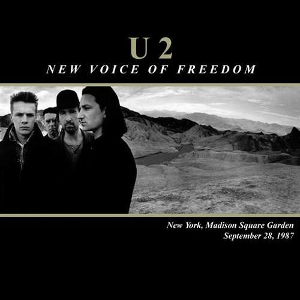
Dennis Bell, director of New York gospel choir The New Voices of Freedom, records a demo of a gospel version of “I Still Haven’t Found What I’m Looking For.” While in Glasgow, Scotland in late July during U2’s Joshua Tree Tour, Rob Partridge of Island Records plays the demo for the band. In late September, U2 rehearses with Bell’s choir in a Harlem church, and a few days later they perform the song together at U2’s Madison Square Garden concert.
Footage of the rehearsal is featured in the rockumentaryRattle and Hum, while the Madison Square Garden performance appears on the Rattle and Humalbum, the band’s sixth studio album. After the church rehearsal, U2 walks around the Harlem neighbourhood where they come across blues duo Satan and Adam playing on the street. A 40-second clip of them playing their composition “Freedom for My People” appears on both the movie and the album.
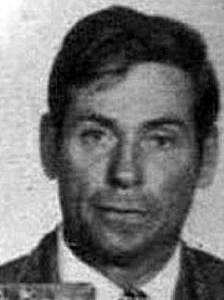
Michael J. Spillane, Irish American mobster much better known as Mickey Spillane from Hell’s Kitchen, New York City, is killed outside his apartment in Queens on May 13, 1977. Spillane, who is called the “last of the gentleman gangsters,” is a marked contrast to the violent Westies mob members who succeed him in Hell’s Kitchen.
As a young boy in Hell’s Kitchen, Spillane starts as a numbers runner for various organized crime figures in his neighborhood. In 1960, he takes over the rackets left to him by his predecessor Hughie Mulligan. He marries Maureen McManus, the daughter of the Democratic district leader Eugene McManus.
Though Italian mobsters dominate organized crime in the city, the Italian mob stays out of Hell’s Kitchen while Spillane is the boss. Often, Spillane kidnaps members of the Italian Mafia and holds them for ransom to raise money for his operations. Although he runs the rackets such as gambling and loansharking, he never allows the sale of drugs.
It is Spillane’s refusal to allow the Italian mobsters to participate in the Hell’s Kitchen rackets that leads to his downfall. The Jacob K. Javits Convention Center is being built on Spillane’s westside at the time. The amount of money the new convention center, Madison Square Garden, the waterfront and the unions are generating for Spillane is enormous, and the Italians are desperate for a piece of the action. Spillane refuses to allow the Italian mob to participate, and the New York Irish-Italian Mob War begins.
In the 1970s the Irish mob sees an increased threat from the Italian Mafia as the Genovese crime family seeks control over the soon to be built Jacob K. Javits Convention Center. Since the convention center is located in Spillane’s Hell’s Kitchen neighborhood, Spillane refuses to allow any involvement by the Italians. Although the Italian gangsters greatly outnumber the members of the Irish mob, Spillane is successful in keeping control of the convention center and Hell’s Kitchen. The Italians, frustrated and embarrassed by their defeat to Spillane and the Irish gangsters, respond by hiring a rogue Irish American hitman named Joseph “Mad Dog” Sullivan to assassinate Tom Devaney, Eddie “the Butcher” Cummiskey, and Tom “the Greek” Kapatos, three of Spillane’s chief lieutenants. By the mid-1970s, Spillane has moved his family out of Hell’s Kitchen to Woodside, Queens, because of threats of violence against his children.
In 1966, a young upstart named Jimmy Coonan attempts to take the neighborhood from Spillane, muscling in on his territory and murdering a Spillane underling. Ultimately, Coonan is sent to prison in 1967. When he is released from prison, Coonan seeks to align himself with the Gambino crime family through an up-and-coming mobster from Brooklyn, named Roy DeMeo. This marks the beginning of the end for the Irish mob, as Coonan eventually goes to work for the Gambinos.
On May 13, 1977, Spillane is killed outside his apartment in Queens. It has long been rumored that DeMeo murdered Spillane as a favor to Coonan, who subsequently takes over as the boss of the Hell’s Kitchen Irish Mob. Spillane is buried in Calvary Cemetery in Queens, New York.
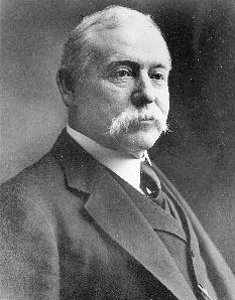
Daly emigrates from Ireland to the United States as a young boy, arriving in New York City. He sells newspapers and works his way to California in time to join the gold rush in what is to become Virginia City, Nevada, and the fabulously rich silver diggings now known as the Comstock Lode, in 1860.
Daly gains experience in the mines of the Comstock under the direction of John William Mackay and James Graham Fair. While working in the mines of Virginia City, Daly meets and befriends George Hearst, father of William Randolph Hearst, and Lloyd Tevis, co-owners of the Ophir Mining Company. In 1872, Daly recommends purchase by the Hearst group of the Ontario silver mine, near Park City, Utah. In ten years, the Ontario produces $17 million and pays $6,250,000 in dividends.
Their business friendship extends for many years and helps establish the Anaconda Copper Mine in Butte, Montana. Daly originally comes to Butte in August 1876 to look at a mine, the Alice, as an agent for the Walker Bros. of Salt Lake City. The Walkers purchase the mine, install Daly as superintendent, and award him a fractional share of the mine.
Daly notices, while working underground in the Alice, that there are significant deposits of copper ore. He gains access into several other mines in the area and concludes that the hill is full of copper ore. He envisions an ore body several thousand feet deep, some veins of almost pure copper, and hundreds of millions of dollars. He urges his employers, the Walker Bros., to purchase the Anaconda and when they refrain, Daly purchases it himself. Daly finds his fortune on the Anaconda Copper Mine in Butte, after selling his small share of the Alice Mine for $30,000.
The Anaconda began as a silver mine, but Daly’s purchase is for the copper, found to be one of the largest deposits known at the time. However, he lacks the money to develop it, so he turned to Hearst, Haggin and Tevis. The first couple hundred feet within the mine are rich in silver, and took a few years to exhaust. By that time, Butte’s other silver mines are also playing out, so Daly closes the Anaconda, St. Lawrence, and Neversweat. Prices on surrounding properties drop and Daly purchases them. Then he re-opens the Anaconda. Due to Thomas Edison‘s development of the light bulb the world would need copper which is a very excellent conductor of electricity. Butte has copper, hundreds of thousands of tons of it, waiting to be taken from the ground.
He builds a smelter to handle the ore, and by the late 1880s, has become a millionaire several times over, and owner of the Anaconda Mining and Reduction Company. Daly owns a railroad, the Butte, Anaconda and Pacific Railroad, to haul ore from his mines to his smelter in Anaconda, a city he founds. He owns lumber interests in the Bitterroot Valley and a mansion and prized stables in the same valley, south of Missoula.
In 1894, Daly spearheads an energetic but unsuccessful campaign to have Anaconda designated as Montana’s state capital, but loses out to Helena. Daly is active in Montana politics throughout the 1890s, because of his opposition and intense rivalry with fellow copper king, and future U.S. Senator, William A. Clark. He attempts to keep Clark out of office by lavishly supporting his opponents.
In 1891, Daly becomes the owner of Tammany, said to be one of the world’s fastest racehorses in 1893. He also arranges the breeding of the great Sysonby, ranked number 30 in the top 100 U.S. thoroughbred champions of the 20th Century by The Blood-Horse magazine. However, Daly dies in New York City on November 12, 1900, before the horse is born.
Following his death, New York’s Madison Square Garden hosts a dispersal sale for the Bitterroot thoroughbred studs on January 31, 1901. One hundred eighty-five horses are sold for $405,525.
Gilmore is born in Ballygar, County Galway, on December 25, 1829. He starts his music career at age fifteen and spends time in Canada with an English band. Already a fine cornet player, he settles in Boston, Massachusetts in 1848, becoming leader of the Suffolk, Boston Brigade, and Salem bands in swift succession. He also works in the Boston music store of John P. Ordway and founds Ordway’s Aeolians, a group of blackfaceminstrels. With the Salem Band, Gilmore performs at the 1857 inauguration of President James Buchanan.
In 1858, Gilmore founds “Gilmore’s Band,” and at the outset of the American Civil War the band enlists with the 24th Massachusetts Volunteers, accompanying General Ambrose Burnside to North Carolina. After the temporary discharge of bands from the field, Governor John Albion Andrew of Massachusetts entrusts Gilmore with the task of re-organizing military music-making. General Nathaniel P. Banks creates him Bandmaster-general.
When the war ends, Gilmore is asked to organize a celebration, which takes place in New Orleans. That success emboldens him to undertake two major music festivals in Boston, the National Peace Jubilee in 1869 and the World’s Peace Jubilee and International Musical Festival in 1872. These feature monster orchestras of massed bands with the finest singers and instrumentalists, including the only American appearance by “waltz king” Johann Strauss II, and cements Gilmore’s reputation as the leading musical figure of the age. Coliseums are erected for the occasions, holding 60- and 120,000 persons. Grateful Bostonians present Gilmore with medals and cash, but in 1873 he moves to New York City, as bandmaster of the 22nd Regiment. Gilmore takes this band on acclaimed tours of Europe.
On September 24, 1892, back in the United States preparing an 1892 musical celebration of the quadricentennial anniversary of Christopher Columbus‘ voyage of discovery, Gilmore collapses and dies in St. Louis. He is buried in Calvary Cemetery, Queens, New York, where his wife is later interred.
In many ways Gilmore can be seen as the principal figure in 19th-century American music. He holds the first “Promenade Concert in America” in 1855, the forerunner to today’s Boston Pops. He sets up “Gilmore’s Concert Garden,” which becomes Madison Square Garden. He is the Musical Director of the Nation in effect, leading the festivities for the 1876 Centennial celebrations in Philadelphia and the dedication of the Statue of Liberty in 1886. In 1888 he starts the tradition of seeing in the New Year in Times Square.


 seamus dubhghaill