seamus dubhghaill

Promoting Irish Culture and History from Little Rock, Arkansas, USA


Leave a comment

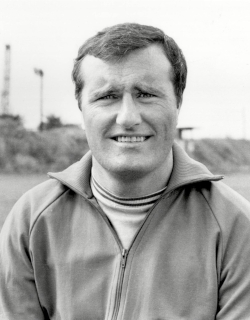
Birth of Noel Cantwell, Irish Footballer & Cricketer

Noel Euchuria Cornelius Cantwell, Irish football player and sometime cricketer, is born at 2 Illen Villas, Mardyke Walk, Cork, County Cork, on February 28, 1932.

Cantwell is one of five sons and a daughter of Michael Cantwell, a master tailor, and his wife Hannah (née Daly). He is educated at St. Joseph’s national school and the Presentation Brothers College in Cork. He plays as a full-back for Western Rovers, Cork Athletic, West Ham United and Manchester United.

While at West Ham, Cantwell features in the London XI side that competes in the 1955–58 Inter-Cities Fairs Cup final on May 1, 1958. He captains the Hammers to winning the Division Two championship in the 1957–58 season thereby leading the club into the topflight for the first time since 1932.

In November 1960, Cantwell joins Manchester United for £29,500 which at the time is a record for a full-back. He helps the club win the 1965 and 1967 league titles and captains United when winning the 1963 FA Cup Final – just as his fellow countryman Johnny Carey had done in United’s previous FA Cup win fifteen years earlier.

Cantwell also serves as Chairman of the Professional Footballers’ Association.

During his International career (1953-67), Cantwell wins 36 full International caps for the Republic of Ireland, typically playing at left full-back and on several occasions at centre-forward. He makes his debut against Luxembourg in October 1953, with his final appearance coming away to Turkey in February 1967. He scores fourteen goals including five from penalties and also captains the Republic on several occasions including a match against England at Wembley Stadium.

In his first managerial role at Coventry City, Cantwell has the onerous task of following Jimmy Hill who had taken the club into the First Division for the first time in their history. He narrowly keeps the Sky Blues in the top in his first two seasons before taking them to a sixth-place finish in 1969–70, earning them qualification for the Inter-Cities Fairs Cup (a year before it is replaced by the UEFA Cup).

Cantwell departs Highfield Road on March 12, 1972, but within seven months is back in English football as manager of Peterborough United. He helps Peterborough win the Fourth Division title in his first full season as manager, before leaving on May 10, 1977, to manage the New England Tea Men.

Cantwell returns to Peterborough on November 19, 1986, for a second stint as manager, remaining in this role until he becomes general manager on July 12, 1988. He is general manager at London Road for a year until he quits football to become licensee of the New Inn at Peterborough, where he remains for ten years until he retires in 1999. He also is landlord of the Bull and Swan in Stamford, Lincolnshire.

Cantwell also plays cricket for Cork Bohemians Cricket Club and Ireland as a left-handed batsman and a right-arm medium bowler. He plays five times for Ireland, making his debut in what is his sole first-class match versus Scotland at Edinburgh in 1956, scoring 31 and 17. His last match for Ireland is against Lancashire in July 1959.

Cantwell dies from cancer at Addenbrooke’s Hospital, Cambridge, not far from his home in Peterborough, on September 8, 2005. He is survived by his wife Maggie, a native of Belfast, and two daughters, Liz and Kate. A 22-year-old son, John Robert, is killed in a car crash thirteen years earlier.

Cantwell’s former teams each hold a moment of silence for him before their next matches.

Leave a comment

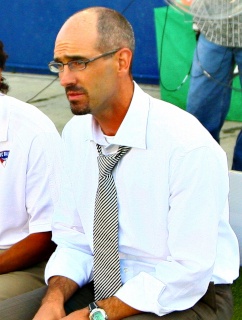
Birth of Steve Morrow, Professional Footballer & Manager

Stephen Joseph Morrow, Northern Irish former professional footballer and manager, is born on July 2, 1970, in Belfast, Northern Ireland.

Morrow makes his full international debut for Northern Ireland in May 1990 against Uruguay. He goes on to win 39 caps for his country from then until 1999.

Morrow becomes a semi-regular with Arsenal in 1992–93. He plays most of his matches in midfield, replacing the injured Paul Davis as Arsenal reaches the League Cup and FA Cup finals. He starts the League Cup final against Sheffield Wednesday. After falling behind to a John Harkes goal, Arsenal equalises through Paul Merson, and then Merson sets up Morrow to score the winner, which is also his first for the club. In the celebrations after the match, Arsenal skipper Tony Adams attempts to pick up Morrow and parade him on his shoulders, but Adams slips, and Morrow awkwardly hits the ground. He breaks his arm and has to be rushed to hospital.

As a result, Morrow misses the rest of that season, including the 1993 FA Cup Final, where Arsenal completes the Cup Double. Before the final kicks off, he receives his League Cup winners’ medal.

Morrow is fit enough by the start of the next season but plays only 13 matches, compared to 25 the previous season. One of those is the scene of an Arsenal triumph, the club’s 1994 European Cup Winners’ Cup Final win over Parma. In an Arsenal midfield depleted of John Jensen and David Hillier, he makes his first appearance in the competition that season partnering 20-year-old Ian Selley in central midfield as Arsenal beats Parma 1–0 with an Alan Smith goal.

Morrow nearly leaves the club in March 1994, following an approach from the Premier League‘s bottom club Swindon Town, but the transfer falls through and he signs a new contract with Arsenal, where he spends three more years.

Morrow goes on to play over 20 matches the following season, including a second Cup Winners’ Cup final, which Arsenal loses to Real Zaragoza. He scores his second Arsenal goal in the League Cup once again against Sheffield Wednesday, and scores his first Arsenal league goal in a 3–1 defeat at Blackburn Rovers, who win the Premier League that season. However, he never finds favour under new Arsenal boss Bruce Rioch, who only gives the Irishman five matches in 1995–96.

After the arrival of Arsène Wenger in 1996, Morrow is told he is surplus to requirements at Highbury, and he is loaned to Queens Park Rangers (QPR) in March 1997, the deal being made permanent that summer. He plays 85 games for Arsenal in total, scoring three goals.

At QPR, Morrow is initially a regular, but the club struggles, going from contenders for promotion to the Premiership to facing relegation to the Football League Second Division. Injuries to his shoulder ligaments ruled him out for most of the 1999–2000 season, and he loses his place in the side. He later has a loan spell at Peterborough United, but it does not become permanent, and he is released on a free transfer in the summer of 2001.

Struggling to find a club in the United Kingdom, Morrow moves to the United States to play for Major League Soccer (MLS) side Dallas Burn. He spends two seasons at Dallas, who rename themselves FC Dallas in 2004, before retiring because of a persistent neck injury.

On February 3, 2004, Morrow is named as an assistant coach to FC Dallas but resigns in late May due to personal reasons. However, he returns to the club on January 27, 2005, under coach Colin Clarke. When Clarke is fired on November 7, 2006, Morrow is named interim head coach. On December 11, 2006, FC Dallas removes the ‘interim’ from his title. He is fired as coach on May 20, 2008.

On September 12, 2008, Morrow returns to Arsenal as International Partnerships – Performance Supervisor, managing Arsenal’s international partnerships, which includes the Colorado Rapids of Major League Soccer in the United States, BEC Tero of Thailand and Hoàng Anh Gia Lai of Vietnam, and assisting Arsenal’s academies in countries such as Egypt and Ghana. From 2014, he works as Arsenal’s head of youth development. He leaves Arsenal in 2019 following a coaching staff shake up.

On May 7, 2021, Morrow is appointed The FA’s head of player selection and talent strategy working across England men’s teams.


Leave a comment

Death of Noel Cantwell, Soccer Player & Cricketer

noel-cantwell

Noel Euchuria Cornelius Cantwell, soccer player and sometime cricketer, dies of cancer on September 8, 2005. Born in Cork, County Cork on February 28, 1932, he is educated at the Roman Catholic Presentation Brothers College there.

Cantwell plays as a full-back for Western Rovers, Cork Athletic F.C., West Ham United F.C. and Manchester United F.C. While at West Ham, he features in the London XI side that competes in the 1955–58 Inter-Cities Fairs Cup final on May 1, 1958. He captains the Hammers to winning the Division Two championship in the 1957–58 season and thereby leads the club into the topflight for the first time since 1932.

In November 1960, Cantwell joins Manchester United for £29,500 which at the time is a record for a full-back. He helps the club win the 1965 and 1967 league titles and captains United when winning the 1963 FA Cup Final, just as his fellow countryman Johnny Carey had done in United’s previous FA Cup win 15 years earlier. He also serves as Chairman of the Professional Footballers’ Association.

Cantwell wins 36 full International caps for the Republic of Ireland national football team, typically playing at left full-back and on several occasions at centre-forward. He makes his debut against Luxembourg in October 1953 with his final appearance coming away to Turkey in February 1967. He scores 14 goals including 5 from penalties and also captains the Republic on several occasions including a match against England at Wembley Stadium.

In his first managerial role at Coventry City F.C. he has the onerous task of following Jimmy Hill who had taken the club into the Football League First Division for the first time in their history. He narrowly keeps the Sky Blues in the top in his first two seasons before taking them to a sixth-place finish in 1969–70, earning them qualification for the Inter-Cities Fairs Cup, a year before it was replaced by the UEFA Cup.

Cantwell departs from Highfield Road on March 12, 1972, to take charge of the New England Tea Men in the United States, but within seven months is back in English football as manager of Peterborough United F.C. He helps Peterborough win the Football League Fourth Division title in his first full season as manager, before leaving on May 10, 1977, for a second spell with the Tea Men. This time he spends a year in the United States.

Cantwell returns to Peterborough on November 19, 1986, for a second spell as manager, remaining in this role until he becomes general manager on July 12, 1988. He is general manager at London Road for a year until he quits football to become licensee of the New Inn at Peterborough, where he remains for 10 years until he retires in 1999. He also is landlord of the Bull and Swan in Stamford, Lincolnshire.

Cantwell also plays cricket for Cork Bohemians Cricket Club and Ireland as a left-handed batsman and a right-arm medium bowler. He plays five times for Ireland making his debut in what is his sole first-class match versus Scotland at Edinburgh in 1956, scoring 31 and 17. His last match for Ireland is against Lancashire in July 1959.

Cantwell dies on September 8, 2005, from cancer at the age of 73, leaving a widow and two children. His former teams each hold a minute of silence for him before their next matches.