
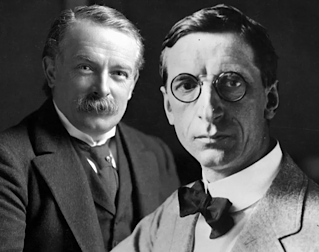
On August 30, 1921, Éamon de Valera sends a sharp reply to British Prime Minister David Lloyd George as the two sides move closer to formal peace negotiations. The letter comes during a tense period when the British have presented their “Proposals of the British Government for the Irish Settlement” — offering Ireland “within the Empire…in allegiance to His Majesty’s throne” with Northern Ireland’s Unionist government remaining in place, full British naval access, and other imperial arrangements.
De Valera’s response is a stinging rebuke to Lloyd George’s approach. He reiterates Ireland’s determination to be “free from Imperialistic entanglements,” while still offering “reasonable guarantees not inconsistent with Irish sovereignty.” He makes clear that Ireland could enter a treaty of free association with the British Commonwealth but could not accept the British government’s right to “mutilate our country.” This is a direct challenge to the British insistence on loyalty to the Crown and continued imperial ties.
The exchange reflects the core conflict in the talks. The British position requires that Ireland must remain part of the Empire, with some form of association and recognition of the King’s sovereignty. The Irish position maintains that Ireland must be fully independent, with no coercion of Northern Ireland, and with sovereignty intact.
By August 30, both sides have softened their initial positions enough for Lloyd George to send a revised invitation to negotiate in person. De Valera’s letter is part of the diplomatic back-and-forth that culminates in his acceptance of the conference on September 30, 1921, marking the start of the most consequential peace talks in Irish history.
In essence, the August 30 letter is both a political statement and a diplomatic signal — asserting Irish sovereignty while leaving room for a negotiated settlement, and setting the tone for the negotiations that would soon begin.

