seamus dubhghaill

Promoting Irish Culture and History from Little Rock, Arkansas, USA


Leave a comment

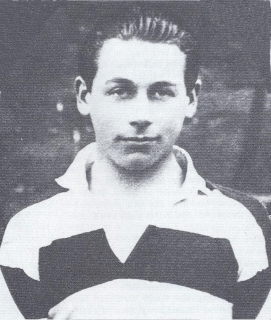
Birth of Kevin Barry, IRA Volunteer & Medical Student

Kevin Gerard Barry, Irish Republican Army (IRA) volunteer and medical student, is born on January 20, 1902, at 8 Fleet Street, Dublin. He becomes the first Irish republican to be executed by the British Government since the leaders of the Easter Rising.

Barry is the fourth of seven children born to Thomas Barry, dairyman, and Mary Barry (née Dowling), both originally from northeast County Carlow. His father dies of heart disease on February 8, 1908, at the age of 56. His mother then moves the family to the family’s farm at Tombeagh, Hacketstown, County Carlow, while retaining the family’s townhouse on Fleet Street. As a child he goes to the National School in Rathvilly. In 1915, he is sent to live in Dublin and attends the O’Connell Schools for three months, before enrolling in the Preparatory Grade at St. Mary’s College, Rathmines, in September 1915. He remains at that school until May 31, 1916, when it is closed by its clerical sponsors. With the closure of St. Mary’s College, he transfers to Belvedere College, a Jesuit school in Dublin. He joins the Irish Volunteers, the forerunner of the IRA, while still at Belvedere College, and enters University College Dublin (UCD) in 1919 to study medicine.

As a member of 1st Battalion, Dublin Brigade of the Irish Volunteers, he takes part in a successful raid for arms on the military post in King’s Inns, Dublin, on June 1, 1920. Within only six minutes the raiders secure rifles, light machine guns, and large quantities of ammunition, and depart the site with no casualties. He also takes part in an abortive attempt to burn Aughavanagh House, Aughrim, County Wicklow in July 1920, and an attack on a British ration party in Church Street, Dublin, on September 20, with the aim of seizing arms. The final operation fails. Gunfire breaks out, three soldiers of around Barry’s own age are killed or fatally wounded, and he becomes the first Volunteer to be captured in an armed attack since 1916.

During interrogation, Barry is threatened with a bayonet and is mistreated. A general court-martial on October 20, which he refuses to recognise, condemns him to death for murdering the three soldiers, although one of the bullets taken from Private Marshall Whitehead’s body is a .45 calibre, while all witnesses state that Barry was armed with a .38 Mauser Parabellum. Despite widespread appeals on grounds of both clemency and expediency, the cabinet in London and officials in Dublin decide separately against a reprieve, probably because of its likely effect on the morale of soldiers and police.

On October 28, the Irish Bulletin, the official propaganda newspaper produced by Dáil Éireann‘s Department of Publicity, publishes Barry’s statement alleging torture. The headline reads English Military Government Torture a Prisoner of War and are about to Hang him. The Irish Bulletin declares Barry to be a prisoner of war, suggesting a conflict of principles is at the heart of the conflict. The British do not recognise a war and treat all killings by the Irish Republican Army (IRA) as murder. The public learns on this day that the date of execution has been fixed for November 1.

He was hanged in Mountjoy Prison, Dublin, on November 1, after hearing two Masses in his cell. The timing of the execution, only seven days after the death by hunger strike of Terence MacSwiney, the republican Lord Mayor of Cork, brings public opinion to a fever-pitch. He is buried in unconsecrated ground on the jail property. His comrade and fellow student Frank Flood is buried alongside him four months later. A plain cross marks their graves and those of Patrick Moran, Thomas Whelan, Thomas Traynor, Patrick Doyle, Thomas Bryan, Bernard Ryan, Edmond Foley and Patrick Maher who are hanged in the same prison before the Anglo-Irish Treaty of July 1921 which ends hostilities between Irish republicans and the British. The graves go unidentified until 1934. They become known as the Forgotten Ten by republicans campaigning for the bodies to be reburied with honour and proper rites. On October 14, 2001, the remains of the ten men are given a state funeral and moved from Mountjoy Prison to be re-interred at Glasnevin Cemetery in Dublin.

Barry is the first person to be tried and executed for a capital offence under the Restoration of Order in Ireland Act 1920, passed twelve weeks earlier. Together with his youth, this makes him a republican martyr celebrated in many ballads and verses. The best-known, set to a tune popular with British servicemen, is recorded by the American singer Paul Robeson, among others. A memorial stained-glass window by Richard King of the Harry Clarke Studio is later installed in the former UCD council chamber (afterward called the Kevin Barry Room), Earlsfort Terrace, Dublin.


Leave a comment

The Hanging of IRA Soldier Kevin Barry

Kevin Gerard Barry, an 18-year-old Irish Republican Army (IRA) soldier, is executed by the British Government on November 1, 1920, during the Irish War of Independence. He is sentenced to death for his part in an attack upon a British Army supply lorry which results in the deaths of three British soldiers.

Barry’s execution inflames nationalist public opinion in Ireland, largely because of his age. The timing of the execution, only seven days after the death by hunger strike of Terence MacSwiney, the republican Lord Mayor of Cork, brings public opinion to a fever-pitch. His pending death sentence attracts international attention, and attempts are made by United States and Vatican officials to secure a reprieve. His execution and MacSwiney’s death precipitate an escalation in violence as the Irish War of Independence enters its bloodiest phase, and Barry becomes an Irish republican martyr.

Barry is born on January 20, 1902, at 8 Fleet Street, Dublin, to Thomas and Mary (née Dowling) Barry. The fourth of seven children, two boys and five sisters, he is baptised in St. Andrew’s Church, Westland Row. As a child he attends the National School in Rathvilly, County Carlow, and the O’Connell Schools in Dublin, before enrolling in the Preparatory Grade at St. Mary’s College, Dublin, in September 1915. He remains at that school until May 31, 1916, when it is closed by its clerical sponsors. With the closure of St. Mary’s College, he transfers to Belvedere College, a Jesuit school in Dublin.

In October 1917, during his second year at Belvedere, Barry joins Company C, 1st Battalion of the Dublin Brigade of the Irish Volunteers. When Company C is later reorganized, he is reassigned to the newly formed Company H, under the command of Captain Seamus Kavanagh. The following year he is introduced by Seán O’Neill and Bob O’Flanagan to the Clarke Luby Club of the Irish Republican Brotherhood (IRB), and at some point in time he is sworn as a member of this secret society which is led by Michael Collins.

Two Dublin Volunteers notice that a British army lorry guarded by an armed party of soldiers makes twice weekly trips to Monk’s Bakery on Church Street to obtain bread. Based on these observations, John Joe Carroll of Company H conducts a reconnaissance of the bakery. In addition to its main entrance on Church Street, he observes that the bakery yard is also accessible by a corridor leading from a shop on North King Street. He concludes that this makes the bakery an attractive site for an ambush.

On the morning of September 20, 1920, Barry goes to Mass, then joins a party of IRA volunteers on Bolton Street in Dublin. Their orders are to ambush a British army lorry as it picks up a delivery of bread from the bakery and capture their weapons. The ambush is scheduled for 11:00 AM, which gives him enough time to take part in the operation and return to class in time for an examination he has at 2:00 PM. The truck arrives late and is under the command of Sergeant Banks.

Armed with a .38 Mauser Parabellum, Barry and members of C Company are to surround the lorry, disarm the soldiers, take the weapons and escape. He covers the back of the vehicle and, when challenged, the five soldiers comply with the order to lay down their weapons. A shot is then fired, possibly a warning shot from an uncovered soldier in the front. Barry and the rest of the ambush party then open fire. His gun jams twice and he dives for cover under the vehicle. His comrades flee and he is left behind. He is then spotted and arrested by the soldiers. One soldier is killed and two other later die of their wounds.

The War Office orders that Barry be tried by court-martial under the Restoration of Order in Ireland Act 1920, which received royal assent on August 9, 1920. Barry is charged on three counts of the murder of Private Marshall Whitehead. In accordance with military procedure the verdict is not announced in court. He is returned to Mountjoy Prison. Later that night the district court-martial officer enters his cell and reads out the sentence: death by hanging. The public learns on October 28 that the date of execution has been fixed for November 1.

Barry is hanged on November 1, 1920, after hearing two Masses in his cell. Canon Waters, who walks with him to the scaffold, writes to Barry’s mother later, “You are the mother, my dear Mrs. Barry, of one of the bravest and best boys I have ever known. His death was one of the most holy, and your dear boy is waiting for you now, beyond the reach of sorrow or trial.”

Barry’s body is buried at 1:30 PM, in a plot near the women’s prison. His comrade and fellow-student Frank Flood is buried alongside him four months later. A plain cross marks their graves and those of Patrick Moran, Thomas Whelan, Thomas Traynor, Patrick Doyle, Thomas Bryan, Bernard Ryan, Edmond Foley and Patrick Maher who are hanged in the same prison before the Anglo-Irish Treaty of July 1921 which ends hostilities between Irish republicans and the British. The men are buried in unconsecrated ground on the jail property and their graves are unidentified until 1934. They become known as the Forgotten Ten by republicans campaigning for the bodies to be reburied with honour and proper rites. On October 14, 2001, the remains of these ten men are given a state funeral and moved from Mountjoy Prison to be re-interred at Glasnevin Cemetery in Dublin.