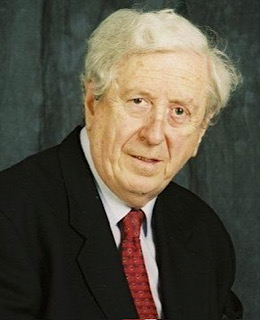
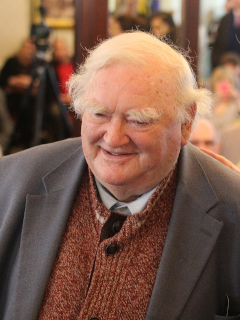
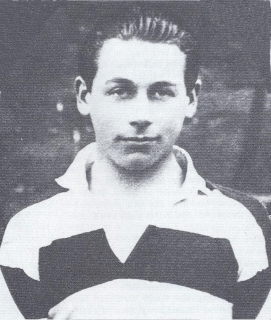
FitzGerald joins Fine Gael, attaching himself to the liberal wing of the party. and in 1969 is elected to Dáil Éireann, the lower house of the Oireachtas, the Irish parliament. He later gives up his university lectureship to become Minister for Foreign Affairs in the coalition government of Liam Cosgrave (1973–77). When the coalition government is resoundingly defeated in the 1977 Irish general election, Cosgrave yields leadership of Fine Gael to FitzGerald. In his new role as Leader of the Opposition and party leader, he proceeds to modernize and strengthen the party at the grass roots. He briefly loses power in 1982 when political instability triggers two snap elections.
By the time of the 1981 Irish general election, Fine Gael has a party machine that can easily match Fianna Fáil. The party wins 65 seats and forms a minority coalition government with the Labour Party and the support of a number of Independent TDs. FitzGerald is elected Taoiseach on June 30, 1981. To the surprise of many, FitzGerald excludes Richie Ryan, Richard Burke and Tom O’Donnell, former Fine Gael stalwarts, from the cabinet.
On May 5, 2011, it is reported that FitzGerald is seriously ill in a Dublin hospital. Newly elected Fine Gael Taoiseach Enda Kenny sends his regards and calls him an “institution.” On May 6 he is put on a ventilator. On May 19, after suffering from pneumonia, he dies at the Mater Private Hospital in Dublin at the age of 85.
In a statement, Irish PresidentMary McAleese hails FitzGerald as “a man steeped in the history of the State who constantly strove to make Ireland a better place for all its people.” Taoiseach Enda Kenny pays homage to “a truly remarkable man who made a truly remarkable contribution to Ireland.” Henry Kissinger, the former United States Secretary of State, who serves as an opposite number to FitzGerald in the 1970s, recalls “an intelligent and amusing man who was dedicated to his country.”
FitzGerald’s death occurs on the third day of Queen Elizabeth II‘s state visit to the Republic of Ireland, an event designed to mark the completion of the Northern Ireland peace process that had been “built on the foundations” of FitzGerald’s Anglo-Irish Agreement with Margaret Thatcher in 1985. In a personal message, the Queen offers her sympathies and says she is “saddened” to learn of FitzGerald’s death.
On his visit to Dublin, United States PresidentBarack Obama offers condolences on FitzGerald’s death. He speaks of him as “someone who believed in the power of education; someone who believed in the potential of youth; most of all, someone who believed in the potential of peace and who lived to see that peace realised.”
FitzGerald is the author of a number of books, including Planning in Ireland (1968), Towards a New Ireland (1972), Unequal Partners (1979), All in a Life: An Autobiography (1991), and Reflections on the Irish State (2003).
O’Riordan is the youngest child among two sons and three daughters of Daniel O’Connell O’Riordan, a barrister and justice of the peace (JP), and Katharine O’Riordan (née O’Neil), who is her husband’s first cousin. At age of four he witnesses his mother’s death in a carriage accident. His formal education, firstly as a day student at Belvedere College, Dublin (1881–85), and secondly as a boarder at Clongowes Wood College, County Kildare (1887–88), is interrupted by ill health and periods of self-education at home, marked by omnivorous reading in his father’s library.
While engaged in military studies in Bonn, Germany (March–September 1890), preparatory to entering Royal Military Academy Sandhurst in Great Britain, he falls from a horse during riding lessons, suffering a back injury that results in permanent spinal damage, thus precluding a military career.
Left with limited means after his father’s death, O’Riordan moves to London in 1891, where, after attempting suicide, he finds work as a stage actor with the Independent Theatre Society of J. T. Grein and other companies, both in London and touring the provinces, and is noted for his interpretations of Henrik Ibsen. Active in the Irish Literary Society, where he meets W. B. Yeats, he writes fiction under the pseudonym “F. Norreys Connell,” which he also adopts for his stage work.
O’Riordan’s early publications include In the Green Park (1894), a collection of connected short stories, The House of the Strange Woman (1895), a provocative novel of sexual promiscuity in upper-class London bohemia, boycotted by some booksellers as being “morally tainted,” and several books reflecting his deep interest in all things military, most notably The pity of war (1906), a collection of Kiplingesque short stories. Largely abandoning fiction for some years to concentrate on writing for the stage, he returns to Dublin for the first time in fourteen years to direct his controversial one-act play The Piper, which opens at the Abbey Theatre on February 13, 1908. It is jeered as a slander on Irish patriots in disturbances mildly reminiscent of the “Playboy” riots thirteen months previously. The audience on the third night is placated by Yeats, who in a speech from the stage interprets the play – in which a party of rebels in the 1798 rising disdain to set sentries as they argue interminably and discursively, only to be surprised and slaughtered by yeomanry – as a satirical allegory on the fruitless debate that followed the Parnellite split. The work can more usefully be read as a meditation on the propensity of democracy to disintegrate at moments of crisis into ineffectual and dillusory demagoguery. The Piper weathers the controversy to become a frequently performed staple of the Abbey Theatre repertoire during the 1910s.
After the death of John Millington Synge, O’Riordan serves briefly as managing director of the Abbey Theatre from March 25 to July 2, 1909, during which time he produces and directs two of his own one-act plays – Time on April 1, in which he also acts, and An Imaginary Conversation on May 13 – as well as the first revival of Synge’s The Playboy of the Western World on May 27. Wearied by the repeated interferences in the theatre’s affairs by its financial backer, Annie Horniman, he resigns abruptly during her fit of pique when the actress Sara Allgood recites poetry at a private gathering of suffragettes.
O’Riordan scores a major triumph on the London stage with Captain Hannibal (1909), his adaptation of a novel by Stanley Weyman, on the proceeds of which he lives for many years. Settling permanently in London, in 1910 he purchases a house at 106 Meadvale Road, Ealing, his home for the rest of his life. Rejected by the British Army at the outset of World War I owing to his disability, after several failed attempts to secure war work he eventually goes to the front in 1918 in charge of YMCA rest huts at Étaples railway junction, where he befriends the doomed soldier poet Wilfred Owen.
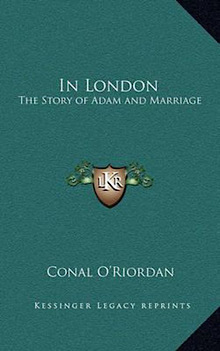
O’Riordan achieves his most accomplished writing within a cycle of twelve novels, published under his own name, chronicling the experiences of several inter-connected Irish and English families from the Napoleonic Wars to the 1920s. First of the series to appear was Adam of Dublin (1920), a combined Bildungsroman and roman-à-clef of the literary revival, with vignettes of Dublin slum life, Belvedere College, and the early years of the Abbey Theatre. He follows his protagonist, Adam Quinn, through the sexual turmoil of adolescence, an itinerant acting career, and an unhappy marriage in three sequels: Adam and Caroline (1921), In London (1922), and Married life (1924). These four novels chronologically conclude the narrative of the completed cycle. The narrative commences with the “Soldier” tetralogy – Soldier Born (1927), Soldier of Waterloo (1928), Soldier’s Wife (1935), and Soldier’s End (1938) – a picaresque treatment of the multifarious and farflung experiences of David Quinn, a forebear of Adam, from an Irish childhood and English education, to the Battle of Waterloo, where he suffers horrible facial mutilation, through the Irish famine and the American Civil War, to his death at the hands of Versaillais troops during the suppression of the Paris commune. Judith Quinn (1939) and Judith’s Love (1940), about the disappointments in love and marriage of a late-Victorian Dublin woman, link the narratives of the “Adam” and “Soldier” tetralogies, while The Age of Miracles(1925) and Young Lady Dazincourt (1926) are chronologically contemporaneous with the latter “Adam” novels. Inconsistent in intention, and uneven in execution, the cycle is strongest in its evocative descriptions of Dublin, London, and other cities, with their varied social strata, in different historical periods, in the sharp-edged, witty dialogue, and in the juxtaposition of dazzling comedy and an ironic sense of tragedy.
O’Riordan continues to write successful, if lightweight, stage plays. His 1928 production of Napoleon’s Josephine features a stellar cast including Edith Evans. Among his published plays are Shakespeare’s End, and Other Irish Plays (1912), Rope Enough (1914), His Majesty’s Pleasure (1925), The King’s Wooing (1929), and Captain Falstaff and Other Plays (1935). The historical commentary Napoleon Passes (1933) reflects his abiding interest in the French emperor. President of the Irish Literary Society from 1937 to 1939, he resigns after failing to persuade his colleagues to repudiate Ireland’s wartime neutrality. Despite age, disability, and increasing reclusivity, throughout World War II he serves as an air raid warden from 1940 to 1945. Elected a fellow of the Royal Society of Literature (1945–48), he represents the society on the council of the newly formed National Book League, and is the society’s Tredegar lecturer in 1946. Charming and convivial, a witty and erudite conversationalist, he cultivates numerous literary friendships, and is an inveterate womaniser, enjoying countless intimate relationships, both sexual and platonic.
O’Riordan marries firstly Florence Derby in 1903, a nurse eight years his senior, with whom he has one son. They are estranged by the time of her death in 1923. In 1924, he marries secondly Olga Buckley, his lover since 1920, and secretary to the wife of G. K. Chesterton. They have two sons (both born before the marriage) and one daughter. Despite considerable contemporary celebrity and critical acclaim, his work compared to that of Charles Dickens and Honoré de Balzac, he has been ignored by posterity. The best of his writing, especially the “Adam” and “Soldier” novels, merit rediscovery.
O’Riordan dies at his London home on June 18, 1948, the anniversary of the Battle of Waterloo. A special O’Riordan number of the Journal of Irish Literature (September 1985), edited by his daughter Judith, includes a portrait photograph, the text of The Piper, and a detailed chronology.
(From: “O’Riordan, Conal Holmes O’Connell (‘Norreys Connell’)” by Lawrence William White and Aideen Foley, Dictionary of Irish Biography, http://www.dib.ie, October 2009)
De Bhaldraithe is born Thomas MacDonagh Waldron on December 14, 1916, in Ballincurra, County Limerick. He moves to Dublin with his family at the age of five. He is named after Thomas MacDonagh, one of the signatories of the Proclamation of the Irish Republic, who had been executed after the Easter Rising earlier in the year. He adopts the use of the Irish language version of the name in both Irish and English. He receives his second-level education at Belvedere College in Dublin.
De Bhaldraithe’s stance on standard forms and spellings is supported by Éamon de Valera despite opposition from traditionalists in the Department of Education, and the work is widely seen as an important benchmark in Irish scholarship.
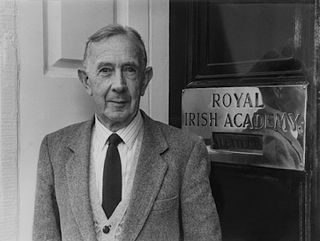
In 1942, de Bhaldraithe is appointed a professor at the Dublin Institute for Advanced Studies (DIAS) in the department of Celtic Studies. In 1960 he is appointed professor of modern Irish language and literature in University College Dublin (UCD), where he develops an impressive archive of material on Irish dialects. Much of the material in this archive is later used as the basis of Niall Ó Dónaill‘s Foclóir Gaeilge-Béarla, published in 1978, for which he is consulting editor. Also during the 1970s, he translates the Irish language diary of Amhlaoibh Ó Súilleabháin into English. It is then published by Mercier Press as “The Diary of an Irish Countryman.”
The language laboratory which de Bhaldraithe sets up in UCD is the first of its kind in any university in Ireland. His interest in seanchas (folklore) leads to his publication of Seanchas Tomás Laighléis in 1977, while his earlier work includes the ground-breaking study of the Cois Fharraige dialect (a variety of Connacht Irish), Gaeilge Chois Fharraige: Deilbhíocht. In later years he works extensively on the definitive Irish dictionary, Foclóir Stairiúil na Nua-Ghaeilge, which remains unfinished when he dies on April 24, 1996, but which is still in progress today.
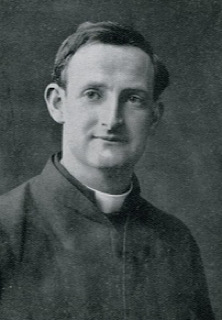
Doyle is awarded the Military Cross for his bravery during the assault on the village of Ginchy during the Battle of the Somme in 1916. He is also posthumously recommended for both the Victoria Cross and the Distinguished Service Order, but is awarded neither. It is possible that anti-Catholicism played a role in the British Army’s decision not to grant him both awards.
General William Hickie, the commander-in-chief of the 16th (Irish) Division, describes Father Doyle as “one of the bravest men who fought or served out here.”
Irish folk singer Willie ‘Liam’ Clancy is named after Doyle due to his mother’s fondness for him, although they never meet.
In August 2022, the Father Willie Doyle Association is established to petition the Catholic Church to introduce a cause for canonisation for Doyle. In January 2022, the Supplex Libellus, the formal petition, is presented to Bishop Thomas Deenihan. Having consulted with the Irish Bishops’ Conference and the Dicastery for the Causes of Saints, Deenihan issues an edict on October 27, 2022, announcing the opening of a cause. The Opening Session takes place on November 20, 2022, at the Cathedral of Christ the King, Mullingar.
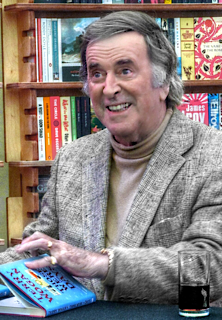
Sir Michael Terence WoganKBEDL, Irish-British radio and television broadcaster who works for the BBC in the United Kingdom (UK) for most of his career, dies on January 31, 2016, at his home in Taplow, Buckinghamshire, England. Between 1993 and his semi-retirement in December 2009, his BBC Radio 2 weekday breakfast programme Wake Up to Wogan regularly draws an estimated eight million listeners. He is believed at the time to be the most listened-to radio broadcaster in Europe.
Wogan, the elder of two children, is born at Cleary’s Nursing Home, Elm Park, Limerick, County Limerick, on August 3, 1938. He is the son of the manager of Leverett & Frye, a high-class grocery store in Limerick, and is educated at Crescent College, a Jesuit school, from the age of eight. He experiences a strongly religious upbringing, later commenting that he had been brainwashed into believing by the threat of going to hell. Despite this, he often expresses his fondness for the city of his birth, commenting on one occasion that “Limerick never left me, whatever it is, my identity is Limerick.”
At the age of 15, after his father is promoted to general manager, Wogan moves to Dublin with his family. While living there he attends Crescent College’s sister school, Belvedere College. He participates in amateur dramatics and discovers a love of rock and roll. After leaving Belvedere in 1956, he has a brief career in the banking profession, joining the Royal Bank of Ireland. Still in his twenties, he joins the national broadcaster of Ireland, Raidió Teilifís Éireann (RTÉ), as a newsreader and announcer, after seeing a newspaper advertisement inviting applicants.
Wogan conducts interviews and presents documentary features during his first two years at RTÉ, before moving to the light entertainment department as a disc jockey and host of TV quiz and variety shows such as Jackpot, a top-rated quiz show on RTÉ in the 1960s.
Wogan is a leading media personality in Ireland and Britain from the late 1960s, and is often referred to as a “national treasure.” In addition to his weekday radio show, he is known for his work on television, including the BBC One chat show Wogan, presenting Children in Need, the game show Blankety Blank and Come Dancing. He is the BBC’s commentator for the Eurovision Song Contest from 1971 to 2008 (radio in 1971, 1974–1977; television in 1973, 1978, 1980–2008) and the Contest’s host in 1998. From 2010 to 2015 he presents Weekend Wogan, a two-hour Sunday morning show on BBC Radio 2.
In 2005, Wogan acquires British citizenship in addition to his Irish nationality and is awarded a knighthood in the same year and is therefore entitled to use the title “Sir” in front of his name.
Wogan’s health declines after Christmas 2015. He does not present Children in Need in November 2015, citing back pain as the reason for his absence from the long-running annual show. One of his friends, Father Brian D’Arcy, visits him during January and notices he is seriously ill. He dies of cancer at the age of 77 on January 31, 2016, at his home in Taplow, Buckinghamshire, England.
After Wogan’s death and his private funeral a few weeks later, a public memorial service is held on September 27 of the same year. This is held at Westminster Abbey and is opened by a recording of Wogan himself, and features a number of his celebrity friends making speeches, such as Chris Evans and Joanna Lumley. The service is broadcast live on BBC Radio 2.
On November 16, 2016, the BBC renames BBC Western House, home of BBC Radio 2, in his memory, to BBC Wogan House.
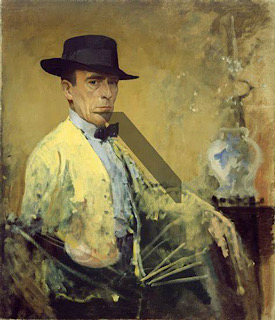
Whelan is awarded many prizes in the Royal Dublin Society (RDS) Taylor art competitions, including one in 1912 for a portrait of his sister Lena, entitled On the Moors, rendered in a strongly academic technique. In 1916, he wins the Taylor scholarship for the Royal Hibernian Academy (RHA) schools for his finest early work, The Doctor’s Visit, an adroitly executed composition of contrasting shadows and light. Typical of many of his genre interiors, the painting depicts a room in the family home, with relatives as models: Whelan’s mother sits by the bed watching over his ill cousin, while his sister, dressed in a Mater hospital nurse’s uniform, is in the background opening the door for the doctor. The subtly evoked atmosphere of restrained emotion foreshadowed a hallmark of his mature style.
Whelan exhibits annually at the RHA for forty-five years (1911–56), averaging six works per year. He is elected an RHA associate in 1920, becoming a full member in 1924. He participates in the Exposition d’art irlandais at the Galerie Barbazanges in Paris in 1922. A visiting teacher at the RHA schools in 1924, he also teaches in the DMSA for a time. He has studios at 64 Dawson Street (1914–27) and 7 Lower Baggot Street (1931–56). Beginning in the 1910s, he receives regular commissions for portraits, constituting his primary source of income. Having become the family’s main breadwinner following his parents’ deaths in the 1920s, he concentrates most of his production on this lucrative activity, portraying numerous leading figures in the spheres of politics, academia, religion, society, medicine, and law.
Situated securely in the academic tradition, in most of his portraits Whelan favours a sombre, restricted palette, with the sitter placed, in grave demeanour, against a monotone background with few accessories. In a 1943 interview he asserts that twentieth-century portraiture suffers from the drabness of modern costume, for which the artist must compensate by careful rendition of the subject’s hands. He tends to depart from his prevailing portrait style when painting women, whom he characteristically depicts in meticulously observed interiors, a notable example being his portrait of Society hostess Gladys Maccabe (c.1946; NGI).
Whelan’s commercial concentration on portraiture notwithstanding, he expresses his true talent in genre compositions, especially kitchen interiors, in which he emulates the technique of the Dutch painter Johannes Vermeer. Two of the most accomplished of these depict his sister Frances in the basement kitchen of the family home: The Kitchen Window (1927; Crawford Art Gallery, Cork) demonstrates a particularly skillful use of light, while Interior of a Kitchen (1935) is notable for the dexterous handling of objects of varied shapes and textures. His genre works include both urban and rural scenes, with a distinctive interest in portraying occupations and other activities. Gypsy (1923), an Orpenesque composition of a shawled woman in a west-of-Ireland landscape with a caravan in the background, receives wide contemporary critical acclaim. Jer (c.1925), depicting a man seated by the fire in a cottage interior, is reproduced in J. Crampton Walker’s Irish Art and Landscape (1927). The Fiddler (c.1932), a naturalistic, sensitively characterised study, is first shown at an Ulster Academy exhibition at Stranmillis, Belfast. A Kerry Cobbler is reproduced in Twelve Irish Artists (1940), introduced by Thomas Bodkin, as among the works denoting the development of a distinctively Irish school of painting.
In 1929, Whelan designs the first Irish Free State commemorative stamp, a portrait of Daniel O’Connell for the centenary of Catholic emancipation. Commissioned by the Thomas Haverty trust to paint an incident from the life of Saint Patrick for the 1932 Eucharistic Congress, he executes The Baptism by St. Patrick of Ethna the Fair and Fedelmia the Ruddy, Daughters of the Ard Rí Laoghaire, a work highly conservative in style. He rapidly completes an oil study of the papal legate, Lorenzo Lauri, also for the Eucharistic Congress. He is represented in the art competitions at the 1932 Summer Olympics in Los Angeles. His depiction of Saint Brigid, shown at the Academy of Christian Art exhibition (1940), becomes a familiar image owing to the wide circulation of reproductions.
Whelan’s political portraits are influential in creating a strong, assured image of the newly formed Irish state, and thus retain an historical significance. His posthumous portrait, The Late General Michael Collins, exhibited at the RHA in 1943 and now held in Leinster House, is an iconic, heroic image of the fallen leader. His portraits of Arthur Griffith and Kevin O’Higgins – commissioned posthumously, as is the Collins, by Fine Gael – also hang in Leinster House, while that of John A. Costello, exhibited at the RHA in 1949, is now held in the King’s Inns, Dublin. He paints two presidents, Douglas Hyde and Seán T. O’Kelly, both works currently in Áras an Uachtaráin. A portrait of Éamon de Valera, painted in 1955 when the sitter is Leader of the Opposition, is in Leinster House. In 1954, he designs a second commemorative stamp, picturing a reproduction of a portrait bust of John Henry Newman, to mark the centenary of the Catholic University of Ireland.
Whelan is elected an honorary academician of both the Ulster Academy of Arts (1931), and the Royal Ulster Academy (1950). He becomes a member of the United Arts Club in 1934. As a representative of the RHA, he sits on the board of governors of the National Gallery of Ireland for many years, and is on the advisory committee of the Municipal Gallery of Modern Art. Unmarried, he resides until his death at the Eccles Street address, with two sisters who continue to manage the family hotel. He dies on November 6, 1956, from leukemia at the Mater private nursing home in Dublin. He is buried in Glasnevin Cemetery.
(From: “Whelan, (Michael) Leo,” by Carmel Doyle, Dictionary of Irish Biography, http://www.dib.ie, October 2009)
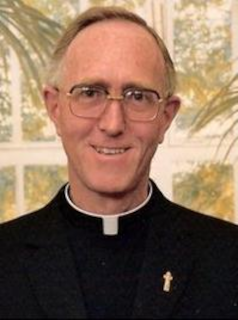
Martin is born on July 23, 1921, in Ballylongford, County Kerry, to a middle-class family in which the children are raised speaking Irish at the dinner table. His parents, Conor and Katherine Fitzmaurice Martin, have five sons and five daughters. Four of the five sons become priests, including his younger brother, Francis Xavier Martin.
Martin participates in the research on the Dead Sea Scrolls and publishes 24 articles on Semitic palaeography. He does archaeological research and works extensively on the Byblos syllabary in Byblos, in Tyre, and in the Sinai Peninsula. He assists in his first exorcism while working in Egypt for archaeological research. In 1958, he publishes a work in two volumes, The Scribal Character of the Dead Sea Scrolls.
In 1964, Martin requests a release from his vows and from the Jesuit Order. He receives a provisional release in May 1965 and a dispensation from his vows of poverty and obedience on June 30, 1965. Even if dispensed from his religious vow of chastity, he remains under the obligation of chastity if still an ordained secular priest. He maintains that he remains a priest, saying that he had received a dispensation from Paul VI to that effect.
Martin moves to New York City in 1966, working as a dishwasher, a waiter, and taxi driver, while continuing to write. He co-founds an antiques firm and is active in communications and media for the rest of his life.
In 1967, Martin receives his first Guggenheim Fellowship. In 1970, he publishes the book The Encounter: Religion in Crisis, winning the Choice Book Award of the American Library Association. He then publishes Three Popes and the Cardinal: The Church of Pius, John and Paul in its Encounter with Human History (1972) and Jesus Now (1973). In 1970, he becomes a naturalizedU.S. citizen.
In 1969, Martin receives a second Guggenheim Fellowship, allowing him to write his first of four bestsellers, Hostage to the Devil: The Possession and Exorcism of Five Living Americans (1976). In the book, he calls himself an exorcist, claiming he assisted in several exorcisms. According to McManus Darraugh, William Peter Blatty “wrote a tirade against Malachi, saying his 1976 book was a fantasy, and he was just trying to cash in.” Darraugh also says that Martin became “an iconic person in the paranormal world.”
Martin is a periodic guest on Art Bell‘s radio program, Coast to Coast AM, between 1996 and 1998. The show continues to play tapes of his interviews on Halloween.
The Vatican restores Martin’s faculty to celebrate Mass in 1989, at his request. He is strongly supported by some Traditionalist Catholic sources and severely criticized by other sources, such as the National Catholic Reporter. He serves as a guest commentator for CNN during the live coverage of the visit of Pope John Paul II to the United States in October 1995.
On July 27, 1999, Martin dies in Manhattan of an intracerebral haemorrhage, four days after his 78th birthday. It is caused by a fall in his Manhattan apartment. The documentary Hostage to the Devil claims that Martin says he was pushed from a stool by a demonic force.
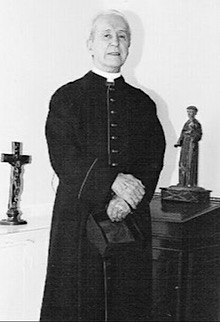
Ryan is Professor of Oriental Languages at University College Dublin before his appointment by Pope Paul VI as Archbishop of Dublin and Primate of Ireland on December 29, 1971. Maintaining his connection and interest in oriental studies, he serves as chairman of the trustees of the Chester Beatty Library from 1978 to 1984.
During his term, Ryan consolidates much of the expansion of the archdiocese which had taken place during the term of his predecessor. He also oversees the fuller implementation of the reforms of Vatican II. He is particularly interested in liturgical reform.
Ryan also takes a traditional stand on social issues, including poverty, family life and opposition to abortion. He strongly promotes the Eighth Amendment of the Constitution of Ireland in 1983, granting the equal right to life to mother and unborn.
As Archbishop, Ryan gives the people of Dublin a public park on a site earmarked by his predecessors for a proposed cathedral. It is named “Archbishop Ryan Park” in his honour. The land, at Merrion Square, is a gift from the archbishop to the city of Dublin.
Ryan dies at the age of 60 in Rome on February 21, 1985, following a heart attack. He is buried in St. Mary’s Pro-Cathedral.
Coogan’s particular focus is on Ireland’s nationalist/independence movement in the 20th century, a period of unprecedented political upheaval. He blames the Troubles in Northern Ireland on “Paisleyism.”
In 2000, Irish writer and editor Ruth Dudley Edwards is awarded £25,000 damages and a public apology by the High Court in London against Coogan for factual errors in references to her in his book Wherever Green is Worn: The Story of the Irish Diaspora (2000). In the book, he writes that Dudley Edwards had “groveled to and hypocritically ingratiated herself with the English establishment to further her writing career.” He also alleges that Dudley Edwards “had abused the position of chairwoman of the British Association for Irish Studies (BAIS) by trying to impose her political views on it” and that her commission to write True Brits had been awarded because of political favouritism.
When TaoiseachEnda Kenny causes confusion following a speech at Béal na Bláth by incorrectly claiming Michael Collins had brought Lenin to Ireland, Coogan comments, “Those were the days when bishops were bishops and Lenin was a communist. How would that have gone down with the churchyard collections?”
Coogan has been criticised by the Irish historians Liam Kennedy and Diarmaid Ferriter, as well as Cormac Ó Gráda, for a supposed lack of thoroughness in his research and bias:
“Well, I waited in this book to hear some great revelation, and it just isn’t there. It’s anticlimactic. I could not see the great plot, and indeed there is no serious historian who … I can’t think of a single historian who has researched the Famine in depth – and Tim Pat has not researched it in depth” (The Famine Plot).
“Coogan is not remotely interested in looking at what others have written on 20th-century Irish history…. he does not appear interested in context and shows scant regard for evidence. He does not attempt to offer any sustained analysis in relation to the challenges of state building, the meaning of sovereignty, economic and cultural transformations, or comparative perspectives on the evolution of Irish society. There is no indication whatsoever that Coogan has engaged with the abundant archival material relating to the subject matter he pronounces on. There is no rhyme or reason when it comes to the citation of the many quotations he uses; the vast majority are not referenced. For the 300-page text, 21 endnotes are cited and six of them relate to Coogan’s previous books, a reminder that much of this tome consists of recycled material…. Tim Pat Coogan… he is a decent, compassionate man who has made a significant contribution to Irish life. But he has not read up on Irish history; indeed, such is the paucity of his research efforts that this book amounts to a travesty of 20th-century Irish history” (1916: The Mornings After).
Barry is the fourth of seven children born to Thomas Barry, dairyman, and Mary Barry (née Dowling), both originally from northeast County Carlow. His father dies of heart disease on February 8, 1908, at the age of 56. His mother then moves the family to the family’s farm at Tombeagh, Hacketstown, County Carlow, while retaining the family’s townhouse on Fleet Street. As a child he goes to the National School in Rathvilly. In 1915, he is sent to live in Dublin and attends the O’Connell Schools for three months, before enrolling in the Preparatory Grade at St. Mary’s College, Rathmines, in September 1915. He remains at that school until May 31, 1916, when it is closed by its clerical sponsors. With the closure of St. Mary’s College, he transfers to Belvedere College, a Jesuit school in Dublin. He joins the Irish Volunteers, the forerunner of the IRA, while still at Belvedere College, and enters University College Dublin (UCD) in 1919 to study medicine.
As a member of 1st Battalion, Dublin Brigade of the Irish Volunteers, he takes part in a successful raid for arms on the military post in King’s Inns, Dublin, on June 1, 1920. Within only six minutes the raiders secure rifles, light machine guns, and large quantities of ammunition, and depart the site with no casualties. He also takes part in an abortive attempt to burn Aughavanagh House, Aughrim, County Wicklow in July 1920, and an attack on a British ration party in Church Street, Dublin, on September 20, with the aim of seizing arms. The final operation fails. Gunfire breaks out, three soldiers of around Barry’s own age are killed or fatally wounded, and he becomes the first Volunteer to be captured in an armed attack since 1916.
During interrogation, Barry is threatened with a bayonet and is mistreated. A general court-martial on October 20, which he refuses to recognise, condemns him to death for murdering the three soldiers, although one of the bullets taken from Private Marshall Whitehead’s body is a .45 calibre, while all witnesses state that Barry was armed with a .38 Mauser Parabellum. Despite widespread appeals on grounds of both clemency and expediency, the cabinet in London and officials in Dublin decide separately against a reprieve, probably because of its likely effect on the morale of soldiers and police.
On October 28, the Irish Bulletin, the official propaganda newspaper produced by Dáil Éireann‘s Department of Publicity, publishes Barry’s statement alleging torture. The headline reads English Military Government Torture a Prisoner of War and are about to Hang him. The Irish Bulletin declares Barry to be a prisoner of war, suggesting a conflict of principles is at the heart of the conflict. The British do not recognise a war and treat all killings by the Irish Republican Army (IRA) as murder. The public learns on this day that the date of execution has been fixed for November 1.
He was hanged in Mountjoy Prison, Dublin, on November 1, after hearing two Masses in his cell. The timing of the execution, only seven days after the death by hunger strike of Terence MacSwiney, the republican Lord Mayor of Cork, brings public opinion to a fever-pitch. He is buried in unconsecrated ground on the jail property. His comrade and fellow student Frank Flood is buried alongside him four months later. A plain cross marks their graves and those of Patrick Moran, Thomas Whelan, Thomas Traynor, Patrick Doyle, Thomas Bryan, Bernard Ryan, Edmond Foley and Patrick Maher who are hanged in the same prison before the Anglo-Irish Treaty of July 1921 which ends hostilities between Irish republicans and the British. The graves go unidentified until 1934. They become known as the Forgotten Ten by republicans campaigning for the bodies to be reburied with honour and proper rites. On October 14, 2001, the remains of the ten men are given a state funeral and moved from Mountjoy Prison to be re-interred at Glasnevin Cemetery in Dublin.
Barry is the first person to be tried and executed for a capital offence under the Restoration of Order in Ireland Act 1920, passed twelve weeks earlier. Together with his youth, this makes him a republican martyr celebrated in many ballads and verses. The best-known, set to a tune popular with British servicemen, is recorded by the American singer Paul Robeson, among others. A memorial stained-glass window by Richard King of the Harry Clarke Studio is later installed in the former UCD council chamber (afterward called the Kevin Barry Room), Earlsfort Terrace, Dublin.