seamus dubhghaill

Promoting Irish Culture and History from Little Rock, Arkansas, USA


Leave a comment

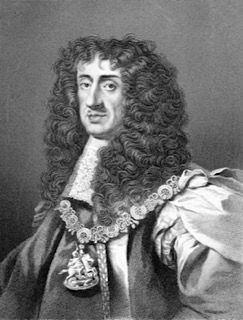
Birth of Charles Stuart, King Charles II of Great Britain and Ireland

Charles II, King of Scotland from 1649 until 1651 and King of England, Scotland, and Ireland from 1660 until his death in 1685, is born at St. James’s PalaceLondon, on May 29, 1630. The years of his reign are known in English history as the Stuart Restoration. His political adaptability and his knowledge of men enables him to steer his country through the convolutions of the struggle between Anglicans, Catholics, and Dissenters that mark much of his reign.

Charles is the eldest surviving son of Charles I and Henrietta Maria of France. His early years are unremarkable, but before he is twenty his conventional education has been completely overshadowed by the harsh lessons of defeat in the English Civil War against the Puritans and subsequent isolation and poverty. Thus he emerges into precocious maturity, cynical, self-indulgent, skilled in the sort of moral evasions that make life comfortable even in adversity.

Though the early years of tawdry dissipation tarnish the romance of Charles’s adventures, not all his actions are discreditable. He tries to fight his father’s battles in the west of England in 1645. He resists the attempts of his mother and his sister Henrietta Anne to convert him to Catholicism and remains openly loyal to his Protestant faith. In 1648, he makes strenuous efforts to save his father, and when, after Charles I’s execution in 1649, he is proclaimed Charles II by the Scots in defiance of the English republic. He is prepared to go to Scotland and swallow the stringently anti-Catholic and anti-Anglican Presbyterian Covenant as the price for alliance. But the sacrifice of friends and principles was futile and leaves him deeply embittered. The Scottish army is routed by the English under Oliver Cromwell at Dunbar in September 1650, and in 1651 Charles’s invasion of England ends in defeat at Worcester. The young king becomes a fugitive, hunted through England for forty days but protected by a handful of his loyal subjects until he escapes to France in October 1651.

Charles’s safety is comfortless, however. He is destitute and friendless, unable to bring pressure against an increasingly powerful England. France and the Dutch Republic are closed to him by Cromwell’s diplomacy, and he turns to Spain, with whom he concludes a treaty in April 1656. He persuades his brother James to relinquish his command in the French army and gives him some regiments of Anglo-Irish troops in Spanish service, but poverty dooms this nucleus of a royalist army to impotence. European princes take little interest in Charles and his cause, and his proffers of marriage are declined. Even Cromwell’s death does little to improve his prospects. But George Monck, one of Cromwell’s leading generals, realized that under Cromwell’s successors the country is in danger of being torn apart and with his formidable army creates the situation favourable to Charles’s restoration in 1660.

Most Englishmen now favour a return to a stable and legitimate monarchy, and, although more is known of Charles II’s vices than his virtues, he has, under the steadying influence of Edward Hyde, his chief adviser, avoided any damaging compromise of his religion or constitutional principles. With Hyde’s help, Charles issues in April 1660 his Declaration of Breda, expressing his personal desire for a general amnesty, liberty of conscience, an equitable settlement of land disputes, and full payment of arrears to the army. The actual terms are left to a free parliament, and on this provisional basis Charles is proclaimed king in May 1660. Landing at Dover on May 25, he reaches a rejoicing London on his 30th birthday.

The unconditional nature of the settlement that takes shape between 1660 and 1662 owes little to Charles’s intervention and likely exceeds his expectations. He is bound by the concessions made by his father in 1640 and 1641, but the Parliament elected in 1661 is determined on an uncompromising Anglican and royalist settlement. The Militia Act of 1661 gives Charles unprecedented authority to maintain a standing army, and the Corporation Act 1661 allows him to purge the boroughs of dissident officials. Other legislation places strict limits on the press and on public assembly, and the Act of Uniformity 1662 creates controls of education. An exclusive body of Anglican clergy and a well-armed landed gentry are the principal beneficiaries of Charles II’s restoration.

But within this narrow structure of upper-class loyalism there are irksome limitations on Charles’s independence. His efforts to extend religious toleration to his Nonconformist and Roman Catholic subjects are sharply rebuffed in 1663, and throughout his reign the House of Commons thwarts the more generous impulses of his religious policy. A more pervasive and damaging limitation is on his financial independence. Although the Parliament votes the king an estimated annual income of £1,200,000, Charles has to wait many years before his revenues produce such a sum, and by then the damage of debt and discredit is irreparable. He is incapable of thrift and finds it painful to refuse petitioners. With the expensive disasters of the Second Anglo-Dutch War of 1665–67 the reputation of the restored king sinks to its lowest level. His vigorous attempts to save London during the Great Fire of September 1666 cannot make up for the negligence and maladministration that leads to England’s naval defeat in June 1667.

Charles clears himself by dismissing his old adviser, Edward Hyde, and tries to assert himself through a more adventurous foreign policy. So far, his reign has made only modest contributions to England’s commercial advancement. The Navigation Acts of 1660 and 1663, which are prompted by the threat to British shipping by the rise of the Dutch carrying trade, are valuable extensions of Cromwellian policies, and the capture of New York in 1664 is one of his few gains from the Dutch. Although marriage to Princess Catherine of Braganza of Portugal in 1662 brings him the possession of Tangier and Bombay, they are of less strategic value than Dunkirk, which he sells to Louis XIV in 1662. He Is, however, prepared to sacrifice much for the alliance of his young cousin. Through his sister Henrietta Anne, Duchess of Orléans, he has direct contact with the French court, and it is through her that he negotiates the startling reversal of the Protestant Triple Alliance (England, the Dutch Republic, Sweden) of 1668. By the terms of the so-called Secret Treaty of Dover of May 1670, not only does England and France join in an offensive alliance against the Dutch, but Charles promises to announce his conversion to Roman Catholicism. If this provokes trouble from his subjects, he is assured of French military and financial support. He sees to it that the conversion clause of the treaty is not made public.

This clause, which is the most controversial act of Charles II’s reign, can be explained as a shortsighted bid for Louis XIV’s confidence. In this, however, it fails. Louis neither welcomes Charles’s intentions nor believes in them, and, in the event, it is only upon his deathbed that Charles is received into the Roman Catholic Church. But he has now fatally compromised himself. Although he subsequently attempts to pursue policies independent of Louis, he remains bound to him by inclination as well as by the fear of blackmail. More seriously, he has lost the confidence of his subjects, who deplore the French alliance and distrust the whole tendency of his policies.

Other circumstances deepen Englishmen’s discontent with their king. By the 1670s the miscarriages of the queen have reduced hopes that Charles will have a legitimate heir, and in 1673 the second marriage of his brother James, Duke of York, to Mary of Modena, increases the possibility of the Catholic line of succession, for James’s conversion to the Roman church is well known. But it is for his autocratic character as much as for his religion that James is feared as his brother is not, and it is on his brother’s behalf that Charles eventually has to face the severest political storm of his reign.

The Popish Plot of 1678 is an elaborate tissue of fictions built around a skeleton of even stranger truths. The allegations of Titus Oates, a former Anglican cleric who has been expelled from a Jesuit seminary, that Roman Catholics plan to murder Charles to make James king, seem to be confirmed by scraps of evidence of which Charles is justifiably skeptical. But he is obliged to bow before the gusts of national hysteria that seek to bar his brother from the line of succession. Between 1679 and 1681, Charles very nearly loses control of his government. Deprived of his chief minister, the Earl of Danby, who has been compromised by his negotiations with France, he has to allow Anthony Ashley-Cooper, 2nd Earl of Shaftesbury, and his Whig supporters, who uphold the power of the Parliament—men whom he detests—to occupy positions of power in central and local government. Three general elections produce three equally unmanageable parliaments, and, although Charles publicly denies the legitimacy of his first son, the Protestant Duke of Monmouth, he has to send his Catholic brother James out of the country and offer a plan of limitations that will bind James if he comes to the throne. The plan proves to be unacceptable both to the Whigs and to James, and, when Charles falls seriously ill in the summer of 1679, there is real danger of civil conflict.

But Charles keeps his nerve. He defends his queen against slanders, dismisses the intractable parliaments, and recovers control of his government. His subjects’ dread of republican anarchy proves stronger than their suspicion of James, and from March 1681, when he dissolves his last Parliament, Charles enjoys a nationwide surge of loyalty almost as fervent as that of 1660. He has made yet another secret treaty with France and in addition to a French subsidy can now count upon a healthy public revenue. Reforms at the Treasury, which he inaugurates in 1667, provide the crown with a firm basis of administrative control that is among Charles II’s most valuable legacies to English government.

As a result of these actions, Charles, who dies on February 6, 1685, at Whitehall in London, is able to end his reign in the kind of tranquil prosperity he has always sought.

Leave a comment

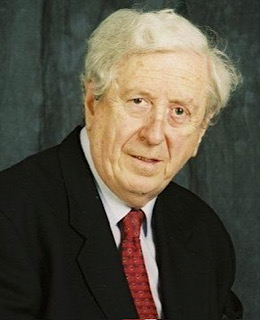
Death of Garret FitzGerald, Eighth Taoiseach of Ireland

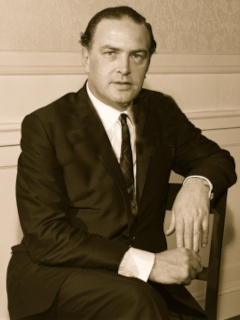
Garret Desmond FitzGerald, Fine Gael politician, economist and barrister who serves twice as Taoiseach (1981-82 and 1982-87), dies at the age of 85 at the Mater Private Hospital in Dublin on May 19, 2011, after suffering from pneumonia. He serves as Senator for the Industrial and Commercial Panel from 1965 to 1969, a Teachta Dála (TD) from 1969 to 1992, Minister for Foreign Affairs from 1973 to 1977, Leader of Fine Gael from 1977 to 1987 and twice Leader of the Opposition between 1977 and 1982.

FitzGerald is born into a very politically active family in Ballsbridge, Dublin, on February 9, 1926, during the infancy of the Irish Free State. His father, Desmond FitzGerald, is the Free State’s first Minister for External Affairs. He is educated at the Jesuit Belvedere CollegeUniversity College Dublin (UCD) and King’s Inns, Dublin, and qualifies as a barrister. Instead of practicing law, however, in 1959 he becomes an economics lecturer in the department of political economy at UCD, and a journalist.

FitzGerald joins Fine Gael, attaching himself to the liberal wing of the party. and in 1969 is elected to Dáil Éireann, the lower house of the Oireachtas, the Irish parliament. He later gives up his university lectureship to become Minister for Foreign Affairs in the coalition government of Liam Cosgrave (1973–77). When the coalition government is resoundingly defeated in the 1977 Irish general election, Cosgrave yields leadership of Fine Gael to FitzGerald. In his new role as Leader of the Opposition and party leader, he proceeds to modernize and strengthen the party at the grass roots. He briefly loses power in 1982 when political instability triggers two snap elections.

By the time of the 1981 Irish general election, Fine Gael has a party machine that can easily match Fianna Fáil. The party wins 65 seats and forms a minority coalition government with the Labour Party and the support of a number of Independent TDs. FitzGerald is elected Taoiseach on June 30, 1981. To the surprise of many, FitzGerald excludes Richie RyanRichard Burke and Tom O’Donnell, former Fine Gael stalwarts, from the cabinet.

In his prime ministry, FitzGerald pushes for liberalization of Irish laws on divorceabortion, and contraception and also strives to build bridges to the Protestants in Northern Ireland. In 1985, during his second term, he and British Prime Minister Margaret Thatcher sign the Anglo-Irish (Hillsborough) Agreement, giving Ireland a consultative role in the governing of Northern Ireland. After his party loses in the 1987 Irish general election, he resigns as its leader and subsequently retires in 1992.

On May 5, 2011, it is reported that FitzGerald is seriously ill in a Dublin hospital. Newly elected Fine Gael Taoiseach Enda Kenny sends his regards and calls him an “institution.” On May 6 he is put on a ventilator. On May 19, after suffering from pneumonia, he dies at the Mater Private Hospital in Dublin at the age of 85.

In a statement, Irish President Mary McAleese hails FitzGerald as “a man steeped in the history of the State who constantly strove to make Ireland a better place for all its people.” Taoiseach Enda Kenny pays homage to “a truly remarkable man who made a truly remarkable contribution to Ireland.” Henry Kissinger, the former United States Secretary of State, who serves as an opposite number to FitzGerald in the 1970s, recalls “an intelligent and amusing man who was dedicated to his country.”

FitzGerald’s death occurs on the third day of Queen Elizabeth II‘s state visit to the Republic of Ireland, an event designed to mark the completion of the Northern Ireland peace process that had been “built on the foundations” of FitzGerald’s Anglo-Irish Agreement with Margaret Thatcher in 1985. In a personal message, the Queen offers her sympathies and says she is “saddened” to learn of FitzGerald’s death.

On his visit to Dublin, United States President Barack Obama offers condolences on FitzGerald’s death. He speaks of him as “someone who believed in the power of education; someone who believed in the potential of youth; most of all, someone who believed in the potential of peace and who lived to see that peace realised.”

FitzGerald is buried at Shanganagh Cemetery in Shankill, Dublin.

FitzGerald is the author of a number of books, including Planning in Ireland (1968), Towards a New Ireland (1972), Unequal Partners (1979), All in a Life: An Autobiography (1991), and Reflections on the Irish State (2003).


Leave a comment

Death of Donogh O’Malley, Politician & Rugby Union Player

Donogh Brendan O’Malley, Irish Fianna Fáil politician and rugby union player, dies suddenly in Limerick, County Limerick, on March 10, 1968. He serves as Minister for Education (1966-68), Minister for Health (1965-66) and Parliamentary Secretary to the Minister for Finance (1961-65). He also serves as a Teachta Dála (TD) for the Limerick East constituency (1954-68). He is best remembered as the Minister who introduces free secondary school education in the Republic of Ireland.

O’Malley is born on January 18, 1921, in Limerick, one of eight surviving children of Joseph O’Malley, civil engineer, and his wife, Mary “Cis” (née Tooher). Born into a wealthy middle-class family, he is educated by the Jesuits at Crescent College and later at Clongowes Wood CollegeCounty Kildare. He later studies at University College Galway (UCG), where he is conferred with a degree in civil engineering in 1943. He later returns to Limerick, where he works as an engineer before becoming involved in politics.

O’Malley plays rugby at provincial level for MunsterLeinster and Connacht and at club level for Bohemians and Shannon RFC. His chances at an international career are ruined by the suspension of international fixtures during World War II. It is at a rugby match in Tralee that he first meets Dr. Hilda Moriarty, who he goes on to marry in August 1947.

Although O’Malley runs as a Fianna Fáil candidate, he is born into a politically active family who supports Cumann na nGaedheal until a falling-out with the party in the early 1930s. He first becomes involved in local politics as a member of Limerick Corporation. He becomes Mayor of Limerick in 1961, the third O’Malley brother to hold the office (Desmond from 1941-43 and Michael from 1948-49). He is a strong electoral performer, topping the poll in every general election he runs in.

O’Malley is first elected to Dáil Éireann as a Fianna Fáil TD for Limerick East at the 1954 Irish general election. Fianna Fáil is not returned to government on that occasion. He spends the rest of the decade on the backbenches. However, his party is returned to power in 1957. Two years later, the modernising process begins when Seán Lemass takes over from Éamon de Valera as Taoiseach. Lemass introduces younger cabinet ministers, as the old guard who has served the party since its foundation in 1926 begin to retire.

In 1961, O’Malley joins the government as Parliamentary Secretary to the Minister for Finance. He is part of a new, brasher style of politician that emerges in the 1960s, sometimes nicknamed “the men in the mohair suits.” It is expected that this generation of politician, born after the Irish Civil War, will be a modernising force in post-de Valera Ireland.

Although his sporting background is in rugby and swimming, it is association football which O’Malley gets involved in at a leadership level, becoming President of the Football Association of Ireland despite never having played the sport.

Following Fianna Fáil’s retention of power in the 1965 Irish general election, O’Malley joins the cabinet as Minister for Health. He spends just over a year in this position before he is appointed Minister for Education, a position in which he displays renowned dynamism. Having succeeded Patrick Hillery, another dynamic young minister, he resolves to act swiftly to introduce the recommendations of an official report on education.

As Minister for Education, O’Malley extends the school transport scheme and commissions the building of new non-denominational comprehensive and community schools in areas where they are needed. He introduces Regional Technical Colleges (RTCs), now called Institutes of Technology, in areas where there is no third level college. The best example of this policy is the University of Limerick, originally an Institute of Higher Education, where O’Malley is credited with taking the steps to ensure that it becomes a university. His plan to merge Trinity College Dublin and University College Dublin arouses huge controversy, and is not successful, despite being supported by his cabinet colleague Brian Lenihan. Access to third-level education is also extended, the old scholarship system being replaced by a system of means-tested grants that give easier access to students without well-off parents.

Mid-twentieth century Ireland experiences significant emigration, especially to the neighbouring United Kingdom where, in addition to employment opportunities, there is a better state provision of education and healthcare. Social change in Ireland and policies intending to correct this deficit are often met with strong resistance, such as Noël Browne‘s proposed Mother and Child Scheme. As a former Health Minister, O’Malley has first-hand experience of running the department which had attempted to introduce this scheme and understood the processes that caused it to fail, such as resistance from Department of Finance and John Charles McQuaid. This influences his strategy in presenting the free-education proposal.

Shortly after O’Malley is appointed, he announces that from 1969 all education up to Intermediate Certificate level will be without cost, and free buses will bring students in rural areas to their nearest school, seemingly making this decision without consulting other ministers. However, he does discuss it with Lemass. Jack Lynch, who, as Minister for Finance, has to find the money to pay for the programme, is not consulted and is dismayed at the announcement.

By announcing the decision first to journalists and on a Saturday (during a month when the Dáil is in recess), the positive public reaction tempers resistance to the idea before the next cabinet meeting. O’Malley’s proposals are hugely popular with the public, and it is impossible for the government to go back on his word.

Some Irish commentators consider that O’Malley’s extension of education, changing Ireland from a land where the majority are schooled only to the age of 14 to a country with universal secondary-school education, indirectly leads to the Celtic Tiger boom of the 1990s-2000s when it is followed for some years by an extension of free education to primary degree level in university, a scheme that is launched in 1996 by the Labour Party and axed in 2009 by Fianna Fáil’s Batt O’Keeffe.

In 1967, O’Malley appoints Justice Eileen Kennedy to chair a committee to carry out a survey and report on the reformatory and industrial school systems. The report, which is published in 1970, is considered ground-breaking in many areas and comes to be known as the Kennedy Report. The Report makes recommendations about a number of matters, including the Magdalene laundries, in relation to which they are not acted upon. The report recommends the closure of a number of reformatories, including the latterly infamous reformatory at DaingeanCounty Offaly.

O’Malley’s reforms make him one of the most popular members of the government. He is affectionately known as “the School Man” for his work in education. His sudden death in Limerick on March 10, 1968, before his vision for the education system is completed, comes as a shock to the public. He is buried with a full Irish state funeral.

Following O’Malley’s death, his widow, Hilda O’Malley, does not run in the subsequent by-election for the seat he has left vacant. It is won narrowly by their nephew Desmond O’Malley. Hilda seeks the Fianna Fáil nomination for the 1969 Irish general election, but Fianna Fáil gives the party nomination to Desmond, as the sitting TD. Hilda runs as an Independent candidate in that election. After what proves a bitter campaign against her nephew, she fails to get the fourth seat in Limerick East by just 200 votes.


Leave a comment

Birth of Father Willie Doyle

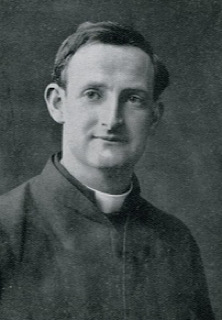
William Joseph Gabriel DoyleSJMC, an Irish Catholic priest, is born in Dalkey, County Dublin, on March 3, 1873. He is killed in action while serving as a military chaplain to the Royal Dublin Fusiliers during the World War I. He is a candidate for sainthood in the Catholic Church.

Doyle is the youngest of seven children of Hugh and Christine Doyle (née Byrne). He is educated at Ratcliffe College, a Catholic boarding school in Leicester, England.

After reading St. Alphonsus‘ book Instructions and Consideration on the Religious State, he is inspired to enter the priesthood. In March 1891, he enters the Society of Jesus (Jesuits) in Ireland. He then enters St. Stanislaus College in Tullabeg, Rahan, County Offaly. Having completed his novitiate, for his regency he is assigned to teach. He teaches at Belvedere College, Dublin, and at Clongowes Wood College, County Kildare, between 1894 and 1898. He then studies philosophy at Collège Saint-Augustin in Enghien, Belgium, and Stonyhurst College, England. From 1904 to 1907, he studies theology at Milltown College and University College Dublin (UCD).

He was ordainedCatholic priest on July 28, 1907. He then undertakes his tertianship at Drongen AbbeyDrongen, Belgium. He takes his final vows on February 2, 1909. From 1909 until 1915 he serves on the Jesuit mission team, traveling around Ireland and Britain preaching parish missions and conducting retreats. In 1914 he is involved in the foundation of a Colettine Poor Clares monastery in Cork, County Cork. He is an early member of the Pioneer Total Abstinence Association and is considered a future leader of the organisation by its founder, Fr. James Cullen.

Doyle volunteers to serve in the Royal Army Chaplains’ Department of the British Army during World War I. He is appointed as a chaplain with the 16th (Irish) Division. He is assigned to the 8th Battalion, Royal Irish Fusiliers, and is posted with them to the Western Front. During the Battle of Loos he is caught in a German gas attack and for his conduct is mentioned in dispatches. A recommendation for a Military Cross is rejected as “he had not been long enough at the front.” He is presented with the “parchment of merit” of the 49th (Irish) Brigade instead. On August 16, 1917, he is killed in action at the Battle of Langemarck “while administering the last rites to his stricken countrymen.”

Doyle is awarded the Military Cross for his bravery during the assault on the village of Ginchy during the Battle of the Somme in 1916. He is also posthumously recommended for both the Victoria Cross and the Distinguished Service Order, but is awarded neither. It is possible that  anti-Catholicism played a role in the British Army’s decision not to grant him both awards.

General William Hickie, the commander-in-chief of the 16th (Irish) Division, describes Father Doyle as “one of the bravest men who fought or served out here.”

Doyle’s body is never recovered but he is commemorated at Tyne Cot Commonwealth War Graves Cemetery and Memorial to the Missing in the Ypres Salient on the Western Front.

Doyle is proposed for canonisation in 1938, but this is not followed through. His papers can be found in the Jesuit archives, Leeson Street, Dublin.

A stained glass window dedicated to Doyle’s memory is present in St. Finnian’s Church, Dromin, County Louth.

Despite his troubled relationship with the Catholic Church in Ireland, Irish author and playwright Brendan Behan is known to have always felt a great admiration for Doyle. He praises Doyle in his 1958 memoir Borstal BoyAlfred O’Rahilly‘s biography of the fallen chaplain is known to have been one of Behan’s favorite books.

Irish folk singer Willie ‘Liam’ Clancy is named after Doyle due to his mother’s fondness for him, although they never meet.

In August 2022, the Father Willie Doyle Association is established to petition the Catholic Church to introduce a cause for canonisation for Doyle. In January 2022, the Supplex Libellus, the formal petition, is presented to Bishop Thomas Deenihan. Having consulted with the Irish Bishops’ Conference and the Dicastery for the Causes of Saints, Deenihan issues an edict on October 27, 2022, announcing the opening of a cause. The Opening Session takes place on November 20, 2022, at the Cathedral of Christ the King, Mullingar.


Leave a comment

Birth of Alan McGuckian, Bishop of Down and Connor

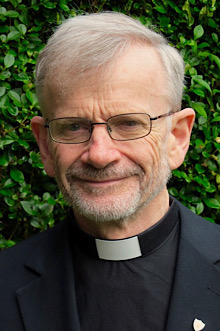
Alexander Aloysius “Alan” McGuckianSJ, the 33rd Bishop of Down and Connor, is born on February 25, 1953, in CloughmillsCounty Antrim, Northern Ireland.

McGuckian is the youngest of six children to Brian McGuckian and his wife Pauline (née McKenna). He is named after his uncle, also Alexander Aloysius McGuckian, who dies five month before he is born. Yet another uncle, Daniel McGuckian, is a priest of the Diocese of Down and Connor and serves as parish priest of Cushendun and then Randalstown until his death in 1980. His father is a successful pig farmer who, alongside his brothers, develops the world’s biggest pig farm.

Two of McGuckian’s brothers are also Jesuit priests, while another brother is a businessman. Both of his sisters predecease him.

McGuckian attends primary school in Cloughmills and secondary school at St. MacNissi’s College, before beginning studies in Irish language and scholastic philosophy at Queen’s University, Belfast (QUB) in 1971, where he is a near-contemporary of future brother bishop Dónal McKeown. He first visits Ranafast, County Donegal, in 1968, and has since become a regular visitor to the Donegal Gaeltacht.

After one year in Belfast, McGuckian enters the Jesuit novitiate at Manresa House in Clontarf, Dublin, during which time he completes a Bachelor of Arts in Latin and Spanish from University College Dublin (UCD) between 1974 and 1977, a Bachelor of Philosophy from Milltown Institute of Theology and Philosophy between 1977 and 1979, and a Master of Divinity and a Licentiate of Sacred Theology from Regis College, Toronto, between 1981 and 1985. He subsequently completes a Master of Arts in Irish translation from Queen’s University, Belfast.

McGuckian is ordained to the priesthood on June 22, 1984, and makes his final profession on February 15, 1997.

Following ordination, McGuckian spends four years as a teacher in Clongowes Wood College and vocations director for the Jesuits, before undertaking a six month period of spiritual renewal in southern India and serving in a shanty town in Quezon CityPhilippines.

McGuckian returns to Ireland in 1992, where he is appointed director of the Jesuit Communication Centre, during which he develops Sacred Space, a website which allows people to pray at their computer, in 1999, and Catholic news service CatholicIreland.net in 2004.

McGuckian also serves as editor of both An Timire and Foilseacháin Ábhair Spioradálta, later translating the autobiography of Ignatius of Loyola into Irish under the title Scéal an Oilithrigh. He also co-authors the drama 1912 – A Hundred Years On with Presbyterian historian Philip Orr in 2011, which looks at the experiences of the Ulster Covenant and the wider Home Rule movement from both nationalist and unionist perspectives.

McGuckian also serves as chaplain to many of the Gaelscoileanna in the Diocese of Down and Connor, and subsequently as chaplain to Ulster University campuses in Belfast and Jordanstown. Following the publication of the Living Church Report, which outlines the findings of a synodal process within the diocese, he is appointed by Noël Treanor in 2012 to set up and lead the Living Church Office, whose aim is to realise the hopes and aspirations expressed in the report and subsequently in the upcoming diocesan pastoral plan.

McGuckian is also appointed diocesan director of formation for the permanent diaconate in 2014, and also works during his directorship of the Living Church Office to establish pastoral communities across the diocese, through fostering a culture of co-responsibility for the mission of the Church between clergy and lay people.

McGuckian is appointed Bishop-elect of Raphoe by Pope Francis on June 9, 2017. His appointment makes him the first member of the Jesuits to be appointed a bishop in Ireland.

McGuckian is consecrated by the Archbishop of Armagh and Primate of All IrelandEamon Martin, on August 6, 2017, in the Cathedral of St. Eunan and St. ColumbaLetterkenny. He uses the name and title Alan Mac Eochagáin, C. Í. when ministering in the Gaeltacht.

In an interview with The Irish Catholic in September 2019, McGuckian says that having a home is as fundamental as the right to life and education, and that the Government must be “pushed” to enshrine a right to housing in the Constitution of Ireland. He also joins a number of church leaders in the West of Ireland on September 16, 2021, in calling on the Irish government to offer reparations to homeowners whose properties are affected by defective concrete blocks.

In an interview with The Irish Catholic in February 2021, McGuckian takes issue with the view held by political leaders that public worship is deemed to be “non-essential” during the COVID-19 pandemic in the Republic of Ireland. Quoting Pope Francis, who states that “the right to worship must be respected, protected and defended by civil authorities like the right to bodily and physical health,” he expresses a need to let political leaders know that public worship is not only central, but also “utterly essential.”

Following a fatal explosion in Creeslough, County Donegal, on October 7, 2022, McGuckian refers to the explosion as “the darkest day in Donegal,” adding that the local community is “living through a nightmare of shock and horror.” He also concelebrates at the Funeral Masses of each of the victims, describing the fact that the parish church would be holding two funerals in the space of three hours as “surreal.”

McGuckian is appointed Bishop of Down and Connor by Pope Francis on February 2, 2024. In his first address following his appointment, he expresses his hope that the restoring of the Northern Ireland Executive will help the most vulnerable in society.


Leave a comment

Death of Terry Wogan, Irish-British Radio & Television Broadcaster

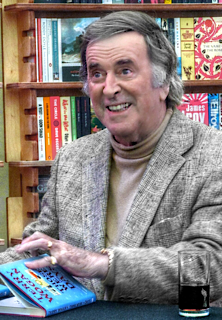
Sir Michael Terence Wogan KBE DLIrish-British radio and television broadcaster who works for the BBC in the United Kingdom (UK) for most of his career, dies on January 31, 2016, at his home in Taplow, Buckinghamshire, England. Between 1993 and his semi-retirement in December 2009, his BBC Radio 2 weekday breakfast programme Wake Up to Wogan regularly draws an estimated eight million listeners. He is believed at the time to be the most listened-to radio broadcaster in Europe.

Wogan, the elder of two children, is born at Cleary’s Nursing Home, Elm Park, LimerickCounty Limerick, on August 3, 1938. He is the son of the manager of Leverett & Frye, a high-class grocery store in Limerick, and is educated at Crescent College, a Jesuit school, from the age of eight. He experiences a strongly religious upbringing, later commenting that he had been brainwashed into believing by the threat of going to hell. Despite this, he often expresses his fondness for the city of his birth, commenting on one occasion that “Limerick never left me, whatever it is, my identity is Limerick.”

At the age of 15, after his father is promoted to general manager, Wogan moves to Dublin with his family. While living there he attends Crescent College’s sister school, Belvedere College. He participates in amateur dramatics and discovers a love of rock and roll. After leaving Belvedere in 1956, he has a brief career in the banking profession, joining the Royal Bank of Ireland. Still in his twenties, he joins the national broadcaster of Ireland, Raidió Teilifís Éireann (RTÉ), as a newsreader and announcer, after seeing a newspaper advertisement inviting applicants.

Wogan conducts interviews and presents documentary features during his first two years at RTÉ, before moving to the light entertainment department as a disc jockey and host of TV quiz and variety shows such as Jackpot, a top-rated quiz show on RTÉ in the 1960s.

Wogan is a leading media personality in Ireland and Britain from the late 1960s, and is often referred to as a “national treasure.” In addition to his weekday radio show, he is known for his work on television, including the BBC One chat show Wogan, presenting Children in Need, the game show Blankety Blank and Come Dancing. He is the BBC’s commentator for the Eurovision Song Contest from 1971 to 2008 (radio in 1971, 1974–1977; television in 1973, 1978, 1980–2008) and the Contest’s host in 1998. From 2010 to 2015 he presents Weekend Wogan, a two-hour Sunday morning show on BBC Radio 2.

In 2005, Wogan acquires British citizenship in addition to his Irish nationality and is awarded a knighthood in the same year and is therefore entitled to use the title “Sir” in front of his name.

Wogan’s health declines after Christmas 2015. He does not present Children in Need in November 2015, citing back pain as the reason for his absence from the long-running annual show. One of his friends, Father Brian D’Arcy, visits him during January and notices he is seriously ill. He dies of cancer at the age of 77 on January 31, 2016, at his home in Taplow, Buckinghamshire, England.

British Prime Minister David Cameron says, “Britain has lost a huge talent.” President of Ireland Michael D. Higgins praises Wogan’s career and his frequent visits to his homeland. Taoiseach Enda Kenny and Tánaiste Joan Burton remember Wogan for his role in helping Anglo-Irish relations during the Troubles. D’Arcy speculates that a public funeral would be logistically difficult, as there would be too many people wanting to pay their respects.

After Wogan’s death and his private funeral a few weeks later, a public memorial service is held on September 27 of the same year. This is held at Westminster Abbey and is opened by a recording of Wogan himself, and features a number of his celebrity friends making speeches, such as Chris Evans and Joanna Lumley. The service is broadcast live on BBC Radio 2.

On November 16, 2016, the BBC renames BBC Western House, home of BBC Radio 2, in his memory, to BBC Wogan House.


Leave a comment

Death of Patrick Dinneen, Lexicographer & Historian

Patrick Stephen Dinneen (Irish: Pádraig Ua Duinnín), an Irish lexicographer, historian and a leading figure in the Gaelic revival, dies in Dublin on September 29, 1934.

Dinneen is born near Rathmore, County Kerry on December 25, 1860, the fifth of ten children of Maitiú Ó Duinnín, farmer and livestock trader, and Máire Ní Dhonnchadha. He is educated at Shrone and Meentogues National Schools and at St. Brendan’s College in Killarney. He earns second class honours bachelor’s and master’s degrees from the Royal University of Ireland. The BA (1885) is in classics and mathematical science, the MA (1889) is in mathematical science. He joins the Society of Jesus in 1880 and is ordained a priest in 1894, but leaves the order in 1900 to devote his life to the study of the Irish language while still remaining a priest. After his ordination, he teaches Irish, English, classics, and mathematics in three different Jesuit colleges, including Clongowes Wood College, a Jesuit boarding school near Clane, County Kildare.

Dinneen is a leading figure in the Irish Texts Society, publishing editions of Geoffrey Keating‘s Foras Feasa ar Éirinn, poems by Aogán Ó RathaillePiaras FeiritéarTadhg Gaelach Ó Súilleabháin, and other poets. He also writes a novel and a play in Irish, and translates such works as Charles Dickens‘s A Christmas Carol into Irish. His best known work, however, is his Irish–English dictionaryFoclóir Gaedhilge agus Béarla, which is first published in 1904. The stock and plates of the dictionary are destroyed during the Easter Rising of 1916, so Dinneen takes the opportunity to expand the dictionary. A much larger second edition, compiled with the assistance of Liam S. Gógan, is published in 1927. His request to the Irish Texts Society to include Gogan’s name on the title page is refused. Gogan continues to work on the collection of words up to his death in 1979. This complementary dictionary is published online in 2011.

Dinneen dies in Dublin at the age of 73 on September 29, 1934, and, following a funeral Mass in the Jesuits’ Gardiner Street church, is buried in Glasnevin Cemetery, Dublin.

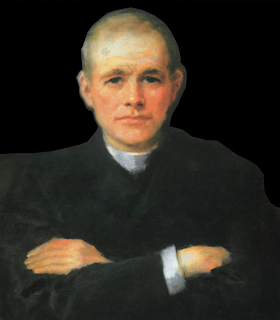
(Pictured: Portrait of Patrick S. Dinneen, oil on canvas by John Butler Yeats, National Gallery of Ireland)


Leave a comment

Death of Malachi Martin, Irish American Catholic Priest

Malachi Brendan Martin, also known under the pseudonym of Michael Serafian, Irish-born American Traditionalist Catholic priestbiblical archaeologistexorcistpalaeographerprofessor, and writer on the Catholic Church, dies in New York City on July 27, 1999.

Martin is born on July 23, 1921, in BallylongfordCounty Kerry, to a middle-class family in which the children are raised speaking Irish at the dinner table. His parents, Conor and Katherine Fitzmaurice Martin, have five sons and five daughters. Four of the five sons become priests, including his younger brother, Francis Xavier Martin.

Martin attends Belvedere College in Dublin, then studies philosophy for three years at University College Dublin (UCD). On September 6, 1939, he becomes a novice with the Society of Jesus. He teaches for three years, spending four years at Milltown Park, Dublin, and is ordained in August 1954.

Upon completion of his degree course in Dublin, Martin is sent to the Catholic University of Leuven in Belgium, where he takes a doctorate in archaeologyOriental history, and Semitic languages. He starts postgraduate studies at both the Hebrew University of Jerusalem and at the University of Oxford. He specializes in intertestamentary studiesJesus in Jewish and Islamic sources, Ancient Hebrew and Arabic manuscripts. He undertakes additional study in rational psychologyexperimental psychologyphysics, and anthropology.

Martin participates in the research on the Dead Sea Scrolls and publishes 24 articles on Semitic palaeography. He does archaeological research and works extensively on the Byblos syllabary in Byblos, in Tyre, and in the Sinai Peninsula. He assists in his first exorcism while working in Egypt for archaeological research. In 1958, he publishes a work in two volumes, The Scribal Character of the Dead Sea Scrolls.

Martin’s years in Rome coincide with the beginning of the Second Vatican Council (1962–65), which is to transform the Catholic Church in a way that the initially liberal Martin begins to find distressing. He becomes friends with Monsignor George Gilmary Higgins and Father John Courtney Murray.

In Rome, Martin becomes a professor at the Pontifical Biblical Institute, where he teaches Aramaic, Hebrew, palaeography, and Sacred Scripture. He also teaches theology, part-time, at Loyola University Chicago‘s John Felice Rome Center. He works as a translator for the Eastern Orthodox Churches and Ancient Oriental Churches Division of the Secretariat for Promoting Christian Unity under Bea. He becomes acquainted with Jewish leaders, such as Rabbi Abraham Joshua Heschel, in 1961 and 1962. He accompanies Pope Paul VI on a trip to Jordan in January 1964. He resigned his position at the Pontifical Institute in June 1964.

In 1964, Martin requests a release from his vows and from the Jesuit Order. He receives a provisional release in May 1965 and a dispensation from his vows of poverty and obedience on June 30, 1965. Even if dispensed from his religious vow of chastity, he remains under the obligation of chastity if still an ordained secular priest. He maintains that he remains a priest, saying that he had received a dispensation from Paul VI to that effect.

Martin moves to New York City in 1966, working as a dishwasher, a waiter, and taxi driver, while continuing to write. He co-founds an antiques firm and is active in communications and media for the rest of his life.

In 1967, Martin receives his first Guggenheim Fellowship. In 1970, he publishes the book The Encounter: Religion in Crisis, winning the Choice Book Award of the American Library Association. He then publishes Three Popes and the Cardinal: The Church of Pius, John and Paul in its Encounter with Human History (1972) and Jesus Now (1973). In 1970, he becomes a naturalized U.S. citizen.

In 1969, Martin receives a second Guggenheim Fellowship, allowing him to write his first of four bestsellersHostage to the Devil: The Possession and Exorcism of Five Living Americans (1976). In the book, he calls himself an exorcist, claiming he assisted in several exorcisms. According to McManus Darraugh, William Peter Blatty “wrote a tirade against Malachi, saying his 1976 book was a fantasy, and he was just trying to cash in.” Darraugh also says that Martin became “an iconic person in the paranormal world.”

Martin serves as religious editor for the National Review from 1972 to 1978. He is interviewed twice by William F. Buckley, Jr. for Firing Line on PBS. He is an editor for the Encyclopædia Britannica.

Martin is a periodic guest on Art Bell‘s radio program, Coast to Coast AM, between 1996 and 1998. The show continues to play tapes of his interviews on Halloween.

Martin’s The Keys of This Blood: The Struggle for World Dominion between Pope John Paul II, Mikhail Gorbachev, and the Capitalist West is published in 1990. It is followed in 1996 by Windswept House: A Vatican Novel.

The Vatican restores Martin’s faculty to celebrate Mass in 1989, at his request. He is strongly supported by some Traditionalist Catholic sources and severely criticized by other sources, such as the National Catholic Reporter. He serves as a guest commentator for CNN during the live coverage of the visit of Pope John Paul II to the United States in October 1995.

On July 27, 1999, Martin dies in Manhattan of an intracerebral haemorrhage, four days after his 78th birthday. It is caused by a fall in his Manhattan apartment. The documentary Hostage to the Devil claims that Martin says he was pushed from a stool by a demonic force.

Martin’s funeral takes place in St. Anthony of Padua Catholic Church in West Orange, New Jersey, before burial at Gate of Heaven Cemetery, in Hawthorne, New York.


Leave a comment

Death of Basil Maturin, Catholic Priest & Writer

Basil William Maturin, Irish-born Anglican priest, preacher and writer who later converts to Catholicism, dies aboard the RMS Lusitania after it is torpedoed by a German U-boat and sinks on May 7, 1915.

Maturin is born on February 15, 1847, at All Saints’ vicarage, Grangegorman, Dublin, the third of the ten children of the Rev. William Basil Maturin and his wife, Jane Cooke (née Beatty). The Maturins, a prominent Anglo-Irish family of Huguenot ancestry, have produced many influential Church of Ireland clergymen over the generations, the most notable being Maturin’s grandfather, the writer Charles Robert Maturin. His own father, whose tractarian convictions are considered too “high church” for many in Dublin, is a somewhat controversial figure in the church. Religion plays a huge part in the Maturin children’s lives. Two of his brothers enter the church and two sisters become nuns. As a young man, he assists in training the choir and playing the organ at his father’s church. Educated at home and at a Dublin day school, he goes on to attend Trinity College Dublin (TCD), from where he graduates BA in 1870.

Though he initially intends to make a career in the army as an engineer, a severe attack of scarlet fever around 1868, and the death of his brother Arthur, changes his outlook on life, and he decides to become a clergyman. He is ordained a deacon in 1870 and later that year goes as a curate to Peterstow, Herefordshire, England, where his father’s friend Dr. John Jebb is rector. He subsequently joins the Society of St. John the Evangelist, entering the novitiate at Cowley, Oxford, in February 1873. As a Cowley father he is sent in 1876 to establish a mission in Philadelphia, Pennsylvania, where he works as an assistant priest and, from 1881, as rector of Saint Clement’s Church. Though he proves to be an effective clergyman and popular preacher, his growing religious doubts and increasing interest in Catholicism results in his returning to Oxford in 1888. Then follows a six-month visit in 1889–90 to a society house in Cape Town, South Africa. He returns to Britain, where he preaches, and conducts retreats around the country and occasionally on the continent. In 1896 he produces the first in a series of religious publications, Some Principles and Practices of Spiritual Life.

Maturin’s continuing religious anxieties eventually lead to his conversion to Catholicism on March 5, 1897, at the Jesuit Beaumont College outside London. He then studies theology at the Canadian College, Rome, and is ordained there in 1898. Following his return to England he lives initially at Archbishop’s House, Westminster, and undertakes missionary work. He then serves at St. Mary’s, Cadogan Street, in 1901. He becomes parish priest of Pimlico and, in 1905, having joined the newly established Society of Westminster Diocesan Missionaries, organises the opening of St. Margaret’s chapel on St. Leonard’s Street, where huge crowds come to hear his sermons. As a Catholic priest, he returns to Ireland on several occasions, and frequently preaches at the Carmelite church, Clarendon Street, Dublin. His attempt, at the age of sixty-three, to enter into monastic life at the Benedictine monastery at Downside, in 1910, proves unsuccessful. He returns to London and begins working in St. James’s, Spanish Place, while maintaining his preaching commitments. He continues to write, publishing Self-Knowledge and Self-Discipline (1905), Laws of the Spiritual Life (1907) and his autobiographical The Price of Unity (1912), in which he traces his gradual move toward Catholicism. His sermons, like his approach when hearing confessions, are said to have much appeal for their integrity. Despite his influence as a preacher, he seems often feel that his life and vocation lack real purpose and at times he suffers from depression.

After a brief visit to the United States in 1913, Maturin accepts the post of Catholic chaplain at the University of Oxford in 1914. He travels to New York in 1915 and, after preaching there throughout the spring, boards the RMS Lusitania in May to return to England. The liner is torpedoed and sinks on May 7, 1915, off the southern coast of Ireland. He assists his fellow passengers in the last minutes, and it is presumed that he refuses a life jacket, as they are in short supply. His body washes ashore. A service is held for him at Westminster Cathedral.

Maturin’s friend Wilfrid Philip Ward edits a collection of his spiritual writings, Sermons and Sermon Notes, in 1916.

(From: “Maturin, Basil William” by Frances Clarke, Dictionary of Irish Biography, http://www.dib.ie, October 2009)


Leave a comment

Birth of William Joyce, Last Person Executed for Treason in the UK

William Brooke Joyce, an American-born fascist and Nazi propaganda broadcaster during World War II, is born on Herkimer Street in Brooklyn, New York, on April 24, 1906. He has the distinction of being the last person to be executed for treason in the United Kingdom.

Joyce is the eldest of three sons of Michael Joyce, an Irish Catholic from a family of tenant farmers in Ballinrobe, County Mayo, and his wife, Gertrude (née Brooke), who although born in Shaw and Crompton, Lancashire, is from a well-off Anglican Anglo-Irish family of physicians associated with County Roscommon. The Joyces return to Ireland in 1909. William, a precocious child, attends Coláiste Iognáid SJ, a Jesuit school in County Galway, from 1915 to 1921. At the age of fourteen, he abandons Catholicism for Anglicanism, apparently after being told that all non-Catholics, including his mother, would be damned. In adult life he is nominally anglican, though his adherence to Christianity is tenuous.

The Joyces are unionists and teach their children fervent imperialism. During the Irish War of Independence, Joyce openly associates with the Black and Tans and acts as a scout for them. An acquaintance claims that his views are so extreme even loyalists dislike him. On December 9, 1921, he flees to England to join the Worcestershire Regiment and is followed to England in 1923 by the rest of the family. When he enlists, he claims to be eighteen, but after he contracts rheumatic fever, his age is discovered, and he is discharged in March 1922. For a time, he studies mathematics and chemistry at Battersea Polytechnic Institute as a pre-medical student (1922–23), but he leaves of his own accord, with a reputation for laziness and violent political views. His studies in English and history at Birkbeck College are more successful. He is a brilliant linguist and mathematician and graduates BA with first-class honours in 1927. He publishes an academic article on philology and considers progressing to an MA. He later falsely claims that his research had been plagiarised by a Jewish academic. In 1932, he enrolls at King’s College, London, for a Ph.D. in educational psychology.

Joyce is disturbed by the difference between depressed post-war Britain and the imperial ideal that he had imbibed in Galway and is mocked for his outspoken patriotism and obvious Irishness. He identifies strongly with Thomas Carlyle, an earlier angry anti-liberal from the provinces. His life is marked by repeated episodes of hero worship, followed by disillusion and bitter denunciation. In 1923, he joins the British Fascists, an organisation that has a significant Irish loyalist membership, and in 1924 he allies himself with a militant splinter group, the National Fascists. Most British fascists see themselves as Tory auxiliaries, and they often provide a security presence at conservative meetings. On October 22, 1924, while stewarding a meeting addressed by a Jewish conservative candidate, he has his face slashed and is left with a prominent scar across his right cheek. He joins the Conservative Party in 1928 and is active in the Chelsea constituency until 1930, when he is forced out because of his eccentricities and sexual misbehaviour. On April 30, 1927, he marries Hazel Kathleen Barr. They have two daughters but separate in 1935, largely because of his infidelities, heavy drinking, and temper. The marriage is dissolved in 1937.

In November 1933, Joyce abandons his Ph.D. studies to work for Sir Oswald Mosley‘s British Union of Fascists (BUF). By early 1934 he has become its paid publicity director, traveling throughout Britain to organise meetings. He is a powerful, rabble-rousing speaker, driven by an instinctive awareness that vitriolic verbal abuse gives speaker and audience a sense of power and solidarity. MI5 sees him as a compelling, though deranged, personality. On February 8, 1937, he marries Margaret Cairns White, a BUF activist from Lancashire, with whom he had cohabited since 1936.

Joyce leads a BUF faction that favours a recruitment strategy based on uncompromising ideological assertion. This is challenged by populists who prioritise marches and displays and hold that indoctrination should follow membership. In February 1937, he is BUF candidate for the London County Council in Shoreditch. The party wins 14 percent of the vote. In March 1937, he, along with many full-time BUF staff, are sacked when the BUF cuts expenses. But his dismissal also reflects Mosley’s awareness that his obsessive rhetoric repels “respectable” recruits and that he is no longer a biddable, slavish admirer of “the Leader.” He later falsely claims near-exclusive credit for the BUF’s escalating antisemitism, a view that Mosley eventually finds it convenient to adopt in order to evade his own responsibility.

In April 1937, Joyce founds the National Socialist League, helped by a wealthy patron. He supports himself as a private tutor, refusing to take Jewish pupils. He is active in various antisemitic and pro-Nazi groups such as the Right Club and engages in “peace” campaigns based on the view that British interests lay with Germany against Russia. Political marginalisation intensifies his admiration for Nazi Germany and hero worship of Adolf Hitler. By the time of the Munich crisis in 1938, he has decided that if war comes, he will go to Germany, though he also considers moving to Ireland. He renews his British passport for one-year terms in August 1938 and August 1939.

On August 26, 1939, Joyce and his wife leave London for Berlin. He is allegedly tipped off about his impending arrest and internment by an MI5 officer, to whom he had supplied information on communists. His siblings, whom he recruited into his fascist organisations, are variously penalised for his activities. At a loose end in Berlin, he is persuaded by a British associate to become a radio announcer with the English-language service of the Reichs-Rundfunk-Gesellschaft (RRG). He makes his first broadcast on September 6, 1939, and receives a contract in October. He finds in radio an outlet for his forceful style and delight in saying the unsayable, and in the early years of the war takes an exultant pride in recounting Nazi victories. His performances are admired by Joseph Goebbels, whom Joyce, to his regret, never meets. On September 26, 1940, he acquires German citizenship.

The novel experience of hearing the enemy in one’s own living room attracts wide audiences in Britain. Joyce’s practice of naming newly captured prisoners of war in his broadcasts is also a compelling motive for listening. In fact, he tries to recruit British prisoners of war as collaborators. The name “Lord Haw-Haw,” invented by the Daily Express radio critic in September 1939, initially applies to several English-language broadcasters but in time becomes associated with Joyce. He is initially a figure of fun, imitated by comedians, but there are sinister undercurrents of terrifying omnipotence, intensified by his sneering, gloating delivery and his delighted deployment of the “big lie” technique. It is widely believed that British-based fifth columnists supply him with information, that he predicts air raids, and shows minute local knowledge. In time, fear and his growing notoriety feed popular hatred of him in Britain, though his anti-British taunts allegedly win appreciative Irish audiences. He exults that he is daily committing treason and rendering himself liable to the death penalty.

In 1940, Joyce publishes a commissioned self-justifying propaganda work, Twilight over England. His representation of himself echoes that of Hitler in Mein Kampf – the provincial patriot, whose martial sacrifices are betrayed by corrupt elites, learning through poverty the hollowness of bourgeois patriotism and the need to synthesise socialism with nationalism. He shares with his hero a paranoid belief in his own ability to create an alternative reality through language and obstinacy. He dreams of becoming the English Führer.

In Berlin, the Joyces’ marriage comes under increasing strain, marked by drunken rows, domestic violence, and infidelity on both sides, though they retain a fierce mutual fascination. They divorce on August 12, 1941, but remarry on February 11, 1942, while continuing their previous behaviour. As the Axis powers begin to fail, his broadcasts become more defensive, focusing on the Soviet threat. On October 14, 1944, he is awarded the German War Merit Cross, first class. On October 22, he is sworn into the Volkssturm (territorial army) and begins drilling. The Joyces are evacuated from Berlin in March 1945, initially to Apen near the Dutch border and then to Hamburg, where he makes a last, drunken, defiant broadcast on April 30, 1945, the day of Hitler’s death. After an unsuccessful attempt to escape to Sweden, the Joyces hide at Flensburg near the Danish border. On May 28, 1945, he is shot and captured while gathering firewood.

Joyce is brought back to Britain on June 16 after Parliament passed legislation simplifying treason trial procedures. At his September 17-20 trial, he proves his American citizenship, but the court holds that his illegally acquired British passport incurred duties of allegiance. His appeals are rejected by the Court of Appeal and the House of Lords. His fate is influenced by British public opinion, and possibly by a desire to avoid antagonising the Soviet Union. In his death cell he blames the defeat of national socialism on German limitations. He also fantasises that he could have saved Hitler from his incompetent subordinates.

Joyce is hanged by Albert Pierrepoint at Wandsworth Prison on January 3, 1946. Unlike most of his fellow Nazis, he proclaims to the end his allegiance to national socialism and hatred of Jews. He corresponds cheerfully with Margaret, joking evasively about the death camps and expressing a belief that his spirit will survive, watch over her, and continue his work. To neo-Nazis he becomes a martyr. Even among those to whom his activities had been repellent, a significant body of opinion holds he should not have been condemned on a questionable and innovative technicality. The historian A. J. P. Taylor maintains that Joyce was executed for making a false declaration to obtain a passport, a misdemeanour that normally incurs a £2 fine.

In 1976, Joyce is reinterred in Galway as it is feared that a grave in England might become a fascist shrine. Thomas Kilroy‘s play Double Cross (1986) juxtaposes Joyce and Brendan Bracken as Irishmen who reinvented themselves through fantasies of Britishness. The BBC Sound Archive has recordings of some of Joyce’s broadcasts and transcripts of others, collected during the war as evidence for a future treason trial.

(From: “Joyce, William Brooke (‘Lord Haw-Haw’)” by Patrick Maume, Dictionary of Irish Biography, http://www.dib.ie, October 2009)