seamus dubhghaill

Promoting Irish Culture and History from Little Rock, Arkansas, USA


Leave a comment

Birth of Michelle O’Neill, Vice President of Sinn Féin

Michelle O’Neill (née Doris), Irish politician who serves as deputy First Minister of Northern Ireland between 2020 and 2022, is born in Fermoy, County Cork, Republic of Ireland, on January 10, 1977. She has been serving as Vice President of Sinn Féin since 2018 and is the Member of the Legislative Assembly (MLA) for Mid Ulster since 2007.

O’Neill comes from an Irish republican family in Clonoe, County Tyrone, Northern Ireland. Her father, Brendan Doris, was a Provisional Irish Republican Army (IRA) prisoner and Sinn Féin councillor. Her uncle, Paul Doris, is a former national president of the Irish Northern Aid Committee (NORAID). A cousin, Tony Doris, was one of three IRA members killed by the British Army‘s Special Air Service (SAS) in the Coagh ambush in 1991. Another cousin, IRA volunteer Gareth Malachy Doris, was shot and wounded during the 1997 Coalisland attack.

After the death of Brendan Doris in 2006, Martin McGuinness pays tribute to the Doris family as “a well-known and respected republican family [who] have played a significant role in the republican struggle for many years.”

O’Neill attends St. Patrick’s Girls’ Academy, a Catholic grammar school in Dungannon, County Tyrone. She subsequently begins to train as an accounting technician, before pursuing a political career.

O’Neill becomes involved in republican politics in her teens, assisting her father with constituency work in his role as a Dungannon councillor. She joins Sinn Féin after the Good Friday Agreement in 1998, at the age of 21, and starts working as an advisor to Francie Molloy in the Northern Ireland Assembly, holding this role until 2005.

O’Neill serves on the Dungannon and South Tyrone Borough Council from 2005 to 2011. She serves as the first female Mayor of Dungannon and South Tyrone from 2010 to 2011. In the 2007 Northern Ireland Assembly election she is elected to represent Mid Ulster in the Northern Ireland Assembly. In 2011, she is appointed to the Northern Ireland Executive by deputy First Minister Martin McGuinness as Minister for Agriculture and Rural Development. In 2016, she is promoted to Minister of Health. In January 2020, she becomes deputy First Minister of Northern Ireland after the New Decade, New Approach (NDNA) agreement restores the power sharing executive.

O’Neill automatically relinquishes her office following Paul Givan‘s resignation as first minister on February 3, 2022. Sinn Féin becomes the largest party after the 2022 Northern Ireland Assembly election, putting O’Neill in line to become the First Minister of Northern Ireland, and the Democratic Unionist Party (DUP) leader to become the deputy First Minister of Northern Ireland. However, she remains to be officially sworn in as First Minister because, as part of its opposition to the Northern Ireland Protocol, the DUP has refused to nominate a deputy First minister and there is therefore no functioning executive of Northern Ireland.

In August 2022, O’Neill is asked in a BBC interview whether it was right during the Troubles for the Provisional IRA “to engage in violent resistance to British rule.” She is criticised for her response, “I think at the time there was no alternative, but now thankfully we have an alternative to conflict, and that is the Good Friday Agreement – that is why it’s so precious to us all.”

In May 2023, O’Neill attends the coronation of King Charles, saying, “Well obviously I wanted to be here. We live in changing times, and it was the respectful thing to do, to show respect and to be here for all those people at home, who I had said I would be a first minister for all. Attendance here is about honouring that and fulfilling my promise.”

Under O’Neill’s leadership, Sinn Fein has led most opinion polls for the next United Kingdom general election.
Leave a comment

Birth of Pádraig McKearney, Provisional Irish Republican Army Volunteer

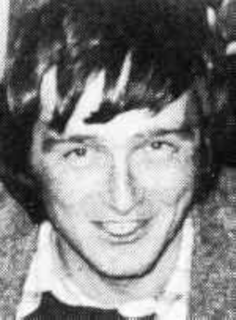
Pádraig Oliver McKearney, a Provisional Irish Republican Army (IRA) paramilitary volunteer, is born on December 18, 1954.

McKearney is raised in Moy, County Tyrone, Northern Ireland, in a staunchly Irish republican family. Both his grandfathers had fought in the Irish Republican Army during the Irish War of Independence, his maternal grandfather in south County Roscommon and his paternal grandfather in east County Tyrone. He is educated at local Catholic schools in Collegeland, County Armagh, and Moy, and later goes to St. Patrick’s Academy, Dungannon.

McKearney joins the Provisional IRA and is first arrested in 1972 on charges of blowing up the post office in Moy. He spends six weeks on remand but is released due to insufficient evidence. In December 1973 he is arrested again and later sentenced to seven years for possession of a rifle. He is imprisoned in Long Kesh Detention Centre and later in Magilligan Prison. During this time, a younger brother, Seán, also an IRA paramilitary, is killed on May 13, 1974. He is released in 1977 but is sentenced to 14 years in August 1980 after being caught by the British Army with a loaded Sten gun along with fellow IRA member Gerard O’Callaghan. That same year an older brother, Tommy McKearney, who had been sentenced to life imprisonment for the murder of an off-duty Ulster Defence Regiment (UDR) soldier who worked as a postman in 1977, nearly dies on hunger strike after refusing food for 53 days. Another brother, Kevin, and an uncle, Jack McKearney, are both murdered by Loyalist paramilitaries in revenge attacks upon the family.

On September 25, 1983, McKearney takes part in the Maze Prison escape along with 37 other prisoners. At the beginning of 1984 he rejoins IRA activity in his native East Tyrone with the Provisional IRA East Tyrone Brigade. He advocates the commencement of the “third phase” of the armed struggle, the ‘strategic defensive,’ in which the Royal Ulster Constabulary (RUC), Ulster Defence Regiment and British Army would be denied all support in selected areas following repeated attacks on their bases. In 1985 Patrick Kelly becomes commander of the Provisional IRA East Tyrone Brigade, and it is under his leadership that this strategy is pursued. Remote Royal Ulster Constabulary bases are attacked and destroyed, and building contractors who try to repair them are targeted and sometimes murdered, as occurs with the attack on the Ballygawley barracks in December 1985, which results in the death of two policemen, and The Birches police station in August 1986.

McKearney is shot dead by the British Army on May 8, 1987, during an IRA attack that he is taking part in upon Loughgall police station, which also claims the lives of seven other IRA members. His body is buried at his hometown of Moy.


Leave a comment

Birth of Cardinal Joseph MacRory in County Tyrone

cardinal-joseph-macrory

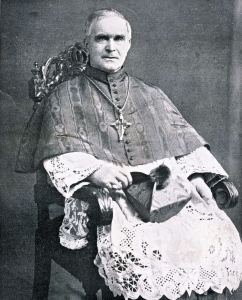
Joseph MacRory, an Irish Cardinal of the Roman Catholic Church who serves as Archbishop of Armagh from 1928 until his death in 1945, is born in Ballygawley, County Tyrone, on March 19, 1861.

MacRory is one of ten children of Francis MacRory, a farmer, and his wife, Rose Montague. He studies at St. Patrick’s College, Armagh, and St. Patrick’s Pontifical University, Maynooth. He is ordained to the priesthood on September 13, 1885, and serves as the first president of St. Patrick’s Academy, Dungannon from 1886 to 1887. MacRory teaches Scripture and Modern Theology at St. Mary’s College, Oscott in England until 1889, when he is appointed Professor of Scripture and Oriental Languages at his alma mater of Maynooth College. In 1906, he co-founds the Irish Theological Quarterly. In 1912, he is made Vice-President of Maynooth.

On August 9, 1915, MacRory is appointed Bishop of Down and Connor by Pope Benedict XV and receives his episcopal consecration on November 14 from Cardinal Michael Logue. During his tenure, his life is threatened repeatedly due to the turbulent atmosphere in Belfast. He is a member of the Irish Convention from 1917 to 1918.

MacRory is promoted to Archbishop of Armagh and thus Primate of All Ireland on June 22, 1928, in succession to Patrick O’Donnell. He is elevated to the cardinalate on December 16, 1929, by Pope Pius XI.

MacRory is the papal legate at the 1933 laying of the foundation stone of Liverpool Metropolitan Cathedral in England. He also serves as one of the cardinal electors who participate in the 1939 papal conclave which ultimately selects Pope Pius XII.

MacRory is a strenuous opponent of social injustice, National Socialism, Protestantism, and the Partition of Ireland. It is MacRory who suggests to Eoin O’Duffy that he raise an Irish Brigade to aid Generalissimo Francisco Franco during the Spanish Civil War. In 1940, he voices strong objections to conscription in the North.

MacRory is a supporter of the Gaelic League. Errigal Ciarán GAC, one of the most famous GAA clubs in Ireland, plays at Cardinal MacRory Park in Dunmoyle, County Tyrone, which is built in 1956 in his honour.

After a brief illness, Cardinal MacRory dies on October 13, 1945, at the age of 84 from a heart attack at Ara Coeli, the residence in Armagh. He is interred in St. Patrick’s Cathedral Cemetery, Armagh.