seamus dubhghaill

Promoting Irish Culture and History from Little Rock, Arkansas, USA


Leave a comment

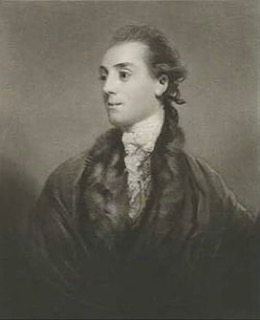
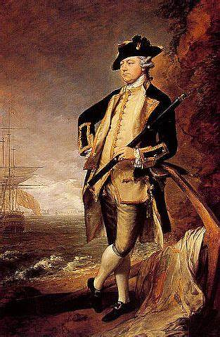
Birth of John Luttrell-Olmius, 3rd Earl of Carhampton 

Captain John Luttrell-Olmius, 3rd Earl of Carhampton, a Royal Navy officer and politician who sits in the House of Commons of Great Britain between 1774 and 1785, is born on December 11, 1739. He is styled The Honourable John Luttrell between 1768 and 1787 and as The Honourable John Luttrell-Olmius between 1787 and 1829.

Born John Luttrell, he is the second son of Simon Luttrell, 1st Earl of Carhampton by Judith Maria Lawes, daughter of Sir Nicholas LawesGovernor of Jamaica. He is the grandson of Colonel Henry Luttrell and the brother of Henry Luttrell, 2nd Earl of CarhamptonJames Luttrell, and Lady Anne Luttrell, Duchess of Cumberland and Strathearn. He is a member of the Irish branch of the ancient family of Luttrell and a descendant of Sir Geoffrey de Luterel, who establishes Luttrellstown CastleCounty Dublin, in the early 13th century.

Luttrell was a captain in the Royal Navy but retires in 1789. He is returned to Parliament for Stockbridge in 1774, a seat he holds until 1775, and again between 1780 and 1785. Between 1785 and 1826 he is a commissioner of HM Customs and Excise. He succeeds his elder brother to the earldom in 1821. This is an Irish peerage and does not entitle him to an automatic seat in the House of Lords.

In 1766, Lord Carhampton marries the Honorable Elizabeth Olmius (1742-97), daughter of John Olmius, 1st Baron Waltham. In 1787, out of respect after the death of his father-in-law, he assumes by Royal Licence the additional surname of “Olmius.” In 1798, he sells the Olmius family seat of Newhall to the founding nuns of New Hall School. There are three children from his first marriage (however only his daughter survives to adulthood):

  • Lady Frances Maria Luttrell (b. 1768), married Sir Simeon Stuart, 4th Baronet
  • James Luttrell (d. 1772)
  • John Luttrell (d. 1769)

Lord Carhampton marries secondly Maria Morgan, daughter of John Morgan, in 1798. They have one child:

  • Lady Maria Anne Luttrell (1799–1857), married Lieutenant-Colonel Hardress Robert Saunderson

Lord Carhampton dies in Greater London, England, on March 19, 1829, aged 89, at which time the Earldom becomes extinct. He is buried at St. Pancras, Soper Lane graveyard, London.
1 Comment

Death of Simon Luttrell, 1st Earl of Carhampton

Simon Luttrell, 1st Earl of Carhampton, Anglo-Irish politician who sits in the House of Commons of Great Britain from 1754 to 1780, dies on January 14, 1787.

Luttrell is born in 1713, the second son of Henry Luttrell, of Luttrellstown Castle (whose family had held Luttrellstown Castle and the demesne and adjoining lands since the land had been granted to Sir Geoffrey de Luterel in about 1210 by King John of England) and his wife Elizabeth Jones. His father is a noted commander in the Jacobite Irish Army between 1689 and 1691. He later receives a pardon from the Williamite authorities and is accused by his former Jacobite comrades of having betrayed them. He is murdered when his sedan chair is attacked in Dublin on October 22, 1717.

Luttrell serves as a Member of Parliament in the House of Commons of Great Britain for four constituencies: Mitchell (1755–1761), Wigan (1761–1768), Weobley (1768–1774) and Stockbridge (1774–1780).

On October 13, 1768, Luttrell is created Baron Irnham of Luttrellstown in the Peerage of Ireland. As his title is an Irish peerage, he is able to keep his seat in the British House of Commons. He is elevated to the title of Viscount Carhampton on January 9, 1781, and is made Earl of Carhampton on June 23, 1785. He lives at Four Oaks Hall, Four Oaks, Sutton Coldfield, from 1751 to 1766.

On January 22, 1735, Luttrell marries Judith Maria Lawes, daughter of Sir Nicholas Lawes, Governor of Jamaica and Elizabeth Cotton (née Lawley), by whom he has eight children:

Luttrell’s rakish behaviour earns him the nickname “King of Hell,” with “Hell” being a district of Dublin notorious for its brothels. He reputedly starts the courtesan Mary Nesbitt in her career by seducing her.

Luttrell dies at Four Oaks, Warwick, England, on January 14, 1787. He is buried at Kingsbury, Warwick, England.


Leave a comment

Death of Sir Richard Steele, Writer, Playwright & Politician

richard-steele

Sir Richard Steele, writer, playwright, and politician, remembered as co-founder, with his friend Joseph Addison, of the magazine Tatler, dies in Carmarthen, Wales on September 1, 1729.

Steele is born in Dublin on March 12, 1672, to Richard Steele, an attorney, and Elinor Symes (née Sheyles). He is largely raised by his uncle and aunt, Henry Gascoigne and Lady Katherine Mildmay. A member of the Protestant gentry, he is educated at Charterhouse School, where he first meets Addison. After starting at Christ Church, Oxford, he goes on to Merton College, Oxford, then joins the Life Guards of the Household Cavalry in order to support King William‘s wars against France. He is commissioned in 1697 and rises to the rank of captain within two years. He leaves the army in 1705, perhaps due to the death of the 34th Foot’s commanding officer, Robert Lucas, 3rd Baron Lucas, which limits his opportunities of promotion.

Steele is a member of the Kit-Kat Club. Both Steele and Addison become closely associated with Child’s Coffee-house in St. Paul’s Churchyard.

Steele’s first published work, The Christian Hero (1701), attempts to point out the differences between perceived and actual masculinity. Written while he is serving in the army, it expresses his idea of a pamphlet of moral instruction.

Steele writes a comedy that same year titled The Funeral. This play meets with wide success and is performed at Theatre Royal, Drury Lane, bringing him to the attention of the King and the Whig party. Next, he writes The Lying Lover, one of the first sentimental comedies, but a failure on stage. In 1705, he writes The Tender Husband with contributions from Addison, and later that year writes the prologue to The Mistake, by John Vanbrugh, also an important member of the Whig Kit-Kat Club with Addison and Steele.

In 1706 Steele is appointed to a position in the household of Prince George of Denmark, consort of Anne, Queen of Great Britain. He also gains the favour of Robert Harley, 1st Earl of Oxford and Earl Mortimer.

The Tatler, Steele’s first journal, first appears on April 12, 1709, and appears three times a week. He writes this periodical under the pseudonym Isaac Bickerstaff and gives Bickerstaff an entire, fully developed personality. The Tatler is closed down to avoid the complications of running a Whig publication that had come under Tory attack.

Steele becomes a Whig Member of Parliament in 1713, for Stockbridge. He is soon expelled for issuing a pamphlet in favor of the Hanoverian succession. When George I of Great Britain comes to the throne in the following year, Steele is knighted and given responsibility for the Theatre Royal, Drury Lane in London. He returns to parliament in 1715, for Boroughbridge.

While at Drury Lane, Steele writes and directs the sentimental comedy The Conscious Lovers, which is an immediate hit. However, he falls out with Addison and with the administration over the Peerage Bill (1719), and in 1724 he retires to his second wife’s homeland of Wales. He remains in Carmarthen after his wife’s death, dying there on September 1, 1729. He is buried there at St. Peter’s Church. During restoration of the church in 2000, his skull is discovered in a lead casket, having previously been accidentally disinterred during the 1870s.

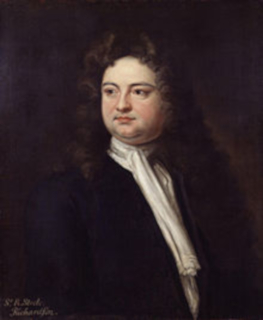
(Pictured: Portrait of Sir Richard Steele by Jonathan Richardson)


Leave a comment

Birth of Thomas Brodrick, Politician

CREATOR: gd-jpeg v1.0 (using IJG JPEG v80), quality = 60

Thomas Brodrick, Irish politician who sits in the Irish House of Commons between 1692 and 1727 and in the British House of Commons from 1713 to 1727 and leads the inquiry into the “South Sea Bubble,” is born in Midleton, County Cork on August 4, 1654.

Brodrick is the eldest son of Sir St. John Brodrick and his wife Alice Clayton, daughter of Laurence Clayton of Mallow, County Cork. He is brother of Alan Brodrick, 1st Viscount Midleton. He is admitted at Trinity Hall, Cambridge and also at Middle Temple in 1670. He marries Anne Piggott, daughter of Alexander Piggott of Innishannon and they have one son Laurence, who is appointed Register of Deeds and Conveyances in Ireland in 1735.

Broderick sits in the Irish House of Commons for Midleton from 1692 to 1693, for County Cork from 1695 to 1699 and again from 1703 to 1713, and for Midleton again from 1715 to 1727. He is appointed to the Privy Council of Ireland on May 10, 1695. He is removed on July 17, 1711, but reappointed on September 30, 1714.

Broderick has contacts with Whig politicians in England and is appointed comptroller of the salt in 1706 and joint comptroller of army accounts from 1708 to 1711. He is elected as Member of Parliament (MP) for Stockbridge at the 1713 general election and again at the 1715 general election. At the 1722 general election, he is elected as MP for Guildford. He does not stand in the 1727 general election.

Thomas Brodrick dies on October 3, 1730, at Wandsworth where he is buried.