seamus dubhghaill

Promoting Irish Culture and History from Little Rock, Arkansas, USA


Leave a comment

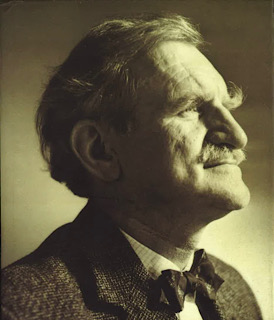
Birth of Sam Hanna Bell, Novelist, Playwright & Broadcaster

Sam Hanna Bell, Scottish-born Northern Irish novelistshort story writer, playwright, and broadcaster, is born in Glasgow to Ulster Scots parents on October 16, 1909.

Following the sudden death of his father in 1918, Bell is brought at the age of seven to live near Raffery in the Strangford Lough area of County Down. He lives with his mother and two brothers in a cottage with no electricity or running water. This is the setting of his acclaimed novel of Ulster rural life, December Bride (1951). He moves to Belfast in 1921, where he works at a variety of manual jobs before securing a post with the BBC in 1945. He is a co-founder of the left-leaning literary journal, Lagan, in 1943.

Bel’s first collection of short stories, Summer Loanen and Other Stories, is published in 1943. His novels include December Bride (1951), The Hollow Ball (1961), A Man Flourishing (1973) and Across the Narrow Sea (1987).

Bell is recruited to the BBC in 1946, along with fellow writer, W. R. Rodgers, by poet and radio producerLouis MacNeice. Some of his work as a radio producer is highly innovative. This is Northern Ireland, An Ulster Journey (1949) is a classic radio feature incorporating actuality, poetry, music and narration. In later work, Bell incorporates the voices of “ordinary people” in his attempt to paint a picture of Ulster as rooted in the lives and traditions of its people. His collaboration with W. R. Rodgers, The Return Room (1955), is one of the most important post-war Irish radio features and shows the influence of Dylan Thomas on Rodgers, the poet.

In the 1940s, along with his BBC colleague John Boyd, the essayist (and anti-Partition activist) Denis Ireland, actors Joseph Tomelty and J. G. Devlin, poets John Hewitt and Robert Greacen, and the Rev. Arthur Agnew, Bell is one of an intellectual set, “the club of ten” Linen Hall Library members that meets weekly next to the library in Campbell’s cafe.

In 1977, Bell is honoured with an MBE in recognition of his contribution to the cultural life of Northern Ireland.

December Bride is made into an acclaimed film in 1990. Reviewing the film, The Irish Times columnist and literary critic Fintan O’Toole says it is “not just a remarkable artistic achievement, but also a remarkable political one…restoring a richness and complexity to a history that has been deliberately narrowed.” In April 1999, December Bride is selected by award-winning novelist and critic Colm Tóibín and publisher, writer and critic Dame Carmen Callil, for inclusion in The Modern Library: The 200 Best Novels in English Since 1950 (Picador).

Bell dies on February 9, 1990, at 190 King’s Road, Knock, Belfast, aged 80, shortly before the premiere of the film of December Bride. On October 15, 2009, the eve of what would have been Bell’s centenary, a blue plaque is unveiled by Northern Ireland Minister of Culture, Arts and Leisure Nelson McCausland on the Belfast house where Bell had written December Bride. Such plaques are erected to commemorate and honour notable people.

Leave a comment

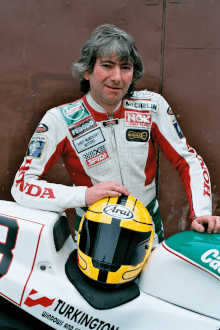
Birth of Northern Irish Motorcyclist Joey Dunlop

William Joseph Dunlop OBE, Northern Irish motorcyclist, is born in Armoy, County Antrim, near Ballymoney, on February 25, 1952. His achievements include three hat-tricks at the Isle of Man TT meeting (1985, 1988 and 2000), where he wins a record 26 races in total. A curve at the 26th milestone on the Isle of Man is named in his honour. During his career he won the Ulster Grand Prix 24 times.

Dunlop marries on September 22, 1972 at the Ballymoney register office. He is the proprietor of a pub in Ballymoney and is highly superstitious, always wearing a red T-shirt and his yellow crash helmet when racing. He is presented with the Freedom of the Borough by Ballymoney Council in 1993.

Dunlop helps orphans in the Balkans, driving a van loaded with supplies to orphanages in Romania, Albania and Bosnia-Herzegovina before the annual racing season begins. In 1996, he receives an OBE for his humanitarian work.

On the night of May 23, 1985, Dunlop is traveling from Northern Ireland to the Isle of Man for the annual TT races by sea, onboard the Tornamona, a former fishing boat. The vessel departs from Strangford, County Down with Dunlop, other riders, racing bikes and equipment onboard. Strong currents into Strangford Lough push the Tornamona onto St. Patrick’s Rock where her rudder breaks off in a crevice. The boat sinks and all 13 passengers and crew are rescued by the Portaferry Lifeboat. The bikes are later recovered by divers.

In 1986, Dunlop wins a fifth consecutive TT Formula One world title. Initially based on one race at the Isle of Man TT after the loss of World Championship status from 1977-onwards and organised by the Auto-Cycle Union, the title is eventually expanded to take in more rounds in other countries.

Dunlop is awarded the MBE in 1986 for his services to the sport. He is featured in three documentary films regarding his career: V Four Victory (1983), Joey – The Man Who Conquered the TT (2013) and Road (2014).

Dunlop wins his third hat trick at the Isle of Man TT in 2000 and sets his fastest lap on the course of 123.87 mph in the Senior race, in which he finishes third.

Dunlop dies in Tallinn, Estonia, on July 2, 2000 while leading a 125cc race on the Pirita-Kose-Kloostrimetsa Circuit. He appears to lose control of his bike in the wet conditions and dies instantly on impact with trees. As a mark of respect, the Estonian government’s official website is replaced with a tribute to Dunlop within hours of his death. Northern Ireland television carries live coverage of his funeral. Fifty thousand mourners, including bikers from all parts of Britain and Ireland and people from all backgrounds in Northern Ireland, attend the funeral procession to Garryduff Presbyterian church and his burial in the adjoining graveyard.

Following Dunlop’s death, the Leisure Centre in his hometown of Ballymoney is renamed from the Riada Centre to the Joey Dunlop Leisure Centre. Also, a memorial statue is erected in his hometown. The Joey Dunlop Foundation is initiated, a charity that provides appropriate accommodation for disabled visitors to the Isle of Man. In 2001, the Joey Dunlop Memorial Garden is established in the Dunlop family’s hometown, and in 2010 the tribute is extended to include the Robert Dunlop Memorial Garden to honour Joey’s late brother, Robert Dunlop.

The most successful overall rider at the annual TT races is awarded the “Joey Dunlop Cup.” On the Isle of Man, a statue of Dunlop astride a Honda overlooks the Bungalow Bend at Snaefell and the 26th Milestone area of the TT course is named “Joey’s.” A memorial stone is installed at the crash site in Tallinn as well. Irish publishers the O’Brien Press produces a full-colour pictorial tribute to Dunlop following his death. Northern Ireland band Therapy? records a song in memory of Dunlop called “Joey.” It appears on the album Shameless, released in 2001.

On January 30, 2015, Dunlop is voted Northern Ireland’s greatest sports star by readers of the Belfast Telegraph newspaper. In 2016 he is voted through Motorcycle News as the fifth greatest motorcycling icon ever, behind Valentino Rossi.


Leave a comment

Birth of William Reeves, Bishop of Down, Connor & Dromore

bishop-william-reeves

William Reeves, Irish antiquarian and the Church of Ireland Bishop of Down, Connor and Dromore from 1886 until his death, is born on March 16, 1815. He is the last private keeper of the Book of Armagh and at the time of his death is President of the Royal Irish Academy.

Reeves is born at Charleville, County Cork, the eldest child of Boles D’Arcy Reeves, an attorney, whose wife Mary is a daughter of Captain Jonathan Bruce Roberts, land agent to the Edmund Boyle, 8th Earl of Cork. This grandfather had fought at the Battle of Bunker’s Hill, and Reeves is born at his house in Charleville.

From 1823, Reeves is educated at the school of John Browne in Leeson Street, Dublin, and after that at a school kept by the Rev. Edward Geoghegan. In October 1830, he enters Trinity College, Dublin, where he quickly gains a prize for Hebrew. In his third year, he becomes a scholar and goes on to graduate BA in 1835. He proceeds to read medicine, wins the Berkeley Medal, and graduates MB in 1837. His object in taking his second degree is that he intends to become a clergyman and to practice the medical profession among the poor of his parish.

In 1838, Reeves is appointed Master of the diocesan school in Ballymena, County Antrim, and is ordained a deacon of Hillsborough, County Down. The following year, he is ordained a priest of the Church of Ireland at Derry.

In 1844, Reeves rediscovers the lost site of Nendrum Monastery when he visits Mahee Island in Strangford Lough, County Down, searching for churches recorded in 1306, and recognises the remains of a round tower. By 1845, he is corresponding with the Irish scholar John O’Donovan, and an archive of their letters between 1845 and 1860 is preserved at University College, Dublin. In July 1845, Reeves visits London.

Reeves resides in Ballymena from 1841 to 1858, when he is appointed vicar of Lusk following the success of his edition of Adomnán‘s Life of Saint Columba (1857), for which the Royal Irish Academy awards him their Cunningham Medal in 1858. In 1853, he purchases from the Brownlow family the important 9th-century manuscript known as the Book of Armagh, paying three hundred pounds for it. He sells the book for the same sum to Archbishop Beresford, who has agreed to present it to Trinity College, Dublin.

In 1875 Reeves is appointed Dean of Armagh, a position he holds until 1886 when he is appointed as Bishop of Down, Connor and Dromore. In 1891 he is elected as President of the Royal Irish Academy. As bishop, he resides at Conway House, Dunmurry, County Antrim, and signs his name “Wm. Down and Connor.”

William Reeves dies in Dublin on January 12, 1892, while still President of the Academy. At the time of his death, he is working on a diplomatic edition of the Book of Armagh, by then in the Trinity College Library. The work is completed by Dr. John Gwynn and published in 1913.