seamus dubhghaill

Promoting Irish Culture and History from Little Rock, Arkansas, USA


Leave a comment

Birth of Edward Michael Conolly, Member of Parliament

Edward Michael Conolly, an Irish Member of Parliament, is born Edward Michael Pakenham on August 23, 1786.

Conolly is the son of Admiral Sir Thomas Pakenham by his wife Louisa, daughter of John Staples and niece of Thomas Conolly of Castletown. His father is the fourth son of Thomas Pakenham, 1st Baron Longford, and his wife Elizabeth, 1st Countess of Longford. Catherine Pakenham, later the Duchess of Wellington, is his first cousin.

He adopts the surname Conolly by Royal Licence on August 27, 1821, following the death of his great-aunt Lady Louisa Conolly.

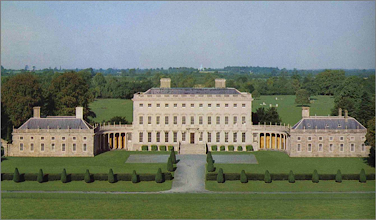
Conolly lives at Castletown House in County Kildare, which he inherits from his great-aunt Louisa, and “Cliff House” in County Donegal. He represents Donegal in the Parliament of the United Kingdom from the 1831 United Kingdom general election until his death, and is a lieutenant-colonel in the Donegal Militia. The Conolly residence “Cliff House” on the banks of the River Erne between Belleek, County Fermanagh, and Ballyshannon, County Donegal, is demolished as part of the Erne Hydroelectric scheme, which constructs the Cliff and Cathaleen’s Fall hydroelectric power stations. Cliff hydroelectric power station is constructed on the site of “Cliff House” and is commissioned in 1950.

On May 20, 1819, Conolly marries Catherine Jane, daughter of Chambré Brabazon Ponsonby-Barker. They have six sons and four daughters, including an eldest son, Chambré Brabazon, who dies in 1835; Thomas, who succeeds his father as MP for Donegal; Arthur Wellesley, who dies at the Battle of Inkerman while serving as a captain in the 30th (Cambridgeshire) Regiment of FootJohn Augustus, who also serves in the Crimean War and is awarded the Victoria Cross for his actions at Sevastopol as a lieutenant in the 49th (Princess Charlotte of Wales’s) (Hertfordshire) Regiment of Foot; Richard, who serves as Secretary of Legation at the Embassy of the United Kingdom in China; Louisa Augusta, who marries Wellington William Robert Rowley, 3rd Baron Langford, and dies of drowning in 1853; and Mary Margaret, who marries Henry Bruen.

Conolly dies in London on January 4, 1849.

(Pictured: Castletown House, Celbridge, County Kildare)

Leave a comment

Birth of Edward Pakenham, 6th Earl of Longford

Francis Pakenham, 7th Earl of Longford

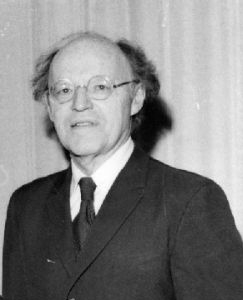
Edward Arthur Henry Pakenham, 6th Earl of Longford and an Irish peer, politician, and littérateur, is born on December 29, 1902. Also known as Eamon de Longphort, he is a member of the fifth Seanad Éireann, the upper house of the Oireachtas, in the 1940s.

Pakenham is the elder son of Thomas Pakenham, 5th Earl of Longford and Mary, Countess of Longford, née Child-Villiers. He is the only one of the Pakenham children on whom his mother dotes, apparently because he is to succeed to the earldom on his father’s death and because he is always in delicate health.

As a pupil at Eton College, where he twice received the Wilder Divinity Prize, Pakenham succeeds to the earldom when his father is killed in action at the Battle of Gallipoli on August 21, 1915. He is an Irish Nationalist since his days at Eton, taking inspiration from the Easter Rising in 1916 and the Russian Revolution of 1917. He learned Irish and adopted the name Eamon de Longphort.

Pakenham becomes an undergraduate at Christ Church, Oxford and meets his future wife, Christine Patti Trew, an Oxford “undergraduette.” They are married on July 18, 1925. His political views make him unpopular at both Eton and Christ Church, where he is famously put in “Mercury,” the pond containing a statue of Mercury in Tom Quad.

Pakenham becomes Chairman of the Gate Theatre in Dublin in 1930 and continues to work for the theatre until 1936, when he founds the Longford Players. His plays include Ascendancy, The Melians, The Vineyard, and Yahoo. An excellent linguist and Classical scholar, he translates Le Bourgeois gentilhomme, Le Malade Imaginaire, L’école des femmes, Tartuffe, Le Barbier de Séville, Agamemnon and Oedipus Rex and adapts the novella Carmilla for the stage.

Pakenham also has several volumes of poetry published, some at the expense of his mother when he is still at Eton, but he is not considered to have been a very good poet.

Pakenham is an Anglo-Catholic who never leaves the Church of Ireland. On November 13, 1946, he is nominated by the Taoiseach, Éamon de Valera, as a member of 5th Seanad Éireann, filling a vacancy caused by the death of Professor William Magennis. He is not re-appointed to the 6th Seanad.

Pakenham often collaborates with his wife with whom he is also responsible for redecorating Pakenham Hall, now Tullynally Castle, in Chinese style. Pakenham Hall is often the scene of gatherings of Oxford-educated intellectuals such as John Betjeman, Evelyn Waugh, and Maurice Bowra.

Edward Pakenham dies without issue on February 4, 1961, and is succeeded by his younger brother Frank. He is buried at Mount Jerome Cemetery in Dublin.