seamus dubhghaill

Promoting Irish Culture and History from Little Rock, Arkansas, USA


Leave a comment

Birth of James McAlinden, Irish Footballer

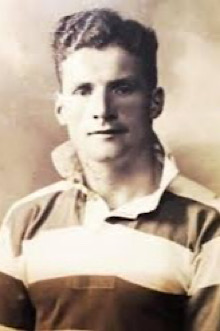
James McAlinden, Irish footballer who plays as a forward for several clubs, most notably, Belfast CelticPortsmouthShamrock Rovers and Southend United, is born in Belfast on December 27, 1917. As an international, he also plays for both Ireland teams – the IFA XI and the FAI XI. After retiring as a player, he goes on to manage GlenavonLisburn Distillery and Drogheda United.

In 1934, aged 16, McAlinden is playing for Glentoran Reserves, when after a game against their reserves, he is offered a professional contract by Belfast Celtic. Together with Jackie VernonTommy BreenBilly McMillan and Charlie Tully, he subsequently becomes a prominent member of the Celtic team managed by Elisha Scott. This team dominates the Irish League in the era before and during World War II. Among his most notable contributions is scoring in the 2–1 win against Bangor in the 1938 Irish Cup final.

In December 1938, McAlinden signs for Portsmouth for a fee of £7.500. He makes his debut for the club against Chelsea and goes on to become a regular in the side. Within six months of his arrival at the club, he helps them win the 1939 FA Cup final, beating Wolverhampton Wanderers 4–1. After the outbreak of World War II, he plays three times for Portsmouth in wartime regional leagues, but his first spell with the club ends when he then returns to Belfast Celtic in 1939. He returns to Portsmouth for a second stint in 1946. In September 1947, he leaves Portsmouth once again and joins Stoke City for a fee of £7,000.

Following the end of his second stint with Belfast Celtic and before he rejoins Portsmouth, McAlinden signs for Shamrock Rovers in September 1945. He makes his debut against Shelbourne at Glenmalure Park on September 16. While playing for Rovers his teammates include Paddy CoadPeter Farrell and Tommy Eglington. During his one season with Rovers, he helps the club reach the 1946 FAI Cup final. However Rovers lose 3–1 to Drumcondra.

McAlinden joins Stoke City in September 1947 for a then club record fee of £7,000. He becomes regular inside forward under manager Bob McGrory in 1947–48, playing in 33 matches scoring just twice against Aston Villa and Huddersfield Town. His lack of goals sees him fall out of favour at the Victoria Ground and he is sold to Third Division South side Southend United in October 1948.

In 1948, Southend United signs McAlinden from Stoke City for a fee of £8,000. He continues to play for United until 1954 and during his time with the club he serves as club captain. He also becomes something of a cult hero among the club’s fans and is remembered as being possibly the best player ever to play for the club. In 1950, he is caught up in controversy after it is alleged that he received illegal payments during his second spell with Portsmouth. As a result, he is suspended for the first two months of the 1950–51 season. In April 1954, he makes his last home appearance for United in a 4–1 win over Queens Park Rangers.

When McAlinden begins his international career in 1937 there are in effect, two Ireland teams, chosen by two rival associations. Both associations, the Northern Ireland–based Irish Football Association (IFA) and the Irish Free State–based Football Association of Ireland (FAI), claim jurisdiction over the whole of Ireland and select players from the whole island. As a result, several notable Irish players from this era, including McAlinden play for both teams.

Between 1937 and 1948, McAlinden makes five appearances for the IFA XI, making his international debut in a 1–1 draw with Scotland at Pittodrie Stadium on November 10, 1937. His IFA XI appearances also include the 8–4 defeat against a Combined Services XI at Windsor Park on September 9, 1944. This team is basically a Great Britain XI and features, among others, Matt BusbyStanley MatthewsTommy Lawton and Stan Mortensen. He also plays against England in 7–2 defeat at Windsor Park on September 9, 1946. He makes his last appearance for the IFA XI on October 10, 1948, in a 6–2 defeat to England at Windsor Park. He makes his first three appearances for the IFA XI while with Belfast Celtic, his fourth while at Portsmouth and his fifth while at Southend United.

In 1946, while with Portsmouth, McAlinden also makes two appearances for the FAI XI. He is one of several players born in Northern Ireland who benefits from the FAI’s attempts to establish their all-Ireland influence. In June 1946, when the FAI organises an Iberian tour, he, together with Jackie Vernon, Billy McMillan and Paddy Sloan, is one of four Northern Irish players called up. He subsequently plays in both the 3–1 defeat to Portugal on June 16 and then helps Ireland gain a surprise 1–0 victory against Spain on June 23, 1946.

In 1955, McAlinden becomes player/manager of Glenavon. He continues playing for an additional year before finally retiring as a player to concentrate on management. During a thirteen-year stint with Glenavon, he guides them two Irish League titles, three Irish Cup victories and one Gold Cup. After leaving Glenavon, works as a full-time scout for Coventry City before taking charge at Lisburn Distillery in 1969. He subsequently guides a Distillery team that includes a young Martin O’Neill to a win in the 1971 Irish Cup. Later in his first season with Drogheda United, he guides them to the 1976 FAI Cup final, only to lose 1–0 to Bohemian.

McAlinden dies at the age of 75 on November 15, 1993.


Leave a comment

Birth of Paddy Coad, Irish Football Player & Manager

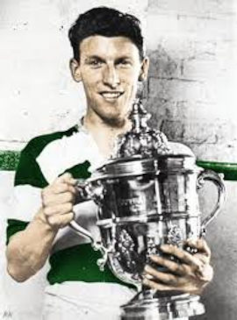
Patrick “Paddy” Coad, Irish football player and manager, is born at 100 Lower Yellow Road in Waterford, County Waterford, on April 14, 1920. He plays as a forward for Waterford, Glenavon, Shamrock Rovers and Ireland. Although known, primarily, as a maker of goals, he scores 126 goals in the League of Ireland and a further 41 in the FAI Cup. In 1946–47, he is top goal scorer in the League of Ireland. As a player manager, he also guides Shamrock Rovers to three League of Ireland titles and two FAI Cups, before he returns to Waterford and guides them to their first league title in 1966. He is appointed manager of Limerick in September 1967.

Coad is educated at De La Salle College Waterford and first distinguishes himself as a sportsman playing hurling and table tennis, becoming a Munster champion at the latter sport. He also begins to play football with Corinthians, a local junior club based in the Lower Yellow Road area of Waterford. He is soon spotted by Waterford, making his League of Ireland debut in 1937 at the young age of seventeen. He then moves to the Northern Ireland Football League (NIFL) club Glenavon but returns to Waterford after the start of World War II. He is a member of the Waterford team that finishes as a runner up to Cork United in both the League of Ireland and the FAI Cup. Waterford could have won the league title, but their players refuse to turn up for a play-off game against Cork after a dispute over bonus payments.

Coad signs with Shamrock Rovers in 1942 and on February 8 makes his debut against Brideville in the FAI Cup. During his early seasons with the club, he plays alongside Peter Farrell, Tommy Eglington, Jimmy McAlinden and Tommy Breen. He also helps Rovers win the FAI Cup three times. In November 1949, after the untimely death of Jimmy Dunne, he reluctantly accepts the position of player manager. He brings in many young players, including Liam Tuohy, and the team becomes known as Coad’s Colts. The Colts win 19 trophies between 1954 and 1959. Under his guidance, Rovers win three League of Ireland titles and the FAI Cup twice. In 1957, they also make their debut in the European Cup. Despite losing 9–2 on aggregate to Manchester United, Coad at the age of 37, dominates the away game at Old Trafford. He makes two appearances in the European Cup. On May 2, 1955, he is rewarded with a benefit game against Chelsea F.C. with Rovers winning 3-2.

Coad returns home to manage the Blues in 1960. In the 1965–66 League of Ireland season Waterford wins the Championship for the first time. Coad reflects on his legacy: “To bring the first title to my native Waterford leaves everything else in the shade.”

Between 1946 and 1952, Coad also makes eleven appearances and scored three goals for Ireland. He makes his debut on September 30, 1946, in a 1–0 defeat to England. On March 2, 1947, he scores his first goal for Ireland in a 3–2 win against Spain. During this game he also sets up both of Ireland’s other goals for Davy Walsh. On May 22, 1949, he scores the only goal, a penalty, in a 1–0 win over Portugal. His third goal for Ireland comes on May 30, 1951, in 3–2 away win over Norway. Ireland is 2–0 down until Peter Farrell and Alf Ringstead level the score. Then in the 82nd minute Coad scores from 20 yards to win the game. He plays his last game for Ireland in a 6–0 away defeat against Spain on June 1, 1952.

Coad wins the Texaco Hall of Fame Award in 1981 and the Professional Footballers’ Association of Ireland (PFAI) Merit Award in 1983.

After his professional playing career Coad works for twelve years as a commercial traveler for B. P. Ganley Ltd, a bacon and pork distributor in Waterford. He and his wife, Bud, have two daughters and a son. He is ill for six months prior to his death on March 8, 1992, at his daughter’s home in Waterford.

Coad’s brother, Seamus, plays for Waterford in the late 1960s and manages the team in the 1990s. Seamus’ sons Gary and Nigel Coad continue the family name by lining out for the Blues under their father before both going on to win many trophies locally. Amazingly, both Gary and Nigel become only the third set of second-generation brothers to play together for Waterford, following Paddy and Seamus, the Hales and Fitzgeralds. In 2012, Seamus’ grandson, Conor, becomes the latest Coad to play for Waterford United.

The Shamrock Rovers Player of the Year trophy is named after Paddy Coad.


Leave a comment

Death of Professional Footballer Johnny Carey

john-joseph-carey

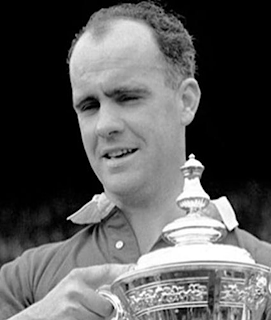
John Joseph “Johnny” Carey, professional footballer, manager and one of Manchester United F.C.’s great captains, dies in Macclesfield, Cheshire, England on August 22, 1995.

Carey is born in Dublin on February 23, 1919. As a schoolboy, he plays football for Home Farm F.C. As a youth, he also plays Gaelic football and is selected to represent Dublin GAA at minor level before he signs for St. James’s Gate F.C. at the start of the 1936–1937 season.

After just two months of League of Ireland football, he is spotted by Billy Behan, a Dublin-based Manchester United scout. In November 1936 United signs him for a then League of Ireland record fee of £250. He makes his debut as an inside left for United on September 23, 1937, against Southampton F.C. During his first season with United, Carey, together with Harry Baird, Jack Rowley, Tommy Bamford, Tommy Breen and Stan Pearson, help United gain promotion to the First Division.

As a player Carey spends most of his career with Manchester United, where he is team captain from 1946 until he retires as a player in 1953. He also plays as a guest for several other clubs including Cardiff City F.C., Manchester City F.C., Everton F.C., Liverpool F.C. and Middlesbrough F.C.

Carey is also a dual internationalist, playing for and captaining both Ireland teams – the FAI XI and the IFA XI. In 1947 he also captains a Europe XI which plays a Great Britain XI at Hampden Park. In 1949 he is voted the Football Writers’ Association Footballer of the Year and in the same year captains the FAI XI that defeats England 2–0 at Goodison Park, becoming the first non-UK team to beat England at home.

Carey is also the first non-UK player and the first Irishman to captain a winning team in both an FA Cup Final and the First Division. Like his contemporary Con Martin, he is an extremely versatile footballer and plays in nine different positions throughout his career. He even plays in goal for United on one occasion.

(Pictured: Manchester United captain Johnny Carey is carried on the shoulders of his teammates, after they win the FA Cup final of 1948 against Blackpool. Date: April 24, 1948)