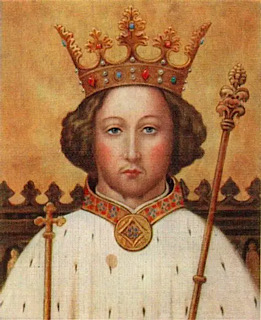
King Richard II of England lands at Waterford, County Waterford, on October 2, 1394, at the head of the largest English military force ever to enter an Irish port. This marks the beginning of his first major expedition to Ireland, a campaign aimed at reasserting royal authority and implementing sweeping administrative reforms.
By 1394, England has secured peace with both France and Scotland, allowing Richard to focus on Ireland. The Lordship of Ireland is in decline, with Gaelic lords like Art Óg Mac Murchadha Caomhánach of Leinster resisting English overlordship. Richard’s stated goal is to secure the submission of the great Gaelic lords and to integrate them into the English legal and political system, making them equal subjects of the Crown.
Richard arrives with an army of about 8,000–9,000 men, a force far larger than any previous English intervention in Ireland since the late twelfth century. The campaign is both military and political: while he seeks to subdue resistance, his primary aim is reform of the Irish administration rather than total conquest.
The expedition moves through lower Leinster, encountering resistance from Mac Murchadha Caomhánach. Historical accounts note a dramatic near-capture of the king’s enemies at a place called Laveroc, where the Earl Marshal almost seizes Mac Murchadha Caomhánach and his wife in their beds. Despite these skirmishes, Richard manages to reconcile most of the major Gaelic lords to his overlordship by promising access to royal justice and arbitration.
Richard’s 1394–95 Irish campaign is the first visit by a reigning English monarch to Ireland since King John in 1210. It demonstrates the king’s ambition to centralize control over the entire lordship, but it also highlights the limits of English power in the face of Gaelic resistance and administrative challenges.
In summary, Richard II’s arrival in Waterford on October 2, 1394, is a pivotal moment in medieval Irish history — a show of royal might, a test of political reform, and a reminder of the enduring challenges of governing a diverse and resistant Ireland.
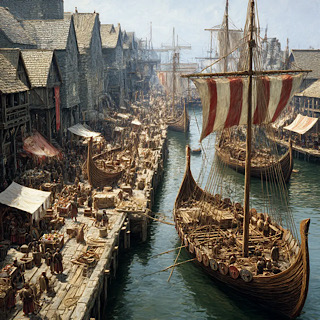
After securing Wexford and Waterford, MacMurrough and Strongbow march on Dublin, bypassing an Irish force under Ruaidrí Ua Conchobair positioned south of the city. They take a northern route, attacking from an unexpected direction, catching the defenders off guard. The assault is swift and decisive, leading to the capture of Dublin.
Ascall mac Ragnaill, King of Dublin, and many Norse inhabitants flee by sea to the Hebrides or the Isle of Man. The fall marks the effective end of centuries of Norse political dominance in Ireland.
Dublin becomes a Norman stronghold, facilitating further expansion into Ireland and setting the stage for Henry II’s 1171 invasion to assert English control. The conquest introduces Norman feudalism, chivalry, and Roman Catholicism to Ireland, altering its political, cultural, and religious landscape for centuries.
This event is a turning point in Irish history, symbolizing the close of the Viking era and the dawn of Norman influence on the island.
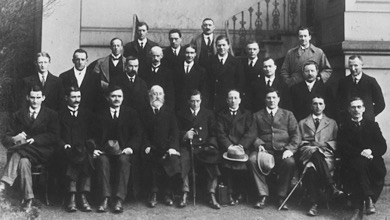
The ban comes after just eight months of Dáil Éireann’s existence, which begins on January 21, 1919, when Sinn Féin MPs refuse to take their seats in Westminster and instead convene a separate parliament in Dublin. The British initially underestimate its significance, but events change rapidly.
Sinn Féin’s attempt to raise funds (the Dáil Loan) in August 1919 for the republican cause is seen as a move to legitimise an independent administration, undermining British control. Also, some Irish Volunteers members swear allegiance to Dáil Éireann, which is seen as a political act with potential to inspire wider resistance. The summer of 1919 also sees a surge in attacks, prompting Dublin Castle to respond with suppression measures.
The proclamation takes effect nationwide, including all counties and major boroughs such as Dublin, Belfast, Cork, Limerick, Derry, and Waterford. Within days, police raids and searches target Sinn Féin headquarters and members’ homes. The Harcourt Street headquarters in Dublin is raided, leading to arrests of figures like Patrick O’Keefe and Ernest Blythe. Similar searches occur in Belfast, Derry, Omagh, and Ballycastle, uncovering literature, weapons, and ammunition in some cases.
The ban is a major blow to Sinn Féin’s political prestige, but it also hardens the resolve of many republicans. Historians note that the suppression turned some moderate politicians into “extremists” and increased the likelihood of militarisation. Despite the crackdown, the Dáil continues to operate in secret, meeting in multiple Dublin locations to maintain the Irish Republic’s political legitimacy.
In short, the September 12, 1919 declaration marks a turning point in the Irish War of Independence, shifting the conflict from political negotiation to open confrontation.
(Pictured: Members of the First Dáil Éireann seated and standing outside the Mansion House in Dublin on January 21, 1919)
Parry is born c. 1599 in Madyn Dyswy, Amlwch, Anglesey, Wales, the son of Rhys Parry, a merchant of Newry, County Down. The name of his mother is disputed. His siblings are Arthur, Grace and Magdalen. He is educated in Newry. In 1616, he enrolls as a student of Trinity College Dublin (TCD) where he graduates with a BA in 1620. He obtains his MA there in 1623 and a fellowship on November 24, 1624. In 1630 he graduates as a Doctor of Divinity and later becomes Pro-Vice-Chancellor of the college.
In Anglican politics Parry is regarded as a Laudian. In 1627, he is appointed Prebendary of Tipperkevin, a living belonging to St Patrick’s Cathedral, Dublin. In 1630, he is Incumbent of St. Bride’s Church, Dublin, where several of his children are baptised. In 1634, he is made Treasurer of Christ Church Cathedral, Dublin and chaplain to Lancelot Bulkeley, Archbishop of Dublin. In 1635, he is appointed one of the High Commission for Ecclesiastical Causes. In 1636, he is appointed Prebendary of Stagonyl, another living belonging to St Patrick’s Cathedral, Dublin. By patent dated April 28, he is presented to St. Olave’s in Waterford where he is installed on May 11, but is also licensed to hold his other preferments at the same time. In 1640, he resigns from St. Olave’s and is appointed Dean of Lismore, County Waterford. Some of the Deanery lands had been seized by Richard Boyle, 1st Earl of Cork and Parry tries to get them back but fails. His successor as Dean of Lismore is his first cousin, Robert Parry. In 1643, he is Archdeacon of Glendalough, County Wicklow.
On December 29, 1646, King Charles I of England in a letter states he favours Parry for the See of the Diocese of Killaloe, County Clare. On March 20, 1647, a patent is issued confirming his appointment as Bishop of Killaloe and he is consecrated at Christ Church Cathedral, Dublin, on March 28, 1647, by Lancelot Bulkeley, Archbishop of Dublin, assisted by the Bishops of Kildare and Cloyne. However, as this is in the middle of the Irish Rebellion he was unable to travel to his diocese and remains in Dublin, where he resides in Chichester House, St. Stephen’s Street, which later houses the Parliament of Ireland. In the Hearth Money Rolls the house is assessed for eight hearths so is quite large. On July 9, 1647, he signs the petition of the clergy praying to be allowed the use of the Liturgy, then abolished by order of the commissioners under Oliver Cromwell. On account of his good character and the smallness of the revenues of Killaloe, the King permits him to hold his former preferments in commendam.
Parry marries the daughter of John Price and by her has six children, who are John Parry, Bishop of Ossory, Benjamin Parry, Bishop of Ossory, Edward Parry, Robert Parry, Mary Parry who marries John Bulkeley, and Elinor Parry who is a love and correspondent of John Locke and later marries Richard Hawkshaw.
Parry dies in his house in St. Stephen’s Street on July 20, 1650, at the age of 51, after contracting the plague which rages there, and is buried in St. Audoen’s Church, Dublin. His will dated July 17, 1650, is proved in the Prerogative Court, Dublin. Its terms are: (1) his body is to be interred in St. Audeon’s Church near the doors, with his face to the east, where he also desires the body of his wife to be translated, and laid by his side, (2) he gives to his eldest daughter, Mary Parry, alias Bulkeley, a little silver watch, and her mother’s dear-head ring, (3) to his other daughter “Eleynor Parry” other ornaments that belonged to her mother, (4) to his sister “Madelius Evans” five pounds, (5) to other beneficiaries are given legacies out of the fifty pounds due to him by William Usher, (6) to his cousin, Robert Parry, he leaves his lexicon and other books, (7) to his cousin, Richard Parry, he leaves a gold ring, (8) to his cousin, Mary Parry, wife of Richard, he leaves a money legacy, and (9) he appoints his cousin, Robert Parry, as overseer of his will.
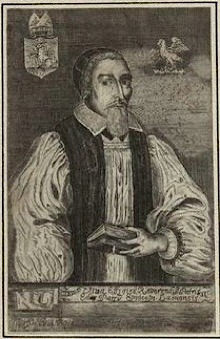
Parry writes a book entitled David restored; or an Antidote against the Prosperity of the Wicked, and the Afflictions of the Just, which is a sermon on the seventy-third Psalm. This is afterward published by his son, John Parry at Oxford in 1660. This work contains an engraved portrait of Edward Parry (above).
(Pictured: An engraved portrait by John Dickson of Dr. Edward Parry, Bishop of Killaloe, from a book authored by the bishop entitled “David restored; or an Antidote against the Prosperity of the Wicked, and the Afflictions of the Just”, published at Oxford in 1660.)
At the start of the Irish Civil War in June 1922, the Free State controls only Dublin. Anti‑Treaty forces, forming the so‑called Munster Republic, hold Cork, Limerick, and Waterford, along with much of the west. Waterford’s republican garrison has fortified the city, dismantled the drawbridge’s control equipment, and isolated the port by removing wireless and other communications.
On July 16, republican forces learn that Free State troops ae moving toward Waterford. They raise the drawbridge early and move vessels from the Kilkenny side to the Waterford side. On July 18, Prout’s column is spotted from Sallypark Hill, prompting republican machine gun and rifle fire. A Free State volunteer, Costeloe, is wounded and later dies.
From July 19, sniping continues across the River Suir. On July 19, the Free State brings the 18‑pounder artillery into position overlooking the city, bombarding republican positions. The republicans hold key buildings such as the Adelphia Hotel, Country Club, and Reginald’s Tower.
By July 21, Free State forces cross the River Suir downstream at Gyles Quay, enter the city, and drive out republican troops from their positions. The drawbridge on Redmond Bridge is lowered by hand, and republican reinforcements from Cork and Tipperary either withdraw or do not engage. The Free State takes Waterford on July 21, 1922, ending the republican hold on the city.
Two anti‑Treaty volunteers, Maurice McGrath and John “Bonny” Boyle, are killed. Two Free State soldiers, Sergeant James Howlett and Michael Costelloe, are killed. At least six civilians are killed, including Joseph Dwan, William Long, and a 10‑year‑old girl. Many civilians are wounded.
The fall of Waterford marks a key Free State victory in the conventional phase of the Irish Civil War, contributing to the re‑capture of major southern cities and paving the way for the later guerrilla phase.
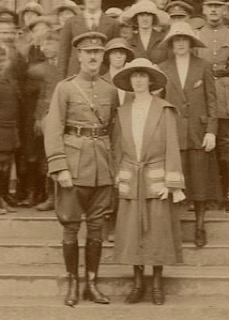
(Pictured: John T. Prout at his wedding to Limerick native Mary Conba at St. John the Evangelist Church (O’Loughlin Memorial Church), Kilkenny, July 12, 1922)
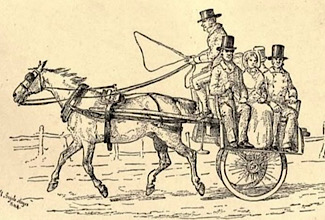
On July 5, 1790, the Irish mail coach service makes its first run from Dublin to Waterford, marking a significant milestone in Ireland’s postal history. This is part of the broader expansion of the General Post Office’s (GPO) mail coach network, which had been introduced in Ireland in 1789.
A twice-weekly mail coach service operates between Dublin and Drogheda to the north, Kilkenny to the south and Athlone to the west as early as 1737 and for a short period from 1740, a Dublin to Belfast mail coach exists. In winter, this route takes three days, with overnight stops at Drogheda and Newry. In summer, travel time is reduced to two days. In 1789, mail coaches begin a scheduled service from Dublin to Belfast. They meet the mail boats coming from Portpatrick in Scotland at Donaghadee, County Down.
The Irish mail coach system is modeled on the successful English service introduced in 1784 by John Palmer, which uses specially built coaches to carry the Royal Mail under contract to independent operators. These coaches are designed for speed and efficiency, stopping only for mail collection and delivery, and are protected by armed guards. The Dublin–Waterford route is one of the early inland services added to the network, complementing other major routes such as London–Norwich, Liverpool–Leeds, and London–Dover.
The July 5, 1790 run from Dublin to Waterford is notable because it is the first scheduled mail coach service on that route, replacing slower and less secure methods like mounted riders or carts. It demonstrates the GPO’s ability to extend its network to key inland towns, improving communication between Dublin and the southeast of Ireland. It also reflects the rapid expansion of the mail coach system in Ireland by 1790, with many towns already having daily mail delivery and collection.
While the primary purpose is to carry the Royal Mail, passengers can also travel at a premium fare. The coaches can carry four seated passengers inside and more standing outside, with the driver and guard occupying the front seats. The journey from Dublin to Waterford is relatively short for the time, but still requires careful scheduling to meet the strict post office timetable.
This first run lays the foundation for a regular mail service that becomes a vital part of Ireland’s transport and communication infrastructure until the advent of railways in the 1830s. By the mid-19th century, most of the mail coaches in Ireland are eventually out-competed by Charles Bianconi’s country-wide network of open carriages, before this system in turn succumbs to the railways. The Dublin–Waterford route, like others, is eventually replaced by the faster rail services, but its role in modernizing Ireland’s postal system is crucial.
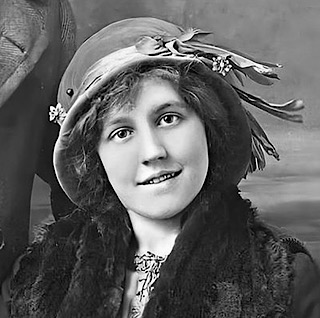
Mernin is born in Clanbrassil Street, Dublin, on November 16, 1886. Her parents are John Mernin and Marianne “Mary” (née McGuire). She has one sister, May. Her father is a baker and confectioner of Dorset Street, Dublin. After his death when Mernin is young, the children are raised by his family in Dungarvan, County Waterford.
In the 1910s, Mernin works as a typist in a number of Dublin companies, and by 1914 she is a shorthand typist in Dublin Castle at the garrison adjutant’s office. She is a member of the Keating branch of the Gaelic League, and through this her cousin, Piaras Béaslaí, introduces her to Michael Collins in 1918. From 1919 she begins working for Collins as an intelligence agent. She uses her position in Dublin Castle to obtain important documents and, in 1920, intelligence on British intelligence officers and the auxiliary police.
Under the alias of “Little Gentleman” or “Lt. G.,” Mernin is one of Collins‘a most important agents, so much so that many believe the Little Gentleman is a British intelligence officer. One of the most important contributions she makes is identifying the homes of British intelligence officers who are later killed on Bloody Sunday, November 21, 1920, by Collins‘s Irish Republican Army (IRA) unit The Squad. She aids Frank Saurin and Tom Cullen in identifying senior British agents in Dublin, typing secret reports for Collins in a room in 19 Clonliffe Road.
In February 1922, Mernin is discharged from the British service, taking up a position as a typist in the Irish Army from July 1922 until February 1952, when she retires. She works primarily at Clancy Barracks. She is awarded a military pension for her service from 1918-1922, and her statement is held in the Bureau of Military History in the Military Archives.
Mernin never marries, although she gives birth to a son in London in June 1922, with some evidence suggesting Béaslaí is the father. She lives at 167 Mangerton Road, Drimnagh. She dies at the age of 70 on February 18, 1957, in Dublin.
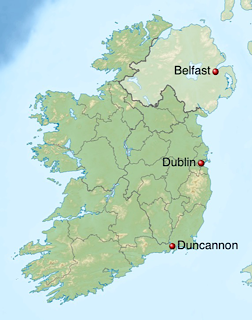
At the outbreak of the Irish Rebellion of 1641, most of south-eastern Ireland falls to the Catholic insurgents. Roughly 1,000 rebels blockade Duncannon, which is heavily fortified and contains an English garrison of about 300 men. Around 150 of the English troops are killed in forays against the Irish at nearby Redmond’s Hall, but without siege artillery, or expertise in siege warfare, the rebels are unable to take Duncannon.
Hostilities continue throughout 1642, as the Irish, now organised as the Irish Confederacy raid the town’s hinterland. As in much of Ireland, the conflict is bitter. In one incident, Laurence Esmonde, 1st Baron Esmonde, the Royalist commander, hangs 16 Irish prisoners who have been taken at nearby Ramsgrange. In response, the Irish execute 18 English prisoners whom they have been holding.
In 1643, because of his need for troops to fight in the English Civil War, Charles I signs a ceasefire with the Irish Confederates. As a result, hostilities between Duncannon and the Catholic-held surrounding area are suspended.
However, in 1644, the English garrison of Cork, under Murrough O’Brien, 1st Earl of Inchiquin, unhappy with the Royalist truce with the Irish Confederates, declares for the English Parliament, who are to remain hostile to Irish Catholic forces throughout the 1640s. Esmonde, under pressure from elements of his garrison, also changes to the side of Parliament and effectively re-declares war on the Catholic Confederates. His motives are unclear: though he is a Protestant convert, the Esmonde family are Anglo-IrishRoman Catholics, and he owes his entire advancement to the Crown.
Duncannon is a strategically important town for two reasons. Firstly, it has formidable defences. Secondly and more importantly, its guns overlook the sea route to Waterford and New Ross, two of the most important Catholic-held towns and also ports at which the Confederates receive military aid from Catholic Europe.
Needing to keep this channel open and also fearing the presence of an English garrison deep in their territory, the Confederates’ Supreme Council in Kilkenny despatches Thomas Preston, general of their Leinster Army, to take Duncannon in January 1645. Preston has at his disposal 1,300 men, four cannons and a mortar. The mortar, the first of its kind to be used in Ireland has been donated by Spain the previous year and is commanded by a French military engineer named Nicholas La Loue. La Loue had served with Preston in Flanders and is chief of engineering in the Leinster Army.
Duncannon possesses formidable defences. For one thing, it is located on a peninsula and can only be approached from the north, the other three sides jutting out into the sea. Just off the town are docked four Parliamentarian ships, which are supplying Duncannon with food and reinforcements. Secondly, it possesse two lines of fortifications, the outer line being a more modern low deep rampart protected by a dry ditch and the inner wall being a medieval curtain wall, complete with three towers. However, it has two grave weaknesses, first, it is overlooked by a hill to the north, from which an attacker can fire into the town and, secondly, the water supply is located outside the walls.
Preston arrives at Duncannon on January 20 and proceeds to construct a ring of trenches which cut off Duncannon on its landward side. From the hill that overlooks the town to the north, his guns are able to fire on a squadron of four Parliamentarian ships that are docked off Duncannon and providing the town with supplies. The flagship, the Great Louis, is badly damaged, its mast wrecked by cannon fire, and it takes several more hits from the mortar as it tries to get away. The ship sinks in deep water, drowning its crew and 200 soldiers who are on board.
Having cut off Duncannon’s supply from the sea, Preston proceeds to dig saps closer to the walls, the ultimate aim being to bring his cannon close enough to the walls in order to blast a breach and open the way for an assault. His engineers also dig a mine underneath one of the town’s bastions. All the while, the town’s defenders are kept under a bombardment by the mortar and, as the Confederate troops get closer to the walls, by sharpshooters. On March 12, one such sniper kills the fort’s second in command, one Captain Lurcan, who is hit in the head by a bullet.
On March 16, by which time the Irish trenches are “within pistol shot of the walls,” Preston orders the mine to be exploded, opening a breach in Duncannon’s outer walls. The Irish infantry then assault the town, but are beaten off with some losses. The following day, Saint Patricks Day, Preston tries again and this time his troops succeed in taking the town’s outer, more modern walls but are stopped at Duncannon’s inner, medieval ramparts. They succeed in occupying one of the town’s towers for an hour before being beaten back. Geoffrey Baron, a Confederate politician, who keeps a diary of the siege, reports that 24 Irish soldiers are killed in the two assaults.
At this point, Preston summons Esmonde to surrender, before he has to “proceed to extremities.” This is a delicate threat, implying that if the town falls to an assault, its defenders will be put to the sword – as is customary in contemporary siege warfare. Esmonde is also advised to surrender by the Parliamentarian vice admiral, William Smith, who is anchored offshore with seven ships, but cannot break through to relieve the town. In a letter that reaches Esmonde on March 11, Smith warns him that “if the rebels take the fort by storming it, they will undoubtedly put you all to death…you should agree with thy adversary while thou art in the way.” Esmond has Smith’s letter publicly read to his troops after the assaults of March 16-17 to discourage those who favour holding out.
Alongside the risk of massacre, the English garrison is also very low on gunpowder and water. The town’s only source of fresh water, a well, is behind the Confederate siege lines.
In light of these facts, Esmonde formally surrenders Duncannon to Preston on March 18. The Confederates take possession of the town but its garrison is allowed to march away to Youghal, which is in Protestant hands. However, they have to leave behind the town’s 18 artillery pieces. Esmonde himself dies a feways after the end of the siege. Preston goes on to briefly besiege Youghal, but bad weather, a lack of supplies and squabbling with James Tuchet, 3rd Earl of Castlehaven, the Confederate Munster general, puts an end to his campaign for the winter.
The siege is of importance in that it reopens the sea route into Waterford and eliminates a hostile English garrison in Confederate territory. Preston, who had for many years been the Spanish military governor of Leuven, is highly experienced in siege warfare and his conduct of the siege draws widespread praise. Not only does he take the town, but he does so at a relatively low cost. Sixty-seven Confederate soldiers die in the siege, of whom roughly 30 die of disease. Given that the campaign is conducted in mid-winter, in an age when disease routinely kills many more soldiers than combat, this represents a considerable logistical achievement on the part of the Irish general.
The Great Lewis, the Parliamentarian ship sunk during the siege, is rediscovered in 1999 and raised in 2004.
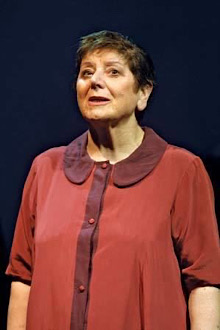
Manahan’s career begins when, as a young woman, she is recruited by the legendary Irish impresarios and theatrical directorsMicheál Mac Liammóir and Hilton Edwards. She later marries stage director Colm O’Kelly, who dies not long afterward of polio, which he contracts after swimming in the Nile during a theatre tour of Egypt. They have no children and she never remarries. She is known professionally by her maiden name. In 1946 she appears in a production by Irish playwrightTeresa Deevy, The Wild Goose, where she plays the part of Eileen Connolly. This is performed by Equity Productions in the Theatre Royal, Waterford.
In 1957, Manahan plays Serafina in the first Irish production of Tennessee Williams‘s The Rose Tattoo and achieves unexpected notoriety when she and several other members of the cast are arrested for the possession of a condom on stage.
Manahan plays a minor role in the Irish cultsoap operaThe Riordans (1960s), and as Mrs. Mary Kenefick in the TV comedy Me Mammy (1970s). She also plays the lead in the Irish comedy series, Leave It To Mrs O’Brien (1980s) and Mrs. Cadogan in The Irish R.M. (1980s). Most recently she plays Ursula in Fair City, for which her niece, Michele Manahan (daughter of Michael Manahan), is a writer.
Manahan has an extensive theatre portfolio having played at theatres throughout Ireland including the Abbey Theatre, the United Kingdom, continental Europe, the United States and Australia. She wins the Tony Award for Best Featured Actress in a Play for her role as Mag in Martin McDonagh’s The Beauty Queen of Leenane on Broadway. She previously receives a Tony nomination in 1969 for Brian Friel’s Lovers.
The Irish playwright John B. Keane writes the play Big Maggie specifically for Manahan. In 2001 she stars in Keane’s The Matchmaker with veteran Irish actor Des Keogh. In 2005 she stars in Sisters, a new play by Declan Hassett that is also written for her and for which she is nominated for a Drama Desk Award in the category of Outstanding Solo Performance. The production tours Ireland and is staged at the International Festival of World Theatre in Colorado and also plays at the 59E59 Theater in New York City in 2006.
In 2004 Manahan starts to play the role of Ursula in Fair City. All About Anna (2005), a documentary on her life and work is made by Charlie Mc Carthy/Icebox Films for RTÉ Television. In 2008, she becomes the first ever patron of the Active Retirement Ireland organization.
Manahan dies of multiple organ failure on March 8, 2009 in Waterford. She had suffered from a longterm illness.
Her funeral is held on March 11, officiated by her “longtime friend” the psychoanalyst, poet, and priest Bernard Kennedy. “As the final curtain falls, the lights dim, the auditorium becomes silent, we remember her” he says. Describing her as a woman of faith (who “sought to bring the word of God alive”), he says she had brought everyone together to be present at “her last great exit from this great stage of life,” saying her life’s work had drawn people from all over the world. “Anna believed in the empty tomb of the Resurrection and she believed the empty tomb could be filled by hearing the word take the place of the emptiness,” he says. “She knew the bedsits which preceded the Tony nomination.”
Born on March 13, 1831, in Lisburn, County Antrim, McCloy is the youngest of five children, born to Peter McCloy, a painter, and his wife Martha Phelan. He studies at the School of Design in Belfast from 1850 to 1851 while serving an apprenticeship in engraving, with J and T Smyth. He then spende a year at the Central School, Somerset House in London before being appointed Master at the Waterford School of Art around 1853, when he also becomes a visiting instructor to several other institutions. In the spring of 1865 he marries his student, the Waterford artist Ellen Lucy Harris, the fourth daughter of a banker named Richard Harris. The dismembered corpse of McCloy’s mother is recovered from the River Suir in September of the same year. She had been missing since the previous November.
McCloy shows just once at the Royal Academy of Arts with a work entitled The Haunt of Meditation in 1859. He exhibits infrequently at the Royal Hibernian Academy between 1862 and 1882, where he displays sixteen works in that time. He displays eleven works in the 1876 Industrial Exhibition at Belfast’s Ulster Hall. In 1880, he shows at Rodman and Company in London where the writer in the Belfast Telegraph indicates that McCloy is becoming a popular artist and is receiving extensive patronage.
After a year-long illness that prevents him from working, McCloy dies in Balham, South London, on October 4, 1904. He is survived by his wife, Ellen, and nine daughters. The Lisburn Museum in his hometown offers a belated retrospective of his work in 1981 to mark the one-hundred fiftieth anniversary of his birth. The exhibition is the first known solo display of McCloy’s work and consists of 58 works. The catalogue for this show is written by Eileen Black and funded by the Arts Council of Northern Ireland.