
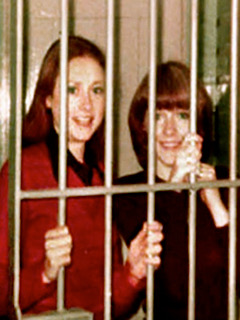
On November 14, 1973, eight members of the Provisional Irish Republican Army (IRA) — six men and two women, including sisters Marian and Dolours Price (pictured) — are convicted at Winchester Crown Court of their roles in the London bombings of March 8, 1973.
The two bombs are placed in London as part of the IRA’s “London bombing campaign.” One bomb explodes outside the criminal court, Old Bailey, injuring over 200 people. The second bomb explodes outside the Ministry of Agriculture near Whitehall, also injuring nearly 200 people. One man dies from a heart attack shortly after the Old Bailey blast, though the autopsy suggests the attack began before the explosion.
The 10‑week trial at Winchester Crown Court is one of the most heavily secured in British legal history, with plain‑clothes detectives, prison officers, and bolted doors. The jury deliberates for two days before convicting the eight defendants. A ninth defendant, Roisin McNearney, is acquitted, and a tenth, William McLarnon, pleads guilty on the first day.
The Price sisters, along with Hugh Feeney and Gerry Kelly, are considered the key conspirators. All eight convicted men and women are sentenced to life imprisonment.
The convicted IRA members immediately begin a hunger strike demanding transfer to prisons in Ireland. The four main leaders — the Price sisters, Feeney, and Kelly — continue the strike for months, are force‑fed, and are eventually transferred to Irish jails in 1975. Marian and Dolours Price are later released early on medical grounds due to anorexia nervosa.
This case remains one of the most high‑profile IRA trials in the United Kingdom, notable for its security, the scale of the attacks, and the prolonged hunger strike that follows.

