seamus dubhghaill

Promoting Irish Culture and History from Little Rock, Arkansas, USA


Leave a comment

French Directory Authorizes Troops to Ireland

On July 19, 1798, the French Directory formally authorizes the dispatch of three expeditions to Ireland to support the United Irishmen in their rebellion against British rule. This decision comes after years of political and military planning, with the Irish republican movement—led by figures such as Theobald Wolfe Tone—urging French intervention to spark a widespread uprising.

The Irish Rebellion of 1798 has been suppressed in the east by British forces, but unrest continues in the west. The French Directory, influenced by Enlightenment ideals and shared revolutionary sympathies with the United Irishmen, see an opportunity to strike a blow against Britain and inspire Irish republicanism. The plan is to land French troops in Ireland to provide military aid to the rebels, incite a general uprising and potentially use Ireland as a staging ground for further operations against Britain.

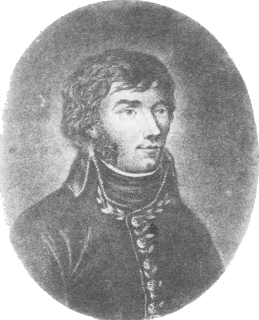
The July 19 authorization marks the final political clearance for the operation. The first expedition is entrusted to General Jean Joseph Amable Humbert (pictured), a veteran of irregular warfare against the Vendéen insurgents. The force is small—about 1,025 French troops, three light field cannons, 3,000 muskets, and 400 sabres—but includes Irish allies such as Bartholomew Teeling and Fr. Henry O’Kane, who help spread the news of the landing.

On August 6, 1798, Humbert’s three frigates—La ConcordeLa Franchise, and La Médée—sail from La Rochelle, taking a circuitous route to avoid British naval detection. They land at Killala Bay, County Mayo, where they quickly take control of the town, hoisting the French flag and rallying local Irish recruits.

Humbert’s landing in Killala, known locally as Bliadhan na bhFrancach (“The Year of the French”), sparks a brief but significant phase of the Rising. His forces achieve notable victories, such as the Races of Castlebar, but ultimately cannot sustain momentum against the British response. Humbert surrenders to British forces at Ballinamuck, County Longford, on September 8, 1798.

In summary, the July 19, 1798, authorization by the French Directory is the decisive political step that enables Humbert’s small but symbolic invasion of Ireland, which, though militarily limited, becomes a potent symbol of French-Irish revolutionary solidarity.

Leave a comment

Thomas Francis Meagher Publicly Presents the Tricolour National Flag

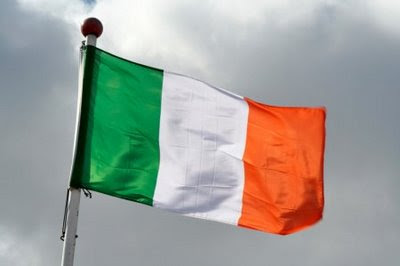
Waterford native Thomas Francis Meagher presents the tricolour national flag of Ireland to the public for the first time at a meeting of the Young Ireland party in Dublin on April 15, 1848.

The mid-19th-century is a difficult time for the Irish. Under British subjugation, and amidst the vice-grip of the Great Famine, Ireland and its people are in desperate need for optimism, and something to bring the nation together.

News of the recent French Revolution has reached Irish ears and there is a growing belief that the path to independence is an achievable one.

During a trip to Paris with an Irish delegation sent to congratulate the French republicans on their successful revolution, Meagher is inspired to create a design for the Irish tricolour, similar to the French flag, with the help of a small group of French women sympathetic to the Irish cause.

The new flag has green, white and orange stripes – the colours symbolising the unification of two traditions into one nation – Catholics (green) and Protestants (orange). Few realise however, that Meagher’s original flag has the orange stripe closest to the staff, a design now used by Ivory Coast.

As Meagher outlines later, “The white in the centre signifies a lasting truce between Orange and Green and I trust that beneath its folds the hands of Irish Protestants and Irish Catholics may be clasped in generous and heroic brotherhood.”

At a meeting in Waterford on March 7, 1848, Meagher first publicly unveils the flag from a second-floor window of the Wolfe Tone Club as he addresses a gathered crowd on the street below who are present to celebrate another revolution that has just taken place in France.

From March of that year the Irish tricolour appears side-by-side with the French tricolour at meetings held all over the country.

On April 14 and 15, the flag is paraded around the country. Political journalist John Mitchel says at the time, “I hope to see that flag one day waving, as our national banner.”

The flag is nearly forgotten following the Young Irelander’s failed rising later in 1848. The Fenians, the next Irish revolutionary movement, use the traditional green field and golden harp motif for its flags and it is the predominantly used flag for the next sixty years.

During this time, support for Meagher’s design grows, and following the events of the 1916 Easter Rising, it is resurrected by the Irish Volunteers and later by Sinn Féin and is unofficially adopted as the flag of Ireland. With the green stripe closest to the staff, Meagher’s tricolour becomes the official flag of the 26 counties of the Irish Republic.

In 1937, the design achieves constitutional status as the official Irish flag.

Until recently, display of the tricolour flag is illegal in the six occupied counties of Northern Ireland.

(From: “On this day in 1848: Ireland’s new flag is shown to public for first time” by Harry Brent, The Irish Post, http://www.irishpost.com, April 15, 2021)