
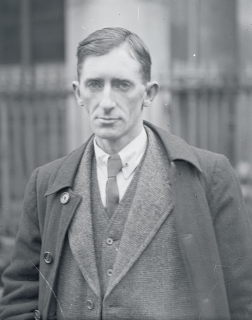
On November 3, 1922, anti-Treaty Irish Republican Army (IRA) forces launch an attack on the official residence of General Richard Mulcahy (pictured), commander-in-chief of the Irish Free State’s National Army, located in Portobello, Dublin, adjacent to Portobello Barracks.
By late 1922, the Irish Civil War is in its final phase. The Free State, under Michael Collins, has just launched its decisive offensive in July–August 1922, re-taking major towns and consolidating control over the east of Ireland. Mulcahy, as head of the National Army, is a key pro-Treaty military leader, and his residence is a high-value target for anti-Treaty forces seeking to disrupt Free State command structures.
The IRA assault targets the residence, which is situated next to a military barracks, making it a symbolic and strategic site. According to historical accounts, a grenade is thrown at the building but fails to detonate. The Free State guard is quickly reinforced, and the attackers are repelled with one man killed.
This incident reflects the ongoing tension between pro- and anti-Treaty forces in late 1922. While the Free State has regained the capital and much of the east, anti-Treaty IRA units continue to strike at military and political leaders, aiming to undermine the legitimacy of the new state. The Portobello attack is part of a broader campaign of sabotage and targeted violence during the final months of the Civil War.
In related events, on November 2, anti-Treaty volunteers attempt to assassinate Mulcahy by approaching Portobello Barracks armed with revolvers; one volunteer, Frank Power, is shot dead. On November 3, Liam Lynch arrives in Dublin to set up his headquarters in Santry. These events show that even as the Free State consolidates its military position, anti-Treaty forces remain active, focusing on high-profile military and political targets.


