
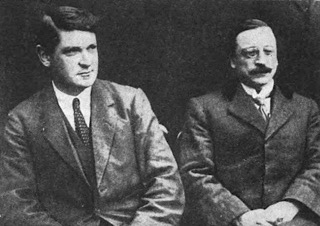
On November 25, 1921, Michael Collins and Arthur Griffith, the Irish plenipotentiaries, return to Dublin from the Anglo‑Irish Treaty negotiations in London. The talks, which run from October 11 to December 6, 1921, produce a compromise settlement between the United Kingdom and Ireland that creates the Irish Free State with 26 of Ireland’s 32 counties, allow Northern Ireland to opt out, and include a Boundary Commission to adjust the partition.
Upon their return, Collins and Griffith present the final treaty text to Éamon de Valera’s Dáil Éireann cabinet. The cabinet, led by de Valera, is deeply divided over the treaty’s terms — particularly the oath of allegiance to the British monarch, the partition of Ireland, and the Commonwealth status.
On November 25, the cabinet debates and passes a motion recommending the treaty to the Dáil. This is a critical step: it is the first formal parliamentary endorsement of the treaty, but it also sets the stage for a fierce political and military split.
The treaty’s compromise nature — granting partial independence while leaving the question of full unity unresolved — creates irreconcilable divisions among Irish nationalists. The pro‑treaty faction, consisting of Collins, Griffith and de Valera supporters, see it as a pragmatic step toward independence. The anti‑treaty faction, consisting of de Valera’s opponents and many republicans, reject it as a betrayal of the vision of a united, fully independent Irish Republic.
The cabinet’s approval of the treaty means the Dáil has to vote on it, and the dispute over its interpretation and implementation soon erupts into armed conflict. This political schism directly precipitates the Irish Civil War (June 1922 – May 1923), in which over 1,000 people die.
The November 25, 1921 meeting is the turning point from diplomatic compromise to domestic division. It marks the moment when the Anglo‑Irish Treaty’s terms are officially advanced in the Irish parliament, setting in motion the political and military confrontation that reshapes Ireland’s path to independence.
In short, the return of Collins and Griffith on November 25, 1921, and the cabinet’s passage of the treaty proposal is the decisive step that turns a negotiated peace into a civil war.
(Pictured: Michael Collins (L) and Arthur Griffith)


