seamus dubhghaill

Promoting Irish Culture and History from Little Rock, Arkansas, USA


Leave a comment

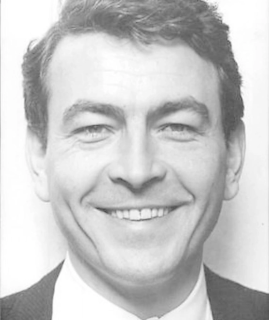
Birth of Patrick Bedford, Stage & Television Actor

Patrick Alexander Bedford, Irish stage and television actor, is born in Dublin on May 30, 1932.

Bedford begins his career in the 1950s at the Gate Theatre in Dublin then under the direction of Hilton Edwards and Micheál Mac Liammóir, including productions of Anton Chekhov, George Bernard Shaw and William Shakespeare. He later works on the stage and in television in England. In London, he appears on stage and television in Edgar Wallace Mysteries and in several plays adapted for television.

Bedford is in the original stage production of Brian Friel‘s Philadelphia, Here I Come! at the Gaiety Theatre in Dublin in September 1964, in the London West End transfer at the Criterion Theatre, and in the Broadway New York City transfer. His performance earns him a 1965 Tony Award for Best Actor in a Play nomination, along with Donal Donnelly, and an Outer Critics Circle Award.

Bedford is a key figure in episode four, “A Death in England,” of the ABC Weekend TV sci-fi drama Undermind on UK television in 1965. He has a small part in Orson Welles‘s film Chimes at Midnight (1965) and a starring role with Sandy Dennis in the 1967 film Up the Down Staircase about life in a New York City high school and is in The Next Man (1976).

Bedford then mainly works in theatre in the United States, on both coasts, but mainly in New York City both on and off Broadway. He is in the premiere of Tennessee Williams‘s last play Small Craft Warnings at the New Theatre in New York in 1972. Other stage appearances include Brian Friel’s The Mundy Scheme in New York in 1969 and as John Adams in the nationwide tour of the musical 1776. He appears in over 200 stage productions throughout his career.

Bedford dies at the age of 67 on November 20, 1999, in Manhattan, New York City, of cancer six weeks after entering the hospital.


Leave a comment

Premiere of “Cathleen ni Houlihan”

cathleen-ni-houlihan

Cathleen ni Houlihan, a one-act play written by William Butler Yeats and Lady Gregory, is first performed in Dublin on April 2, 1902, with Maud Gonne in the leading role. It is first published in the October 1902 number of Samhain magazine.

The play centers on the Irish Rebellion of 1798. The play is startlingly nationalistic, in its last pages encouraging young men to sacrifice their lives for the heroine Cathleen ni Houlihan, who represents an independent and separate Irish state. The title character first appears as an old woman at the door of a family celebrating their son’s wedding. She describes her four “beautiful green fields,” representing the four provinces of Ireland, that have been unjustly taken from her. With little subtlety, she requests a blood sacrifice, declaring that “many a child will be born and there will be no father at the christening” and that “they that have red cheeks will have pale cheeks for my sake, and for all that, they will think they are well paid.” She convinces the future groom, Michael, to give up the wedding and go fight.

After the youth leaves the safety of his home to fight for her, she appears as an image of youth with “the walk of a queen,” professing of those who fight for her: “They shall be remembered forever, They shall be alive forever, They shall be speaking forever, The people shall hear them forever.”

Death is common during the time around the rising, but becoming a martyr is somethings that is admirable, so oftentimes people welcome death so they can create themselves a heroic memory. The martyrs will be remembered forever, which is why this theme is so ingrained into this play.

Cathleen ni Houlihan is such a simple play that contains many symbols and has the goal of convincing men to fight for Ireland. While the play is written about the rising of 1798, it is meant to inspire people for the 1916 Easter Rising. Throughout the whole play, there is constant reference to memory and its influence on the public. The men that die while fighting for Ireland are considered heroes, which is why memory and martyrdom are such important themes that are incorporated into works about revolution.

Cathleen ni Houlihan is about Irish Independence, but there are themes of martyrdom in other works, like the musicals about American Independence, Hamilton and 1776.

(Pictured: Scene from a production of “Cathleen ni Houlihan,” circa 1912)