seamus dubhghaill

Promoting Irish Culture and History from Little Rock, Arkansas, USA


Leave a comment

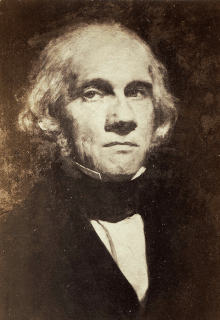
Birth of Irish Mathematician James Thomson

James Thomson, Irish mathematician notable for his role in the formation of the thermodynamics school at the University of Glasgow, Is born on November 13, 1786, in Ballynahinch, County Down, in what is now Northern Ireland. He is the father of the engineer and physicist James Thomson and the physicist William Thomson, 1st Baron Kelvin.

Born into an Ulster Scots family, Thomson is the fourth son of Agnes Nesbit and James Thomson, a small farmer, at Annaghmore, near Ballynahinch, County Down, in Ulster. His early education is from his father. At the age of 11 or 12 he finds out for himself the art of dialling. His father sends him to a school at Ballykine, near Ballynahinch, kept by Samuel Edgar, father of John Edgar. Here he soon rises to be an assistant.

Wishing to become a minister of the Presbyterian church, Thomson enters the University of Glasgow in 1810, where he studies for several sessions, supporting himself by teaching in the Ballykine school during the summer. He graduates MA in 1812, and in 1814 he is appointed headmaster of the school of arithmetic, bookkeeping, and geography in the newly established Royal Belfast Academical Institution. In 1815 he is Professor of Mathematics in its collegiate department. Here he proves himself as a teacher. In 1829 the honorary degree of LL.D. is conferred upon him by the University of Glasgow, where in 1832 he is appointed Professor of Mathematics. He holds this post until his death on January 12, 1849.

Thomson is buried with his family on the northern slopes of the Glasgow Necropolis to the east of the main bridge entrance. The grave is notable due to the modern memorial to Lord Kelvin at its side.

Thomson is the author of schoolbooks that have passed through many editions including Arithmetic (1819), Trigonometry, Plane and Spherical (1820), Introduction to Modern Geography (1827), The Phenomena of the Heavens (1827), The Differential and Integral Calculus (1831), and Euclid (1834).

A paper, “Recollections of the Battle of Ballynahinch, by an Eye-witness,” which appears in the Belfast Magazine for February 1825, is from his pen.


Leave a comment

Birth of Physicist & Engineer William Thomson

William Thomson, 1st Baron Kelvin, Scots Irish mathematical physicist and engineer, is born in Belfast on June 26, 1824.

At the University of Glasgow, he does important work in the mathematical analysis of electricity and formulation of the first and second laws of thermodynamics and does much to unify the emerging discipline of physics in its modern form. He works closely with mathematics professor Hugh Blackburn in his work. He also has a career as an electrical telegraph engineer and inventor, which propels him into the public eye and ensures his wealth, fame and honour. For his work on the transatlantic telegraph project, he is knighted in 1866 by Queen Victoria, becoming Sir William Thomson. He has extensive maritime interests and is most noted for his work on the mariner’s compass, which had previously been limited in reliability.

Absolute temperatures are stated in units of kelvin in his honour. While the existence of a lower limit to temperature (absolute zero) is known prior to his work, Thomson is widely known for determining its correct value as approximately −273.15 degree Celsius or −459.67-degree Fahrenheit.

Thomson is ennobled in 1892 in recognition of his achievements in thermodynamics, and of his opposition to Irish Home Rule, becoming Baron Kelvin, of Largs in the County of Ayr. He is the first British scientist to be elevated to the House of Lords. The title refers to the River Kelvin, which flows close by his laboratory at the University of Glasgow. His home is the imposing red sandstone mansion Netherhall, in Largs. Despite offers of elevated posts from several world-renowned universities, Thomson refuses to leave Glasgow, remaining Professor of Natural Philosophy for over 50 years, until his eventual retirement from that post. The Hunterian Museum at the University of Glasgow has a permanent exhibition on the work of Thomson including many of his original papers, instruments and other artifacts such as his smoking pipe.

Always active in industrial research and development, he is recruited around 1899 by George Eastman to serve as vice-chairman of the board of the British company Kodak Limited, affiliated with Eastman Kodak.

In November 1907 he catches a chill, and his condition deteriorates until he dies at his Scottish residence, Netherhall, in Largs on December 17.

Lord Kelvin is an elder of St. Columba’s Parish Church (Church of Scotland) in Largs for many years. It is to that church that his remains are taken after his death. Following the funeral service, his body is taken to Bute Hall in his beloved University of Glasgow for a service of remembrance before being taken to London for interment at Westminster Abbey, near the final resting place of Sir Isaac Newton.