seamus dubhghaill

Promoting Irish Culture and History from Little Rock, Arkansas, USA


Leave a comment

Use of the “Book of Common Prayer” Ordered in Ireland

The Book of Common Prayer, the short title of a number of related prayer books, is ordered to be used in Ireland on June 9, 1549.

The Book of Common Prayer is used in the Anglican Communion, as well as by the Continuing Anglican movement, Anglican realignment and other Anglican churches. The original book, published in 1549 during the reign of Edward VI, is a product of the English Reformation following the break with the Roman Catholic Church. Prayer books, unlike books of prayers, contain the words of structured, or liturgical, services of worship.

The work of 1549 is the first prayer book to include the complete forms of service for daily and Sunday worship in English. It contains Morning Prayer, Evening Prayer, the Litany, and Holy Communion and also the occasional services in full such as the orders for Baptism, Confirmation, Marriageanointing of the sick and a Funeral service. It also sets out in full the “propers,” that is the parts of the service which vary week by week or, at times, daily throughout the Church’s Year. Old Testament and New Testament readings for daily prayer are specified in tabular format as are the Psalms.

The 1549 book is soon succeeded by a more reformed revision in 1552 under the same editorial hand, that of Thomas Cranmer, Archbishop of Canterbury. It is used only for a few months, as after Edward VI’s death in 1553, his half-sister Mary I restores Roman Catholic worship. Mary dies in 1558, and, in 1559, Elizabeth I reintroduces the 1552 book with a few modifications to make it acceptable to more traditionally minded worshippers, notably the inclusion of the words of administration from the 1549 Communion Service alongside those of 1552.

In 1604, James I orders some further changes, the most significant of these being the addition to the Catechism of a section on the Sacraments. William Bedell undertakes an Irish translation of the Book of Common Prayer in 1606. Following the tumultuous events leading to and including the English Civil War, another major revision is published in 1662. This edition has remained the official prayer book of the Church of England, although in the 21st century, alternative provision under the title Common Worship has largely displaced the Book of Common Prayer at the main Sunday worship service of most English parish churches. An Irish translation of the revised prayer book of 1662 is affected by John Richardson and published in 1712.

A Book of Common Prayer with local variations is used in churches inside and outside the Anglican Communion in over 50 different countries and in over 150 different languages. In many parts of the world, other books have replaced it in regular weekly worship.

Traditional English Lutheran, Methodist and Presbyterian prayer books have borrowed from the Book of Common Prayer and the marriage and burial rites have found their way into those of other denominations and into the English language. Like the King James Version of the Bible and the works of William Shakespeare, many words and phrases from the Book of Common Prayer have entered common parlance.

(Pictured: A 1760 printing of the 1662 “Book of Common Prayer”)

Leave a comment

Attempted Assassination of Mussolini by Violet Gibson

violet-albina-gibson

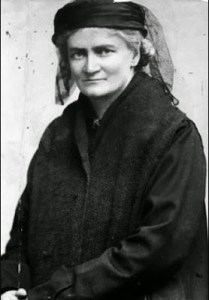
The Honourable Violet Albina Gibson, daughter of Lord Ashbourne, attempts to assassinate Benito Mussolini in Rome on April 7, 1926.

Gibson is born in Dublin in 1876. Her father, Edward Gibson, is an Irish lawyer and politician who is created Baron Ashbourne in 1886. She becomes a Roman Catholic in 1902.

In 1924, after spending two years in a mental institution, Gibson is released and goes to Rome accompanied by a nurse, Mary McGrath. They take up residence in a convent in a working-class neighborhood with a high crime rate. Her crisis of conscience grows as she becomes more convinced that killing is the sacrifice that God is asking of her. During this time, she somehow gains possession of a gun.

On February 27, 1925, Gibson goes to her room, reads the Bible, and then shoots herself in the chest. The bullet misses her heart, passes through her ribcage, and lodges in her shoulder. She tells McGrath that she wants to die for God. She recovers from the wound.

On Wednesday, April 7, 1926, Gibson leaves the convent after breakfast. In her right pocket she carries a revolver wrapped in a black veil. In her left pocket she carries a rock in case she has to break a windshield to get to Mussolini. She also clutches the address of the Fascist Party headquarters written on a scrap of envelope as she has read in the newspaper that Mussolini will be there in the afternoon.

Mussolini appears as scheduled and walks through the Palazzo del Littorio, soaking in the praise of the crowd. He stops about a foot from where Gibson is standing. Just before the gun goes off, Mussolini leans his head back to acknowledge the crowd’s adoration and the bullet grazes his nose. Gibson shoots again but the gun misfires.

Mussolini maintains his composure and consoles the crowd saying, “Don’t be afraid. This is a mere trifle.” Gibson is immediately captured and beaten by the crowd. The police gain control of the situation and take her away just before she succumbs to vigilante justice.

At the time of the assassination attempt Gibson is almost fifty years old and does not explain her reason for trying to assassinate Mussolini. It is theorised that Gibson is insane at the time of the attack and the idea of assassinating Mussolini is hers and that she worked alone. In a statement in reply to the questions of the Crown prosecutor, Gibson says she felt impelled by a “supernatural force entrusting her with a lofty mission.”

Gibson is later deported to Britain after being released without charge at the request of Mussolini. She spends the rest of her life in a mental asylum, St. Andrew’s Hospital in Northampton. She dies on May 2, 1956, and is buried in Kingsthorpe Cemetery, Northampton. No one attends her burial.


Leave a comment

James I Ascends to King of England and Ireland

king-james-i

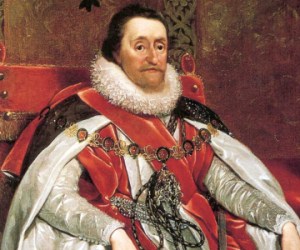
James VI of Scotland ascends to King of England and Ireland as James I on March 24, 1603. The kingdoms of Scotland and England are individual sovereign states, with their own parliaments, judiciary, and laws, though both are ruled by James in personal union.

James is born on June 19, 1566, at Edinburgh Castle, the son of Mary, Queen of Scots, and a great-great-grandson of Henry VII, King of England and Lord of Ireland, uniquely positioning him to eventually accede to all three thrones. He is baptised “Charles James” on December 17, 1566, in a Catholic ceremony held at Stirling Castle.

James succeeds to the Scottish throne at the age of thirteen months, after his mother is compelled to abdicate in his favour. Four different regents govern during his minority though he does not gain full control of his government until 1583. On March 24, 1603, he succeeds his cousin, Elizabeth I, upon her death, uniting the crowns of Scotland and England, while also gaining possession of the Kingdom of Ireland, then an English possession.

James continues to reign in all three kingdoms for 22 years, a period known as the Jacobean era, until his death in 1625 at 58 years of age. After the Union of the Crowns in 1603, he bases himself in England, which is the largest of the three realms, and styles himself “King of Great Britain and Ireland.” He returns to Scotland only once in 1617. He is a major advocate of a single parliament for England and Scotland. During his reign, the Plantation of Ulster and British colonisation of the Americas begins.

At 57 years and 246 days, James’s reign in Scotland is longer than those of any of his predecessors. He achieves most of his aims in Scotland but faces great difficulties in England, including the Gunpowder Plot in 1605 and repeated conflicts with the English Parliament. Under James, the “Golden Age” of Elizabethan literature and drama continues, with writers such as William Shakespeare, John Donne, Ben Jonson, and Sir Francis Bacon contributing to a flourishing literary culture. James himself is a talented scholar, the author of works such as Daemonologie (1597), True Law of Free Monarchies (1598), and Basilikon Doron (1599). He sponsors the translation of the Bible that is named after him – the Authorised King James Version.

In early 1625, James is plagued by severe attacks of arthritis, gout, and fainting fits. In March, he falls seriously ill with tertian ague followed by a stroke. He dies at Theobalds House on March 27 during a violent attack of dysentery. James is buried in Westminster Abbey, but the position of the tomb is lost for many years. In the 19th century, following an excavation of many of the vaults beneath the floor, the lead coffin is found in the Henry VII vault.