
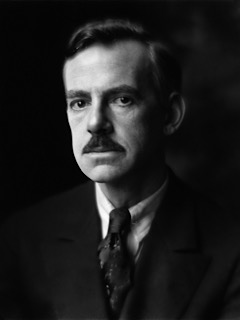
Eugene Gladstone O’Neill, Sr., the Irish American playwright renowned as a pioneer of modern American drama and recipient of the Nobel Prize in Literature, dies on November 27, 1953, in Boston, Massachusetts.
O’Neill is born on October 16, 1888, in a hotel, the Barrett House, on what is then Longacre Square (now Times Square) in New York City.
O’Neill is an influential figure in 20th-century theatre, celebrated for transforming American drama with his realistic and psychologically intense plays. He is the first American playwright to receive the Nobel Prize in Literature in 1936, recognized for his bold exploration of human emotion, complex characters, and innovative use of dramatic structure.
O’Neill authors numerous classic works, including Long Day’s Journey into Night, The Iceman Cometh, Ah, Wilderness!, and Mourning Becomes Electra, many of which are considered masterpieces of modern theatre. His plays often draw on personal experiences, including family struggles and his battle with alcoholism, lending them profound emotional depth.
O’Neill’s later years are marked by declining health, including Parkinson’s disease, and he has largely retired from writing by the 1940s. Despite his death, O’Neill’s influence endures, with his works continuing to be staged worldwide and studied for their contributions to dramatic literature and psychological realism.
On November 27, 1953, O’Neill dies at the Sheraton Hotel (now Boston University‘s Kilachand Hall) on Bay State Road in Boston, at the age of 65. As he is dying, he whispers: “I knew it. I knew it. Born in a hotel room and died in a hotel room.” He is interred in the Forest Hills Cemetery in Boston’s Jamaica Plain neighborhood.
O’Neill’s passing marks the end of a defining era in American theatre, but his legacy persists through his rich body of work, his innovations in playwriting, and the recognition he brought to American drama on the global stage. His life and death remain pivotal moments in literary history, celebrating the enduring power of his plays to explore the human condition.

