seamus dubhghaill

Promoting Irish Culture and History from Little Rock, Arkansas, USA


Leave a comment

Birth of Tana French, Writer & Theatrical Actress

Tana Elizabeth French, American-Irish writer and theatrical actress, is born in Burlington, Vermont, on May 10, 1973. She is a longtime resident of Dublin. Her debut novel, In the Woods (2007), a psychological mystery, wins the Edgar Award for Best First Novel, the Anthony Award for Best First Novel, the Macavity Award for Best First Mystery, and the Barry Award for Best First Novel. The Independent refers to her as “the First Lady of Irish Crime.”

French is born to Elena Hvostoff-Lombardi and David French. Her father is an economist who works on resource management for the developing world, and she lives in numerous countries as a child including Ireland, Italy, the United States and Malawi.

French attends Trinity College Dublin, and trains in acting. She settles in Ireland and has lived in Dublin since 1990. She and her husband have two daughters.

French is enthralled by both acting and writing since her childhood but eventually focuses more on acting. She grows up reading mystery and crime novels. She trains as a professional actor at Trinity, and she works in theatre, film, and voice-over.

In her later 30s, her passion for writing is rekindled. She begins writing her debut novel in the months-long lulls between castings. In the Woods is published in 2007 to international acclaim and receives rave reviews from many publications. Publishers Weekly praises her, saying she “expertly walks the line between police procedural and psychological thriller in her debut” and that “Ryan and Maddox are empathetic and flawed heroes, whose partnership and friendship elevate the narrative beyond a gory tale of murdered children and repressed childhood trauma.” It receives several literary prizes, is a bestseller in hardcover and paperback, and has been termed a “dream debut.” In 2014, Flavorwire includes it in their 50 of the Greatest Debut Novels Since 1950. As of 2015 more than one million copies of In the Woods have been sold.

French’s second novel, The Likeness (2008), presents the story of the first novel’s co-lead, Cassie Maddox. It quickly achieves high positions on bestseller lists in various countries and stays on The New York Times Best Seller list for several months. In its reviews of the novel, Kirkus Reviews praises its mix of “police procedures, psychological thrills and gothic romance beautifully woven into one stunning story.” In an interview with The Guardian, French states that Donna Tartt‘s The Secret History was an influence on The Likeness, opening up the “landscape of friendship as something worthy of exploration and something that could be powerful enough to trigger a murder.”

French’s first six novels are part of the Dublin Murder Squad series. After publishing The Trespasser in 2016, she publishes two standalone novels. Both The Witch Elm and The Searcher also take place in Ireland.

In 2015, Euston Films & Veritas acquire TV production rights. Sarah Phelps writes the screenplay, which she bases on both In the Woods and The Likeness, for the eight-episode series of Dublin Murders, commissioned by the BBC for BBC One and Starz, with RTÉ later joining the project. Filming commences in 2018 in Belfast and Dublin and continues in Dublin to late February 2019. Broadcast begins on BBC One on October 14, 2019, on RTÉ One on October 16, 2019, and on Starz on November 10, 2019.
3 Comments

Birth of John Lonergan, American Civil War Captain

john-lonergan

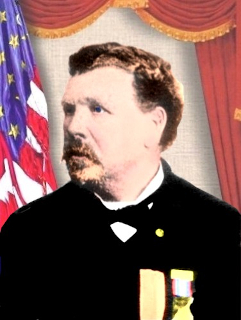
John Lonergan, American Civil War captain and Medal of Honor winner, is born in Carrick-on-Suir, County Tipperary on April 7, 1839. Hailed as a hero in the American Civil War, he wins the award for his bravery during the second day of the Battle of Gettysburg.

Lonergan immigrates to the United States with his family in 1848. It is said that the Lonergans were on the run from the Great Famine, as well as British oppression. Settling in Vermont, he works alongside his father as a cooper.

In 1862, Lonergan forms a company of fellow Vermont Irishmen to volunteer to fight the Confederates. He does so with the mindset to gain more military skill to help the cause of Irish freedom. He is also leader of the Vermont branch of the Fenian Brotherhood, a forerunner to the Irish Republican Army.

Lonergan serves for the Union Army in two stages, 1862-1863 and 1865. Serving as the captain of Company A, 13th Vermont Infantry, his efforts on July 2, 1863 at the Battle of Gettysburg earn him the Medal of Honor, which cites him for “Gallantry in the recapture of four guns and the capture of two additional guns from the enemy; also the capture of a number of prisoners.”

Following his services in the Civil War, Lonergan helps organize a pair of failed raids into Canada from staging areas in St. Albans. The Fenians’ quixotic aim is to pressure Britain, which rules Canada as a colony, to surrender control of Ireland.

Lonergan dies in Montreal, Quebec, Canada on August 6, 1902. In 2013, a memorial is erected to him in Burlington, Vermont.


Leave a comment

Birth of James Augustine Healy, Bishop of Portland, Maine

james-augustine-healy

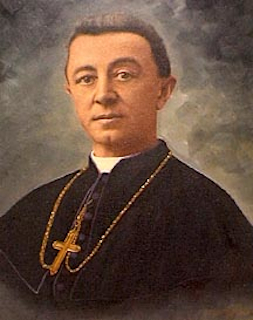
James Augustine Healy, American Roman Catholic priest and the second bishop of Portland, Maine, is born on April 6, 1830, in Macon, Georgia to a multiracial slave mother and Irish immigrant father. He is the first bishop in the United States of any known African descent. When he is ordained in 1854, his multiracial ancestry is not widely known outside his mentors in the Catholic Church.

Healy is the eldest of ten siblings of Michael Morris Healy, an Irish immigrant planter from County Roscommon, and his common law wife Eliza Smith (sometimes recorded as Clark), a multiracial enslaved African American. He achieves many “firsts” in United States history. He is credited with greatly expanding the Catholic church in Maine at a time of increased Irish immigration. He also serves Abenaki people and many parishioners of French-Canadian descent who were traditionally Catholic. He speaks both English and French.

Beginning in 1837, like many other wealthy planters with mixed-race children, Michael Healy starts sending his sons to school in the North. James, along with brothers Hugh and Patrick, goes to Quaker schools in Flushing, New York, and Burlington, New Jersey. Later they each attend the newly opened College of the Holy Cross in Worcester, Massachusetts. He graduates as valedictorian of the college’s first graduating class in 1849.

Following graduation, Healy wishes to enter the priesthood. He cannot study at the Jesuit novitiate in Maryland, as it is a slave state. With the help of John Bernard Fitzpatrick, he enters a Sulpician seminary in Montreal. In 1852, he transfers to study at Saint-Sulpice Seminary in Paris, working toward a doctorate and a career as a seminary professor. After a change of heart, he decides to become a pastor. On June 10, 1854, he is ordained at Notre-Dame de Paris as a priest to serve in Boston, Massachusetts. He is the first African American to be ordained a Roman Catholic priest although at the time he identifies as and is accepted as white Irish Catholic.

When Healy returns to the United States, he becomes an assistant pastor in Boston. He serves the archbishop, who helps establish his standing in the church. In 1866 he becomes the pastor of St. James Church, the largest Catholic congregation in Boston. In 1874 when the Boston legislature is considering taxation of churches, he defends Catholic institutions as vital organizations that help the state both socially and financially. He also condemns certain laws that are generally enforced only on Catholic institutions. He founds several Catholic charitable institutions to care for the many poor Irish immigrants who had arrived during the Great Famine years.

Healy’s success in the public sphere leads to his appointment by Pope Pius IX to the position of second bishop of Portland, Maine. He is consecrated as Bishop of Portland on June 2, 1875, becoming the first African American to be consecrated a Catholic bishop. For 25 years he governs his large diocese, supervising also the founding of the Diocese of Manchester, New Hampshire, when it is split from Portland in 1885. During his time in Maine, which is a period of extensive immigration from Catholic countries, he oversees the establishment of 60 new churches, 68 missions, 18 convents, and 18 schools. During that period, he also serves his Abenaki and French-Canadian parishioners.

Healy is the only member of the American Catholic hierarchy to excommunicate men who joined the Knights of Labor, a national union, which reaches its peak of power in 1886.

Two months before his death on August 5, 1900, Healy is called as assistant to the Papal throne by Pope Leo XIII, a position in the Catholic hierarchy just below that of cardinal.