seamus dubhghaill

Promoting Irish Culture and History from Little Rock, Arkansas, USA


Leave a comment

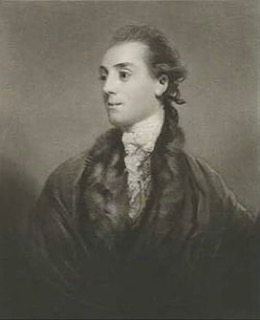
Birth of John Luttrell-Olmius, 3rd Earl of Carhampton 

Captain John Luttrell-Olmius, 3rd Earl of Carhampton, a Royal Navy officer and politician who sits in the House of Commons of Great Britain between 1774 and 1785, is born on December 11, 1739. He is styled The Honourable John Luttrell between 1768 and 1787 and as The Honourable John Luttrell-Olmius between 1787 and 1829.

Born John Luttrell, he is the second son of Simon Luttrell, 1st Earl of Carhampton by Judith Maria Lawes, daughter of Sir Nicholas LawesGovernor of Jamaica. He is the grandson of Colonel Henry Luttrell and the brother of Henry Luttrell, 2nd Earl of CarhamptonJames Luttrell, and Lady Anne Luttrell, Duchess of Cumberland and Strathearn. He is a member of the Irish branch of the ancient family of Luttrell and a descendant of Sir Geoffrey de Luterel, who establishes Luttrellstown CastleCounty Dublin, in the early 13th century.

Luttrell was a captain in the Royal Navy but retires in 1789. He is returned to Parliament for Stockbridge in 1774, a seat he holds until 1775, and again between 1780 and 1785. Between 1785 and 1826 he is a commissioner of HM Customs and Excise. He succeeds his elder brother to the earldom in 1821. This is an Irish peerage and does not entitle him to an automatic seat in the House of Lords.

In 1766, Lord Carhampton marries the Honorable Elizabeth Olmius (1742-97), daughter of John Olmius, 1st Baron Waltham. In 1787, out of respect after the death of his father-in-law, he assumes by Royal Licence the additional surname of “Olmius.” In 1798, he sells the Olmius family seat of Newhall to the founding nuns of New Hall School. There are three children from his first marriage (however only his daughter survives to adulthood):

  • Lady Frances Maria Luttrell (b. 1768), married Sir Simeon Stuart, 4th Baronet
  • James Luttrell (d. 1772)
  • John Luttrell (d. 1769)

Lord Carhampton marries secondly Maria Morgan, daughter of John Morgan, in 1798. They have one child:

  • Lady Maria Anne Luttrell (1799–1857), married Lieutenant-Colonel Hardress Robert Saunderson

Lord Carhampton dies in Greater London, England, on March 19, 1829, aged 89, at which time the Earldom becomes extinct. He is buried at St. Pancras, Soper Lane graveyard, London.

Leave a comment

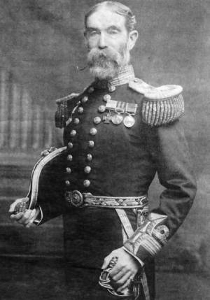
Death of Victoria Cross Recipient Charles Davis Lucas

Charles Davis Lucas, Irish recipient of the Victoria Cross, dies in Great Culverden, Kent, England on August 7, 1914.

Lucas is born in Druminargal House, Poyntzpass, County Armagh, in what is now Northern Ireland, on February 19, 1834. He enlists in the Royal Navy in 1848 at the age of 13, serves aboard HMS Vengeance, and sees action in the Second Anglo-Burmese War of 1852–53 aboard the frigate HMS Fox at Rangoon, Pegu, and Dalla. By age 20, he has become a mate.

On June 21, 1854, in the Baltic Sea during the Crimean War, HMS Hecla, along with two other ships, is bombarding Bomarsund, a fort in the Åland Islands off Finland. The fire is returned from the fort, and, at the height of the action, a live shell lands on HMS Hecla‘s upper deck with its fuse still hissing. All hands are ordered to fling themselves flat on the deck, but 20-year-old Lucas with great presence of mind runs forward and hurls the shell into the sea where it explodes with a tremendous roar before it hits the water. Thanks to his action no one on board is killed or seriously wounded by the shell and, accordingly, he is immediately promoted to lieutenant by his commanding officer. His act of bravery is the first to be rewarded with the Victoria Cross in 1857.

In 1879 Lucas marries Frances Russell Hall, daughter of Admiral William Hutcheon Hall, who had been captain of HMS Hecla in 1854. The couple has three daughters together. Lucas serves for a time as Justice of the Peace for both Kent and Argyllshire.

Lucas’s later career includes service on HMS Calcutta, HMS Powerful, HMS Cressy, HMS Edinburgh, HMS Liffey and HMS Indus. He is promoted to commander in 1862 and commands the experimental armoured gunboat HMS Vixen in 1867. He is promoted to captain in 1867, before retiring on October 1, 1873. He is later promoted to rear admiral on the retired list in 1885. During his career he receives the India General Service Medal with the bar Pegu 1852, the Baltic Medal 1854–55, and the Royal Humane Society Lifesaving Medal.

Lucas dies in Great Culverden, Kent on August 7, 1914. He is buried at St. Lawrence’s Church, Mereworth, Maidstone, Kent.

Lucas’s campaign medals, including his Victoria Cross, are displayed at the National Maritime Museum in Greenwich, London. They are not the original medals, which were left on a train and never recovered. Replacement copies were made, though the reverse of the Victoria Cross copy is uninscribed.


Leave a comment

Heroic Act of Charles Davis Lucas Earns First Victoria Cross

Charles Davis Lucas, a 20-year-old mate on the HMS Hecla in the Royal Navy, hurls a Russian shell, its fuse still burning, from the deck of his ship on June 21, 1854, during the Crimean War. For this action, he becomes the first recipient of the Victoria Cross in 1857.

Lucas is born in Druminargal House, Poyntzpass, County Armagh, on February 19, 1834. He enlists in the Royal Navy in 1848 at the age of 13, serves aboard HMS Vengeance, and sees action in the Second Anglo-Burmese War of 1852–53 aboard the frigate HMS Fox at Rangoon, Pegu, and Dalla. By age 20, he has become a mate.

On June 21, 1854, in the Baltic Sea, HMS Hecla, along with two other ships, is bombarding Bomarsund, a fort in the Åland Islands off Finland. The fire is returned from the fort, and, at the height of the action, a live shell lands on HMS Hecla‘s upper deck with its fuse still hissing. All hands are ordered to fling themselves flat on the deck, but Lucas with great presence of mind runs forward and hurls the shell into the sea where it explodes with a tremendous roar before it hits the water. Thanks to Lucas’s action no one on board is killed or seriously wounded by the shell and, accordingly, he is immediately promoted to lieutenant by his commanding officer. His act of bravery is the first to be rewarded with the Victoria Cross.

His later career includes service on HMS Calcutta, HMS Powerful, HMS Cressy, HMS Edinburgh, HMS Liffey and HMS Indus. He is promoted to commander in 1862 and commands the experimental armoured gunboat HMS Vixen in 1867. He is promoted to captain in 1867, before retiring on October 1, 1873. He is later promoted to rear admiral on the retired list in 1885. During his career he receives the India General Service Medal with the bar Pegu 1852, the Baltic Medal 1854–55, and the Royal Humane Society Lifesaving Medal.

In 1879 he marries Frances Russell Hall, daughter of Admiral William Hutcheon Hall, who had been captain of HMS Hecla in 1854. The couple has three daughters together. Lucas serves for a time as Justice of the Peace for both Kent and Argyllshire, and dies in Great Culverden, Kent on August 7, 1914. He is buried at St. Lawrence Church, Mereworth, Maidstone, Kent.

Lucas’s campaign medals, including his Victoria Cross, are displayed at the National Maritime Museum in Greenwich, London. They are not the original medals, which were left on a train and never recovered. Replacement copies were made, though the reverse of the Victoria Cross copy is uninscribed.