

“Captain” James Maclaine, an Irish man of a respectable Presbyterian family who has a brief but notorious career as a mounted highwayman in London with his accomplice William Plunkett, is hanged at Tyburn Gallows in Middlesex, London, on October 3, 1750.
Maclaine is born in County Monaghan in 1724, second son among two sons and one daughter of the Rev. Lauchlin Maclaine, a Presbyterian minister from Scotland, and Elizabeth Maclaine (née Milling). His brother, Archibald Maclaine, later becomes a minister. Educated locally, he is reckless, headstrong, and dismissive of his parents’ attempts to make him respectable. When his father dies he squanders his inheritance on a dissolute lifestyle and is forced to find work in London.
Maclaine considers joining the Irish Brigade in the French Royal Army, but is told that he would make little progress with them unless he becomes a Roman Catholic, which he is unwilling to do. Instead he enlists in Lord Albemarle‘s horse troops. Again his propensity for fast living costs him dearly, and he suffers a thrashing after he is discovered having an affair with an officer’s wife.
Around 1746 Maclaine marries the daughter of a publican on Oxford Road, London, and with her dowry of five hundred pounds establishes himself as a grocer and chandler in Welbeck Street, Cavendish Square. His wife dies in 1748, leaving one daughter.
Frustrated by his lack of opportunities, Maclaine decides to embark on a life of crime. Together with William Plunkett, an Irish apothecary who had attended to his wife, he decides to find a rich heiress to marry. Pretending to be a high-living gentleman, with Plunkett as his liveried servant, he exhausts all his money dancing and gambling but has little success in his quest. Undaunted, he now turns his hand to robbery and becomes a highwayman. This proves extremely profitable and he takes lodgings at St. James’s Street, where he passes himself off as an Irish squire, with Plunkett again in attendance.
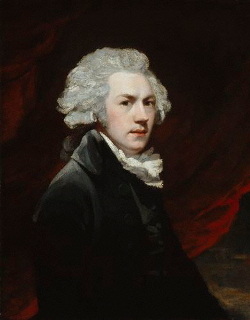
A dashing, handsome man, Maclaine soon becomes a popular figure in London. His most infamous adventure occurs in November 1749 when he robs the famous diarist and politician Horace Walpole at Hyde Park. For the first and only time in his career, he fires a shot, as one of his pistols discharges accidentally, scorching Walpole’s face. He later insists that he would have committed suicide if he had killed his victim. Walpole’s retort is that he would be satisfied if Maclaine just allowed himself to be hanged. Overcome with guilt, Maclaine afterwards sends two letters to Walpole apologising for the injury and suggesting a duel if he wants satisfaction. Walpole wisely ignores the correspondence.
After visiting his brother at The Hague, where he impresses with his extravagant gifts and lifestyle, Maclaine again decides to seek an heiress. Together with Plunkett, who is visiting Ireland, he sets his sights on a woman with an income of £40,000, but the scheme comes to nothing.
Returning to his career as a highwayman, Maclaine commits a number of daring robberies in the summer of 1750. On June 26, 1750, he and Plunkett hold up the coach of the Earl of Eglinton on Hounslow Heath, which proves to be his undoing. One passenger makes public a list of his stolen possessions, and when Maclaine sells some of the items on July 19 the crime is traced to him. On July 27 he is arrested and immediately breaks down in prison, confessing everything. Weeping in his cell, he consistently blames Plunkett, who evaded capture, for leading him astray.
Maclaine’s trial on September 13 attracts enormous interest, especially from women who are enamoured of his romantic image. The jury finds him guilty without leaving the box. Sentenced to death, he attempts to read a plea for mercy but loses his nerve and is only able to speak a few words. After a few minutes of embarrassed silence he cries, “My lord, I can go no further.” His brother denounces him, and from his cell he writes a number of letters expressing regret for his actions.
Maclaine is executed at Tyburn on October 3, 1750, having informed a minister that he went to his execution “without being daunted but rather with eagerness.” A great crowd attends the execution, before whom he maintains a steady composure, and his last words to them are, “O God, forgive my enemies, bless my friends and receive my soul!” A later publication tells that, as the cart is about to be drawn from under him, a witness hears him say, “I must never more behold this beauteous sun! Do thou, O sun of righteousness, shine on my departing soul.” After his death an enduring legend develops around the story of “the gentleman highwayman” and “the ladies’ hero.”
The film Plunkett and Macleane (1999) is an innovative retelling of his story, with Robert Carlyle as Plunkett and Johnny Lee Miller as the dashing highwayman.
 seamus dubhghaill