seamus dubhghaill

Promoting Irish Culture and History from Little Rock, Arkansas, USA


Leave a comment

Death of Thomas “Buck” Whaley

Thomas Whaley, Irish gambler and member of the Irish House of Commons commonly known as Buck Whaley or Jerusalem Whaley, dies on November 2, 1800, in England.

Whaley is born in Dublin on December 15, 1766, the eldest surviving son of the landowner, magistrate and former Member of Parliament Richard Chapell Whaley. At the age of sixteen, he is sent to Europe on the Grand tour, accompanied by a tutor. He settles in Paris for some time, maintaining both a country residence and town house, but is forced to leave Paris when his cheque for the amount of £14,000, to settle gambling debts accrued in one night of gambling, is refused by his bankers. Following his return to Dublin, Whaley, at the age of eighteen, is elected to the Irish House of Commons in 1785 representing the constituency of Newcastle in County Dublin.

While dining with William FitzGerald, 2nd Duke of Leinster at Leinster House, wagers totaling £15,000 are offered that Whaley cannot travel to Jerusalem and back within two years and provide proof of his success. The reasoning of those offering the bets is based on the belief that, as the region was part of the Ottoman Empire and had a reputation for widespread banditry, it will be too dangerous for travelers, and it will be unlikely that Whaley can complete the journey.

Whaley embarks from Dublin on October 8, 1788. He sails first to Deal, Kent, where he is joined by a companion, a Captain Wilson, and then on to Gibraltar. In Gibraltar, his party is joined by another military officer, Captain Hugh Moore. The party sets sail for the port of Smyrna, although Wilson is prevented from travelling any further due to rheumatic fever. The remaining pair make an overland journey from there to Constantinople, arriving in December.

The British ambassador in Constantinople introduces Whaley to the Vizier Cezayirli Gazi Hasan Pasha. Taking a liking to Whaley, Hasan Pasha provides him with permits to visit Jerusalem. Whaley’s party leaves Constantinople on January 21, 1789, by ship and sail to Acre, Israel. He encounters the Wāli of Acre and Galillee, Ahmad Pasha al-Jazzar. Al-Jazzar, notoriously known as “The Butcher” in the region he rules, takes a liking to Whaley and, though he dismisses the documents issued in Constantinople as worthless, he permits Whaley to continue his journey.

Whaley and his companions make their way overland to Jerusalem, arriving on January 28. During his visit, he stays at a Franciscan monastery, the Convent of Terra Sancta. It is a signed certificate from the superior of this institution, along with detailed observations of the buildings of Jerusalem, that provide the proof needed to prove the success of his journey. They stay for little over a month before returning overland to Ireland.

Whaley arrives back in Dublin in the summer of 1789 to great celebrations and collects the winnings of the wager. The trip costs him a total of £8,000, leaving him a profit of £7,000.

Following his Jerusalem exploit, Whaley remains in Dublin for two years and later spends time in London and travelling in Europe, including Paris during the Revolutionary period. Due to mounting debts, he is forced to sell much of his estate in the early 1790s and these financial problems also lead to his departure from Dublin.

Thomas Whaley dies on November 2, 1800, in the Cheshire town of Knutsford, while travelling from Liverpool to London. The cause of death is attributed to rheumatic fever, although a popular story circulated in Ireland is that he is stabbed in a jealous rage by one of two sisters, both of whom are objects of his attentions.


2 Comments

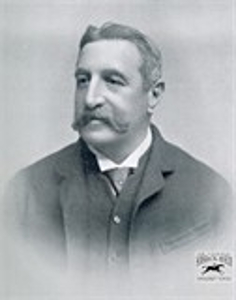
Birth of John Gubbins, Racehorse Breeder & Owner

john-gubbins

John Gubbins, breeder and owner of racehorses, is born on December 16, 1838 at the family home in Kilfrush, County Limerick. He is fourth son of Joseph Gubbins by his wife Maria, daughter of Thomas Wise of Cork.

Of three surviving brothers and five sisters, the third brother, Stamer, breeds horses at Knockany after distinguishing himself in the Crimean War. He dies at the age of 46 on August 7, 1879, after a horse falls on him while “schooling” over fences.

John Gubbins, after being educated privately, inherits the Knockany property from his brother and purchases the estate of Bruree, County Limerick. A fortune is also left him by an uncle, Francis Wise of Cork. Settling at Bruree in 1868, he builds kennels and stables and purchases horses and hounds. He hunts the Limerick country with both stag and fox hounds, and is no mean angler, until forced to stop by the operations of the Land League in 1882.

From his youth he takes a keen interest in horse racing. At first his attention is mainly confined to steeplechasers, and he rides many winners at Punchestown Racecourse and elsewhere in Ireland. He is the owner of Seaman when the horse wins the grand hurdle race at Auteuil, but sells him to Lord Manners before he wins the Grand National at Liverpool in 1882. Usna is another fine chaser in his possession. Buying the stallions Kendal and St. Florian, he breeds, from the mare Morganette, Galtee More by the former and Ard Patrick by the latter. Galtee More wins the 2000 Guineas Stakes and the St. Leger Stakes as well as the Epsom Derby in 1897, and is afterwards sold to the Russian government who later pass him on to the Prussian government. The Prussian government also purchases Ard Patrick just days before he wins the Eclipse Stakes in 1903, when he defeats Sceptre and Rook Sand after an exceptionally exciting contest.

Other notable horses bred by John Gubbins are Blairfinde, winner of the Irish Derby, and Revenue. In 1897 he heads the list of winning owners and is third in the list in 1903. In 1903 Gubbins is rarely seen on a racecourse due to failing health and sells his horses in training. In 1905, however, his health apparently improving, he sends some yearlings to Cranborne, Dorset, to be trained by Sir Charles Nugent, but before these horses can run he dies of bronchitis at Bruree on March 20, 1906.  His final instructions are, “As I aspired to breed fast horses, please see that my hearse is pulled at speed on my final journey.” Gubbins is buried in the private burial ground at Kilfrush.

In 1889 he marries Edith, daughter of Charles Legh, of Addington Hall, Cheshire. She predeceases him without issue. His estates pass to his nephew, John Norris Browning, a retired naval surgeon.