seamus dubhghaill

Promoting Irish Culture and History from Little Rock, Arkansas, USA


Leave a comment

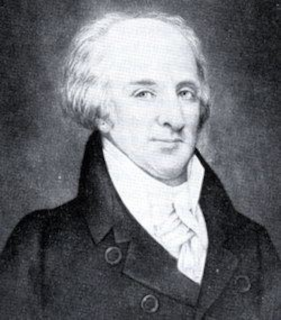
John Armstrong, Sr. Appointed Brigadier General in the Continental Army

John Armstrong, Sr., an Irish American civil engineer and soldier, is appointed a brigadier general in the Continental Army on March 1, 1776. He also serves as a major general in the Pennsylvania Militia during the American Revolutionary War.

Armstrong is born on October 13, 1717, in Brookeborough, County Fermanagh, parents not determined, who married in 1704. He is one of approximately fifteen children born to his parents that included: Margaret Armstrong (1737–1817), who marries Rev. George Duffield (1732–90), and Rebecca Armstrong (1738–1828), who marries James Turner (1737–1803).

Armstrong is educated in Ireland and becomes a civil engineer before emigrating to Pennsylvania, with his brother-in-law, John Lyon, around 1740. He comes to Pennsylvania as a surveyor for the Penn family, the proprietary owners of the colony. In 1750, he lays out the first plat or plan for the town of Carlisle, Pennsylvania, and is one of its first settlers. He is later appointed surveyor for the newly established Cumberland County.

In 1756, during the Seven Years’ War, Armstrong leads the Kittanning Expedition. In 1758, he leads 2,700 Pennsylvania provincial troops on the Forbes Expedition, the approach of which compels the French to vacate and blow-up Fort Duquesne. He becomes a good friend to the other militia commander in this expedition, Colonel George Washington.

James Smith writes that in the fall of 1763, “I went on the Susquehannah campaign, against the Indians, under the command of General Armstrong. In this route we burnt the Delaware and Monsey towns, on the West Branch of the Susquehannah, and destroyed all their corn.”

In the early stages of the American Revolutionary War (1775-83), Armstrong is a brigadier general in the Pennsylvania militia. On March 1, 1776, the Continental Congress appoints him to that same rank in the Continental Army. He is sent south to begin preparations for the defense of Charleston, South Carolina. He contributes his engineering talents to the construction of defenses that enable them to withstand the Battle of Sullivan’s Island later that year. When General Charles Lee arrives to take command, Armstrong returns to his duties with the main army and with the Pennsylvania militia. Pennsylvania names him major general in charge of the state militia. This ends his service in the Continental Army, but not the war or his cooperation with General George Washington.

At the Battle of Brandywine on September 11, 1777, Armstrong’s militia holds the far left of the American line. They also guard the army’s supplies. After a hard day’s fighting, the Americans are forced to withdraw, or face being surrounded. He brings the supplies and his militia out from Pyle’s Ford after dark.

In the Battle of Germantown on October 4, Armstrong leads the American right. His mission is to skirt the British left flank and attack there and in their rear. Despite delays and the troubles some units have in moving, the overall attack is going well, until the center is held up at the Benjamin Chew House. The attack then collapses after a friendly fire incident in the fog in which General Adam Stephen‘s men fire on Anthony Wayne‘s troops causing their withdrawal. Armstrong, whose men have advanced nearly to the center of Germantown but are not greatly involved in the fight later complains that it was “…. a glorious victory fought for, and eight tenths won, …. mysteriously lost, for to this moment no one man can …. give any good reason for the flight.”

After Germantown, Armstrong is granted permission to give up active command. At aged sixty, his health is declining, and old wounds are troubling him. He serves until April 4, 1778.

After his service in the War ends, Armstrong returns home to Carlisle, where he is elected to the Continental Congress by the Pennsylvania Assembly. As a delegate from 1779 to 1780, he is a strong supporter of Washington and the army. He is firm in his support for a new United States Constitution and is returned to the Congress of the Confederation during its final days in 1787 and 1788.

Throughout his life Armstrong serves in a number of local or civic offices. One of these, the Carlisle school board, leads him to originally oppose Dr. Benjamin Rush‘s proposal to start a college in the town. He later relents and becomes a member of the first Board of Trustees for Dickinson College from 1783 to 1794.

In 1747, Armstrong marries Rebecca Lyon Armstrong (1719–97), daughter of Archibald Lyon and Ann Lyon. Together, they are the parents of:

Armstrong dies at his home in Carlisle, Pennsylvania, on March 9, 1795, and is buried in the Old Carlisle Cemetery. In 1800, when Pennsylvania creates a new county with its seat at Kittanning, it is named Armstrong County in his honor.


Leave a comment

Death of Richard Butler, Irish-born Officer in the Continental Army

Richard Butler, an Irish-born officer in the Continental Army during the American Revolutionary War, is killed on November 4, 1791, while fighting Native Americans in the United States in a battle that is known as St. Clair’s defeat.

Born on April 1, 1743, in St. Bridget’s Parish, Dublin, Butler is the oldest son of Thomas and Eleanor Butler (née Parker). His father is an Irish aristocrat who serves in the British Army. He is the brother of Colonel Thomas Butler and Captain Edward Butler. All three brothers serve in the American Revolution and in the Northwest Indian War against the Northwestern Confederacy of Native American tribes in the Northwest Territories. His two other brothers, William and Percival, serve in the Revolution but do not see later military service.

In 1748 Butler’s father opens a gun shop in Dublin, but that same year the family moves to Lancaster, Pennsylvania, where he learns to make the Pennsylvania long rifles used in the French and Indian War.

By 1760, the family moves to the frontier at Carlisle, Pennsylvania, where Thomas and his sons manufacture long rifles and become friends with Daniel Morgan. The Butler gun shop still stands in Carlisle.

By the 1770s, Butler and his brother William are important traders at Fort Pitt in Pennsylvania and in Ohio. Butler Street in Pittsburgh is named for them.

At the outset of the American Revolution, the Continental Congress names Butler a commissioner in 1775 to negotiate with the Indians. He visits representatives of the Delaware, Shawnee, and other tribes to secure their support, or at least neutrality, in the war with Britain.

On July 20, 1776, Butler is commissioned a major in the 8th Pennsylvania Regiment in the Continental Army, serving first as second in command to his friend Daniel Morgan. He is promoted to lieutenant colonel on March 12, 1777, retroactive to September 1776. On June 7, 1777, he is promoted to colonel and placed in command of 9th Pennsylvania Regiment.

During the war Butler sees action at the Battle of Saratoga (1777) and the Battle of Monmouth (1778). His four other brothers also serve and are noted for their bravery as the “fighting Butlers.” In January 1781 he is transferred to the 5th Pennsylvania Regiment and leads the Continental Army at the Battle of Spencer’s Ordinary.

At the conclusion of the Battle of Yorktown in October 1781, General George Washington confers on Butler the honor of receiving Cornwallis’ sword of surrender, an honor which he gives to his second in command, Ebenezer Denny. At the last moment, Baron von Steuben demands that he receive the sword. This almost precipitates a duel between Butler and Von Steuben.

At the victory dinner for his officers, George Washington raises his glass and toasts, “The Butlers and their five sons!”

Following Yorktown, Butler remains in the Continental Army and is transferred to the 3rd Pennsylvania Regiment following a consolidation of the Army on January 1, 1783. On September 30 of the same year, he is breveted as a brigadier general. He remains in active service with the Continental Army until it is finally disbanded on November 3, 1783.

In 1783 Butler and his brothers become original members of the Pennsylvania Society of the Cincinnati, a military society of officers who had served in the Continental Army.

After the war, the Confederation Congress puts Butler in charge of Indians of the Northwest Territory. He negotiates the Treaty of Fort Stanwix in 1784, in which the Iroquois surrender their lands. He is also called upon during later negotiations, such as the Treaty of Fort McIntosh in 1785.

Butler returns to Pennsylvania and is a judge in Allegheny County. He also serves in the state legislature. He marries Maria Smith, and they have four children, only one of whom lives to have children and continue the line. He also fathers a son, Captain Butler (or Tamanatha) with Shawnee chief Nonhelema. He and his Shawnee son fight in opposing armies in 1791.

In 1791, Butler is commissioned a major general in the levies (i.e. militiamen conscripted into Federal service) under Major General Arthur St. Clair to fight against the Western Confederacy of Native Americans in the Northwest Territories (modern day Ohio). He is killed in action on November 4, 1791, in St. Clair’s Defeat at what is now Fort Recovery, Ohio.

Reportedly Butler is first buried on the battlefield, which site is then lost until it is accidentally found years later. The remains are laid to rest with the remains of the other fallen at Fort Recovery.

Butler County, Ohio, where Fort Hamilton stood, is named for Richard Butler, as are Butler County, Kentucky, and Butler County, Pennsylvania. The city of Butler, Pennsylvania and the General Richard Butler Bridge, located in the city of Butler, are also named for him. A miniature portrait of Butler is painted by “The Painter of The Revolution,” Colonel John Trumbull, in 1790 and is in the collection of Yale University.

Butler is also honored in the name of General Richard Butler KYSAAR, Butler County, Kentucky recognized August 20, 2016. A chapter of the Sons of the American Revolution is named for him as as is the General Richard Butler Chapter of the Daughters of the American Revolution (DAR), founded in Butler, Pennsylvania.