seamus dubhghaill

Promoting Irish Culture and History from Little Rock, Arkansas, USA


Leave a comment

The Battle of Ballineen and Enniskean

On the stormy Saturday morning of November 4, 1922, a major engagement takes place in the West Cork villages of Ballineen and Enniskean, marking one of the last significant clashes of the Irish Civil War.

The attack is led by General Tom Barry, who had recently escaped internment in Kildare, alongside Irish Republican Army (IRA) figures M. Donovan, P. Kearney, and M. Crowley. The Free State (Provisional Government) had established military posts in both villages, with 38 soldiers and two officers at Ballineen under Captain Ben Byrne, and 25 soldiers and one officer at Enniskean under Captain Larry Finnegan. Both captains served with Michael Collins’s “Squad” during the Irish War of Independence.

The IRA force, estimated at two hundred or more, targets the O’Donovan’s Hotel in Ballineen, taking the ground floor and besieging the Free State troops on the upper floor with a Lewis gun. Byrne attempts to fight from a back window but is overpowered and taken prisoner. IRA fighters also move to Enniskean, where house-to-house fighting ensues.

Private Thomas Gallagher (18) of the Free State Army Medical Corps is fatally shot in Ballineen while assisting Private Michael Woods, who also dies. Private Andrew Hogan (24), veteran of World War I and the Irish War of Independence, is wounded in the thigh and later dies from sepsis. In Enniskean, Private Andrew Hogan is wounded while others are captured or killed.

Five Free State soldiers are wounded (two later die), including Captain Byrne. The IRA suffers three dead, several wounded, and some captured.

The IRA succeeds in overrunning the Ballineen position and inflicting serious casualties, but expected reinforcements lead them to withdraw. Free State troops retake control of both villages.

This day-long battle is notable for its stormy conditions, the mixed veteran and young recruits on both sides, and the personal histories of many involved. It reflects the Irish Civil War’s shift from large-scale conventional battles to guerrilla-style engagements in rural areas.

Today, the event is remembered as a forgotten but pivotal moment in the final months of the Irish Civil War, symbolizing the struggle between the Free State and anti-Treaty forces in the West Cork region.

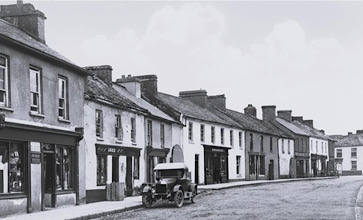
(Pictured: Ballineen, County Cork, in 1920)

Leave a comment

Six Free State Soldiers Killed in Three Separate Ambushes

On August 29, 1922, six Irish Free State soldiers are killed in three separate ambushes, reflecting the intense and deadly engagements of the early Irish Civil War period.

The Irish Civil War (June 1922 – May 1923) erupts following the signing of the Anglo-Irish Treaty in 1921, which creates the Irish Free State. Pro-Treaty forces, forming the National Army, clash with anti-Treaty Irish Republican Army (IRA) elements refusing to accept the Treaty. This conflict includes both conventional and guerrilla phases, with August 1922 marking the end of the conventional campaign as Free State forces advance to secure towns in the south and southwest.

On this day, six Free State soldiers are killed in three distinct ambushes. Two soldiers died in Tullamore, County Offaly, one in Macroom, County Cork, and two in an ambush and firefight between Killorglin and Tralee, County Kerry. In Tullamore, Lieutenant Matthew Cullen of the 3rd Southern Division is fatally shot near Bonaterrin Hill, while Lieutenant Leahy is seriously wounded in the same attack. These ambushes are carried out by anti-Treaty forces and demonstrate the difficulties the National Army faces while attempting to secure supply routes and rural areas, even after major towns have fallen under Free State control.

These casualties underscore the dangers posed by guerrilla tactics, including ambushes, during the Irish Civil War. Free State soldiers are often young and inexperienced, and many fatalities occur in such rural confrontations. Despite these losses, the Free State maintains strategic momentum, continuing the offensive that eventually consolidates the new government’s control.

Overall, the Irish Civil War results in roughly 1,426 deaths in the Free State counties, with the National Army sustaining substantial casualties in actions like these ambushes. The conflict’s fatal events, including Tullamore on August 29, illustrate both the human cost of the war and the localized intensity of battles beyond major urban centers.

In summary, August 29, 1922, represents a notable moment in Irish Civil War history, highlighting the lethal impact of ambushes on Free State forces and the challenges of combatting anti-Treaty operations in rural Ireland. These events contribute to the broader struggle to establish the Irish Free State’s authority.

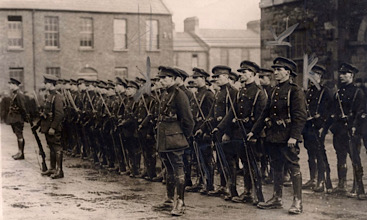
(Pictured: Irish Free State Army, 1922)