seamus dubhghaill

Promoting Irish Culture and History from Little Rock, Arkansas, USA


Leave a comment

Death of Mary Ward, First Motor Vehicle Fatality

mary-ward

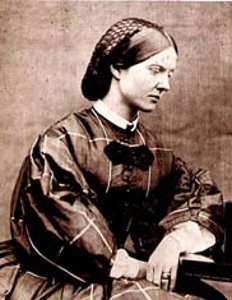
Mary Ward, Anglo-Irish amateur scientist, is killed on August 31, 1869, when she falls under the wheels of an experimental steam car built by her cousins. As the event occurs in 1869, she is the world’s first person known to be killed by a motor vehicle.

During the 19th century, when most women have little encouragement for a science education, Mary is unusual. She is born Mary King in present-day Ferbane, County Offaly on April 27, 1827, the youngest child of Henry and Harriett King. She and her sisters are educated at home, as are most girls at the time. However, her education is slightly different from the norm because she is of a renowned scientific family. She is interested in nature from an early age, and by the time she is three years old she is collecting insects.

Universities and most societies do not accept women, but Mary obtains information any way she can. She writes frequently to scientists, asking them about papers they have published. During 1848, her cousin William Parsons, 3rd Earl of Rosse, is made President of the Royal Society, enabling her to meet many scientists during visits to his home.

Parsons’ sons build a steam-powered car. It is thought at the time that steam transport will be developed greatly during the near future. This becomes true for trains but does not become true for cars due to the development of internal combustion engine. Steam cars are heavy, and they do too much damage to the already uneven roads. In 1865, the Red Flag Acts imposes a speed limit of four miles per hour for the countryside and two miles per hour in towns. This effectively ends the popularity of motorcars, but some enthusiasts still have one, often homemade, like the Parsons’ vehicle.

On August 31, 1869, Mary and her husband, Henry, are travelling in it with the Parsons boys, Richard Clare Parsons and the future steam turbine pioneer Charles Algernon Parsons, and their tutor, Richard Biggs. She is thrown from the car on a bend in the road at Parsonstown, County Offaly. She falls under its wheel and dies almost instantly. A doctor who lives near the scene arrives within moments and finds her cut, bruised, and bleeding from the ears. The fatal injury is a broken neck.


Leave a comment

Assassination of Irish Criminal Martin Cahill

martin-cahill

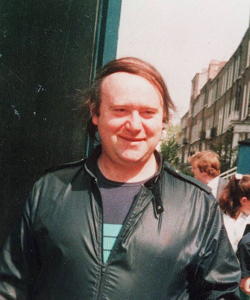
Martin Cahill, prominent Irish criminal from Dublin, is assassinated on August 18, 1994. Cahill generates a certain notoriety in the media, which refers to him by the sobriquet “The General.” During his lifetime, Cahill takes particular care to hide his face from the media and is rarely photographed.

At age 16, Cahill is convicted of two burglaries and sentenced to an industrial school run by the Oblates of Mary Immaculate at Daingean, County Offaly. With his brothers, he continues to commit multiple burglaries in the affluent neighbourhoods nearby, at one point even robbing the Garda Síochána depot for confiscated firearms.

In 1983, Cahill and his gang famously steal gold and diamonds with a value of over €2.55 million from O’Connor’s jewelers in Harold’s Cross. The jewelers subsequently are forced to close, with the loss of more than one hundred jobs. He is also involved in stealing some of the world’s most valuable paintings from Russborough House in 1986 and extorting restaurants and hot dog vendors in Dublin’s nightclub district.

On November 1, 1993, Cahill’s gang abducts National Irish Bank CEO Jim Lacey, his wife, and four children and holds them hostage in an attempt to force the bank to hand over the estimated €10 million in cash in the bank’s vault. Ultimately, the plan fails, and the gang is arrested.

With all gang members from the Lacey kidnapping released on bail, on August 18, 1994, Cahill leaves the house at which he has been staying at Swan Grove and begins driving to a local video store to return a borrowed copy of Delta Force 3: The Killing Game. Upon reaching the intersection of Oxford Road and Charleston Road he is repeatedly shot in the face and upper torso and dies almost instantly. The gunman, who is armed with a .357 Magnum revolver, jumps on a motorbike and disappears from the scene.

There are a number of theories about who murdered Martin Cahill and why. Within hours of Cahill’s murder, the Provisional Irish Republican Army claims responsibility in a press release. The reasons cited are Cahill’s alleged involvement with a Portadown unit of the Ulster Volunteer Force, which had attempted a bomb attack on a south Dublin pub which was hosting a Sinn Féin fund-raiser.

Another theory surfaces that reputedly claims that two of Cahill’s underlings, John Gilligan and John Traynor, had put together a massive drug trafficking ring. When Cahill demanded a cut of the profits, the Gardaí believe that Traynor and Gilligan approached the IRA and suggested that Cahill was importing heroin, a drug that the IRA despised and were trying to prevent from being sold in Dublin. Gilligan reputedly paid the Provisional IRA a considerable sum in exchange for Cahill’s assassination. Frances Cahill’s memoir, Martin Cahill, My Father, alleges the General detested and steered clear of the drug trade.

After a Roman Catholic requiem mass, Martin Cahill is buried in consecrated ground at Mount Jerome Cemetery. In 2001, his gravestone is vandalised and broken in two.


Leave a comment

Death of Saint Mo Chutu mac Fínaill

sts-carthage-catherine-patrick

Saint Mo Chutu mac Fínaill, also known as Carthach or Carthach the Younger (a name Latinized as Carthagus and Anglicized as Carthage), dies on May 14, 637. Mo Chutu is abbot of Rahan, County Offaly and subsequently, founder and first abbot of Lismore, County Waterford.

Through his father, Fínall Fíngein, Mo Chutu belongs to the Ciarraige Luachra, while his mother, Finmed, is of the Corco Duibne. Notes added to the Félire Óengusso, the Martyrology of Óengus, claim that his foster father is Carthach mac Fianáin, also known as Carthach the Elder, whose period of activity can be assigned to the late 6th century.

Mo Chutu first becomes abbot of Rahan, a monastery which lays in the territory of the southern Uí Néill. He composes a rule for his monks, an Irish metrical poem of 580 lines, divided into nine separate sections, a notable literary relic of the early Irish Church.

According to the Annals of Ulster, he is expelled from the monastery during the Easter season of 637. The incident is connected with the Easter controversy in which Irish churches are involved during the 7th century. Through his training in Munster, Mo Chutu is possibly a supporter of the Roman system of calculation, which likely brought him into conflict with adherents of the “Celtic” reckoning in Leinster.

Following his expulsion, Mo Chutu journeys to the Déisi, where he founds the great monastery of Lismore in modern day County Waterford. The Latin and Irish lives make very little of Mo Chutu’s earlier misfortune and focus instead on the saint’s resistance to the oppressive Uí Néill rulers and his joyous reception among the Déisi. He is portrayed in a heroic light in Indarba Mo Chutu a r-Raithin (The expulsion of Mo Chutu from Rahan).

His foundation at Lismore flourishes after his lifetime, eclipsing the reputation of the saint’s earlier church. It is able to withstand the Viking depredations which plague the area and benefit from the generosity of Munster kings, notably the Mac Carthaig of Desmond. In the 12th century, St. Déclán‘s foundation of Ardmore aspires to the status of episcopal see in the new diocese, but the privilege goes instead to Lismore.

His feast day in the Irish martyrologies is May 14, as well as in the Great Synaxaristes of the Orthodox Church. In the present calendar of the Catholic Church in Ireland, in which May 14 is the feast of Saint Matthias, the memorial of Saint Carthage is celebrated on May 15.

The photograph above is from an altar tomb of 1543 in St. Carthage’s cathedral in Lismore and depicts Mo Chutu along with St. Catherine and St. Patrick.