seamus dubhghaill

Promoting Irish Culture and History from Little Rock, Arkansas, USA


Leave a comment

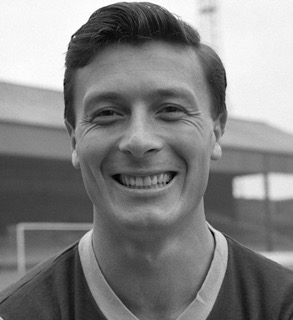
Birth of Jimmy McIlroy, Northern Irish Footballer & Manager

James “Jimmy” McIlroy, celebrated Northern Irish footballer and manager, is born on October 25, 1931, in Lambeg, County Antrim, Northern Ireland. He is regarded as one of Burnley’s greatest-ever players and a key figure in Northern Ireland’s 1958 World Cup squad.

McIlroy grows up in a working class family as the eldest and only son among five sisters. Football runs in his family; his father, Harry McIlroy, plays for Lisburn Distillery, and his uncle Willie represents Portadown. He hones his skills playing street football during wartime shortages and leaves school at 14 to pursue his football career, initially working as a bricklayer.

McIlroy began his senior career with Glentoran in 1949, making 18 league appearances and scoring 8 goals, quickly attracting attention from English clubs.

McIlroy transfers to Burnley in 1950 for £7,000. He spends twelve years at Burnley, making 497 appearances and scoring 131 goals across all competitions. Known as the “Brain” of Burnley, he is renowned for his intelligent passing, vision, and footwork, playing a pivotal role in Burnley’s First Division title in 1959–60 and helping the team reach the 1962 FA Cup Final. He forms key midfield partnerships with players like Jimmy Adamson and Brian Pilkington, contributing to Burnley’s prominence in English football during the late 1950s and early 1960s.

In 1963, McIlroy joins Stoke City in a major rebuild under Tony Waddington for £25,000. Despite a difficult debut, he helps them achieve Second Division promotion in 1962–63, and contributes to Stoke reaching the 1964 Football League Cup Final. He scores 16 goals in 98 league appearances during his tenure.

McIlroy joins Oldham Athletic in 1965, serving as player-manager from 1966 to 1968. He makes 39 appearances with 1 goal while implementing attacking tactics and mentoring players, though promotion eludes the club under his management.

McIlroy earns 55 caps for Northern Ireland between 1951 and 1965, scoring 10 goals. He is a key player in Northern Ireland’s 1958 FIFA World Cup squad, helping the team reach the quarter-finals and scoring crucial goals in qualifying matches, including a famous win over Italy. He partners effectively with captain Danny Blanchflower, combining tactical awareness and technical skill to orchestrate midfield play.

After Oldham Athletic, McIlroy briefly coaches Bolton Wanderers in 1970, resigning after 18 days due to disagreements with the board. His managerial record reflects 124 matches with 46 wins overall.

McIlroy is appointed Member of the Order of the British Empire (MBE) in 2011 for services to football and charity. He receives the Freedom of the Borough Burnley in December 2008. The east stand of Turf Moor is named the “Jimmy McIlroy Stand” in his honour. He is remembered as Burnley’s greatest-ever player, and is praised for his elegance, vision, and leadership on and off the pitch.

McIlroy retires in Burnley, where he continues to attend matches and participate in local events. He passes away on August 20, 2018, at the age of 86. He is survived by his children, Paul and Anne, and his enduring legacy lives on among Burnley fans and football historians.

Jimmy McIlroy’s story exemplifies dedication, technical excellence, and loyalty, leaving a lasting imprint on both club and international football.

Leave a comment

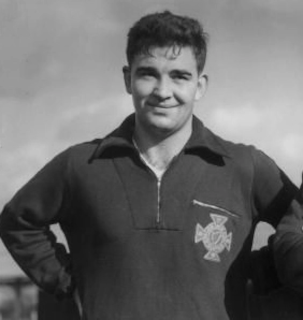
Death of Danny Blanchflower, Northern Ireland Footballer

Robert Dennis “Danny” Blanchflower, former Northern Ireland international footballer and football manager, dies of pneumonia in Staines-upon-Thames, Surrey, England, on December 9, 1993.

Blanchflower is born on February 10, 1926, in the Bloomfield district of Belfast, the first of five children born to John and Selina Blanchflower. He is educated at Ravenscroft public elementary school and is awarded a scholarship to Belfast College of Technology. He leaves school early to become an apprentice electrician at Gallaher’s cigarette factory in Belfast. He also joins the Air Raid Precautions (ARP) and, in 1943, joins the Royal Air Force after lying about his age. By 1946, after a trainee navigator course at the University of St. Andrews in Scotland and further training in Canada, he is back at Gallaher’s in Belfast and building a reputation as an outstanding footballer.

Blanchflower signs with Glentoran F.C. in 1946 before crossing the Irish Sea and signing with Barnsley F.C. for £6000 in 1949 at the age of 23. He transfers from Barnsley to Aston Villa F.C. for a fee of £15,000 and makes his First Division debut in March 1951. He makes 155 senior appearances for Villa before being bought by Tottenham Hotspur F.C. in 1954 for a fee of £30,000. During his ten years playing at White Hart Lane he makes 337 League appearances and 382 total appearances.

The highlight of Blanchflower’s time with the Spurs comes in the 1960–61 season, while serving as captain, the Spurs win their first 11 games and eventually win the league by 8 points. They beat Leicester City F.C. in the final of the FA Cup, becoming the first team in the 20th century to win the League and Cup double and a feat not achieved since Aston Villa in 1897.

In 1962, Blanchflower again captains the Spurs team to victory in the FA Cup in 1962, narrowly missing out on a second double when they finish a close third in the league behind Ipswich Town F.C. and Burnley F.C. In 1963, he captains the team to victory over Atlético Madrid in the final of the European Cup Winners’ Cup, making Spurs the first English team to win a European trophy.

Between 1949 and 1963, Blanchflower earns 56 caps for Northern Ireland, often playing alongside his brother Jackie until the younger Blanchflower’s playing career is cut short as a result of injuries sustained in the Munich air disaster of February 1958. In 1958, he captains his country when they reached the quarter-finals of the FIFA World Cup.

On December 4, 1957, Blanchflower captains the Northern Ireland team against Italy in Belfast in a bad tempered game that comes to be known as the “Battle of Belfast.” He attempts to keep the peace as the game turns nasty.

Blanchflower announces his retirement as a player on April 5, 1964, having played nearly 400 games in all competitions for the Spurs and captains them to four major trophies.

Following his retirement as a player, Blanchflower coachs for the Spurs for a number of years. Manager Bill Nicholson intends for Blanchflower to be his successor but, when Nicholson resigns in 1974, Blanchflower is passed over in favour of Terry Neill. He leaves the Spurs and becomes manager of Northern Ireland for a brief spell in 1978 before being appointed boss of Chelsea F.C. The team wins only three of fifteen games under his charge and he leaves the team in September 1979.

On May 1, 1990, Tottenham holds a testimonial match for Blanchflower at White Hart Lane, but at this point he is in the early stages of what is later diagnosed as Alzheimer’s disease and Parkinson’s disease. He is eventually placed in a nursing home in Staines-upon-Thames where he dies as a result of pneumonia on December 9, 1993, at the age of 67.

Blanchflower’s hometown of Belfast has honoured him with an Ulster History Circle plaque, located at his childhood home at 49 Grace Avenue, recognising the late sportsman as one of the greatest players in the history of Tottenham Hotspur FC.


Leave a comment

Birth of Jackie Blanchflower, Northern Irish Footballer

John “Jackie” Blanchflower, Northern Irish footballer, is born on March 7, 1933, in Belfast, Northern Ireland. He graduates from Manchester United‘s youth system and plays for the club on 117 occasions, winning two league titles, before his career is cut short due to injuries sustained in the Munich air disaster. He is also capped 12 times at senior level by Northern Ireland.

Blanchflower is the younger brother of Danny Blanchflower, the captain of the Tottenham Hotspur side that dominates English football in the early 1960s.

Blanchflower’s first appearance in a professional game is for Manchester United on November 24, 1951, against Liverpool, away at Anfield. He becomes a regular first team player in the 1953–54 season, when he plays in 27 out of 42 league games and scores 13 goals as an inside-forward.

Blanchflower helps the club win the league title in 1956 and again in 1957. Nicknamed “Twiggy” by his teammates, he is renowned for his versatility. He begins his career as a left-half before the emergence of Duncan Edwards in this position, at which time he switches to the forward positions. The Manchester United manager, Matt Busby, recognises his intelligent positioning sense and aerial power and chooses to play him at centre-half by the 1955–56 season, with John Doherty and Billy Whelan now competing for his former position. He faces fierce competition for the solitary centre-half place due to the presence of Mark Jones. He covers in goal in the 1957 FA Cup Final while Ray Wood receives treatment for an injury suffered in a collision with Peter McParland, who scores both of Aston Villa‘s goals as United loses 2–1. Blanchflower also plays in some of United’s first European Cup fixtures.

Blanchflower scores 27 goals during his time with Manchester United, most of them during his time as a forward.

On February 6, 1958, the Manchester United team that had travelled to Belgrade for the second leg of a European cup tie have their chartered plane stop in Munich to refuel. Weather conditions cause the plane to crash when the pilot attempts to take-off from Munich airport and 23 of the 44 people on board are killed. Blanchflower is severely injured, suffering from a fractured pelvis and arms and legs, and crushed kidneys, and his right arm is nearly severed. He is in hospital for two months and, although not a Catholic, is read the last rites but survives.

Blanchflower tries to return to football, but never makes a full recovery. Doctors advise him not to return to football because of fears he would damage his kidney and, a year later, he retires from football. The Munich air disaster means that he had played his last game of football when still only 24 years old, having earned 12 caps for Northern Ireland, played well over 100 times for Manchester United and won two league championship medals.

Blanchflower marries his wife Jean in 1956 and eventually pursues studies in finance and begins a career as an accountant. He later becomes an after-dinner speaker and is a regular on the after-dinner circuits until his death from cancer on September 2, 1998. He is 65 years old, and just two weeks prior to his death he attended the Munich air disaster testimonial match at Old Trafford.

He is survived by his three children; Krista, Senior (born 1958), Laurie (born 1961) and Andrew (born 1963), as well as his wife, Jean, who dies in 2002 following a long illness.