seamus dubhghaill

Promoting Irish Culture and History from Little Rock, Arkansas, USA


Leave a comment

The Bloody Sunday Inquiry Convenes

bloody-sunday-inquiry-1

The Bloody Sunday Inquiry, the biggest public inquiry in British history, opens properly on March 27, 2000, when formal public hearings begin at the Guildhall in Derry. The Inquiry holds public hearings on 116 days over the year, clocking up more than 600 hours of evidence. The vast majority of the evidence is from eyewitnesses.

The Bloody Sunday Inquiry, also known as the Saville Inquiry or the Saville Report after its chairman, Lord Saville of Newdigate, is established in 1998 by British Prime Minister Tony Blair after campaigns for a second inquiry by families of those killed and injured in Derry on Bloody Sunday during the peak of ethno-political violence known as The Troubles. The inquiry is set up to establish a definitive version of the events of Sunday, January 30, 1972, superseding the tribunal set up under Lord Widgery in April 1972, and to resolve the accusations of a whitewash that had surrounded it.

The inquiry takes the form of a tribunal established under the Tribunals of Inquiry (Evidence) Act 1921, and consists of Lord Saville, the former Chief Justice of New Brunswick William L. Hoyt, and John L. Toohey, a former Justice of the High Court of Australia. The judges retire on November 23, 2004, and reconvene once again on December 16 to listen to testimony from another key witness, known only as Witness X.

The results are published on June 15, 2010. The report states, “The firing by soldiers of 1 PARA on Bloody Sunday caused the deaths of 13 people and injury to a similar number, none of whom was posing a threat of causing death or serious injury.” It also says, “The immediate responsibility for the deaths and injuries on Bloody Sunday lies with those members of Support Company whose unjustifiable firing was the cause of those deaths and injuries.”

Saville states that British paratroopers “lost control”, fatally shooting fleeing civilians and those who tried to aid the civilians who had been shot by the British soldiers and that the civilians had not been warned by the British soldiers that they intended to shoot. Saville also says British soldiers should not have been ordered to enter the Bogside area as “Colonel Wilford either deliberately disobeyed Brigadier MacLellan’s order or failed for no good reason to appreciate the clear limits on what he had been authorised to do.”

The report states five British soldiers aimed shots at civilians they knew did not pose a threat and two other British soldiers shot at civilians “in the belief that they might have identified gunmen, but without being certain that this was the case.” It also states that British soldiers had concocted lies in their attempt to hide their acts and, contrary to the previously established belief, that none of the soldiers fired in response to attacks by petrol bombers or stone throwers, and that the civilians were not posing any threat. The report finds that Martin McGuinness, “did not engage in any activity that provided any of the soldiers with any justification for opening fire.”

bloody-sunday-inquiry-2

On the morning that the report is published, thousands of people walk the path that the civil rights marchers had taken on Bloody Sunday, holding photos of those who had been shot. The families of the victims receive advance copies of the report inside the Guildhall. British Prime Minister David Cameron addresses the House of Commons that afternoon where he acknowledges, among other things, that the paratroopers had fired the first shot, had fired on fleeing unarmed civilians, and shot and killed one man who was already wounded. He then apologises on behalf of the British Government.


Leave a comment

The End of the “Border Campaign”

united-irishman-1962

On February 26, 1962, due to lack of support, the Irish Republican Army (IRA) ends what it calls “The Campaign of Resistance to British Occupation,” which is also known as the “Border Campaign.”

The Border Campaign is the first major military undertaking carried out by the IRA since the harsh security measures of the Republic of Ireland and Northern Ireland governments had severely weakened it in the 1940s.

The campaign is launched with simultaneous attacks by approximately 150 IRA members on targets on the Border in the early hours of December 12, 1956. A BBC relay transmitter is bombed in Derry, a courthouse is burned in Magherafelt, a B-Specials post near Newry is burned, and a half-built Army barracks at Enniskillen is blown up. A raid on Gough barracks in Armagh is beaten off after a brief exchange of fire.

On December 14, an IRA column under Seán Garland detonates four bombs outside Lisnaskea Royal Ulster Constabulary (RUC) station before raking it with gunfire. Further attacks on Derrylin and Roslea RUC barracks on the same day are beaten off.

On the evening of December 30, 1956, the Teeling Column attacks the Derrylin RUC barracks again, killing RUC constable John Scally, the first fatality of the campaign. The new year of 1957 begins with Seán Garland and Dáithí Ó Conaill planning an attack on the Police station at Brookeborough but they assault the wrong building. Two IRA men, Seán South and Fergal O’Hanlon, are killed in the abortive attack. Garland is seriously wounded in the raid. He and the remainder of the group are pursued back over the border by British soldiers.

The year 1957 is the most active year of the IRA’s campaign, with 341 incidents recorded. In November, the IRA suffers its worst loss of life in the period when four of its members die preparing a bomb, which explodes prematurely, in a farmhouse at Edentubber, County Louth. The civilian owner of the house is also killed.

By 1958, the campaign’s initial impetus has largely dissipated with many within the IRA in favour of calling the campaign off. By mid-year, 500 republicans are in gaol or interned. The decline in IRA activity leads the Fianna Fáil government in the South to end internment in March 1959.

Following their release, some of the interned leaders met Seán Cronin in a farmhouse in County Laois and are persuaded to continue the campaign “to keep the flame alive.” The number of incidents falls to just 26 in 1960, with many of these actions consisting of minor acts of sabotage.

The final fatality of the conflict comes in November 1961, when an RUC officer, William Hunter, is killed in a gun battle with the IRA in south County Armagh.

By late 1961, the campaign is over and has cost the lives of eight IRA men, four republican supporters, and six RUC members. In addition, 32 RUC members are wounded. A total of 256 Republicans are interned in Northern Ireland during the campaign and another 150 or so in the Republic.

The Campaign is officially called off on February 26, 1962, with a press release drafted by Ruairí Ó Brádaigh and several other persons including members of the Army Council. The statement is released by the Irish Republican Publicity Bureau and signed “J. McGarrity, Secretary.”


Leave a comment

Bloody Sunday in Derry, Northern Ireland

bogside-mural

Bloody Sunday, sometimes referred to as the Bogside Massacre, occurs on January 30, 1972, in the Bogside area of Derry, Northern Ireland. Twenty-six unarmed civilians are shot by British soldiers of the 1st Battalion, Parachute Regiment, as they march in protest of internment (imprisonment without trial). Thirteen people are killed on the spot, and another dies over four months later as a result of his injuries.

The march, organised by the Northern Ireland Civil Rights Association and the Northern Resistance Movement, begins at about 2:45 PM at Bishop’s Field and is to conclude at the Guildhall, in the city centre, where a rally is to take place. There are as many as 15,000 people in the march, with many joining along the route.

As the march makes its way along William Street and nears the city centre, its path is blocked by British Army barricades. The organisers then redirect the march down Rossville Street with the intention of holding the rally at Free Derry Corner instead. Some of the marchers, however, break away from the march and begin throwing stones at soldiers manning the barricades. The soldiers fire rubber bullets, CS gas, and water cannon to try and disperse the rioters and observers report that this rioting is not intense.

Some of the marchers spot British paratroopers hiding in a derelict three-story building overlooking William Street and begin throwing stones at the windows. At about 3:55 PM, the first shots are fired as these paratroopers open fire with real bullets. Civilians Damien Donaghy and John Johnston are shot and wounded while standing on waste ground opposite the building. The soldiers claim Donaghy is holding a black cylindrical object.

At 4:07 PM, the paratroopers are ordered to go through the barricades and arrest rioters. On foot and in armoured vehicles, the paratroopers chase people down Rossville Street and into the Bogside. Two people are knocked down by the vehicles. Although Brigadier Pat MacLellan orders that only one company of paratroopers be sent on foot through the barricades and that they should not chase people down Rossville Street, Lieutenant Colonel Derek Wilford disobeys this order. This results in no separation between the rioters and the peaceful marchers.

There are many claims of paratroopers beating people, clubbing them with rifle butts, firing rubber bullets at them from close range, making threats to kill, and hurling abuse. One group of paratroopers take up position at a low wall about 80 yards in front of a rubble barricade that stretches across Rossville Street. Some of the people near the barricade throw stones at the soldiers but they are not close enough to hit the soldiers. The soldiers then open fire on the people at the barricade, killing six and wounding another.

A large group of people flee or are chased into the car park of Rossville Flats, which is like a courtyard, surrounded on three sides by high-rise flats. The soldiers open fire, killing one civilian, Jackie Duddy, who is shot in the back, and wounding six others.

Other people flee into the car park of Glenfada Park, which is also a courtyard-like area surrounded by flats. From a distance of approximately 50 yards, the soldiers shoot at people across the car park. Two civilians are killed and at least four others wounded. The soldiers pass through the car park and out the other side. Some soldiers exit the southwest corner, where they shoot and kill two civilians. The remainder exit the southeast corner and shoot four more civilians, killing two.

Only about ten minutes elapse between the time soldiers first drive into the Bogside and the time the last of the civilians is shot. Under the command of Major Ted Loden, more than 100 rounds are fired by the soldiers.

Some of those shot are given first aid by civilian volunteers, either on the scene or after being carried into nearby homes. The first ambulances arrive at 4:28 PM. The injured are then driven to the hospital, either in civilian cars or in ambulances. The three boys killed at the rubble barricade are driven to hospital by the paratroopers after, as witnesses claim, they lifted the bodies by the hands and feet and dumped them in the back of their vehicle as if they were “pieces of meat.”

In April 1972, the British government releases a report exonerating British troops from any illegal actions during the protest. The shootings act as a rallying call for the Irish Republican Army (IRA) as their numbers swell and Irish indignation over Britain’s Northern Ireland policies grow. As a result, Britain increases its military presence in the North while removing any vestige of Northern self-rule. On July 21, 1972, the IRA explode 20 bombs simultaneously in Belfast, killing British military personnel and a number of civilians. Britain responds by instituting a new court system composed of trial without jury for terrorism suspects and conviction rates exceed 90 percent. No criminal charges have ever been brought against the participating members of the British military.


Leave a comment

Creation of The Honourable The Irish Society

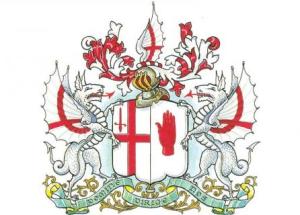
irish-society-coat-of-arms

On January 28, 1613, The Honourable The Irish Society, a consortium of livery companies of the City of London, is created by Royal Charter of James I of England to undertake the Plantation in the North West of Ulster that is then being driven by the English Crown.

Following the Gaelic defeat in the Nine Years’ War in 1603 and the Flight of the Earls in 1607, northwest Ulster is left open to colonisation. James I sets out to defend against a future attack from within or without. He finds that the town of Derry can become either a great asset as a control over the River Foyle and Lough Swilly, or it can become an inviting back door should the people of the area turn against him. He pressures the guilds of the City of London to fund the resettlement of the area, including the building of a new walled city. This results in the creation of the Society.

The city of Derry is renamed Londonderry in recognition of the London origin of the Irish Society. County Coleraine is enlarged and renamed County Londonderry after its new county town. The rural area of the county is subdivided between the Great Twelve livery companies, while the towns and environs of Londonderry and Coleraine are retained by the Irish Society.

In January 1635, the Irish Society, as well as the City of London, are found guilty of mismanagement and neglect of Derry plantation. They are sentenced to a fine of £70,000 and forfeiture of Derry property. The Society is suppressed in 1637 but is revived by Oliver Cromwell in 1650 and again after the Restoration by Londonderry’s 1662 royal charter.

The Society is involved in several controversies over the years including a dispute over fishing rights with the Church of Ireland and Bishop of Derry and a lawsuit brought by The Skinners’ Company in 1832 over the distribution of profits. The Society also has some disputes with the corporations over ownership and development of property. During the 17th and 18th centuries, four of the twelve livery companies sell their estates, with the Irish Society requiring a bond of indemnity in each case. Leases to middlemen granted by the remaining companies expire at various times during the nineteenth century, after which the companies “enormously increased the rental.”

The Society finances the building of the Guildhall in Derry. Construction begins in 1887 and it is opened in July 1890, at a cost of £19,000.

The Society remains in existence today as a relatively small grant-giving charitable body. Its educational grants are funded by its remaining property, including the Walls of Derry, a tourist attraction and heritage site, and fisheries on the River Bann. The Society is based in London, but maintains a “representative” resident in County Londonderry.


Leave a comment

Death of Irish Songwriter Percy French

percy-french

Percy French, one of Ireland’s foremost songwriters and entertainers of his day, dies of pneumonia in Formby, England, on January 24, 1920.

French is born at Cloonyquin House, near Tulsk, County Roscommon. He is educated at Foyle College, Derry, and writes his first successful song, Abdul Abulbul Amir, while studying at Trinity College Dublin in 1877. The song is sold for £5 to an unscrupulous publisher and later becomes hugely popular and is falsely claimed by other authors.

He graduates from Trinity as a civil engineer in 1881 and joins the Board of Works in County Cavan as an “Inspector of Drains.” It is said that he writes his best songs during this period. French is also a prolific painter of landscape watercolours and during this period he considers art to be his true vocation. When he becomes well-known later in his life, his paintings from his time as a civil engineer become fashionable and sought after.

When the Board of Works reduces its staff around 1887, French turns to journalism as the editor of The Jarvey, a weekly comic paper. Upon the failure of the paper, he embarks on a long and successful career as a songwriter and entertainer. It is around this time that he marries Ethel Kathleen Armitage-Moore, second daughter of William Armytage-Moore, brother of Countess of Annesley. Tragically, at the age of 20, she dies during childbirth along with her daughter.

percy-french-statue

French becomes renowned for composing and singing comic songs and gains considerable distinction with such songs as Phil the Fluther’s Ball, Slattery’s Mounted Foot, and The Mountains of Mourne. One of his most famous songs is Are Ye Right There Michael, a song that ridicules the state of the rail system in rural County Clare. The song causes such embarrassment to the rail company that it lead to an ultimately unsuccessful libel action against French. It is said that he arrives late for the libel hearing and, when questioned by the judge on his lateness, he responds, “Your honour, I travelled by the West Clare Railway,” which results in the case being thrown out.

French takes ill while performing in Glasgow and dies of pneumonia on January 24, 1920, at the age of 65 at the home of his cousin, Canon Richardson of Green Lea, in Formby. He is buried in the churchyard of St. Luke’s Parish Church, Formby in Merseyside. A statue of him sitting on a park bench can be found in the town center of Ballyjamesduff in honour of him and his famous song, Come Back Paddy Reilly to Ballyjamesduff.