seamus dubhghaill

Promoting Irish Culture and History from Little Rock, Arkansas, USA


Leave a comment

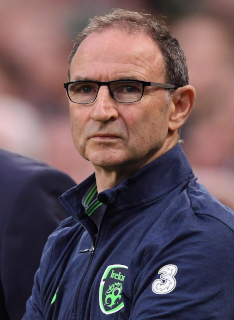
Birth of Martin O’Neill, Association Football Player & Manager

Martin Hugh Michael O’Neill, OBE, Northern Irish association football manager and former player who played as a midfielder, is born in Kilrea, County Londonderry, Northern Ireland, on March 1, 1952, the sixth child of nine siblings.

O’Neill’s father is a founding member of local GAA club Pádraig Pearse’s GAC Kilrea. He plays for both Kilrea and Derry at underage level. He also plays Gaelic football while boarding at St. Columb’s College, Derry, and later at St. Malachy’s College, Belfast.

Starting his career in Northern Ireland, O’Neill moves to England where he spends most of his playing career with Nottingham Forest, with whom he wins the European Cup twice, in 1979 and 1980. He is capped 64 times for the Northern Ireland national football team, also captaining the side at the 1982 FIFA World Cup.

During his managerial career O’Neill manage Grantham Town, Wycombe Wanderers, Norwich City, Leicester City, Celtic, Aston Villa and Sunderland. He guides Leicester City to the Football League Cup final three times, winning twice. As Celtic manager between 2000 and 2005, he leads that club to seven trophies including three Scottish Premier League titles and the 2003 UEFA Cup Final. After joining Aston Villa he achieves three consecutive sixth-place finishes in the English Premier League and guides them to the 2010 Football League Cup Final.

O’Neill becomes Republic of Ireland manager in 2013 and leads them to qualification for the 2016 UEFA European Football Championship for the third time in the nation’s history, beating the reigning world champions, Germany, in the process. He leaves the role with assistant Roy Keane by “mutual agreement” in November 2018. He is appointed as Nottingham Forest manager on January 15, 2019. He guides the club to a ninth-place finish in the Championship. However, he is sacked as manager on June 28, 2019, after reportedly falling out with some of the senior first team players.

Despite never completing his degree, O’Neill remains a follower of criminology. His fascination begins with the James Hanratty case of 1961. He has worked in television as an analyst for BBC and ITV at the FIFA World Cup, the UEFA European Championship and on UEFA Champions League matches.

In 2002, Norwich supporters voted O’Neill into the club’s Hall of Fame. He is awarded an OBE for services to sport in 2004. He is awarded the Nottingham Lifetime Achievement Award on November 3, 2013 for his services to football and achievements with Nottingham Forest.

Leave a comment

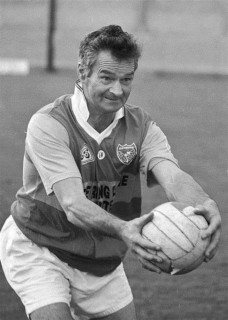
Birth of Gaelic Footballer Mick O’Connell

Michael “Mick” O’Connell, retired Gaelic footballer, is born on Valentia Island, County Kerry, on January 4, 1937. His league and championship career with the Kerry senior team spans nineteen seasons from 1956 to 1974. He is widely regarded as one of the greatest players in the history of the game.

O’Connell is raised in a family that has no real link to Gaelic football. His father is a fisherman who also works on the family’s small farm on the island. From an early age O’Connell shows his footballing talent and “inimitable signs of excellence.” He excels at the game in his youth and also at Cahersiveen CBS.

O’Connell begins his club football career with neighbouring Waterville. When a football club, Valentia Young Islanders, is founded on Valentia Island, as per GAA rules he switches allegiance to his local parish team. He wins three Kerry Senior Football Championship medals with the South Kerry divisional side.

O’Connell’s career with Kerry begins in 1955 when he lines out in the Munster Minor Championship. Kerry loses the replayed Munster final to Tipperary.

O’Connell quickly joins the Kerry senior football team, making his debut in 1956 against Tipperary in the Munster Championship. He later lines out in the Munster final against Cork, but loses out in a replay. In 1958 he wins the first of eight consecutive Munster Senior Football Championship titles, however, Kerry suffers a shocking defeat by Derry in the All-Ireland semi-final. In 1959 he is captain when Kerry wins the National Football League. He later guides his native-county to another Munster title, however, he has to retire due to injury in Kerry’s All-Ireland victory over Galway.

Following a second National League victory in 1961, O’Connell captures his second All-Ireland medal in 1962 when Kerry defeats Roscommon in the final. A third National League victory quickly follows at the start of 1963. After two All-Ireland defeats by Galway in 1964 and 1965 Kerry surrenders their provincial crown to Cork in 1966 and 1967. He wins a ninth Munster title in 1968, however, Kerry loses out to Down in the All-Ireland final. This defeat is followed by a great year of success in 1969 as he adds a fourth National League medal to his collection before winning a tenth Munster title. He later wins a third All-Ireland medal following a victory over Offaly.

In 1970 O’Connell enters the third decade of his inter-county football career, winning an eleventh Munster title in the process. A fourth All-Ireland medal quickly follows after a victory over Meath in the first 80-minute All-Ireland final. He claims two more National league medals in 1971 and 1972, before winning his twelfth and final provincial medal in 1972. That year Offaly later defeats Kerry in O’Connell’s last All-Ireland final appearance. In spite of this loss he is still presented with an GAA GPA All Star award. He retires from inter-county football in 1973.

In 1972 O’Connell marries his wife Rosaleen. They have three children, Máire, Mícheál and Diarmuid. Mícheál marries Emma, daughter of then President of Ireland Mary McAleese in December 2009.

In retirement from playing O’Connell publishes his autobiography, A Kerry Footballer, in 1974. Ten years later in 1984, the GAA’s centenary year, his reputation as one of the all-time greats is recognised when he is named in the midfield position on the GAA Football Team of the Century. In 2000 he is also named on the associations Football Team of the Millennium.


Leave a comment

Death of Hunger Striker Kevin Lynch

kevin-lynch

Kevin Lynch, Irish republican hunger striker and member of the Irish National Liberation Army (INLA), dies on August 1, 1981 at Maze Prison in County Down, Northern Ireland following 71 days on hunger strike.

Lynch is born on May 25, 1956 in Park near Dungiven, County Londonderry, Northern Ireland, the youngest in a family of eight children born to Paddy and Bridie Lynch. His older brother, Frank, is an amateur boxer and he also participates in the sport as well as Gaelic football and hurling. He is a member of the winning Dungiven GAC team which wins the Féile na nGael Division 3 in Thurles, County Tipperary in 1971. In 1972 he captains the Derry Hurling team to an Under-16 All-Ireland title at Croke Park in Dublin by defeating the Armagh GAA club.

Lynch stands as a Anti H-Block candidate in the Waterford constituency during the June 1981 general election in the South and polls extremely well despite missing out on election.

Lynch is tried, convicted and sentenced to ten years for conspiracy to obtain arms, taking part in a punishment shooting and conspiring to take arms from the security forces. He is sent to the Maze Prison in County Down in December 1977. He becomes involved with the blanket protest and joins the 1981 hunger strike at the Maze on May 23, 1981. He dies at Maze Prison 71 days later on August 1, 1981.

The Dungiven hurling team is renamed Kevin Lynch’s Hurling Club in his honour following his death.


Leave a comment

Birth of Kevin Lynch, Irish Republican Hunger Striker

kevin-lynch

Kevin Lynch, Irish republican hunger striker and member of the Irish National Liberation Army (INLA), is born on May 25, 1956 in Park near Dungiven, County Londonderry, Northern Ireland.

Lynch is the youngest in a family of eight children born to Paddy and Bridie Lynch. His older brother, Frank, is an amateur boxer and he also participates in the sport as well as Gaelic football and hurling. He is a member of the winning Dungiven GAC team which wins the Féile na nGael Division 3 in Thurles, County Tipperary in 1971. In 1972 he captains the Derry Hurling team to an Under-16 All-Ireland title at Croke Park in Dublin by defeating the Armagh GAA club.

Lynch is tried, convicted and sentenced to ten years for stealing shotguns, taking part in a punishment shooting and conspiring to take arms from the security forces. He is sent to the Maze Prison in County Down, Northern Ireland in December 1977. He becomes involved with the blanket protest and joins the 1981 hunger strike at the Maze on May 23, 1981. Kevin Lynch dies at Maze Prison 71 days later on August 1, 1981.

The Dungiven hurling team is renamed Kevin Lynch’s Hurling Club in his honour after his death.