seamus dubhghaill

Promoting Irish Culture and History from Little Rock, Arkansas, USA


Leave a comment

Death of Neil Blaney, Fianna Fáil Politician

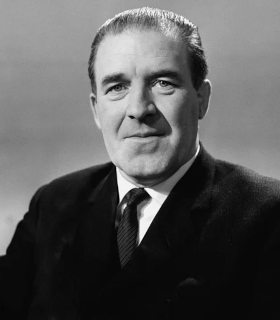
Neil Terence Columba Blaney, Irish politician first elected to Dáil Éireann in 1948 as a Fianna Fáil Teachta Dála (TD) representing Donegal East, dies in Dublin of cancer at the age of 73 on November 8, 1995. He serves as Minister for Posts and Telegraphs (1957), Minister for Local Government (1957–1966) and Minister for Agriculture and Fisheries (1966–1970). He is Father of the Dáil from 1987 until his death.

Blaney is born on October 1, 1922, in Fanad, County Donegal, the second eldest of a family of eleven. His father, from whom he got his strong republican views and his first introduction to politics, had been a commander in the Irish Republican Army (IRA) in Donegal during the Irish War of Independence and the Irish Civil War. He is educated locally at Tamney on the rugged Fanad Peninsula and later attends St. Eunan’s College in Letterkenny. He later works as an organiser with the Irish National Vintners and Grocers Association.

Blaney is first elected to Dáil Éireann for the Donegal East constituency in a by-election in December 1948, following the death of his father from cancer. He also becomes a member of the Donegal County Council. He remains on the backbenches for a number of years before he is one of a group of young party members handpicked by Seán Lemass to begin a re-organisation drive for the party following the defeat at the 1954 Irish general election. Within the party he gains fame by running the party’s by-election campaigns throughout the 1950s and 1960s. His dedicated bands of supporters earn the sobriquet “the Donegal Mafia,” and succeed in getting Desmond O’Malley and Gerry Collins elected to the Dáil.

Following Fianna Fáil’s victory at the 1957 Irish general election, Éamon de Valera, as Taoiseach, brings new blood into the Cabinet in the shape of Blaney, Jack Lynch, Kevin Boland and Mícheál Ó Móráin. Blaney is appointed Minister for Posts and Telegraphs however he moves to the position of Minister for Local Government at the end of 1957 following the death of Seán Moylan. He retains the post when Lemass succeeds de Valera as Taoiseach in 1959. During his tenure it becomes possible to pay rates by installment and he also introduces legislation which entitles non-nationals to vote in local elections.

In 1966 Lemass resigns as Taoiseach and Fianna Fáil leader. The subsequent leadership election sees Cork politician Jack Lynch become party leader and Taoiseach. In the subsequent cabinet reshuffle Blaney is appointed Minister for Agriculture and Fisheries.

In 1969, when conflict breaks out in Northern Ireland, Blaney is one of the first to express strong Irish republican views, views which contradict the policy of the Irish Government, in support of Northern nationalists. From around late 1968 onwards, he forms and presides over an unofficial Nationalist group in Leinster House popularly known as “the Letterkenny Table.” The group is dominated by Blaney up until his death.

There is general surprise when, in an incident known as the Arms Crisis, Blaney, along with Charles Haughey, is sacked from Lynch’s cabinet amid allegations of the use of the funds to import arms for use by the IRA. Lynch asks for their resignations but both men refuse, saying they did nothing illegal. Lynch then advises President de Valera to sack Haughey and Blaney from the government. Haughey and Blaney are subsequently tried in court but are acquitted. However, many of their critics refuse to recognise the verdict of the courts. Although Blaney is cleared of wrongdoing, his ministerial career is brought to an end.

Lynch subsequently moves against Blaney so as to isolate him in the party. When Blaney and his supporters try to organise the party’s national collection independently, Lynch acts and in 1972 Blaney is expelled from Fianna Fáil for “conduct unbecoming.”

Following his expulsion from Fianna Fáil, Kevin Boland tries to persuade Blaney to join the Aontacht Éireann party he is creating but Blaney declines. Instead, he contests all subsequent elections for Independent Fianna Fáil – The Republican Party, an organisation that he built up. Throughout the 1970s there are frequent calls for his re-admittance to Fianna Fáil but the most vocal opponents of this move are Fianna Fáil delegates from County Donegal.

At the 1979 European Parliament elections Blaney tops the poll in the Connacht–Ulster constituency to the annoyance of Fianna Fáil. He narrowly loses the seat at the 1984 election but is returned to serve as a Member of the European Parliament (MEP) in the 1989 election where he sits with the regionalist Rainbow Group. He also canvasses for IRA hunger striker Bobby Sands in the Fermanagh and South Tyrone by-election, in which Sands is elected to Westminster.

Blaney holds his Dáil seat until his death from cancer at the age of 73 on November 8, 1995, in Dublin.

Leave a comment

Birth of Thomas Pringle, Irish Independent Politician

Thomas Pringle, an Irish independent politician who has been a Teachta Dála (TD) for the Donegal constituency since the 2016 Irish general election, is born into an Irish Republican family in Dublin on August 30, 1967. From 2011 to 2016 he is the TD for the Donegal South-West constituency.

Pringle’s father, Peter, is a supporter of the Irish Republican Socialist Party (IRSP) and is convicted of the killing of two members of the Gardaí in 1980, a conviction that is subsequently declared as unsafe, although it has not been certified as a miscarriage of justice. Pringle is a patron of the People’s Movement, which campaigns against the Treaty of Lisbon. He is previously a member of Donegal County Council, where he manages a water treatment plant and is a shop steward, having been elected as an independent member in the 1999 Irish local elections, and then as a Sinn Féin candidate in the 2004 Irish local elections. He leaves Sinn Féin in 2007 and retains his seat as an independent in the 2009 Irish local elections.

Pringle is elected as a TD for the Donegal South-West constituency at the 2011 Irish general election, unseating the incumbent Tánaiste Mary Coughlan. He quickly becomes an ally of Luke ‘Ming’ Flanagan, elected as an independent TD at the same time as Pringle, but for the Roscommon–South Leitrim constituency. Flanagan and Pringle go on to support each other on many issues, including reform of the Common Agricultural Policy (CAP) and opposition to the Mercosur deal. Even when Flanagan is elected as a Member of the European Parliament (MEP) for the Midlands–North-West constituency after spending three years in the Dáil, he and Pringle continue to work together, and Flanagan visits Donegal to canvass for Pringle ahead of the 2020 Irish general election.

On December 5, 2011, Pringle delivers a televised address to the nation, representing the technical group of TDs in Dáil Éireann. He does so in response to Taoiseach Enda Kenny‘s address to the nation of the previous evening. Later that month, he calls on people for support in a campaign not to pay a new household charge brought in as part of the latest austerity budget and announces that he will not register for the tax or pay it.

In February 2012, Pringle publishes his expenses online. He is elected leader of the technical group in Dáil Éireann in March 2012.

In May 2012, Pringle brings an unsuccessful High Court challenge over the 2012 European Fiscal Compact referendum and the European Stability Mechanism (ESM) Treaty which is appealed to the Supreme Court in July 2012. In July 2012, the Irish Supreme Court decides to refer three questions to the Court of Justice of the European Union (CJEU) arising out of his challenge of the European Stability Mechanism Treaty and doubts about the ESM’s legality under the Treaties of the European Union. The CJEU holds an oral hearing on the referral on October 23, 2012. It is the first time that the full court sits to hear a reference from a member state of the Union. The 27 judges hear oral arguments from the counsel for Pringle, Ireland, nine other member states, the Commission, the Council, and the European Parliament. On November 27, 2012, the EU Court of Justice dismisses Pringle’s arguments and rules that the ESM is in accordance with the Treaties.

In the 2016 Irish general election, after a re-drawing of constituency boundaries, Pringle campaigns in the new five-seater Donegal constituency. He is re-elected to the final seat by a margin of just 184 votes over Sinn Féin’s Pádraig Mac Lochlainn. During negotiations to form a government, Pringle says he is glad not to have signed up to the Independent Alliance, after that group enters talks with Taoiseach Enda Kenny. He says that unless Kenny or Fianna Fáil leader Micheál Martin sign up to Right2Change, he will not support either as Taoiseach.

As of April 2016, Pringle had become a member of the Independents 4 Change technical group in the Dáil.

In May 2016, Pringle introduces legislation designed to retain water in public ownership and avoid further privatisation.

Pringle puts forward a bill calling on the government to end public spending from fossil fuels, which passes, making Ireland the first country to fully divest public money from fossil fuels. In June 2022, he puts forward a bill proposing a referendum on lowering the voting age to sixteen.

Pringle is married and has three children.


Leave a comment

Bridie Gallagher’s “The Boys From The County Armagh” Tops the Irish Charts

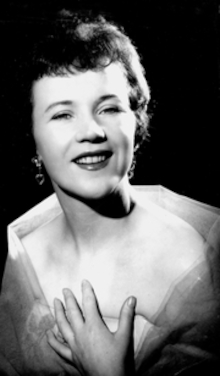
Bridget “Bridie” Gallagher, Irish singer affectionately known as “The Girl from Donegal,” reaches No. 1 in the Irish Singles Chart with “The Boys From The County Armagh” on July 2, 1957. She is widely regarded as “Ireland’s first international pop star.”

Gallagher is born on September 7, 1924 in Creeslough, County Donegal. She starts her singing in the Creeslough Hall with a local Céilí band started by Bill Gallagher. The Creeslough Hall is owned by Jim McCaffrey and Bridie makes many more visits to the Creeslough Hall in her home town throughout her long and successful career. Her talent is soon spotted in the 1950s by Billy Livingstone who is a talent scout for Decca Records. She goes to Belfast, which becomes her base, where she marries Robert (Bob) Livingstone (no relation to Billy Livingstone) and has two boys, Jim and Peter. Peter dies in a motor accident in 1976 and Jim later goes on to tour with her.

Gallagher shoots to fame in 1956 with her recording of “A Mother’s Love’s A Blessing” and achieves international acclaim with her legendary rendition of “The Boys From County Armagh.” During her career, which spans over six decades, she appears in many leading venues across the globe. She also makes songs such as “The Homes of Donegal” famous.

Gallagher holds the record for the largest number of people in attendance in the Royal Albert Hall in London, with over 7,500 people, a record that is never equaled as it goes on to become an all-seater venue. She becomes world-famous and travels all over the world, United States, Canada, Europe, Australia and is known as “The Girl from Donegal.” She plays in many of the world’s best known theatres, including London’s Royal Albert Hall, Sydney Opera House and Carnegie Hall in New York City. She sings mainly ballads or as they later became known as Country and Irish. One of her best known songs is “The Boys From The County Armagh,” which sells over 250,000 copies, the biggest-selling Irish single at that time.

Bridie also records “Cottage by the Lee,” written by Irish songwriter, Dick Farrelly. Farrelly achieved worldwide fame with his classic song “The Isle of Innisfree“, which is originally a worldwide hit for Bing Crosby and is chosen by movie director John Ford as the main theme music for his film The Quiet Man.

Gallagher lives in Belfast for most of her life. She is honoured by the people of Creeslough on July 10, 2000 with an event to celebrate her career. Members of her family from Creeslough and Donegal attend the event along with her two sisters and their families who travel from Glasgow to be there along with an estimated crowd of 2,500 fans. A plaque paying tribute to her is unveiled. The following day she is honoured by Donegal County Council when they hold a Civic Reception for her. “Bridie blazed the trail for many artists who followed after her and I’m sure that many of them looked upon her as a role model as they started their careers in the music world,” council chairman Charlie Bennett says at the ceremony.

Gallagher dies at her home in Belfast on January 9, 2012 at the age of 87. Her burial takes place in her native Creeslough.


Leave a comment

Birth of Neil Blaney, Fianna Fáil Politician

Neil Terence Columba Blaney, Irish politician first elected to Dáil Éireann in 1948 as a Fianna Fáil Teachta Dála (TD) representing Donegal East, is born on October 1, 1922 in Fanad, County Donegal. He serves as Minister for Posts and Telegraphs (1957), Minister for Local Government (1957–1966) and Minister for Agriculture and Fisheries (1966–1970). He is Father of the Dáil from 1987 until his death.

Blaney is the second eldest of a family of eleven. His father, from whom he got his strong republican views and his first introduction to politics, had been a commander in the Irish Republican Army (IRA) in Donegal during the Irish War of Independence and the Irish Civil War. He is educated locally at Tamney on the rugged Fanad Peninsula and later attends St. Eunan’s College in Letterkenny. He later works as an organiser with the Irish National Vintners and Grocers Association.

Blaney is first elected to Dáil Éireann for the Donegal East constituency in a by-election in December 1948, following the death of his father from cancer. He also becomes a member of the Donegal County Council. He remains on the backbenches for a number of years before he is one of a group of young party members handpicked by Seán Lemass to begin a re-organisation drive for the party following the defeat at the 1954 general election. Within the party he gains fame by running the party’s by-election campaigns throughout the 1950s and 1960s. His dedicated bands of supporters earn the sobriquet “the Donegal Mafia,” and succeed in getting Desmond O’Malley and Gerry Collins elected to the Dáil.

Following Fianna Fáil’s victory at the 1957 general election, Éamon de Valera, as Taoiseach, brings new blood into the Cabinet in the shape of Blaney, Jack Lynch, Kevin Boland and Mícheál Ó Móráin. Blaney is appointed Minister for Posts and Telegraphs however he moves to the position of Minister for Local Government at the end of 1957 following the death of Seán Moylan. He retains the post when Lemass succeeds de Valera as Taoiseach in 1959. During his tenure it becomes possible to pay rates by installment and he also introduces legislation which entitles non-nationals to vote in local elections.

In 1966 Lemass resigns as Taoiseach and Fianna Fáil leader. The subsequent leadership election sees Cork politician Jack Lynch become party leader and Taoiseach. In the subsequent cabinet reshuffle Blaney is appointed Minister for Agriculture and Fisheries.

In 1969, when conflict breaks out in Northern Ireland, Blaney is one of the first to express strong Irish republican views, views which contradict the policy of the Irish Government, in support of Northern nationalists. From around late 1968 onwards, he forms and presides over an unofficial Nationalist group in Leinster House popularly known as “the Letterkenny Table.” The group is dominated by Blaney up until his death.

There is general surprise when, in an incident known as the Arms Crisis, Blaney, along with Charles Haughey, is sacked from Lynch’s cabinet amid allegations of the use of the funds to import arms for use by the IRA. Lynch asked for their resignations but both men refuse, saying they did nothing illegal. Lynch then advises President de Valera to sack Haughey and Blaney from the government. Haughey and Blaney are subsequently tried in court but are acquitted. However, many of their critics refuse to recognise the verdict of the courts. Although Blaney is cleared of wrongdoing, his ministerial career is brought to an end.

Lynch subsequently moves against Blaney so as to isolate him in the party. When Blaney and his supporters try to organise the party’s national collection independently, Lynch acts and in 1972 Blaney is expelled from Fianna Fáil for “conduct unbecoming.”

Following his expulsion from Fianna Fáil, Kevin Boland tries to persuade Blaney to join the Aontacht Éireann party he is creating but Blaney declines. Instead, he contests all subsequent elections for Independent Fianna Fáil – The Republican Party, an organisation that he built up. Throughout the 1970s there are frequent calls for his re-admittance to Fianna Fáil but the most vocal opponents of this move are Fianna Fáil delegates from County Donegal.

At the 1979 European Parliament elections Blaney tops the poll in the Connacht–Ulster constituency to the annoyance of Fianna Fáil. He narrowly loses the seat at the 1984 election but is returned to serve as a Member of the European Parliament (MEP) in the 1989 election where he sits with the regionalist Rainbow Group. He also canvasses for IRA hunger striker Bobby Sands in the Fermanagh and South Tyrone by-election, in which Sands is elected to Westminster.

Blaney holds his Dáil seat until his death from cancer at the age of 73 on November 8, 1995 in Dublin.


Leave a comment

Birth of Bridie Gallagher, the “Girl from Donegal”

bridie-gallagher

Bridget “Bridie” Gallagher, Irish singer affectionately known as “The Girl from Donegal,” is born on September 7, 1924 in Creeslough, County Donegal. She is widely regarded as “Ireland’s first international pop star.”

Gallagher starts her singing in the Creeslough Hall with a local Céilí band started by Bill Gallagher. The Creeslough Hall is owned by Jim McCaffrey and Bridie makes many more visits to the Creeslough Hall in her home town throughout her long and successful career. Her talent is soon spotted in the 1950s by Billy Livingstone who is a talent scout for Decca Records. She goes to Belfast, which becomes her base, where she marries Robert (Bob) Livingstone (no relation to Billy Livingstone) and has two boys, Jim and Peter. Peter dies in a motor accident in 1976 and Jim later goes on to tour with her.

Gallagher shoots to fame in 1956 with her recording of “A Mother’s Love’s A Blessing” and achieves international acclaim with her legendary rendition of “The Boys From County Armagh.” During her career, which spans over six decades, she appears in many leading venues across the globe. She also makes songs such as “The Homes of Donegal” famous.

Gallagher holds the record for the largest number of people in attendance in the Royal Albert Hall in London, with over 7,500 people, a record that is never equaled as it goes on to become an all-seater venue. She becomes world-famous and travels all over the world, United States, Canada, Europe, Australia and is known as “The Girl from Donegal.” She plays in many of the world’s best known theatres, including London’s Royal Albert Hall, Sydney Opera House and Carnegie Hall in New York City. She sings mainly ballads or as they later became known as Country and Irish. One of her best known songs is “The Boys From The County Armagh,” which sells over 250,000 copies, the biggest-selling Irish single at that time.

Bridie also records “Cottage by the Lee,” written by Irish songwriter, Dick Farrelly. Farrelly achieved worldwide fame with his classic song “The Isle of Innisfree“, which is originally a worldwide hit for Bing Crosby and is chosen by movie director John Ford as the main theme music for his film The Quiet Man.

Gallagher lives in Belfast for most of her life. She is honoured by the people of Creeslough on July 10, 2000 with an event to celebrate her career. Members of her family from Creeslough and Donegal attend the event along with her two sisters and their families who travel from Glasgow to be there along with an estimated crowd of 2,500 fans. A plaque paying tribute to her is unveiled. The following day she is honoured by Donegal County Council when they hold a Civic Reception for her. “Bridie blazed the trail for many artists who followed after her and I’m sure that many of them looked upon her as a role model as they started their careers in the music world,” council chairman Charlie Bennett says at the ceremony.

Gallagher dies at her home in Belfast on January 9, 2012 at the age of 87. Her burial takes place in her native Creeslough.