seamus dubhghaill

Promoting Irish Culture and History from Little Rock, Arkansas, USA


Leave a comment

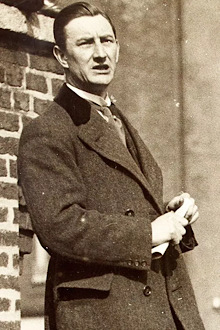
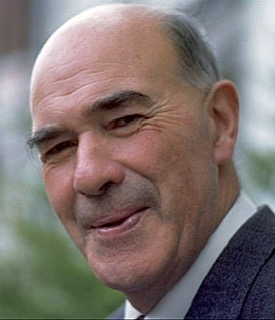
Birth of Gerald Boland, Fianna Fáil Politician

Gerald Boland, an Irish Fianna Fáil politician, is born in Manchester, England, on May 25, 1885.

Boland is the son of James Boland and Kate Boland (née Woods). He is the second child and eldest son among three sons (including Harry Boland) and two daughters of the couple. His family on both sides are staunch Irish Nationalists. His father is a Fenian in his younger days, a devout follower of Charles Stewart Parnell, and later a member of the Irish Republican Brotherhood (IRB). His father also has ties to the Irish National Invincibles, and his association with them causes him to have to flee to New York City for a time.

After his national school education, Boland attends the O’Brien Institute in Fairview, Dublin. He leaves school at fifteen and becomes an apprentice fitter at Broadstone railway station. Instead of attending his studies to secure an engineering diploma, he takes Irish language and history classes at night. Despite this, he passes his engineering exams.

Boland is enrolled in the IRB along with his younger brothers Harry in 1904, following in the footsteps of his father. He and his brothers Harry and Ned subsequently join the Irish Volunteers when that organisation is established in 1913, serving in the same company as Arthur Griffith. When news breaks out of the Easter Rising in 1916 he immediately leaves his job, however, he is bitterly disappointed when he finds out that the order has been countermanded. When the rebellion begins in earnest on Easter Monday, he makes his way to Jacob’s Mill where he fights under Thomas MacDonagh. Following the official surrender, he is arrested and interned at Frongoch internment camp in Wales, where he comes into contact with other notable revolutionary leaders, including his brother Harry’s friend Michael Collins.

Boland is released after a general amnesty in December 1916, however, he remains involved in revolutionary circles, although he declines to rejoin the IRB, believing the organisation is no longer needed. He is arrested and imprisoned in Belfast from May to December 1918 for practising military drills in the Dublin Mountains. Meanwhile, a number of his colleagues secure their release by winning seats in the 1918 United Kingdom general election.

During the Irish War of Independence, Boland is Battalion Commandant of 7 Battalion, Dublin Brigade, Irish Republican Army (IRA) and is known as “Trotsky” for his left-wing views.

Boland and his brothers are opposed to the Anglo-Irish Treaty of 1921. He is Battalion Commandant of 3 Battalion, 2 Dublin Brigade (South Dublin) in BlessingtonCounty Wicklow, but is captured early on in the Irish Civil War on July 7, 1922, and is interned until his release in July 1924. On the outside, his brother Harry dies some days after being shot, in August 1922, after two National Army officers attempt to arrest him at the Grand Hotel in Skerries, County Dublin. Boland applies to the Irish government for a service pension under the Military Service Pensions Act of 1934 and is awarded 11 and 5/12 years of service at Grade C for his service with the Irish Volunteers and the IRA between April 1, 1916 and September 30, 1923.

Following the end of the Irish Civil War, Boland helps to build up Sinn Féin as the main Republican party. While still imprisoned, he is selected to stand for Dáil Éireann as the Teachta Dála (TD) for Roscommon, Harry’s old seat, for the 1923 Irish general election, in which he is successful. He is among those in Kilmainham Gaol who go on hunger strike in October 1923. The hunger strike does not result in his release and he credits his practice of yoga with keeping him alive at the time.[3]

Boland is eventually released from the custody of the state in July 1924. Upon his release, he becomes secretary of Sinn Féin and stands on the executive of the party.

Boland is among the first in Sinn Féin to call for an end to the party’s abstentionism from Dáil Éireann, believing it to be a political dead end. Party leader Éamon de Valera proposes that the party abandon this policy and take their seats in the Dáil if changes are made to the oath of allegiance to the British monarch. His proposal is defeated and de Valera and his supporters, including Boland, leave Sinn Féin. Shortly after this split, a new party emerges called Fianna Fáil, with de Valera acting as leader and the other disillusioned Republican TDs joining. Boland is vital in transferring many members from Sinn Féin to Fianna Fáil. Fianna Fáil briefly also has an abstentionist policy but in 1927 a new law forces Fianna Fáil TDs to take the oath of allegiance and take their seats in the Dáil. Fianna Fáil dismisses the oath as “an empty formula.”

Boland works alongside Seán Lemass in building up Fianna Fáil’s grassroots support and organisation, giving particular attention to the party’s rural apparatus. In the September 1927 Irish general election Fianna Fáil comes within four seats of the ruling Cumann na nGaedheal party. The latter forms a coalition of sorts with the Farmers’ Party and returns to government.

Following the 1932 Irish general election, Fianna Fáil forms a new government. Boland is appointed Government Chief Whip, a position which allows him to attend cabinet meetings but not vote at them.

Fianna Fáil remains in power with an increased mandate following the 1933 Irish general election and Boland is promoted to the position of Minister for Posts and Telegraphs. Despite being the Minister in charge of the postal service, he does not own a telephone until some time later. During his tenure, the postal service makes considerable progress. It is also during this time that the Post Office becomes a paying concern. During his time as minister, he oversees a major expansion of the telephone service in Ireland, improvements in the transmission capacity of Radio Éireann, and construction of new provincial post offices and a new central postal sorting office.

Boland is acting Minister for Justice briefly for a time when P. J. Ruttledge is ill. It is during this time that he declares the Irish Republican Army a proscribed organisation.

A cabinet reshuffle in 1936 sees Boland become Minister for Lands. The Land Act 1939 reforms land distribution, broadening the criteria by which the state can take control over undeveloped land while offering the tenant of the land more favourable terms of compensation. He is critical of the policy of the Minister for Industry and Commerce, Seán Lemass, of centralising industrial development in Dublin. He instead wishes to see a more decentralised economy based around food production. The differing viewpoint causes a rift between Boland and Lemass, but despite this Boland favoured Lemass’s policy of state intervention in the economy over Seán MacEntee‘s more laissez-faire approach.

In 1937 Boland is highly vocal during the drafting of a new constitution of Ireland by Fianna Fáil against any word which would give the Catholic Church special status, something heavily considered at the time. He declares that if the constitution elevates the position of the Catholic Church above others, it would be sectarian, anti-republican, and a hindrance to any prospects of Irish reunification. As a compromise, the term “special position” is used in the approved text of the Constitution.

Following the outbreak of World War II in 1939, known in Ireland as the Emergency, there is a cabinet reshuffle, and Boland is appointed as Minister for Justice. He takes over at a time when the IRA has once again declared war against the British state and has begun their Sabotage Campaign. He is charged with the task of crushing the organisation and preventing the IRA from drawing the Irish state into conflict with the United Kingdom. Although he always considers himself a republican, he takes a hardline against the IRA and uses his powers to order the internment of hundreds of IRA members before introducing military courts and special criminal courts.

In 1940, several imprisoned IRA members go on hunger strike but Boland refuses to grant their release. Two of the men eventually die, one of whom is the nephew of one of his Fianna Fáil colleagues. Tony D’Arcy dies at the age of 32 on April 16, 1940, as a result of a 52-day hunger strike, and Jack McNeela dies three days later after 55 days on hunger strike. These deaths spark reprisals by the IRA on the Garda Síochána. Boland subsequently introduces tougher measures by setting up a military court with the death penalty and no provision for appeal except for a review by the government. In all, twelve men are found guilty with six of them facing death and the remaining six having their sentences changed to imprisonment. Among those executed is Charlie Kerins, an acting Chief of Staff of the IRA.

As Minister of Justice, Boland is also asked to enforce policies of wartime censorship, however, finding the idea of the state censorship distasteful he establishes a censorship board to avoid accusations of bias.

During the Emergency, Boland is also responsible for the detention of several foreign agents in pursuit of Ireland’s strict policy of neutrality. During this time some 500 individuals are interned and 600 are sentenced under the newly introduced Offences against the State Act, 1939. By 1943 the IRA is in disarray, particularly after the Chief of Staff is arrested and imprisoned, leaving the organisation without leadership. Boland and Fianna Fáil feel their hardline is backed by the electorate following strong returns for the party at the 1944 Irish general election.

In 1947, Boland is among four leading Fianna Fáil figures (including de Valera) involved in the “Locke’s Distillery Scandal”, an accusation brought by Oliver J. Flanagan that foreign businessmen are bribing members of Fianna Fáil to gain the right to purchase the distillery. A tribunal of inquiry finds no evidence to support the claims, but the event taints the public’s view of Fianna Fáil.

By 1948, Fianna Fáil has been in government for an uninterrupted 16 years. With World War II finally over, the electorate seeks change and a fresh start. Arising to meet this desire is the new political party Clann na Poblachta. Led by Seán MacBride, this new party seeks to kick off a new post-war political era in Ireland, and to do this means removing Fianna Fáil from power. Many in Clann na Poblachta have republican backgrounds and in some ways, the party can be partially described as an organic reaction to Fianna Fáil and Boland’s hardline stance during the war years. Many in political circles, including inside Fianna Fáil, believe Clann na Poblachta can be a new force to reckon with.

However, de Valera always holds a reputation for being cunning in selecting the dates of general elections, and he once again cements that notion, when he calls for a general election in early 1948 before Clann na Poblachta is completely ready to contest a national election. At the 1948 Irish general election Clann na Poblachta and other Fianna Fáil opponents do well, but not as well as expected. To remove Fianna Fáil from government, every single party in the Dáil and several independents have to form the unwieldy “First Inter-Party Government.” The coalition sees Clann na Poblachta forced to work with Fine Gael, considered the traditional “enemy” of Irish republicanism. By 1951, the coalition collapses and Fianna Fáil returns to government following that year’s election, with Boland re-appointed Minister for Justice.

Boland does not seek ministerial office in 1957 when Fianna Fáil returns to power after its defeat in 1954. However, his son, Kevin, is appointed to the cabinet as Minister for Defence at the beginning of his first term in the Dáil. By this stage, Boland is beginning to be seen as an aging warhorse, with his base in Roscommon starting to slip and Fianna Fáil unhappy that he is unable to get a Fianna Fáil running mate elected alongside himself.

At the 1961 Irish general election, Boland is defeated for the first time in fourteen general election campaigns. Despite losing his Dáil seat, he subsequently secures election to Seanad Éireann. Four years later in 1965, he returns to the Seanad, this time as a nominee by the Taoiseach Seán Lemass.

In 1970, the outbreak of the Arms Crisis sees Kevin Boland resign as a Minister and as Secretary of Fianna Fáil in protest at the government’s policy on Northern Ireland and in response to the sackings of Charles Haughey and Neil Blaney from the cabinet over allegations they had arranged for weapons to be provided to the Provisional IRA. Gerald Boland, in a similar protest, resigns as a vice president and as a trustee of Fianna Fáil, although he remains a member of the party. He also articulates his loss of confidence in the leadership of Taoiseach Jack Lynch.

Boland dies in Dublin at the age of 87 on January 5, 1973. He is buried in the republican plot in Glasnevin Cemetery, Glasnevin, County Dublin. His wife, Annie Boland, predeceases him in 1970. He is survived by his three daughters and four sons.
Leave a comment

Death of Máirtín Ó Direáin, Irish Poet

Máirtín Ó Direáin, Irish poet, dies in Dublin on March 19, 1988.

Ó Direáin is born on November 26, 1910, in Inis Mór, Aran Islands, County Galway, the eldest of the three sons and one daughter of Seán Ó Direáin, a small farmer, and Mairéad Ní Dhireáin (widow of Labhrás Mac Confhaola), both of Inis Mór. His father dies in 1917, aged forty-three, leaving his mother to rear a family of four on less than 20 acres of land. Educated at the local national school, he leaves Aran to join the post office in Galway in January 1928.

Ó Direáin is involved with the Irish language movement during the late 1920s and 1930s, during which time he is secretary of the Galway branch of the Gaelic League and writes for and acts on the stage of the Taibhdhearc Theatre. In July 1937 he moves to Dublin to work as a clerical officer in the Department of Posts and Telegraphs and later in the Department of Education. Inspired by a lecture given by the poet and Gaelic scholar Tadhg Ó Donnchadha, he begins writing poetry in Irish in the winter of 1938. Unlike Ó Donnchadha, however, who advocates and practises a poetry based on traditional Gaelic metres, he favours a rhythmically measured form of free verse. He publishes his first collection, Coinnle geala, in 1942, quickly followed by Dánta aniar (1943), both at his own expense. In 1949, a volume of selected poems, Rogha dánta, is one of the first books published by the newly founded Irish language publisher Sáirséal agus Dill.

These books herald not just a new voice, but a new generation of modern poets in Irish, distinct in outlook and ambition from most of the revivalist poets who precede them. The leading figures of this generation, Ó Direáin, Seán Ó Ríordáin and Máire Mhac an tSaoi, all publish poems in various Irish language journals during the 1940s, though the latter two poets do not produce their first collections until the 1950s. Ó Direáin’s poetry is less thematically and linguistically adventurous than that of Ó Ríordáin (whom he nevertheless defends in print against the dogmatic criticism of Ó Ríordáin’s traditionalist detractors), and less consciously indebted to tradition than that of Mhac an tSaoi.

Ó Direáin’s early lyrics celebrate the traditional virtues of island life and mourn its passing because of increasing modernisation and population shifts toward the major cities. One of the best known of these poems, “Stoite“ (“Uprooted”), sets up a gloomy contrast between a traditional life in tune with nature’s rhythms, destined to endure in communal memory, and the fruitless urban existence of the contemporary office worker. This theme of uprootedness haunts his work throughout the 1950s and early 1960s. During this period he publishes his two most significant collections, Ó Mórna agus dánta eile (1957) and Ár ré dhearóil (1962), both of which take their titles from ambitious, and uncharacteristically long, poems. Ó Mórna, a poem of which there are two published versions, charts the colourful life of a proud, amoral tyrant, a figure based loosely on traditional accounts of a hard-living nineteenth-century landlord’s agent from Aran. Ó Mórna represents, in the poet’s view, the timeless Übermensch whose will to power is boundless and awesome. Ár ré dhearóil (“Our wretched era”) is an excoriation of the loveless hedonism of a middle-class Dublin populated by lonely bachelors, bitter spinsters, and immoral, though free-spirited and well-educated, women. The poem, which ends with an ominous if oblique warning against the threat of nuclear annihilation, bears some comparison with T. S. Eliot‘s “The waste land.” Eliot, Ezra Pound and W. B. Yeats are key influences alongside the canonical figures of seventeenth- and eighteenth-century Gaelic poetry. His strong social conscience is registered early on in poems such as “An Stailc“ (“The strike“). His life-long adherence to traditional nationalist values and his scornful attitude to what he perceives as the mercenary embrace of American-style capitalism in the changing economic climate of Ireland in the 1960s is most trenchantly voiced in poems such as “Éire ina bhfuil romhainn” (“Ireland in times ahead”) and “Mar chaitheamar an choinneal” (“As we spent the candle”).

Ó Direáin is an active member of the Irish language literary groups Cumann na Scríbhneoirí and Cumann na hÉigse, and publishes essays on a variety of topics throughout the 1940s and 1950s in magazines such as Ar AghaidhAn GlórComhar and Feasta. A selection of mostly autobiographical essays, Feamainn Bhealtaine (1961), casts valuable light on the Aran of his youth and early adulthood. He is registrar for the National College of Art (1948–55), where he gets to know such prominent artists as Seán KeatingMaurice MacGonigal and Nano Reid, whose artwork adorns Rogha Dánta. From 1955 until his retirement from the civil service in 1975, he is a staff officer in the Department of Education. Cloch choirnéil appears in 1966, followed by Crainn is cairde (1970) and Ceacht an éin (1979).

The most comprehensive selection of Ó Direáin‘s poetry, Máirtín Ó Direáin: dánta 1939–1979 (1980), edited by Eoghan Ó hAnluain, covers all but two final volumes, Béasa an túir (1984) and Craobhóg dán (1986), neither of which add much of major significance to his oeuvre. A bilingual selection, Selected poems: Tacar dánta (1984), includes translations by Tomás Mac Síomóin and Douglas Sealy. In 1969, Ó Direáin delivers a series of lectures on his own work at University College Dublin (UCD), later edited by Eoghan Ó hAnluain as Ón ulán ramhar siar (2002), which provides useful background information on many individual poems. He receives the Irish American Cultural Institute (IACI) award in 1967 and is made a member of the Irish Academy of Letters in 1970. In 1977, he receives an honorary Doctor of Letters degree from the National University of Ireland and the Ossian-Preis of the Freiherr von Stein Foundation in Hamburg. He is a full-time visiting lecturer in the department of Irish at University College Galway for the academic year 1978–79. He was also a member of Aosdána.

Ó Direáin marries Áine Colivet, a Dubliner of French extraction, in 1945. Their only child, Niamh, is born in 1947. He dies in Dublin on March 19, 1988.

A selection of Ó Direáin’s essays, An chuid eile díom féin, edited by Síobhra Aiken, and a bilingual volume of poems Máirtin Ó Direáin: Selected poems/ Rogha dánta, translated by Frank Sewell, are both published in 2018.

(From: “Ó Direáin, Máirtín” by Caoimhín Mac Giolla Léith, Dictionary of Irish Biography, www dib.ie, October 2009, last revised March 2021)


Leave a comment

Birth of P. S. O’Hegarty, Writer, Editor & Historian

Patrick Sarsfield O’Hegarty (Irish: Pádraig Sáirséal Ó hÉigeartaigh), Irish writereditor and historian and a member of the Supreme Council of the Irish Republican Brotherhood, is born on December 29, 1879, at CarrignavarCounty Cork.

O’Hegarty is born to John and Katherine (née Hallahan) Hegarty. His parents’ families emigrate to the United States after the Great Famine, and his parents are married in BostonMassachusetts. His father is a member of the Irish Republican Brotherhood (IRB).

O’Hegarty is educated at North Monastery CBS, where he forms an enduring friendship with Terence MacSwiney. In 1888, his father dies of tuberculosis at the age of 42. Left destitute, his mother pawns her wedding ring to pay for an advertisement looking for work, and eventually becomes a cook.

O’Hegarty joins the postal service in Cork in 1897. Along with J. J. Walsh, he plays on the Head Post Office hurling team. He joins the IRB and represents Munster on the IRB Supreme Council. He starts writing for Arthur Griffith‘s United Irishman and The Shan Van Vocht, a periodical established by Alice Milligan and Ethna Carbery.

O’Hegarty serves at the main Postal Sorting Office in Mount Pleasant, London, from 1902 to 1913. Along with J. J. Walsh, he spends three years at King’s College London, studying for the Secretary’s Office. While he succeeds in his studies, Walsh does not and returns to Ireland. O’Hegarty becomes the IRB representative for South East England and joins the Gaelic League and Sinn Féin and becomes a strong advocate of the Irish language. In 1905, he is elected secretary of the local Dungannon Club, which draws in as members Robert LyndHerbert Hughes and George Cavan. In 1907, as Sinn Féin’s London Secretary, he approves and signs the membership card of Michael Collins, later becoming friend and mentor to Collins.

O’Hegarty has to return to Ireland for a break due to overwork in 1909 and gives up some of his work for the Gaelic League. However, he takes over as editor of the IRB publication, Irish Freedom. It is in this publication that he famously writes, concerning the visit of King George V to Ireland in 1911: “Damn your concessions, England: we want our country!” In 1912, at the height of the Playboy riots, he writes four articles entitled “Art and the Nation” in Irish Freedom, which take a very liberal and inclusionist approach to Anglo-Irish literature and art in general but invokes the wrath of many of the paper’s readers.

In 1913, he is re-posted to Queenstown (present-day Cobh) as postmaster. He continues editing nationalist newspapers such as Irish Freedom (founded in 1910 and suppressed in December 1914 on account of its seditious content) and An tÉireannach and joins the Irish Volunteers. At the outbreak of war he is moved to Shrewsbury, probably on account of his political activities. In 1915, he marries Wilhelmina “Mina” Smyth, a schoolteacher and suffragist, and is then moved to WelshpoolMontgomeryshire. In the aftermath of the 1916 Easter Rising, he is opposed to physical force. In 1918, he refuses to take the British Oath of Allegiance and resigns his position in the Post Office.

O’Hegarty feels that the Abbey Theatre is “doing good for Ireland” and supports W. B. Yeats against attacks from Arthur Griffith and like-minded Nationalists. He opposes the extremist views of D. P. Moran, who seeks a Roman Catholic Irish-speaking Ireland.

O’Hegarty is Secretary of the Irish Department of Post and Telegraphs from 1922 to 1945. He is elected a member of the Irish Academy of Letters in 1954.

O’Hegarty’s son, Seán Ó hÉigeartaigh, is a founder of the Irish-language publishing house Sáirséal agus Dill. His daughter Gráinne, a harpist, marries Senator Michael Yeats, son of W. B. Yeats.

O’Hegarty dies on December 17, 1955.

O’Hegarty’s papers are acquired by the Kenneth Spencer Research Library at the University of Kansas. This includes an outstanding collection of books, pamphlets and periodicals of W. B. Yeats.

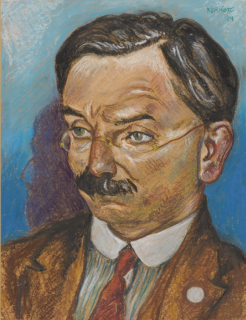
(Pictured: “P. S. O’Hegarty, 1929,” pastel on paper by Harry Kernoff, RHA, property from the Yeats family)


Leave a comment

Death of Conor Cruise O’Brien, Politician, Writer & Historian

Conor Cruise O’Brien, politician, writer, historian and academic often nicknamed “The Cruiser,” dies in Howth, Dublin, on December 18, 2008.

Cruise O’Brien is born in Rathmines, Dublin on November 3, 1917. He serves as Minister for Posts and Telegraphs from 1973 to 1977, a Senator for Dublin University from 1977 to 1979, a Teachta Dála (TD) for the Dublin North-East constituency from 1969 to 1977 and a Member of the European Parliament (MEP) from January 1973 to March 1973.

Cruise O’Brien follows his cousin Owen into Sandford Park School, which has a predominantly Protestant ethos despite objections from Catholic clergy. He subsequently attends Trinity College Dublin (TCD) before joining the Irish diplomatic corps.

Although he is a fierce advocate of his homeland, Cruise O’Brien is a strong critic of Irish Republican Army (IRA) violence and of what he considers the romanticized desire for reunification with Northern Ireland. His collection of essays Maria Cross: Imaginative Patterns in a Group of Modern Catholic Writers (1952; written under the pseudonym Donat O’Donnell) impresses UN Secretary-General Dag Hammarskjöld, who in 1961 appoints him UN special representative in the Congo, later the Democratic Republic of the Congo. He orders UN peacekeeping forces into the breakaway Katanga province, and the resulting scandal forces him out of office. Despite UN objections, he writes To Katanga and Back (1963) to explain his actions.

After serving as vice-chancellor of the University of Ghana (1962–65) and Albert Schweitzer Professor of Humanities at New York University (1965–69), Cruise O’Brien enters Irish politics. He holds a Labour Party seat in Dáil Éireann from 1969 to 1977 and then in the Senate from 1977 to 1979, representing Trinity College, of which he is pro-chancellor (1973–2008).

In 1979, Cruise O’Brien is named editor in chief of the British Sunday newspaper The Observer, but he leaves after three tumultuous years. He remains an active newspaper columnist, especially for the Irish Independent until 2007. His books include States of Ireland (1972) and On the Eve of the Millennium (1995), as well as perceptive studies of Charles Stewart ParnellEdmund Burke, and Thomas Jefferson.

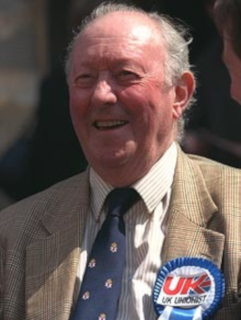
In early July 1996, in the period of Cruise O’Brien’s involvement as a UK Unionist Party (UKUP) representative in talks at Stormont, he suffers a mild stroke. He recovers well, but is left with anxiety about his recall of names. His last public appearance is on September 7, 2006, to deliver an address on the ninetieth anniversary of the death of Tom Kettle, in the old House of Lords chamber of the Bank of Ireland on College Green.

Cruise O’Brien dies at the age of 91 on December 18, 2008, in Howth, Dublin. His funeral is at the Church of the Assumption, Howth, and he is interred in Glasnevin Cemetery.


Leave a comment

Death of Oscar Traynor, Fianna Fáil Politician & Republican

Oscar TraynorFianna Fáil politician and republican, dies in Dublin on December 14, 1963. He serves as Minister for Justice from 1957 to 1961, Minister for Defence from 1939 to 1948 and 1951 to 1954, Minister for Posts and Telegraphs from 1936 to 1939 and Parliamentary Secretary to the Minister for Defence from June 1936 to November 1936. He serves as a Teachta Dála (TD) from 1925 to 1927 and 1932 to 1961. He is also involved with association football, being the President of the Football Association of Ireland (FAI) from 1948 until 1963.

Traynor is born in Dublin on March 21, 1886, into a strongly nationalist family. He is educated by the Christian Brothers. In 1899, he is apprenticed to John Long, a famous woodcarver. As a young man he is a noted footballer and tours Europe as a goalkeeper with Belfast Celtic F.C. whom he plays with from 1910 to 1912. He rejects claims soccer is a foreign sport calling it “a Celtic game, pure and simple, having its roots in the Highlands of Scotland.”

Traynor joins the Irish Volunteers and takes part in the Easter Rising in 1916, being the leader of the Hotel Metropole garrison. Following this he is interned in Wales. During the Irish War of Independence, he is brigadier of the Dublin Brigade of the Irish Republican Army and leads the disastrous attack on the Custom House in 1921 and an ambush on the West Kent Regiment at Claude Road, Drumcondra on June 16, 1921, when the Thompson submachine gun is fired for the first time in action.

When the Irish Civil War breaks out in June 1922, Traynor takes the Anti-Treaty IRA side. The Dublin Brigade is split, however, with many of its members following Michael Collins in taking the pro-Treaty side. During the Battle of Dublin, he is in charge of the Barry’s Hotel garrison, before making their escape. He organises guerilla activity in south Dublin and County Wicklow, before being captured by Free State troops in September. He is then imprisoned for the remainder of the war.

On March 11, 1925, Traynor is elected to Dáil Éireann in a by-election as a Sinn Féin TD for the Dublin North constituency, though he does not take his seat due to the abstentionist policy of Sinn Féin. He is re-elected as one of eight members for Dublin North in the June 1927 Irish general election but just one of six Sinn Féin TDs. Once again, he does not take his seat. He does not contest the September 1927 Irish general election but declares his support for Fianna Fáil. He stands again in the 1932 Irish general election and is elected as a Fianna Fáil TD for Dublin North.

In 1936, Traynor is first appointed to the Cabinet as Minister for Posts and Telegraphs. In September 1939, he is appointed Minister for Defence and holds the portfolio to February 1948. In 1948, he becomes President of the Football Association of Ireland, a position he holds until his death. He serves as Minister for Defence in several Fianna Fáil governments and as Minister for Justice, where he is undermined by his junior minister, and later TaoiseachCharles Haughey, before he retires in 1961.

Traynor dies in Dublin at the age of 77 on December 14, 1963. He has a road named in his memory, running from the Malahide Road through Coolock to Santry in Dublin’s northern suburbs.


Leave a comment

Death of J. J. Walsh, Politician & Businessman

James Joseph Walsh, generally referred to as J. J. Walsh, Postmaster General (later Minister for Posts and Telegraphs) of the Irish Free State from 1922 to 1927, dies in Dublin on February 3, 1948. He is also a senior Gaelic Athletic Association (GAA) organiser and Cumann na nGaedheal politician. Later, he has heavy connections with fascism, including his association with Ailtirí na hAiséirghe.

Walsh is born in the townland of Rathroon, near Bandon, County Cork, on February 20, 1880. His family comes from a farming background, “working a substantial holding of medium but well-cultivated land.” Until the age of fifteen, he attends a local school in Bandon, but by his own account “as far as learning went, I may as well have been at home.” Together with his school friend P. S. O’Hegarty, he passes the Civil Service exams for the Postal service. He later works locally as a clerk in the Post Office. Like O’Hegarty, he spends three years in London at King’s College, studying for the Secretary’s Office “a syllabus (which) differed little from the Indian Civil Service.” While O’Hegarty succeeds in his studies, Walsh does not, and returns to Cork where a friend, Sir Edward Fitzgerald, arranges work for him on the Entertainments Committee of the Cork International Exhibition.

Walsh is active in the GAA, promoting Gaelic games in many areas, but particularly in Cork city and county. His interest in organised sports has a strong political dimension.

“I happened to be one of those who realised the potentialities of the GAA as a training ground for Physical Force. Contamination with the alien and all his works was taboo. I gathered around me a force of youthful enthusiasts from the University, Civil Service and Business. With this intensely organised instrument, war was declared on foreign games which were made to feel the shock so heavily that one by one, Soccer and Rugby Clubs began to disappear.”

Walsh is also instrumental in establishing the “revived” Tailteann Games. He is Chairman of the Cork County Council GAA and is involved in the founding of the Cork City Irish Volunteers.

Walsh participates in the Easter Rising in 1916 in the General Post Office (GPO). He claims he is responsible for mobilising 20 members of the Hibernian Rifles and takes them to the GPO. However, Rifles commandant John J. Scollan contradicts this account. He is promoted from Rifleman to Vice-Commandant of the Hibernian Rifles in 1915.

Walsh is arrested following the general surrender and sentenced to death after a court-martial at Richmond Barracks. This is almost immediately commuted to life imprisonment, but he is released the following year under a general amnesty.

In later 1917 Walsh is arrested and imprisoned after making a speech declaring “the only way to address John Bull is through the barrel of a rifle.”

In the autumn of 1919 Walsh is involved in a failed assassination attempt on John French, 1st Earl of Ypres.

Walsh is elected as a Sinn Féin Member of Parliament (MP) in the 1918 United Kingdom general election for the Cork City constituency. As a member of the First Dáil he is arrested for partaking in an illegal government. He is released in 1921 and supports the Anglo-Irish Treaty and goes on to become a founding member of the new political party, Cumann na nGaedheal. He serves as Postmaster General from 1922 until 1924 and joins the cabinet of W. T. Cosgrave between 1924 and 1927, after the office is reconstituted as the Department of Posts and Telegraphs. He is elected at every election for the Cork Borough constituency until 1927 when he retires from government.

In August 1922 Walsh is part of a government committee which is intended to consider what the Irish Free State’s policy towards north-east Ulster will be.

During World War II, known at the time in Ireland as “the Emergency,” Walsh’s connections with fascism, including his association with Ailtirí na hAiséirghe, bring him to the attention of the Directorate of Military Intelligence, the Intelligence branch of the Irish Army. Their request to the Minister for Justice, Gerald Boland, to place a tap on Walsh’s phone is, however, refused. He is closely associated with Irish-based pro-Nazi initiatives through his association with Ailtirí na hAiséirghe, frequently expressing his views with anti-semitic rhetoric.

After leaving politics Walsh founds a bus company which operates with great success between the city centre and south Dublin. When private bus services are bought out by the Dublin Tramway Co., he invests his profits in other Irish companies including Clondalkin Paper Mills, Solus Teoranta and Benbulben Barytes. He is also a director of Killeen and Newbrook Paper Mills, timber exporters Dinan Dowds, the Moore Clothing Co., and Fancy Goods. In 1937 he is elected president of the Federation of Irish Manufacturers, having previously held the vice-presidency. His businesses benefit greatly from the protectionist measures introduced by Fianna Fáil after 1932. Nonetheless, he complains that not enough has been done to make capital available to native entrepreneurs, and that “alien” interests are allowed too much scope to penetrate the Irish market.

In 1944 Walsh publishes a short memoir, Recollections of a Rebel. In his later years he suffers from deteriorating health, leading to his resignation from the presidency of the Federation of Irish Manufacturers in 1946. He dies in Dublin on February 3, 1948. He is buried in St. Finbarr’s Cemetery, Cork, County Cork.

On April 24, 2016, a plaque commemorating Walsh is unveiled in Kilbrittain, County Cork.


Leave a comment

Death of P. S. O’Hegarty, Writer, Editor & Historian

Patrick Sarsfield O’Hegarty (Irish: Pádraig Sáirséal Ó hÉigeartaigh), Irish writer, editor and historian and a member of the Supreme Council of the Irish Republican Brotherhood, dies on December 17, 1955.

O’Hegarty is born on December 29, 1879, at Carrignavar, County Cork, to John and Katherine (née Hallahan) Hegarty. His parents’ families emigrate to the United States after the Great Famine, and his parents are married in Boston, Massachusetts. His father is a member of the Irish Republican Brotherhood (IRB).

He is educated at North Monastery CBS, where he forms an enduring friendship with Terence MacSwiney. In 1888, his father dies of tuberculosis at the age of 42. Left destitute, his mother pawns her wedding ring to pay for an advertisement looking for work, and eventually becomes a cook.

He joins the postal service in Cork in 1897. Along with J. J. Walsh, he plays on the Head Post Office hurling team. He joins the IRB and represents Munster on the IRB Supreme Council. He starts writing for Arthur Griffith‘s United Irishman and the Shan van Vocht, a periodical established by Alice Milligan and Ethna Carbery.

He serves at the main Postal Sorting Office in Mount Pleasant, London, from 1902 to 1913. Along with J. J. Walsh, he spends three years at King’s College London, studying for the Secretary’s Office. While he succeeds in his studies, Walsh does not and returns to Ireland. O’Hegarty becomes the IRB representative for South East England and joins the Gaelic League and Sinn Féin and becomes a strong advocate of the Irish language. In 1905, he is elected secretary of the local Dungannon Club, which draws in as members Robert Lynd, Herbert Hughes and George Cavan. In 1907, as Sinn Féin’s London Secretary, he approves and signs the membership card of Michael Collins, later becoming friend and mentor to Collins.

He has to return to Ireland for a break due to overwork in 1909 and gives up some of his work for the Gaelic League. However, he takes over as editor of the IRB publication, Irish Freedom. It is in this publication that he famously writes, concerning the visit of King George V to Ireland in 1911: “Damn your concessions, England: we want our country!” In 1912, at the height of the Playboy riots, he writes four articles entitled “Art and the Nation” in Irish Freedom, which take a very liberal and inclusionist approach to Anglo-Irish literature and art in general but invokes the wrath of many of the paper’s readers.

In 1913, he is re-posted to Queenstown (present-day Cobh) as postmaster. He continues editing nationalist newspapers such as Irish Freedom (founded in 1910 and suppressed in December 1914 on account of its seditious content) and An tÉireannach and joins the Irish Volunteers. At the outbreak of war he is moved to Shrewsbury, probably on account of his political activities. In 1915, he marries Wilhelmina “Mina” Smyth, a schoolteacher and suffragist, and is then moved to Welshpool, Montgomeryshire. In the aftermath of the 1916 Easter Rising, he is opposed to physical force. In 1918, he refuses to take the British Oath of Allegiance and resigns his position in the Post Office.

O’Hegarty feels that the Abbey Theatre is “doing good for Ireland” and supports W. B. Yeats against attacks from Arthur Griffith and like-minded Nationalists. He opposes the extremist views of D. P. Moran, who seeks a Roman Catholic Irish-speaking Ireland.

He is Secretary of the Irish Department of Post and Telegraphs from 1922 to 1945. He is elected a member of the Irish Academy of Letters in 1954.

His son, Seán Ó hÉigeartaigh, is a founder of the Irish-language publishing house Sáirséal agus Dill. His daughter Gráinne, a harpist, marries Senator Michael Yeats, son of W. B. Yeats.

O’Hegarty’s papers are acquired by the Kenneth Spencer Research Library at the University of Kansas. This includes an outstanding collection of books, pamphlets and periodicals of W. B. Yeats.

(Pictured: “P. S. O’Hegarty, 1929,” pastel on paper by Harry Kernoff, RHA, property from the Yeats family)


Leave a comment

Birth of J. B. Malone, Hillwalking Enthusiast

John James Bernard (J. B.) Malone, an Irish hillwalking enthusiast who popularises the pastime through his television programmes and books, is born on December 13, 1913, in Leeds, West Yorkshire, England. He is responsible for the establishment of the Wicklow Way as a recognised walking trail, having first proposed it in 1966.

Malone is born to James Bernard Malone and his wife, Agnes (née Kenny), both from Dublin. He is raised mainly in England and completes his secondary education at the Marist Brothers College, Grove Ferry, Kent.

Malone moves to Ireland in 1931 where he finds employment in a builders’ providers firm and an insurance company before joining the Irish Army in 1940. There he becomes a cartographer in the intelligence section. In 1947, having left the army, he goes to work at the Department of Posts and Telegraphs as a draughtsman. He remains employed in the Irish civil service until his retirement in 1979. Also in 1947, he marries Margaret Garry, and they have three children.

Malone starts hillwalking in 1931 when he climbs Montpelier Hill to visit the ruins of the Hell Fire Club. Later, while on leave during his military career, he develops a detailed knowledge of walking routes throughout the hills of County Wicklow. He sits on the Board of An Taisce in Ireland from 1970 to 1974.

Following his retirement from the civil service, Malone is appointed as a field officer with the Long-Distance Walking Routes Committee of Cospóir, the Irish Sports Council. There, he negotiates rights of way with landowners to enable his vision of the Wicklow Way to become a reality. He first proposes a guided walking route through the Wicklow hills in 1966, although he had first raised the idea as early as 1942.

From 1938 to 1975 Malone contributes a regular column to the Evening Herald entitled Over the Hills. Between 1967 and 1968 he writes the column Know your Dublin, illustrated by Liam C. Martin. The column features information on a Dublin landmark and is later compiled into a book published in 1969.

During the 1960s, Malone presents a television documentary series on RTÉ entitled Mountain and Meadow, in which, accompanied by a cameraman, he introduces viewers to a variety of hill walks in Wicklow and surrounding counties. In 1980, he presents a one-hour TV programme on the newly opened Wicklow Way.

From 1950 to 1988, Malone writes several books on hillwalking in the Dublin Mountains and the Wicklow Mountains.

In 1980, Malone is made an honorary life member of An Óige, the Irish Youth Hostel Association (IYHA), in recognition of his contribution to promoting the Irish countryside.

Malone dies at the age of 75 on October 17, 1989, at St. James’s Hospital in Dublin. He is buried in Bohernabreena Cemetery, Tallaght, County Dublin.

Following his death in 1989, Malone’s contribution to hillwalking in Ireland is marked by the erection of the J.B. Malone Memorial Stone plaque in his honour on a section of the Wicklow Way overlooking Lough Tay.

In October 2014, on the 25th anniversary of Malone’s death, the South Dublin Libraries hold an exhibition on his life and work.

(Pictured: The John James Bernard Malone memorial, on the Wicklow Way overlooking Lough Tay and Luggala)


Leave a comment

The Fianna Fáil Government Fires the RTÉ Authority

On November 24, 1972, the Fianna Fáil government fires the RTÉ Authority after it broadcast a recorded radio interview on November 19 by Kevin O’Kelly with Seán Mac Stíofáin, then Chief of Staff of the Provisional Irish Republican Army, on the RTÉ This Week radio programme. Mac Stíofáin is arrested on the same day, charged with IRA membership, and the interview is used as evidence against him. He is sentenced to six months imprisonment on November 25 by the Special Criminal Court in Dublin.

The announcement of dismissal comes shortly before 10:00 p.m. in a statement from Gerry Collins, Minister for Posts and Telegraphs. It is an abrupt but not unexpected climax to a week of conflict and speculation after the broadcast of the Mac Stíofáin interview.

Collins reads the announcement on RTÉ but does not make any further comments. He also announces the appointment of the new Authority. The Taoiseach, Jack Lynch, who is in London for his meeting with British Prime Minister Edward Heath, is kept fully informed of developments during the day.

Lynch says at the London airport before his departure for Dublin that the dismissal is an exercise in democracy. The action is taken because the Government sees the need for “protecting our community.”

Lynch speaks to reporters just after midnight after arriving at the airport from his dinner with the Prime Minister at 10 Downing Street. He says that the Cabinet had decided its course of action in regard to RTÉ on Tuesday, November 21, and that he had been in touch by phone throughout the day with his colleagues in Dublin.

The RTÉ Authority, the Taoiseach says, is controlled by Acts of Parliament and is subject to the democratic process.

It is the obligation of the Government to ensure that their terms of reference are adhered to. The Authority breached a directive given under the Broadcasting Act, ordering them “not to project people who put forward violent means for achieving their purpose.”

In the opinion of the Government, the interview with Mac Stíofáin is a breach of that directive. When Lynch is asked by a reporter how the Government knew that the RTÉ interview with Mac Stíofáin was taking place, he says that they have their own way of knowing things.

The comments of the members of the dismissed Authority reflect indignation, hurt and relief.

Phyllis O’Kelly, widow of the late Seán T. O’Kelly, former President of Ireland, says that it was “a strange thing to happen.” She does not accept that the station was deliberately trying to outwit the Government. The interviewer, Kevin O’Kelly, had listed various people that he wished to interview, and they seemed all right to her.

The Authority’s letter to the Minister makes it abundantly clear that the Authority appreciates his right to issue the direction. It also makes clear its anxiety to abide by that direction.

(From: The Irish Times Archives, http://www.irishtimes.com, November 25, 2010)


Leave a comment

Death of Neil Blaney, Fianna Fáil Politician

Neil Terence Columba Blaney, Irish politician first elected to Dáil Éireann in 1948 as a Fianna Fáil Teachta Dála (TD) representing Donegal East, dies in Dublin of cancer at the age of 73 on November 8, 1995. He serves as Minister for Posts and Telegraphs (1957), Minister for Local Government (1957–1966) and Minister for Agriculture and Fisheries (1966–1970). He is Father of the Dáil from 1987 until his death.

Blaney is born on October 1, 1922, in Fanad, County Donegal, the second eldest of a family of eleven. His father, from whom he got his strong republican views and his first introduction to politics, had been a commander in the Irish Republican Army (IRA) in Donegal during the Irish War of Independence and the Irish Civil War. He is educated locally at Tamney on the rugged Fanad Peninsula and later attends St. Eunan’s College in Letterkenny. He later works as an organiser with the Irish National Vintners and Grocers Association.

Blaney is first elected to Dáil Éireann for the Donegal East constituency in a by-election in December 1948, following the death of his father from cancer. He also becomes a member of the Donegal County Council. He remains on the backbenches for a number of years before he is one of a group of young party members handpicked by Seán Lemass to begin a re-organisation drive for the party following the defeat at the 1954 Irish general election. Within the party he gains fame by running the party’s by-election campaigns throughout the 1950s and 1960s. His dedicated bands of supporters earn the sobriquet “the Donegal Mafia,” and succeed in getting Desmond O’Malley and Gerry Collins elected to the Dáil.

Following Fianna Fáil’s victory at the 1957 Irish general election, Éamon de Valera, as Taoiseach, brings new blood into the Cabinet in the shape of Blaney, Jack Lynch, Kevin Boland and Mícheál Ó Móráin. Blaney is appointed Minister for Posts and Telegraphs however he moves to the position of Minister for Local Government at the end of 1957 following the death of Seán Moylan. He retains the post when Lemass succeeds de Valera as Taoiseach in 1959. During his tenure it becomes possible to pay rates by installment and he also introduces legislation which entitles non-nationals to vote in local elections.

In 1966 Lemass resigns as Taoiseach and Fianna Fáil leader. The subsequent leadership election sees Cork politician Jack Lynch become party leader and Taoiseach. In the subsequent cabinet reshuffle Blaney is appointed Minister for Agriculture and Fisheries.

In 1969, when conflict breaks out in Northern Ireland, Blaney is one of the first to express strong Irish republican views, views which contradict the policy of the Irish Government, in support of Northern nationalists. From around late 1968 onwards, he forms and presides over an unofficial Nationalist group in Leinster House popularly known as “the Letterkenny Table.” The group is dominated by Blaney up until his death.

There is general surprise when, in an incident known as the Arms Crisis, Blaney, along with Charles Haughey, is sacked from Lynch’s cabinet amid allegations of the use of the funds to import arms for use by the IRA. Lynch asks for their resignations but both men refuse, saying they did nothing illegal. Lynch then advises President de Valera to sack Haughey and Blaney from the government. Haughey and Blaney are subsequently tried in court but are acquitted. However, many of their critics refuse to recognise the verdict of the courts. Although Blaney is cleared of wrongdoing, his ministerial career is brought to an end.

Lynch subsequently moves against Blaney so as to isolate him in the party. When Blaney and his supporters try to organise the party’s national collection independently, Lynch acts and in 1972 Blaney is expelled from Fianna Fáil for “conduct unbecoming.”

Following his expulsion from Fianna Fáil, Kevin Boland tries to persuade Blaney to join the Aontacht Éireann party he is creating but Blaney declines. Instead, he contests all subsequent elections for Independent Fianna Fáil – The Republican Party, an organisation that he built up. Throughout the 1970s there are frequent calls for his re-admittance to Fianna Fáil but the most vocal opponents of this move are Fianna Fáil delegates from County Donegal.

At the 1979 European Parliament elections Blaney tops the poll in the Connacht–Ulster constituency to the annoyance of Fianna Fáil. He narrowly loses the seat at the 1984 election but is returned to serve as a Member of the European Parliament (MEP) in the 1989 election where he sits with the regionalist Rainbow Group. He also canvasses for IRA hunger striker Bobby Sands in the Fermanagh and South Tyrone by-election, in which Sands is elected to Westminster.

Blaney holds his Dáil seat until his death from cancer at the age of 73 on November 8, 1995, in Dublin.