seamus dubhghaill

Promoting Irish Culture and History from Little Rock, Arkansas, USA


Leave a comment

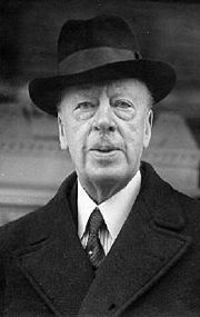
Birth of James Hamilton, First Governor of Northern Ireland

james-hamilton

James Albert Edward Hamilton, 3rd Duke of Abercorn, is born in Hamilton Place, Piccadilly, London, on November 30, 1869. Styled Marquess of Hamilton between 1885 and 1913, he is a British peer and Unionist politician. He serves as the first Governor of Northern Ireland, a post he holds between 1922 and 1945. He is a great-grandfather of Diana, Princess of Wales.

Hamilton is the eldest son of James Hamilton, 2nd Duke of Abercorn, and godson of the Prince of Wales. His mother, Lady Mary Anna, is the fourth daughter of Richard Curzon-Howe, 1st Earl Howe. He is educated at Eton College and subsequently serves first in the Royal Inniskilling Fusiliers until 1892 when he joins the 1st Life Guards. He is later transferred as major to the North Irish Horse.

In early 1901 he accompanies his father on a special diplomatic mission to announce the accession of King Edward to the governments of Denmark, Sweden and Norway, Russia, Germany, and Saxony.

In the 1900 general election, Hamilton stands successfully as Unionist candidate for Londonderry City, and three years later he becomes Treasurer of the Household, a post he holds until the fall of Arthur Balfour‘s Conservative administration in 1905. After serving for a time as an Opposition whip, Hamilton succeeds his father as third Duke of Abercorn in 1913. In 1922, he is appointed governor of the newly created Northern Ireland. He also serves as Lord Lieutenant of Tyrone from 1917 until his death, having previously been a Deputy Lieutenant for County Donegal. Abercorn proves a popular royal representative in Northern Ireland and is reappointed to the post in 1928 after completing his first term of office. In 1931, he declines the offer of the governor generalship of Canada, and three years later he is again reappointed governor for a third term. He remains in this capacity until his resignation in July 1945.

Abercorn is made the last non-royal Knight of the Most Illustrious Order of Saint Patrick in 1922. In 1928 he becomes a Knight of the Most Noble Order of the Garter and is also the recipient of an honorary degree from the Queen’s University Belfast. He receives the Royal Victorian Chain in 1945, the same year he is sworn of the Privy Council.

Abercorn marries Lady Rosalind Cecilia Caroline Bingham, only daughter of Charles Bingham, 4th Earl of Lucan and his wife Lady Cecilia Catherine Gordon-Lennox at St. Paul’s Church, Knightsbridge, on November 1, 1894. They have three daughters and two sons.

Abercorn dies at his London home on September 12, 1953, and is buried at Baronscourt in County Tyrone.


Leave a comment

Birth of Bryan Guinness, 2nd Baron Moyne

bryan-guinness

Bryan Walter Guinness, 2nd Baron Moyne, heir to part of the Guinness family brewing fortune, lawyer, poet, and novelist, is born on October 27, 1905.

Guinness is born in London to Walter Edward Guinness, 1st Baron Moyne, son of Edward Guinness, 1st Earl of Iveagh, and Lady Evelyn Stuart Erskine, daughter of Shipley Gordon Stuart Erskine, 14th Earl of Buchan. He attends Heatherdown School, near Ascot in Berkshire, followed by Eton College, and Christ Church, Oxford, and is called to the bar in 1931.

As an heir to the Guinness brewing fortune and a handsome, charming young man, Bryan is an eligible bachelor. One of London’s “Bright Young Things,” he is an organiser of the 1929 “Bruno Hat” hoax art exhibition held at his home in London. Also, in 1929 he marries the Hon. Diana Mitford, one of the Mitford sisters, and has two sons with her. The couple become leaders of the London artistic and social scene and are dedicatees of Evelyn Waugh‘s second novel Vile Bodies. However, they divorce in 1933 after Diana deserts him for British fascist leader Sir Oswald Mosley.

Guinness remarries happily in 1936 to Elisabeth Nelson, of the Nelson publishing family, with whom he has nine children.

During World War II, Guinness serves for three years in the Middle East with the Spears Mission to the Free French, being a fluent French speaker, with the rank of major. Then in November 1944 Guinness succeeds to the barony when his father, posted abroad as Resident Minister in the Middle East by his friend Winston Churchill, is assassinated in Cairo.

After the war, Lord Moyne serves on the board of the Guinness corporation as vice-chairman (1947-1979), as well as the Guinness Trust and the Iveagh Trust, sitting as a crossbencher in the House of Lords. He serves for 35 years as a trustee of the National Gallery of Ireland and donates several works to the gallery. He writes a number of critically applauded novels, memoirs, books of poetry, and plays. With Frank Pakenham he seeks the return of the “Lane Bequest” to Dublin, resulting in the 1959 compromise agreement. He is invested as a Fellow of the Royal Society of Literature.

Lord Moyne dies of a heart attack on July 6, 1992, at Biddesden House, his home in Wiltshire, and is succeeded by his eldest son Jonathan. He is buried at Ludgershall, Wiltshire, England.