seamus dubhghaill

Promoting Irish Culture and History from Little Rock, Arkansas, USA


Leave a comment

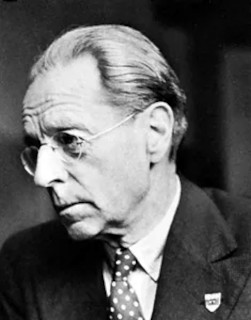
Birth of Harry Ferguson, Mechanic and Inventor

Henry George “Harry” Ferguson, a British mechanic and inventor who is noted for his role in the development of the modern agricultural tractor and its three-point linkage system, for being the first person in Ireland to build and fly his own aeroplane, and for developing the first four-wheel drive Formula One car, the Ferguson P99, is born on November 4, 1884, at Growell, near Dromore, County Down, in what is now Northern Ireland.

Ferguson is the son of a farmer. In 1902, he goes to work with his brother, Joe, in his bicycle and car repair business. While working there as a mechanic, he develops an interest in aviation, visiting air shows abroad. In 1904, he begins to race motorcycles.

In the 1900s Ferguson becomes fascinated with the newly emerging technology of powered human flight and particularly with the exploits of the Wright brothers, the American aviation pioneers who made the first plane flight in 1903 at Kill Devil Hills, North Carolina.

The first person to accomplish powered flight in the UK is Alliot Verdon Roe in June 1908, who also flies an aeroplane of his own design, but this has not yet been achieved in Ireland. Ferguson begins to develop a keen interest in the mechanics of flying and travels to several air shows, including exhibitions in 1909 at Blackpool and Rheims where he takes notes of the design of early aircraft. He convinces his brother that they should attempt to build an aircraft at their Belfast workshop and, working from his notes, they work on the design of a plane, the Ferguson monoplane.

After making many changes and improvements, they transport their new aircraft by towing it behind a car through the streets of Belfast up to Hillsborough Park to make their first attempt at flight. They are at first thwarted by propeller trouble but continue to make technical alterations to the plane. After a delay of nearly a week caused by bad weather, the Ferguson monoplane finally takes off from Hillsborough on December 31, 1909. Ferguson becomes the first Irishman to fly and the first Irishman to build and fly his own aeroplane.

After falling out with his brother over the safety and future of aviation, Ferguson decides to go it alone, and in 1911 founds a company selling Maxwell, Star and Vauxhall cars and Overtime Tractors. He sees at first hand the weakness of having tractor and plough as separate articulated units, and in 1917 he devises a plough that can be rigidly attached to a Ford Model T car — the Eros, which becomes a limited success, competing with the Fordson Model F.

In 1917 Ferguson meets Charles E. Sorensen while Sorensen is in England scouting production sites for the Fordson tractor. They discuss methods of hitching the implement to the tractor to make them a unit. In 1920 and 1921 he demonstrates early versions of his three-point linkage on Fordson tractors at Cork and at Dearborn, Michigan. He and Henry Ford discuss putting the Ferguson system of hitch and implements onto Fordson tractors at the factory, but no deal is struck. At the time the hitch is mechanical. Ferguson and his team of longtime colleagues, including Willie Sands and Archie Greer, soon develop a hydraulic version, which is patented in 1926. After one or two false starts, he eventually founds the Ferguson-Sherman Inc., with Eber and George Sherman.

The new enterprise manufactures the Ferguson plough, incorporating the patented “Duplex” hitch system mainly intended for the Fordson “F” tractor. Following several more years of development, Ferguson’s new hydraulic version of the three-point linkage is first seen on his prototype “Ferguson Black” or ‘Irish tractor’ as he calls it, now in the Science Museum, South Kensington, London. A production version of the “Black” is introduced in May 1936, made at one of the David Brown Engineering Ltd. factories in Huddersfield, West Yorkshire, and designated Ferguson Model A tractor.

Ferguson’s interests are merged with those of David Brown junior to create the Ferguson-Brown Company.

In October 1938, Ferguson demonstrates his latest tractor to Henry Ford at Dearborn, and they make the famous “handshake agreement.” He takes with him his latest patents covering future improvements to the Ferguson tractor and it is these that lead to the Ford-Ferguson 9N introduction to the world on June 29, 1939.

Henry Ford II, Ford’s grandson, ends the handshake agreement on June 30, 1947, following unsuccessful negotiations with Ferguson, but continues to produce a tractor, the 8N, incorporating Ferguson’s inventions, the patents on almost all of which have not yet expired, and Ferguson is left without a tractor to sell in North America. His reaction is a lawsuit demanding compensation for damage to his business and for Ford’s illegal use of his designs. The case is settled out of court in April 1952 for just over $9 million. The court case costs him about half of that and a great deal of stress and ill health.

By 1952, most of the important Ferguson patents have expired, and this allows Henry Ford II to claim that the case had not restricted Ford’s activities too much. It follows that all the world’s other tractor manufacturers can also use Ferguson’s inventions, which they do. A year later Ferguson merges with Massey-Harris Limited to become Massey-Harris-Ferguson Co., later Massey Ferguson.

Ferguson dies at his home at Stow-on-the-Wold, Gloucestershire, England, on October 25, 1960, as the result of a barbiturate overdose. The inquest is unable to conclude whether his death had been accidental or not.

A blue plaque commemorating Ferguson is mounted on the Ulster Bank building in Donegall Square, Belfast, the former site of his showroom. A granite memorial has been erected to Ferguson’s pioneering flight on the North Promenade, Newcastle, County Down, and a full-scale replica of the Ferguson monoplane and an early Ferguson tractor and plough can be seen at the Ulster Folk and Transport Museum at Cultra, County Down. Today his name lives on in the name of the Massey Ferguson company.


Leave a comment

Birth of John Watson, Formula One Driver & Commentator

John Marshall Watson, MBE, British former racing driver and current commentator, is born in Belfast, Northern Ireland, on May 4, 1946.

Watson is educated at Rockport School, in Holywood, County Down. His Formula One career begins in 1972, driving a customer MarchCosworth 721 for Goldie Hexagon Racing in the World Championship Victory Race, a non-Championship event at Brands Hatch. His first World Championship events come in the 1973 season, in which he races in the British Grand Prix in a custom BrabhamFord BT37, and the U.S. Grand Prix, where he drives the third works Brabham BT42. Neither is particularly successful, as in the British race he runs out of fuel on the 36th lap and his engine fails after only seven laps in the United States event.

Watson scores his first World Championship point in the 1974 Monaco Grand Prix, while driving for Goldie Hexagon Racing. He goes on to score a total of six points that season, driving a customer Brabham BT42-Ford modified by the team. He fails to score Championship points the following year, driving for Surtees Racing Organisation, Team Lotus and Team Penske. At the 1975 Spanish Grand Prix he has the chance to score his first win. He is in second position, behind Mario Andretti, until he has to stop in the pits for checks after his car starts to suffer vibrations. Andretti retires later, and after rejoining the race Watson finishes in eighth, his best Championship result in 1975. In non-Championship races he fares somewhat better, taking second place in the Race of Champions at Brands Hatch, and fourth at the BRDC International Trophy race at Silverstone.

Watson secures his first World Championship podium with third place at the 1976 French Grand Prix. Later that season comes his first victory, driving for Penske in the Austrian Grand Prix having qualified second on the grid. After the race he shaves off his beard, the result of a bet with team owner Roger Penske.

In the third race of the 1977 Formula One season, the South African Grand Prix, he manages to complete the race distance, scores a point, and takes his first ever fastest lap. His achievements are overshadowed, however, by the deaths of driver Tom Pryce and a track marshal, Jansen Van Vuuren. His Brabham-Alfa Romeo lets him down throughout the season but, despite this, he gains his first pole position in the Monaco Grand Prix and qualifies in the top ten no fewer than 14 times, often in the first two rows. Problems with the car, accidents, and a disqualification leads him to race the full distance in only five of the 17 races. The closest he comes to victory is during the French Grand Prix, where he dominates the race from the start only to be let down by a fuel metering problem on the last lap which relegates him to second place behind eventual winner Mario Andretti.

In 1978, Watson manages a more successful season in terms of race finishes, even out-qualifying and out-racing his illustrious teammate Niki Lauda on occasion. He manages three podiums and a pole, and notches up 25 points to earn the highest championship placing of his career to that point.

For 1979, Watson moves to McLaren where he gives them their first victory in over three years by winning the 1981 British Grand Prix and also securing the first victory for a carbon fibre composite monocoque F1 car, the McLaren MP4/1. Later in the 1981 season, the strength of the McLaren’s carbon fibre monocoque is demonstrated when he has a fiery crash at Monza during the Italian Grand Prix. He loses the car coming out of the high speed Lesmo bends and crashes backwards into the barriers. Similar accidents have previously proven fatal, but Watson is uninjured in an accident he later recalls as looking far worse than it actually was. After James Hunt‘s abrupt retirement after the Monaco Grand Prix in 1979, he is the only full-time competitive British F1 driver up until the end of his career.

Watson’s most successful year is 1982, when he finishes third in the Drivers’ Championship, winning two Grands Prix. In several races he achieves high placings despite qualifying towards the back of the grid. At the first ever Detroit Grand Prix in 1982, he overtakes three cars in one lap deep into the race on a tight, twisty track that is difficult to pass on. Working his way from 17th starting position on the grid, he charges through the field and scores a victory in the process. He goes into the final race of the season at Caesars Palace with an outside chance of the title, but he finishes five points adrift of Keke Rosberg and level on points with Didier Pironi.

A year later in 1983, Watson repeats the feat of winning from the back of the grid at the final Formula One race in Long Beach, another street circuit, starting from 22nd on the grid, the farthest back from which a modern Grand Prix driver had ever come to win a race. His final victory also includes a fight for position with teammate Niki Lauda, who had started the race 23rd, though Watson ultimately finishes 27 seconds ahead of his dual World Championship winning teammate.

At the end of the 1983 season, however, Watson is dropped by McLaren and subsequently retires from Formula One. Negotiations with team boss Ron Dennis reportedly break down when he asks for more money than dual World Champion Lauda is earning, citing having won a Grand Prix in 1983 where Lauda did not. Dennis instead signs Renault refugee Alain Prost for comparatively little. Watson does return for one further race two years later, driving for McLaren in place of an injured Lauda at the 1985 European Grand Prix at Brands Hatch, in which he qualifies 21st and places seventh in the race.

In 1984 Watson turns to sports car racing, notably partnering Stefan Bellof to victory at the Fuji 1000 km during Bellof’s 1984 Championship year. He is also part of the driver lineup for Bob Tullius‘ Group 44 Jaguar team at the 1984 24 Hours of Le Mans driving an IMSA spec Jaguar XJR-5 powered by a 6.0 litre V12 in the IMSA / GTP class. In what is Jaguar’s first appearance at Le Mans since 1959, he briefly takes the lead toward the end of the first hour when the faster Porsche 956s and Lancia LC2s pit. Driving with American Tony Adamowicz and Frenchman Claude Ballot-Léna, they fail to finish the race due to engine trouble though they are classified in 28th place.

Watson also finishes second in the 1987 World Sportscar Championship season alongside Jan Lammers in the TWR Silk Cut Jaguar XJR-8 when they win a total of three championship races (Jarama, Monza and Fuji). He competes in the 24 Hours of Le Mans seven times over the course of his career between 1973 and 1990, finishing 11th, a career best, in his last start in 1990 driving a Porsche 962C for Richard Lloyd Racing alongside fellow Grand Prix drivers Bruno Giacomelli and Allen Berg.

After retiring from active racing, Watson works as a television commentator for Eurosport, the BBC, Sky Sports’ Pay Per View, BSkyb, runs a race school at Silverstone and manages a racetrack. He also becomes the first man to ever test a Jordan Formula One car in 1990. He currently provides expert commentary on the GT World Challenge Europe alongside regular Blancpain television commentator David Addison.

(Pictured: John Watson at the 1982 Dutch Grand Prix)


Leave a comment

Death of Harry Ferguson, Mechanic & Inventor

Henry George “Harry” Ferguson, a British mechanic and inventor who is noted for his role in the development of the modern agricultural tractor and its three-point linkage system, for being the first person in Ireland to build and fly his own aeroplane, and for developing the first four-wheel drive Formula One car, the Ferguson P99, dies in Stow-on-the-Wold, Gloucestershire, England, on October 25, 1960. Today his name lives on in the name of the Massey Ferguson company.

Ferguson is born on November 4, 1884, at Growell, near Dromore, County Down, in what is now Northern Ireland, the son of a farmer. In 1902, he goes to work with his brother, Joe, in his bicycle and car repair business. While working there as a mechanic, he develops an interest in aviation, visiting airshows abroad. In 1904, he begins to race motorcycles.

In the 1900s Ferguson becomes fascinated with the newly emerging technology of powered human flight and particularly with the exploits of the Wright brothers, the American aviation pioneers who made the first plane flight in 1903 at Kill Devil Hills, North Carolina.

The first person to accomplish powered flight in the UK is Alliot Verdon Roe in June 1908, who also flies an aeroplane of his own design, but this has not yet been achieved in Ireland. Ferguson begins to develop a keen interest in the mechanics of flying and travels to several air shows, including exhibitions in 1909 at Blackpool and Rheims where he takes notes of the design of early aircraft. He convinces his brother that they should attempt to build an aircraft at their Belfast workshop and, working from his notes, they work on the design of a plane, the Ferguson monoplane.

After making many changes and improvements, they transport their new aircraft by towing it behind a car through the streets of Belfast up to Hillsborough Park to make their first attempt at flight. They are at first thwarted by propeller trouble but continue to make technical alterations to the plane. After a delay of nearly a week caused by bad weather, the Ferguson monoplane finally takes off from Hillsborough on December 31, 1909. Ferguson becomes the first Irishman to fly and the first Irishman to build and fly his own aeroplane.

After falling out with his brother over the safety and future of aviation, Ferguson decides to go it alone, and in 1911 founds a company selling Maxwell, Star and Vauxhall cars and Overtime Tractors. He sees at first hand the weakness of having tractor and plough as separate articulated units, and in 1917 he devises a plough that can be rigidly attached to a Ford Model T car — the Eros, which becomes a limited success, competing with the Fordson Model F.

In 1917 Ferguson meets Charles E. Sorensen while Sorensen is in England scouting production sites for the Fordson tractor. They discuss methods of hitching the implement to the tractor to make them a unit. In 1920 and 1921 he demonstrates early versions of his three-point linkage on Fordson tractors at Cork and at Dearborn, Michigan. He and Henry Ford discuss putting the Ferguson system of hitch and implements onto Fordson tractors at the factory, but no deal is struck. At the time the hitch is mechanical. Ferguson and his team of longtime colleagues, including Willie Sands and Archie Greer, soon develop a hydraulic version, which is patented in 1926. After one or two false starts, he eventually founds the Ferguson-Sherman Inc., with Eber and George Sherman.

The new enterprise manufactures the Ferguson plough, incorporating the patented “Duplex” hitch system mainly intended for the Fordson “F” tractor. Following several more years of development, Ferguson’s new hydraulic version of the three-point linkage is first seen on his prototype “Ferguson Black” or ‘Irish tractor’ as he calls it, now in the Science Museum, South Kensington, London. A production version of the “Black” is introduced in May 1936, made at one of the David Brown Engineering Ltd. factories in Huddersfield, West Yorkshire, and designated Ferguson Model A tractor.

Ferguson’s interests are merged with those of David Brown junior to create the Ferguson-Brown Company.

In October 1938, Ferguson demonstrates his latest tractor to Henry Ford at Dearborn, and they make the famous “handshake agreement.” He takes with him his latest patents covering future improvements to the Ferguson tractor and it is these that lead to the Ford-Ferguson 9N introduction to the world on June 29, 1939.

Henry Ford II, Ford’s grandson, ends the handshake agreement on June 30, 1947, following unsuccessful negotiations with Ferguson, but continues to produce a tractor, the 8N, incorporating Ferguson’s inventions, the patents on almost all of which have not yet expired, and Ferguson is left without a tractor to sell in North America. His reaction is a lawsuit demanding compensation for damage to his business and for Ford’s illegal use of his designs. The case is settled out of court in April 1952 for just over $9 million. The court case costs him about half of that and a great deal of stress and ill health.

By 1952, most of the important Ferguson patents have expired, and this allows Henry Ford II to claim that the case had not restricted Ford’s activities too much. It follows that all the world’s other tractor manufacturers can also use Ferguson’s inventions, which they do. A year later Ferguson merges with Massey-Harris Limited to become Massey-Harris-Ferguson Co., later Massey Ferguson.

Ferguson dies at his home at Stow-on-the-Wold on October 25, 1960, as the result of a barbiturate overdose. The inquest is unable to conclude whether his death had been accidental or not.

A blue plaque commemorating Ferguson is mounted on the Ulster Bank building in Donegall Square, Belfast, the former site of his showroom. A granite memorial has been erected to Ferguson’s pioneering flight on the North Promenade, Newcastle, County Down, and a full-scale replica of the Ferguson monoplane and an early Ferguson tractor and plough can be seen at the Ulster Folk and Transport Museum at Cultra.