seamus dubhghaill

Promoting Irish Culture and History from Little Rock, Arkansas, USA


Leave a comment

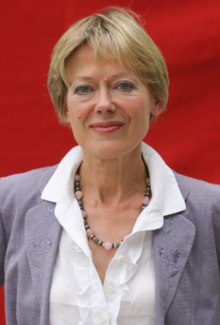
Birth of Anne Harris, Former Editor of the “Sunday Independent”

Anne Harris, the former editor of the Sunday Independent, is born on August 25, 1947. She is the former wife of Eoghan Harris who was an opinion columnist for the newspaper. Her daughter, Constance Harris, writes for the newspaper as a fashion writer.

In 1972, Harris writes a controversial article defending the 1972 Aldershot Bombing, an article she later expresses regret for. She also works for The Irish Press, as well as the political magazine Hibernia and the fashion magazine Image.

Harris is originally a socialist and a feminist. In the 1980s she abandons socialism in favour of the free market but remains a feminist. Harris also becomes known for her opposition to Irish nationalism and Irish republicanism, similar to her then-husband Eoghan Harris and Conor Cruise O’Brien. This position is reflected in the Sunday Independent‘s coverage of Northern Ireland. This causes some commentators to claim Harris is a “Southern Unionist.”

Harris lives with Sunday Independent editor Aengus Fanning until his death on January 17, 2012. On February 5, 2012, the Sunday Independent announces that she will succeed Fanning as the publication’s editor.

On the evening of Saturday, July 19, 2014, group editor of INM newspaper publishers, Stephen Rae, orders the presses to be stopped to amend a column written by Harris, the Sunday Independent editor, which features references to Denis O’Brien. Copies of the original article do however appear, allowing comparisons between the two. Harris originally writes: “Denis O’Brien is the major shareholder in INM. In theory, with 29% of the shares, he does not control it. In practice, he does.” Rae has the last sentence deleted. She also writes: “The question is whether he understands newspapers. In order to confront the truths in our society, we must have a free press. With the restrictive charter for journalists proposed last year, and some garrotive (sic) new structures, Denis O’Brien does not make this easy.” This is changed to: “The question is whether he understands newspapers. In order to confront the truths in our society, we must have a free press. If the restrictive charter for journalists proposed last year, along with some other structural changes, are anything to go by, it might be instructive for him to listen to journalists, troublesome and all as they are.

Harris leaves the newspaper some months later, with The Irish Times noting her departing speech to staff as follows: “She is understood to have spoken only about journalists and journalism and not about newspapers and their owners, a subject matter she has previously addressed in several columns.”

Leave a comment

Death of Clare Boylan, Author, Journalist & Critic

Clare Boylan, Irish author, journalist and critic for newspapers, magazines and many international broadcast media, dies in Dublin at Our Lady’s Hospice, Harold’s Cross, on May 16, 2006.

Boylan is born in Dublin on April 21, 1948, the youngest of three daughters of Patrick Boylan, a clerk, and his wife Evelyn (née Selby). Her mother feels trapped by the limitations that domesticity imposes on women in 1950s Ireland, and had wanted to have a writing career. She encourages her daughter to send off stories and poems to newspapers. The first piece is published when she is 14, and she wins a prize in the national Texaco Children’s Art Competition when she is about 10 years old.

The family lives in the Dublin suburb of Terenure. Boylan goes to school in the Presentation convent, then St. Louis convent in Rathmines, and does her leaving certificate in Rathmines College.

After leaving St. Louis convent, Boylan takes a job as a sales assistant in a bookshop before beginning her career as a journalist at The Irish Press, now defunct. She marries Alan Wilkes, a journalist who is a colleague at The Irish Press, in St. Patrick’s Church in Straffan, County Kildare, on September 18, 1970. In 1974 she wins the Journalist of the Year award when working in the city for the Evening Press. Later in her career she edits the glossy magazine Image, before largely giving up journalism to focus on a career as an author.

Boylan’s novels are Holy Pictures (1983), Last Resorts (1984), Black Baby (1988), Home Rule (1992), Beloved Stranger (1999), Room for a Single Lady (1997), which wins the Spirit of Light Award and is optioned for a film, and Emma Brown (2003). The latter work is a continuation of a 20-page fragment written by Charlotte Brontë before her death.

Boylan’s short stories are collected in A Nail on the Head (1983), Concerning Virgins (1990) and That Bad Woman (1995). The film Making Waves, based on her short story “Some Ladies on a Tour”, is nominated for an Oscar in 1988.

Boylan’s non-fiction includes The Agony and the Ego (1994) and The Literary Companion to Cats (1994). She writes introductions to the novels of Kate O’Brien and Molly Keane and adapts Keane’s novel Good Behaviour as the classic serial for BBC Radio 4 (2004). Her work has been translated as far afield as Russia and Hong Kong.

In later life, Boylan lives in County Wicklow with her husband. When she is diagnosed with ovarian cancer, she faces her illness with characteristic strength. She takes up kickboxing and spends time in France, shopping, cooking and entertaining friends. She succumbs to cancer at the age of 58 on May 16, 2006.