seamus dubhghaill

Promoting Irish Culture and History from Little Rock, Arkansas, USA


Leave a comment

Death of Nellie Gifford, Republican Activist & Nationalist

Nellie GiffordIrish republican activist and nationalist, dies in Rathmines, Dublin, on June 23, 1971.

Born Helen Ruth Gifford on November 9, 1880, in Phibsborough, Dublin, to Frederick Gifford, a solicitor, and Isabella Julia Gifford (née Burton), Gifford is the fifth child and second eldest daughter of the family of six daughters and six sons. Her father is a Catholic while her mother, a niece of the painter Frederic Burton, is rigorously Protestant. All the children are brought up in the Church of Ireland. The men, emigrate and remain unionist while the women are active nationalists. Most famous are the two youngest, the artist Grace Gifford, and the journalist and broadcaster Sidney Czira.

Gifford grows up in Rathmines and goes to school at Alexandra College. She trains as a domestic economy teacher and works for seven years at a series of positions in County Meath.

Gifford experiences the living conditions of the landless rural poor while lodging in labourers’ cottages during this time. As a result, she becomes a supporter of the campaigns of the land agitator and nationalist MP Laurence Ginnell.

Gifford is also influenced by her sisters’ nationalism and feminism. With them, she becomes involved with the Irish Women’s Franchise League, and gets to know Constance Markievicz. She gets parts in stage plays, including Eleanor’s Enterprise by George Birmingham in the Gaiety Theatre, a play produced by the countess’s husband, Count Casimir Markievicz.

During the 1913 Dublin lock-out Gifford assists James Larkin enter the Imperial Hotel, on August 31 to address the crowd. He enters in disguise, that of an elderly and infirm clergyman. She poses as his niece. She speaks to the hotel staff to prevent Larkin’s strong Liverpool accent giving away his identify. This is the speech which precipitates the “Bloody Sunday” police baton charge. Gifford goes on to be a founding member of the Irish Citizen Army (ICA). This group is attractive to many women due to the feminist beliefs of James Connolly.

Gifford gives lessons on camp cookery in Liberty Hall and finds jobs for recruits coming in from abroad. As a result of this work she, very fatefully, introduces Michael Collins to her future brother-in-law Joseph Plunkett who go on to serve together in the 1916 Easter Rising. Collins is Plunkett’s aide-de-camp.

Gifford is the only one of her sisters to actively participate in the rising itself. She is with the ICA’s St. Stephen’s Green contingent alongside Countess Markievicz. Throughout the week she supervises the garrison’s provisions in the Royal College of Surgeons building, commandeering food from shops and bread vans, and by courier from other garrisons. She also ensures the delivery of provisions to troops both in the college with her and in outlying posts. She is one of the women arrested at the surrender and jailed in Kilmainham Gaol. At the same time, in the same prison her sister Grace marries Joseph Plunkett hours before his execution. Only twelve women are detained after the main release of women prisoners on May 8, 1916. Gifford is one of those transferred to Mountjoy Prison until her release on June 4, 1916. Afterward she continues to be as involved in the campaigns.

After her time in prison, Gifford travels through England to the United States where she and other women veterans of Easter week lecture throughout America. While there she marries Joseph Donnelly, of OmaghCounty Tyrone in 1918. In 1921 she and their year-old daughter Maeve leave him to return to Ireland.

Frederick Gifford dies in September 1917 and leaves Gifford £800. However, she is was not well off. She becomes a broadcaster and journalist for the national radio and the Irish press. Holding to her upbringing, she remains a staunch Protestant, unlike four of her sisters, who had married Catholics.

Gifford becomes devoted to preserving the historical record of the independence movement. Noticing the huge number of visitors for the 1932 Eucharistic Congress, she organises a small exhibition there of 1916 memorabilia for the National Museum of Ireland. She is irritated by the display of Catholic religious artifacts there. She campaigns for a permanent exhibition of recent Irish nationalist history. She coordinates a substantial body of material pertinent to nationalist organisations, the Easter Rising, and the Irish War of Independence, which now forms the core of the present collection.

Over the years Gifford is secretary of the Old IRA Association, a member of the Old Dublin Society, and a founder of the Kilmainham Gaol Restoration Society. She also looks after stray and neglected dogs and cats. She dies at the age of 90 on June 23, 1971, at the Gascoigne nursing home in Rathmines, Dublin.

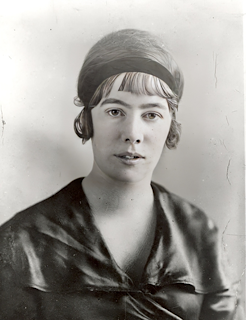
(Pictured: Irish nationalist Nellie Gifford taken in Boston in 1917)

Leave a comment

Death of Madeleine ffrench-Mullen, Revolutionary & Labour Activist

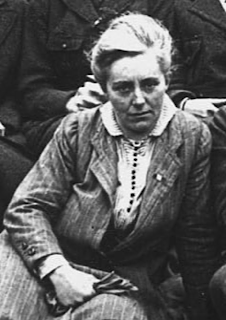
Madeleine ffrench-Mullen, Irish revolutionary and labour activist who takes part in the Easter Rising in Dublin in 1916, dies in Dublin on May 26, 1944.

Ffrench-Mullen is born on December 30, 1880, in Malta, where her father, St. Lawrence ffrench-Mullen, a Royal Navy surgeon, is stationed. She has two brothers, St. Lawrence Patrick Joseph (1890–1891) and Douglas (1893–1943).

Ffrench-Mullen’s interest in politics starts young. Her father is a committed Parnellite and their Dundrum home is a campaign headquarters. She is a radical feminist and republican during her life. Like many others of the time, she regards it as a woman’s right to vote. She joins the suffrage movement, and meets women with a similar worldview and values. The women’s suffrage movement is included in the Movements of Extremists reports of the Dublin Metropolitan Police. Ffrench-Mullen goes on to join Inghinidhe na hÉireann, a radical nationalist women’s group founded by Maud Gonne in 1900. The organisation develops into Cumann na mBan in 1913. Suffragist values are central to Cumann na mBan’s goal of standing side-by-side with men in the fight for the Irish Republic. Some members see this as women regaining the rights that had belonged to them in pre-invasion Gaelic civilisation. She is on the socialist wing of the moment, holding to the ideals of universal social equality of the syndicalist James Connolly and the Irish Citizen Army (ICA).

During the 1916 Easter Rising, ffrench-Mullen serves as a lieutenant in the Irish Citizen Army. She sees action with the St. Stephen’s Green and Royal College of Surgeons garrison. In St. Stephen’s Green she is in command of the 15 Citizen Army women who set up a medical station and field kitchen. While occupying St. Stephen’s Green, she and her comrades come under sustained heavy fire from the Shelbourne Hotel and buildings on the north side of the Green. After the surrender of the College of Surgeons garrison, ffrench-Mullen is one of the 77 women who had fought in the Rising who are imprisoned, among them her life partner Kathleen Lynn. While in captivity ffrench Mullen is moved three times, spending time in Richmond BarracksKilmainham Gaol and Mountjoy Prison. She is released on June 5, 1916.

Ffrench-Mullen meets Kathleen Lynn through Inghinidhe na h-Éireann. In 1915, she moves into Lynn’s home in Belgrave Road, Rathmines, where they live together for thirty years, until ffrench-Mullen’s death in 1944.

Ffrench-Mullen records in her prison diary in 1916 that she can face prison without fear once Lynn (whom she refers to as “the Doctor”) and she are together. Katherine Lynch of the Women’s Studies Centre at University College Dublin (UCD) describes them as partners, calling them part of a network of lesbians living in Dublin—which includes Helena MolonyLouie Bennett and Elizabeth O’Farrell—who meet through the suffrage movement and later become involved with the national and trade union movement. These women are featured, along with Eva Gore-Booth and others, in a 2023 TG4 documentary about “the radical queer women at the very heart of the Irish Revolution”: Croíthe Radacacha (Radical Hearts).

In 1919, Madeleine ffrench-Mullen and Kathleen Lynn establish Saint Ultan’s Children’s Hospital, also known as Teach Ultan, which is a female-run hospital for infants at 37 Charlemont Street, Dublin. The hospital focuses on children’s health and wellbeing, an area that is perceived at the time as women’s concern. In the aftermath of World War I many health problems have arisen including a rise in venereal diseases such as syphilis, carried from soldiers returning home from war. Many of Ireland’s infants of the time suffer from congenital syphilis (inherited disease from mother at birth), and this is a driving factor in the opening of St Ultan’s hospital. Tuberculosis is endemic in Ireland during its time as a British colony. Against steadfast opposition by the State and the Catholic Church, Lynn and ffrench-Mullen establish a vaccination project, vaccinating thousands of impoverished children who would have died of tuberculosis without their vaccines. Their success leads to the foundation of Ireland’s BCG vaccine programme, which has vaccinated all babies since the 1950s.

Ffrench-Mullen dies at the age of 63 in a Dublin nursing home on May 26, 1944. She is interred with her parents as well as her younger brothers (whom she outlives) in the ffrench-Mullen family plot in Glasnevin Cemetery. Her funeral takes place on the same day as the 1944 Irish general election.


Leave a comment

Birth of Anne Harris, Former Editor of the “Sunday Independent”

Anne Harris, the former editor of the Sunday Independent, is born on August 25, 1947. She is the former wife of Eoghan Harris who was an opinion columnist for the newspaper. Her daughter, Constance Harris, writes for the newspaper as a fashion writer.

In 1972, Harris writes a controversial article defending the 1972 Aldershot Bombing, an article she later expresses regret for. She also works for The Irish Press, as well as the political magazine Hibernia and the fashion magazine Image.

Harris is originally a socialist and a feminist. In the 1980s she abandons socialism in favour of the free market but remains a feminist. Harris also becomes known for her opposition to Irish nationalism and Irish republicanism, similar to her then-husband Eoghan Harris and Conor Cruise O’Brien. This position is reflected in the Sunday Independent‘s coverage of Northern Ireland. This causes some commentators to claim Harris is a “Southern Unionist.”

Harris lives with Sunday Independent editor Aengus Fanning until his death on January 17, 2012. On February 5, 2012, the Sunday Independent announces that she will succeed Fanning as the publication’s editor.

On the evening of Saturday, July 19, 2014, group editor of INM newspaper publishers, Stephen Rae, orders the presses to be stopped to amend a column written by Harris, the Sunday Independent editor, which features references to Denis O’Brien. Copies of the original article do however appear, allowing comparisons between the two. Harris originally writes: “Denis O’Brien is the major shareholder in INM. In theory, with 29% of the shares, he does not control it. In practice, he does.” Rae has the last sentence deleted. She also writes: “The question is whether he understands newspapers. In order to confront the truths in our society, we must have a free press. With the restrictive charter for journalists proposed last year, and some garrotive (sic) new structures, Denis O’Brien does not make this easy.” This is changed to: “The question is whether he understands newspapers. In order to confront the truths in our society, we must have a free press. If the restrictive charter for journalists proposed last year, along with some other structural changes, are anything to go by, it might be instructive for him to listen to journalists, troublesome and all as they are.

Harris leaves the newspaper some months later, with The Irish Times noting her departing speech to staff as follows: “She is understood to have spoken only about journalists and journalism and not about newspapers and their owners, a subject matter she has previously addressed in several columns.”


1 Comment

Birth of Hannah Lynch, Feminist, Novelist & Journalist

Hannah Lynch, Irish feminist, novelist, journalist and translator, is born in Dublin on March 25, 1859.

Lynch’s father, who is a committed, non-violent Fenian, dies when she is young. Her mother, Anna Theresa Calderwood, is married twice. She grows up in a cultivated, literary, very female household with her mother and ten sisters and half-sisters. Her stepfather is James Cantwell, also a Fenian, who runs the Star and Garter Hotel. From her early childhood she is familiar with many leading political agitators and writers in Dublin. Having been educated at a convent school in France, she considers training as a doctor and later as a concert pianist. However, economic circumstances lead to her to work as a sub-editor for a provincial paper and as a governess in Europe.

A nationalist like her father and stepfather, Lynch is an executive member of the Ladies’ Land League and as a result closely associates with Fanny Parnell. She writes extensively, producing short stories and satirical sketches, as well as Land War fiction, travel writing, translations and literary criticism. Her satirical pieces include “A Dublin Literary Coterie Sketched by a Non-Pretentious Observer” (1888) and “My Friend Arcanieva” (1895). She publishes William O’Brien‘s paper United Ireland from France, after it is suppressed in Ireland. She disagrees with William Butler Yeats on the literary merit of Emily Lawless, calling her work “highly polished literary stories.”

Lynch also writes fiction on the subject of political and cultural affairs in Ireland, sometimes meeting controversy. Her first novel, Through Troubled Waters (1885), is a fictionalised version of a real-life incident in Galway in which the daughters of a prosperous landowning family are murdered to make way for the sons to inherit the land. The novel also depicts the rural clergy as complicit, by denouncing the victims from the pulpit. The newspaper United Ireland strongly criticises the novel, claiming it peddles in anti-Irish stereotypes for a British audience. She responds by stating that she had intended the book for an Irish publisher and audience, and that she should not be asked “to prove my patriotism at the expense of truth.”

Lynch publishes across Ireland, the United Kingdom and from Paris. Her political work eventually leads to a breakdown in her health, after which she spends a period recuperating on the Isle of Wight. By 1896, she has settled in Paris, having also lived in both Spain and Greece. She speaks Greek and French. She then returns to lecture in Ireland and is a part of the salons of Paris in the Belle Époque as well as the Irish Literary Revival in Dublin. She is friends with the historian, biographer and literary critic Arvède Barine (pseudonym of Louise-Cécile Vincens), the writers Mabel and Mary Robinson, and the medievalist Gaston Paris. Her work however does not bring significant income, and she is forced to apply to the Royal Literary Fund for help on multiple occasions. Eventually it takes a toll on her health. She spends time in hospital in Margate, England in 1903.

Lynch dies at 60 Rue de Breteuil in Paris on January 9, 1904, where she spends much of her working life.


Leave a comment

Death of Suzanne R. Day, Feminist, Novelist & Playwright

Suzanne Rouviere Day, Irish feminist, novelist and playwright, dies in London on May 26, 1964. She founds the Munster Women’s Franchise League, is one of Cork‘s first women poor law guardians and serves a support role in both World Wars.

Day is born in Cork, County Cork, on April 24, 1876 to Robert and Rebecca Day. Her father runs a saddler and ironmonger business and is a well known antiquarian and photographer.

In 1910 Day forms the local Irish Women’s Franchise League branch in Cork as an activist group for women’s suffrage. The following year she leaves that group and founds the non-militant Munster Women’s Franchise League. Her new interest in politics leads to her winning the election of poor law guardians the same year. Her later writings reveal that she sees the Cork workhouses as an expensive self-perpetuating evil run by amateurs. This leads to her first novel, The Amazing Philanthropists (1916). From 1913 to 1917 she writes three plays for the Abbey Theatre in collaboration with Geraldine Cummins, Broken Faith (1913), The Way of the World (1914), and Fox and Geese (1917), which is the most successful of the three.

The Battle of Verdun lasts most of 1916 and during that time Day is amongst a group from the Society of Friends who cares for the wounded. She is in France for fifteen months and uses the experience to create her 1918 book Round about Bar-le-Duc. Where the Mistral Blows is published in 1933 and describes her time in Provence in France.

Day works as a member of the fire service in London during World War II. She lives in Cork, France and London. At the time of her death she is living at 47 Argyle Road, Kensington, London. She dies in the Cromer and District Hospital on May 26, 1964.

The work of Suzanne Rouviere Day and Geraldine Cummins has been described as a mixture of paganism and melodrama and has been suggested as a precursor to John B. Keane.

(Pictured: Suzanne R. Day in the cast of the 1901 production of The Mikado, Cork, County Cork)


Leave a comment

Death of Hannah Lynch, Feminist, Novelist, Journalist & Translator

Hannah Lynch, Irish feminist, novelist, journalist and translator, dies in Paris, France on January 9, 1904, where she spends much of her working life.

Lynch is born in Dublin on March 25, 1859. Her father, who is a committed, non-violent Fenian, dies when she is young. Her mother, Anna Theresa Calderwood, is married twice. She grows up in a very female house with her mother and ten sisters and half-sisters. Her stepfather is James Cantwell, also a Fenian, who runs the Star and Garter Hotel. After finishing school, she works as a sub-editor for a provincial paper and as a governess in Europe.

A nationalist like her father and stepfather, Lynch is an executive member of the Ladies’ Land League and as a result closely associates with Fanny Parnell. She writes extensively, producing short stories and satirical sketches, as well as Land War fiction, travel writing, translations and literary criticism. Her satirical pieces include “A Dublin Literary Coterie Sketched by a Non-Pretentious Observer” (1888) and “My Friend Arcanieva” (1895). She publishes William O’Brien‘s paper United Ireland from France, after it is suppressed in Ireland. She disagrees with William Butler Yeats on the literary merit of Emily Lawless, calling her work “highly polished literary stories.”

Lynch also writes fiction on the subject of political and cultural affairs in Ireland, sometimes meeting controversy. Her first novel, Through Troubled Waters (1885), is a fictionalised version of a real-life incident in Galway in which the daughters of a prosperous landowning family are murdered to make way for the sons to inherit the land. The novel also depicts the rural clergy as complicit, by denouncing the victims from the pulpit. The newspaper United Ireland strongly criticises the novel, claiming it peddles in anti-Irish stereotypes for a British audience. She responds by stating that she had intended the book for an Irish publisher and audience, and that she should not be asked “to prove my patriotism at the expense of truth.”

Lynch publishes across Ireland, the United Kingdom and from Paris. By 1896, she has settled in Paris, having also lived in both Spain and Greece. She speaks Greek and French. She then returns to lecture in Ireland and is a part of the salons of Paris in the Belle Époque as well as the Irish Literary Revival in Dublin. She is friends with the historian, biographer and literary critic Arvède Barine (pseudonym of Louise-Cécile Vincens), the writers Mabel and Mary Robinson, and the medievalist Gaston Paris. Her work however does not bring significant income, and she is forced to apply to the Royal Literary Fund for help on multiple occasions. Eventually it takes a toll on her health. She spends time in hospital in Margate, England in 1903.

Lynch dies in Paris on January 9, 1904.


Leave a comment

Birth of William Sharman Crawford, Irish Politician

William Sharman Crawford, Irish politician with liberal and radical views, is born William Sharman on September 3, 1780 in at Moira Castle in County Down.

Sharman is the eldest son of Colonel William Sharman, for many years a member of the Parliament of Ireland for Lisburn, who dies in 1803 leaving him large estates. In 1805 he marries a wealthy heiress, Mabel Fridiswid Crawford, whose surname and arms he adds to his own.

Sharman Crawford supports Catholic Emancipation and the rights of tenants. He is also a member of the landed gentry. He is High Sheriff of Down for 1811. He is a member of the Parliament of the United Kingdom for Dundalk in 1835–37 and for Rochdale in 1841–52. He greatly increases the prosperity of the tenants on his large estates by extending and confirming the Ulster custom of tenant-right. The main objective of his long parliamentary career is to give legal effect to this right and extend it to other parts of Ireland.

In 1848 with James MacKnight, editor of the liberal Londonderry Standard, Sharman Crawford forms the Ulster Tenant Right Association which is supported by a group of radical Presbyterian ministers. He also supports MacKnight in forming, with Charles Gavan Duffy, editor of the Young Ireland newspaper The Nation, the all-Ireland Tenant Right League.

Sharman Crawford is the father of James Sharman Crawford, member of the Parliament of the United Kingdom for Down, (1874-78), Arthur Sharman Crawford, unsuccessful candidate for Down in 1884 and John Sharman Crawford, unsuccessful candidate for Down in 1880. His daughter is Mabel Sharman Crawford, adventurer, feminist and writer.

Sharman Crawford dies unexpectedly and peacefully at Crawfordsburn, County Down on October 17, 1861. He is buried in the family vault at Kilmore, County Down, where there is a monumental inscription. A great stone obelisk is erected in his memory on a hill at Rademon Estate, near Crossgar, County Down.


Leave a comment

Birth of Helen Blackburn, Feminist & Women’s Rights Activist

Helen Blackburn, feminist and campaigner for women’s rights, especially in the field of employment, is born in Knightstown, County Kerry, on May 25, 1842. She is also an editor of The Englishwoman’s Review.

Blackburn is the daughter of Bewicke Blackburn, a civil engineer from County Kerry, and Isabella Lamb of County Durham in North East England. When her family moves to London in 1859, she soon comes into contact with the women of the Langham Place Group, especially Jessie Boucherett and Emily Faithfull.

Over the years Blackburn and Boucherett work together in a number of endeavours. Both are editors of The Englishwoman’s Review. Together they establish the Women’s Employment Defence League in 1891 to defend women’s working rights against restrictive employment legislation. Together they also edit The Condition of Working Women and the Factory Acts, 1896.

Blackburn joins the National Society for Women’s Suffrage in 1872 and is secretary of the executive committee of the Society from 1874 to 1880. She subsequently holds similar positions in a number of related organisations. She also takes opportunities to study, taking a class in Roman Law at University College London in 1875, and later (1886–88) classes at University College, Bristol. In the early 1890s, she assists Charlotte Carmichael Stopes in her writing of British Freewomen: Their Historical Privilege by supplying her own notes on the subject, then by purchasing the whole of the first edition in 1894. She retires in 1895 to care for her aged father, though later returns to take up her work.

Blackburn inspires and funds two collections. The first is an art collection in 1885 that includes pictures and work done by professional women to show the result of women’s industry. She is insistent that this does not include voluntary or amateurish work but rather show the products of female professionals. This loan exhibition includes portraits of leading women like Florence Nightingale and Mary Carpenter. This is donated to the University of Bristol, but recent enquiries indicate that this work is now lost. Her second collection is focused on a book collection by women. The books are from her collection, friends and from secondhand sources. Bookplates are commissioned and two bookcases which are decorated with paintings of Lydia Becker and Caroline Ashurst Biggs who had been the previous chairs of the Central Committee of the National Society for Women’s Suffrage. These bookcases are given to Girton College, Cambridge and are extant. In 1880 she is secretary of the West of England Suffrage Society in Bristol and is the main organizer of a large demonstration.

Blackburn’s long-term connection with the women’s movement allows her to write her history of the Victorian women’s suffrage campaign, Women’s suffrage: a record of the women’s suffrage movement in the British Isles, with biographical sketches of Miss Becker, finished in 1902, shortly before her death the following year, at Greycoat Gardens, Westminster, on January 11, 1903. She is buried at Brompton Cemetery. She leaves her archives and the decorated book collection to Girton College, Cambridge. Her will also makes provisions for establishing a loan fund for training young women.

A collaboration with Nora Vynne, published in 1903, titled Women under the Factory Act, criticises legislators for treating women as if they have not the intelligence of animals. Blackburn and Vynne argue that women should be allowed to take risks with their health in the workplace or they may find themselves always in need to protection as if they are incapable. The book is noted for its accuracy, but The Economic Journal recognises its authors as Freedom of Labour Defence members and suspects that it may have political motives arguing for the “equality of men and women.”

Blackburn’s name and picture, as well as those of 58 other women’s suffrage supporters, are on the pedestal of the statue of Millicent Fawcett in Parliament Square, London, unveiled in 2018.


Leave a comment

Pro-Abortion Dutch Ship “Aurora” Sails into Dublin Docks

aurora-the-abortion-shipPro-choice activists sail into Dublin docks aboard the controversial pro-abortion Dutch ship Aurora on June 14, 2001. Although the trawler is equipped to carry out abortions, the purpose of its visit to Ireland is to fuel debate on the need for Irish legislation to provide women with choice.

Abortion is perhaps the last taboo in Irish society. The question of abortion still has the power to unleash emotive arguments among both pro-life and pro-choice camps. The arrival of the Aurora thrusts the issue back into the frontline of public debate.

The 1990s are a time of spectacular change in the Republic of Ireland, where the will of the Roman Catholic church traditionally has had a direct influence on family life. Contraception became widely available and a referendum overturned the constitutional bar on divorce. But abortion on Irish soil remains outlawed in all but the most extreme circumstances. As it stands, a woman is only entitled to have her pregnancy terminated if otherwise she is likely to commit suicide. Pro-choice campaigners call the law hypocritical and point to the fact that every year an estimated 6,300 women travel across the Irish Sea to Great Britain, where they pay up to £1,000 to have the procedure done privately.

The 35-metre ship, a cannibalised Dutch deep-sea fishing boat, is chartered by the feminist action group Women on Waves, with the aim of carrying out abortions on board. A shipping container which has been converted into an abortion clinic, complete with gynaecological chair, has been welded to the deck of the Aurora. The mobile clinic is capable of carrying out 20 operations a day.

Originally, the ship had planned to sail 12 miles out into international waters, where it would carry out the terminations. Once there, doctors on board would also be able to distribute the RU486 abortion pill. But a question mark hangs over the mission after it is revealed that Dutch authorities did not issue the floating clinic with the appropriate paperwork that would allow it to carry out abortions.

While the Aurora‘s voyage makes news beyond Irish shores, reaction among pro-life campaigners in Ireland is mostly muted. Many feel that by keeping quiet they will starve the mission of publicity. But some organisations, such as Human Life International Ireland (HLII), do speak out. HLII has plans to launch what it calls a “Life” boat to shadow the Aurora. Spokesman for the group, David Walshe, says the aim is not to protest but to act as “a non-confrontational witness to the sanctity of human life.”

Until 1983, abortion is outlawed in Ireland under a 19th Century act instituted during British rule. In 1983 a constitutional amendment is enacted that outlaws abortion in all circumstances. But in 1992 the Supreme Court of Ireland pronounces that if a woman were suicidal she would be entitled to a termination. The law has remained largely unchanged since then and the Irish government shows no appetite for tackling the issue head-on.

(From: “Abortion ship in stormy waters,” BBC News Online, June 14, 2001)


Leave a comment

Birth of Máire de Paor, Historian & Archaeologist

maire-de-paor

Máire de Paor, Irish historian and archaeologist who also works as a researcher and presenter for national broadcaster RTÉ, is born on May 6, 1925, in Buncrana, County Donegal.

De Paor is born Máire MacDermott to Eamonn MacDermott and Delia MacVeigh. She is educated in the Convent of Mercy in Buncrana before going to University College Dublin, where she completes a master’s degree and a doctorate on early Christian archaeology and metalwork.

De Paor works in the Department of Archeology at UCD from 1946 to 1958. She marries Liam de Paor in 1946, and they have a daughter and four boys. They collaborate on a number of publications. She publishes her papers in the Proceedings of the Royal Irish Academy, Archaeologia, Seanchas Armagh and Comhar. Her husband also works at the university and, as a result of policies about married women, she is forced to leave. Initially she lectures in the United States, Canada, Scandinavia, France and the United Kingdom. She works as lecturer in archaeology at Trinity College, Dublin. The de Paors spend a year in Nepal on a UNESCO project in 1963.

De Paor works as a freelance researcher for Raidió Teilifís Éireann until she is given a full-time position in the 1970s.

De Paor is elected a member of the Royal Irish Academy in 1960 and is a member of the Arts Council from 1973. She becomes a member of Conradh na Gaeilge from 1962. From 1968 she is working with Cumann Merriman, the Irish cultural organisation named after Brian Merriman, working with the group as a director of the schools and spends four years as chairperson. In 1992 she is appointed to the board of Amharclann de hÍde.

Máire de Paor dies on December 6, 1994, at the age of 69.

University College Dublin has created the Dr. Máire de Paor Award for best PhD thesis. Her biographer identifies her as a committed republican, socialist and feminist.