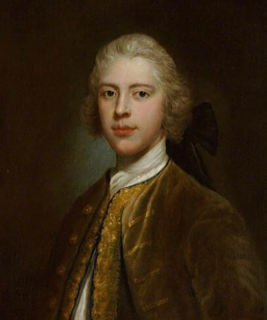
As a result of Boyle’s death before his father the Irish Viscountcy of Dungarvan and the English Barony of Clifford pass to his eldest son,Charles Boyle (bef. 1669–1704), who later becomes the 3rd Earl of Cork and 2nd Earl of Burlington upon the death of his grandfather in 1698. By his mother Lady Elizabeth Clifford’s death in 1691, he has already inherited the Barony of Clifford, which then also passes to his son.
At the time of his death, Charles leaves behind six children from his two marriages:
Arethusa Boyle (born 1688), daughter of his second wife Lady Arethusa Berkeley, married James Vernon
Boyle’s death In 1694 ensures the continuation of the Boyle family legacy through his children, particularly his eldest son, who consolidates the family’s English and Irish peerages. He is buried in Londesborough later that same month.
Although Boyle has a distinguished career as a Member of Parliament and as a Fellow of the Royal Society, his early death precludes him from inheriting the earldoms. Nevertheless, through strategic marriages and succession, the Boyle family maintains their prominent position in Anglo-Irish nobility.
Rokeby is born at Kirk Sandall, eldest of the five sons of John Rokeby (died 1506). His younger brother, Sir Richard Rokeby (died 1523), is Comptroller of the Household to CardinalThomas Wolsey and later Treasurer of Ireland. He retains a deep affection for Kirk Sandall and returns there to die. He goes to school at Rotherham, studies at the University of Oxford and becomes a fellow of King’s Hall, later Trinity College, Cambridge. He becomes vicar of his home parish in 1487 and is transferred to Halifax, another town for which he has a deep attachment, in about 1499. In 1507 he is made Bishop of Meath.
On the death of Walter Fitzsimon in 1511, Rokeby becomes Archbishop of Dublin. It has been suggested that his elevation is due at least in part to his English birth, as the Crown is anxious to place Englishmen high up in the Irish hierarchy. No doubt his brother’s close connection to Wolsey also plays a part. He is Lord Chancellor of Ireland from 1512 to 1513 and from 1516 to 1522.
As Archbishop Rokeby makes a reputation as a peacemaker, settling a long and bitter dispute between the Dean and Chapter of St. Patrick’s Cathedral, Dublin. He gives permission to Gerald FitzGerald, 9th Earl of Kildare, for the original foundation of Maynooth College, which is suppressed in 1535. He is frequently at the English Court, so often indeed that he is accused of neglecting his official duties back in Ireland. He participates in the christening of the future Queen Mary I in 1516 and the ceremony by which Wolsey receives his cardinal’s hat.
As Archbishop of Dublin, Rokeby is best remembered for the Synod of 1518. The Synod prohibits the use of any tin chalice at Mass, and the disposal of Church property by laymen; and attempts to regulate the procedure for dealing with intestate estates, the payment of tithes and burial fees and the rules for admission to the clergy. Rather comically, he strictly forbids clergymen to play football.
Rokeby is appointed Archdeacon of Surrey on March 27, 1519. By 1521 his health is failing, and he retires to Kirk Sandall, where he dies on November 29. In his will he leaves £200 to rebuild St. Mary’s Church, Beverley, whose tower had collapsed the previous year.
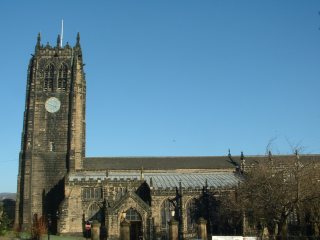
Rokeby makes elaborate provisions in his will for the disposal of his remains. In accordance with his wishes, his body is buried in St. Oswald’s Church, Kirk Sandall, but his heart and bowels are buried in the Church of St. John the Baptist, Halifax (now known as Halifax Minster). Mortuary chapels are erected at both spots, which still exist today.
O’Flanagan praises Rokeby as a good man, a good bishop and, so far as we can tell from the scanty records, a good judge. Irish author F. Elrington Ball, while acknowledging his good qualities, suggests that he was a failure as Irish Lord Chancellor, due partly to his frequent absences in England.
(Pictured: Halifax Minster, where Rokeby’s heart is buried)
Sutton is summoned to Parliament from February 15, 1440, by writs directed to “Johanni de Sutton de Duddeley militi,” whereby he obtains a Barony by writ as Lord Dudley. He is the first of his family to adopt the surname of Dudley as an pseudonym for Sutton.
As Lord Steward in 1422 Sutton brings home the body of King Henry V to England, and is chief mourner and standard bearer at his funeral. From 1428–1430 he serves as Lord Lieutenant of Ireland. He fights in several campaigns throughout the period of the wars with France, and on several occasions acts as a diplomat in the mid-1440s, when he also meets Charles VII of France. In 1443 he is made a king’s councillor and becomes one of the favourite companions of King Henry VI. In 1451 he becomes a Knight of the Garter. Early on in the Wars of the Roses he is a resolute defender of the House of Lancaster, but changes his allegiance to York before the Battle of Towton in 1461.
At the First Battle of St. Albans in 1455, Sutton takes part with his son Edmund, where he is taken prisoner along with Henry VI. At the Battle of Blore Heath on September 23, 1459 he is again present equally with his son, commanding a wing under Lord Audley. Sutton is wounded and again captured. At Towton in 1461 he is rewarded after the battle for his participation on the side of Edward, Earl of March, son of Richard of York, 3rd Duke of York. On June 28 of that year, Edward IV is proclaimed King in London.
John Sutton dies intestate on September 30, 1487. His will is dated August 17, 1487. The barony is inherited by his grandson, Edward Sutton, 2nd Baron Dudley, son of Sir Edmund Sutton who was the heir but dies after July 6, 1483 but before his father.
(Pictured: Coat of Arms of Sir John Sutton, 1st Baron Dudley, KG)